
Opened in October 2022 on the second floor of a Sannomiya building, entre nous has earned consecutive Tabelog Bronze Awards (2025 and 2026) and a 4.28 score from Japan's most-used restaurant platform, placing it among Kobe's most closely watched French tables. Chef Hideki Takayama frames the menu around Japanese terroir expressed through French technique, across a 22-seat room split between a 16-seat counter and private dining.
Pearl is the En Primeur Club membership app — saves, bookings, and concierge access live there. Same editors, same standards.
- Address
- Japan, 〒650-0004 Hyogo, Kobe, Chuo Ward, Nakayamatedori, 1 Chome−25−6 ラ・ドルレイ神戸三宮ビル2F
- Phone
- +81 78-855-3571
- Website
- entrenous.jp
- Directions
- Get directions
 Saves & bookings on Pearl
Kobe's French Tradition and Where entre nous Sits Within It
Kobe has a longer, less interrupted relationship with French cuisine than most Japanese cities. The port's nineteenth-century foreign concessions seeded a European dining culture that never fully left, and today the city sustains a tier of French restaurants that sits comfortably alongside Osaka while operating with a distinct local character: less theatrical than some Osaka contemporaries, more grounded in produce sourced from Hyogo's farms and coastline. In that context, entre nous, opened in October 2022 on the second floor of a building in Nakayamatedori, Chuo Ward, arrived not as an outlier but as a considered addition to a well-established tradition.
Those results place it in the upper bracket of Kobe French dining, above mid-tier bistros and broadly level with Aspirant, which operates at JPY 30,000 to 39,999 per head and works in a French-innovative register. entre nous is priced at about USD 150 per person.
The Counter Format as Editorial Statement
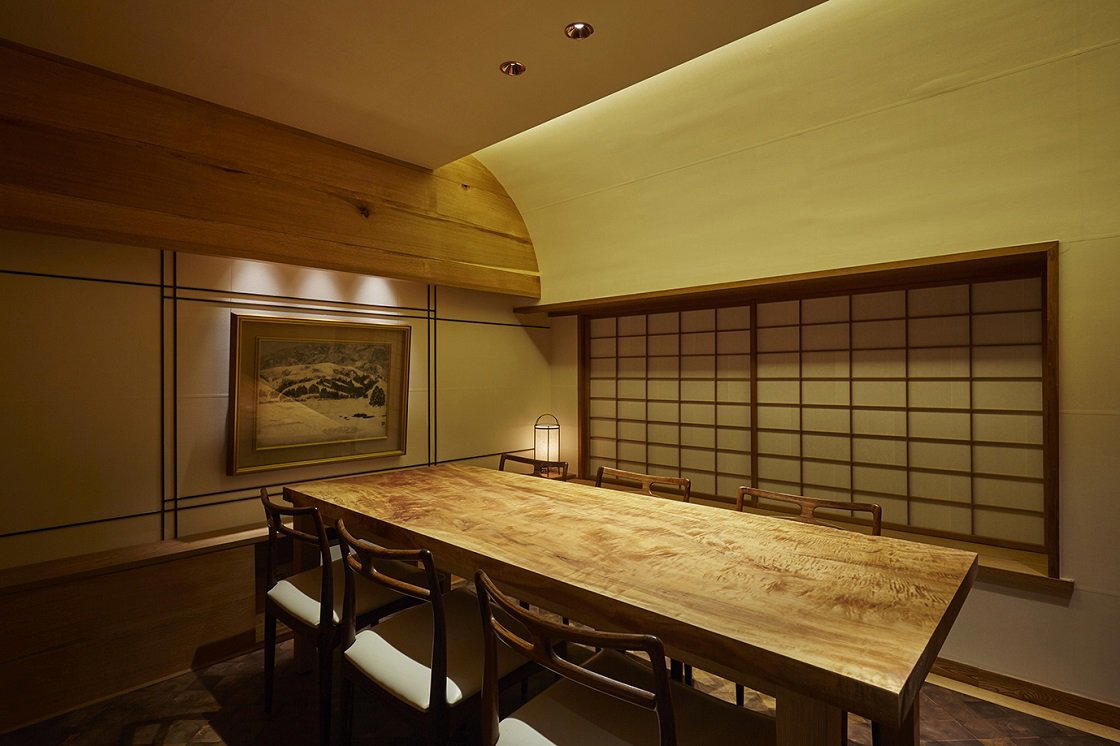
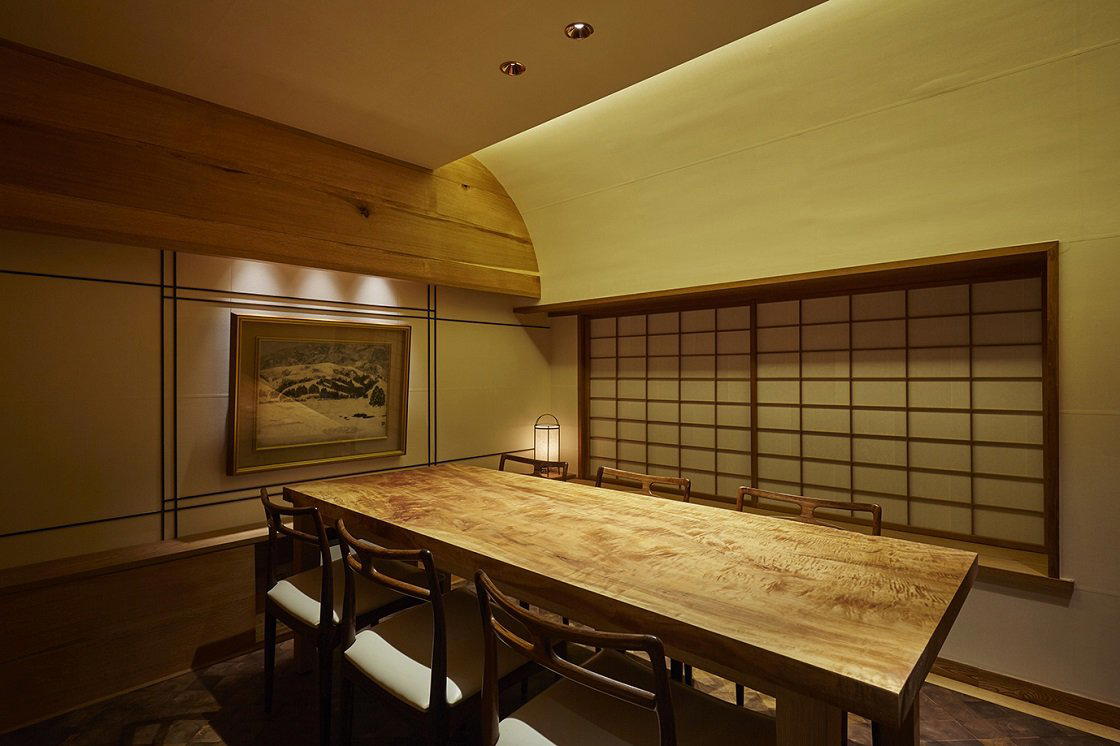
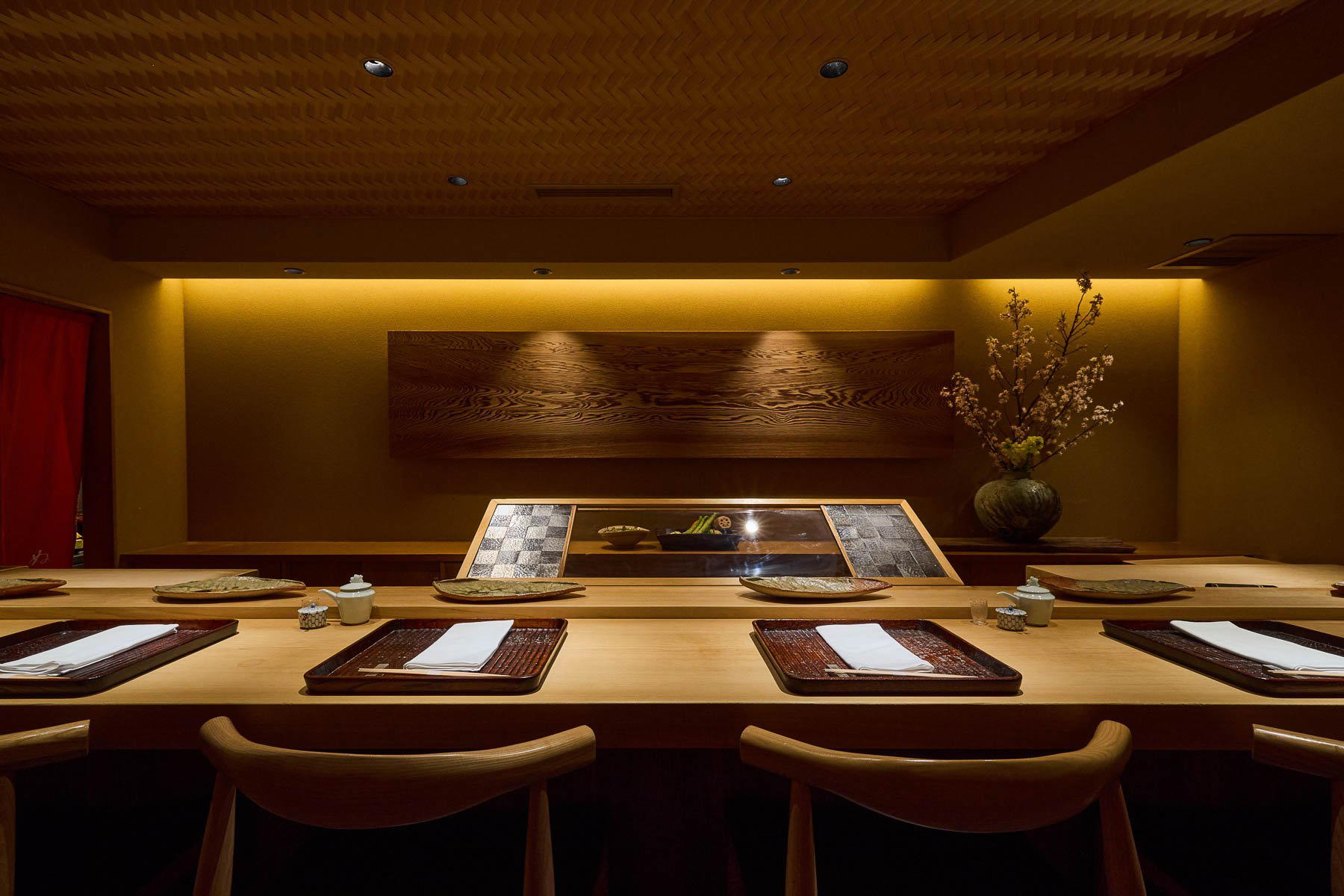
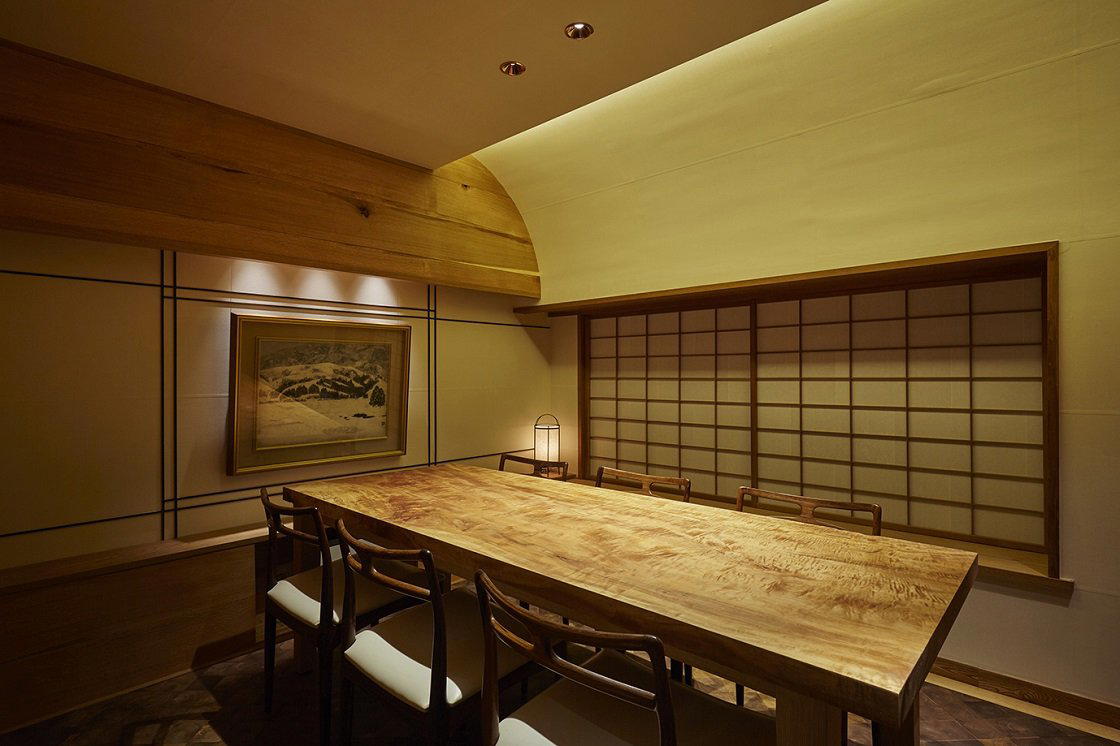
The room holds 22 seats: 16 at a counter, 6 in private rooms accommodating groups of four to six. That configuration is not incidental. Counter-dominant French restaurants in Japan have adopted a format more common to Japanese fine dining, where proximity to the kitchen turns each stage of a meal into a visible event. The arrangement shapes what the menu can do: it foregrounds preparation rhythm, allows courses to arrive at precisely calibrated intervals, and removes the ambient noise that dilutes focus in larger dining rooms.
In Kobe specifically, this counter-forward model sits alongside other tightly focused formats in the city. bb9 works a grilling-centered counter program; Arakawa, at a higher price point of JPY 40,000 to 49,999 for dinner, runs a European-leaning menu through steak and yoshoku. The restaurant occupies a French counter niche that is less populated in Kobe than in Osaka, where restaurants like HAJIME have established a high benchmark for chef-driven French technique applied to Japanese ingredients.
Menu Architecture: Terroir as the Structural Logic
The Tabelog description frames the restaurant's guiding principle as expressing Japan's terroir and food culture through French technique. That is not a decorative flourish; it is the structural logic of how the menu is built. In restaurants that operate this way, the sequence of courses functions less as a conventional French progression (amuse, entrée, plat, fromage, dessert) and more as a seasonal argument: each dish positioned to make a case for a particular ingredient from a particular place at a particular time of year.
This approach has become one of the defining tensions in Japanese French cuisine over the past decade. Chefs trained in classical French kitchens return to Japan and find that the ingredient quality available locally, especially in prefectures like Hyogo with access to both mountain produce and Seto Inland Sea seafood, can anchor menus that operate outside the traditional French supply logic. Hyogo's Tajima beef, its freshwater fish, its mountain vegetables from areas north of Kobe, and the oysters and fish from Akashi all represent ingredients that classical French technique can articulate without distorting. The restaurant's position in Sannomiya, a short distance from Akashi Strait seafood markets, makes that sourcing logic practical rather than aspirational.
For comparison, akordu in Nara applies a similar terroir-first frame to its menus in the Kinki region, while Gion Sasaki in Kyoto does so through a kaiseki lens. The French version of this argument, as practiced at the restaurant, requires a different kind of discipline: French plating logic and sauce work applied to ingredients whose character can easily be overwhelmed if the technique is too assertive.
The Drinks Program and Its Role in the Menu
The drinks list includes sake alongside wine and cocktails. That pairing of sake and French food is increasingly common in restaurants that position themselves around Japanese terroir, sake's range of textures and acidity registers makes it a functional match for many French preparations, particularly seafood courses and dishes built around dashi-adjacent broths or light cream sauces. The presence of sake on a French menu here reads as a coherent extension of the terroir argument rather than a novelty gesture.
Planning Your Visit
The restaurant takes reservations and advance booking is essential. The restaurant is open Monday 6 to 10 PM, Thursday and Friday 6 to 10 PM, and Saturday and Sunday 12 to 3 PM and 6 to 10 PM. Tuesday and Wednesday are closed.
The address is Japan, 〒650-0004 Hyogo, Kobe, Chuo Ward, Nakayamatedori, 1 Chome−25−6 ラ・ドルレイ神戸三宮ビル2F. No parking is available at the venue; coin parking is nearby. The dress code is smart casual. Service charge is 10%, with no additional cover charge.
For broader planning in the region, see our full Hyogo restaurants guide, Hyogo hotels guide, Hyogo bars guide, Hyogo wineries guide, and Hyogo experiences guide. Visitors comparing the restaurant with the wider Kansai French scene may also consider HAJIME in Osaka or akordu in Nara. For a broader view of Japanese fine dining in different registers, Harutaka in Tokyo, Goh in Fukuoka, 1000 in Yokohama, Le Bernardin in New York City, and Atomix in New York City offer useful points of comparison across French and tasting-menu traditions. Nearby in Hyogo, Awajishima Nobu and Eragon represent different points on the same premium dining map.
Standing Among Peers
Comparable venues nearby, for context on price, style, and recognition.
| Venue | Cuisine | Price | Notes |
|---|---|---|---|
| entre nousThis venue — the venue you are viewing | Modern French with Japanese Terroir | $$$$ | Not listed |
| Tanryu | Premium Kobe Beef Teppanyaki | $$$$ | Sannomiya |
| Sushi Josuke | Edomae Omakase Sushi | $$$$ | Kitano-cho, Chuo-ku |
| Konishiya | Modern Japanese Omakase & Kaiseki | $$$$ | Miwa, Sanda |
| Roan Matsuda Sasayama | Michelin-Starred Soba Kaiseki | $$$ | Maruyama, Tanba Sasayama |
| Komago | Traditional Japanese Kaiseki | $$$$ | Kōyōen |
Recognition history
Dated appearances from independent guides and award organizations, with the underlying list record or original source where available.
Tabelog Bronze #64
Tabelog
Tabelog 100 #47 · No. 47
Tabelog · Tabelog 100 - French - WEST - 2025
Tabelog Bronze
Tabelog
Continue exploring
More in Hyogo
Restaurants in Hyogo
Browse all →
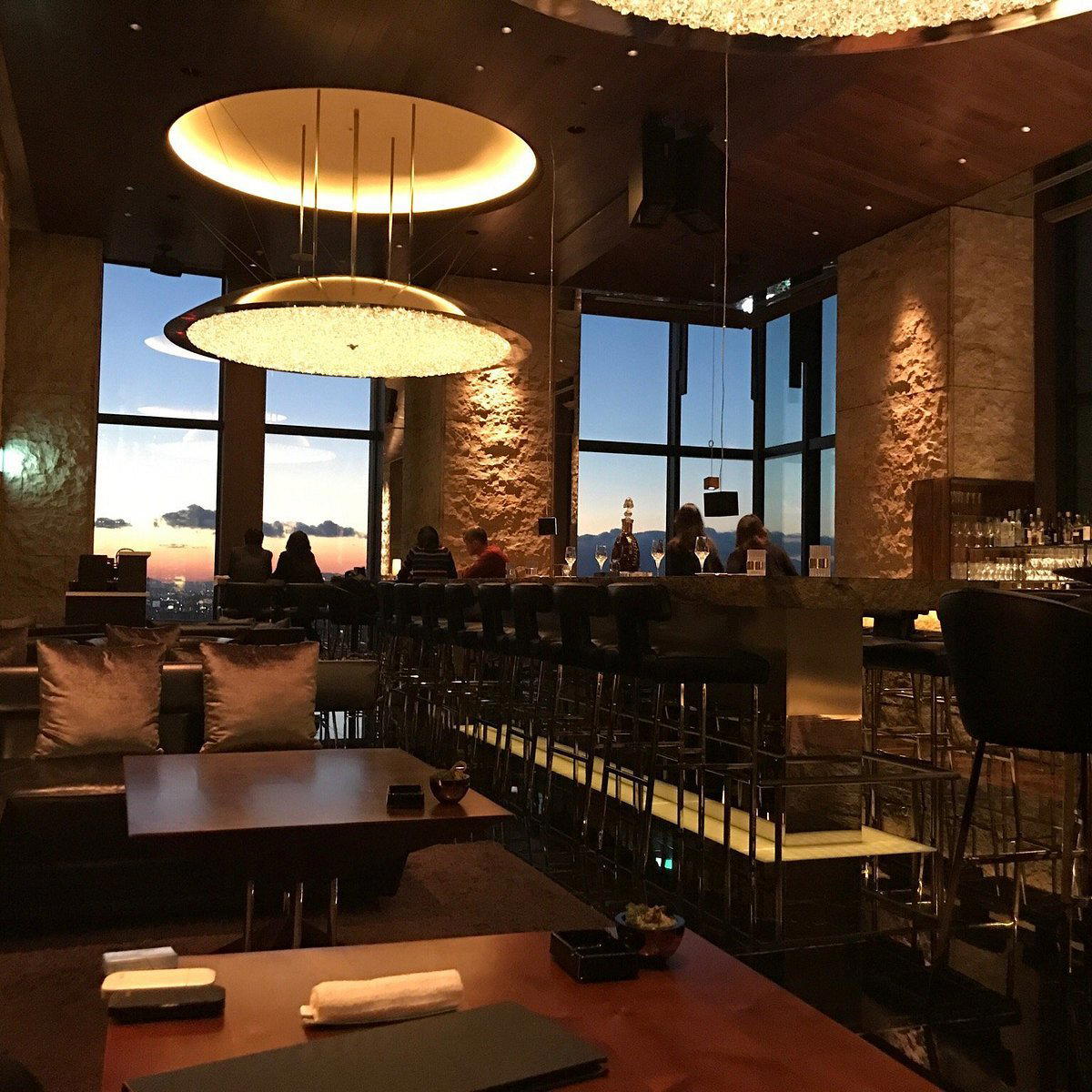
Bars in Hyogo
Browse all →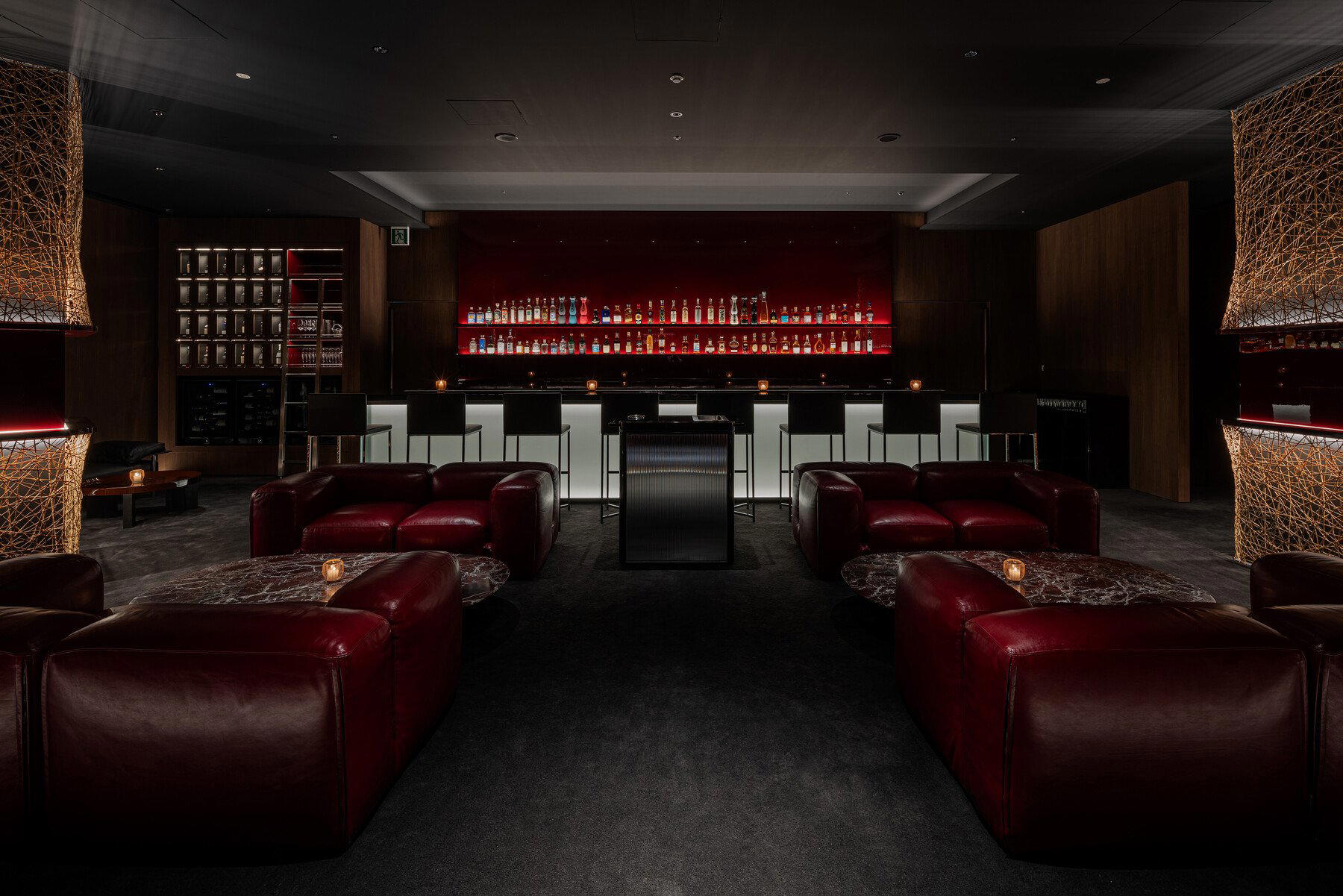



Hotels in Hyogo
Browse all →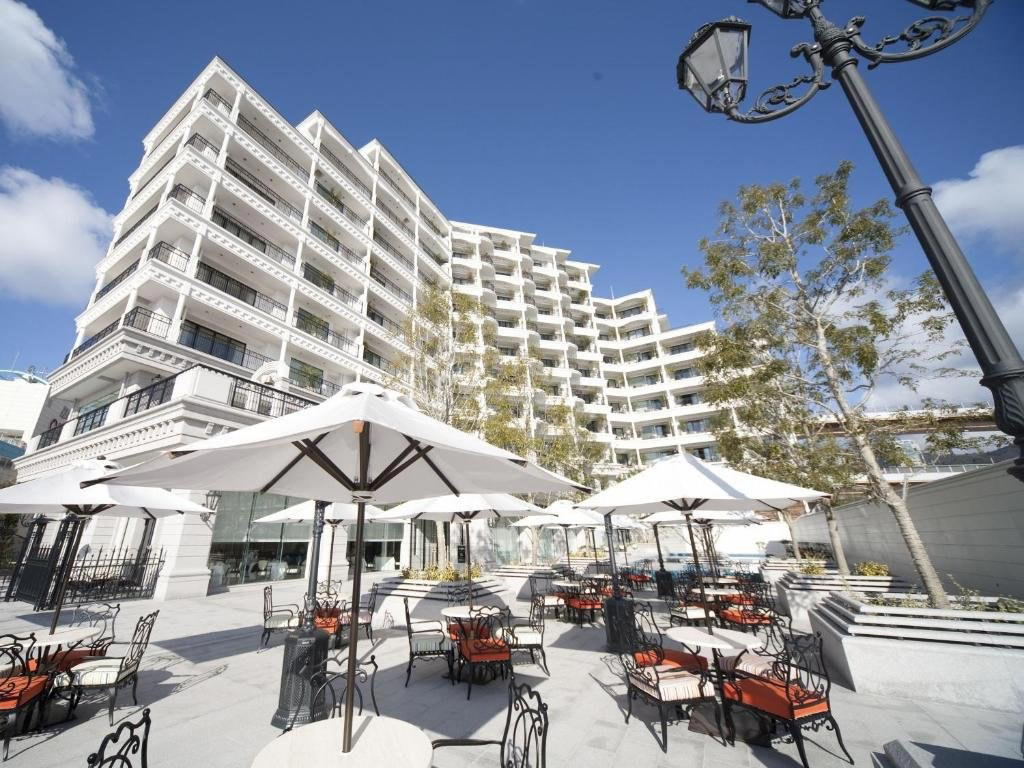

Wineries in Hyogo
Browse all →

At a Glance
- Elegant
- Sophisticated
- Intimate
- Date Night
- Special Occasion
- Chefs Counter
- Extensive Wine List
- Sake Program
- Local Sourcing
Current opening hours
- Monday
- 6–10 PM
- Tuesday
- Closed
- Wednesday
- Closed
- Thursday
- 6–10 PM
- Friday
- 6–10 PM
- Saturday
- 12–3 PM, 6–10 PM
- Sunday
- 12–3 PM, 6–10 PM
Hours can change for holidays and private events. Last verified .
Elegant U-shaped counter seating with Awaji Island soil craftsmanship and Mount Rokko-inspired wooden decor, creating a sophisticated and relaxing space.