
Tabelog 100 #58
Our verdict
EMILIA gives Tokyo’s Italian scene a regional counterpoint: Emilia-Romagna cooking in Jingumae, with à la carte flexibility rather than a ceremony-heavy tasting-menu frame. Tabelog selected it for Italian TOKYO Tabelog 100 in 2021, 2023, and 2025, making it a useful address for diners weighing substance, comfort, and recognition against Tokyo’s pricier Italian rooms.

Pearl is the En Primeur Club membership app, where members save venues, book tables and use the concierge.
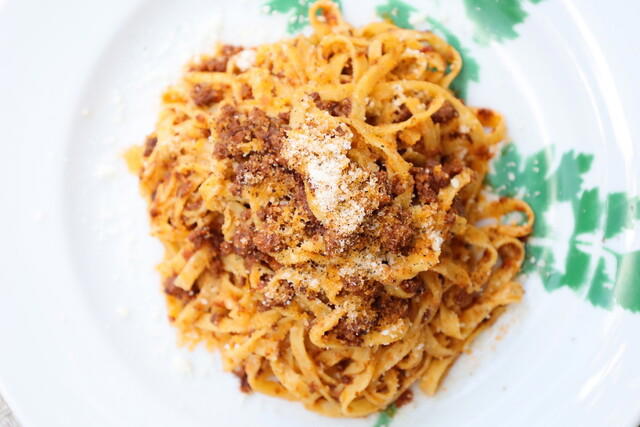
The menu
What to order
- Handmade pasta
- Emilia-Romagna regional specialties
- Homemade bread
- Lambrusco by the carafe
- Balsamic gelato
Tokyo dining’s rhythm changes quickly from one part of the city to the next. Between fashion traffic, residential calm, and a polished restaurant economy, meals often work best when they resist spectacle. EMILIA fits as a Tokyo Italian restaurant built for conversation rather than performance.
Tokyo has absorbed Italian food in waves: trattoria comfort, polished dining rooms, ingredient-led counters, and regional-minded specialists. The most interesting value play is often the restaurant that does not ask diners to pay only for luxury cues. Italian cooking gives structure: pasta, richness, and generosity without needing a parade of courses. In Tokyo, where many premium meals compete with high-end tasting-menu pricing and counter-seat scarcity, a flexible Italian room can give the bill a different logic.
Italian cooking without the tasting-menu tax
The key is format and feel. Rather than treating the restaurant only as a fixed special-occasion exercise, EMILIA works best when the table can build the meal around appetite and company. In Tokyo, where serious dining often uses set menus to control pacing, margin, and procurement, that matters. A more flexible meal shifts value back toward choice: a lighter lunch can stay restrained, while dinner can expand through Italian cooking without forcing every diner into the same spend.
The restaurant’s 2025 Tabelog Italian recognition places it inside a recognized Tokyo Italian bracket, though not necessarily the formal, trophy-chasing end. Its 3.67 score signals a following among Japanese diners who use Tabelog with unusual intensity, especially for restaurants delivering consistency over novelty. More than vague popularity, that recognition shows the room has earned attention within the city’s Italian list.
Italian identity also gives the kitchen a clearer frame than generic occasion dining. In Tokyo, where restaurants often broaden their vocabulary to please many audiences, a focused Italian room narrows expectations in a useful way. Pasta and a sense of generosity can anchor the meal without making it feel rustic or precious; it simply moves the experience closer to an Italian dining grammar than international fine-dining mimicry.
Tokyo value, measured against the wider dining field
Tokyo is not cheap, but it rewards diners who understand the micro-geography of the city. Some areas bring heavy foot traffic and fashion spending; others are calmer, with more room for restaurants built on regulars, reservations, and familiarity. EMILIA occupies a practical middle: more substantial than a casual pasta stop, less financially severe than Tokyo’s highest-gloss Italian tasting rooms.
Comparison helps. YOGORO and MOKUBAZA compete in a lower-spend casual lane, while Higuchi and Jingumae Higuchi sit in a different Japanese dining register. Handmade buckwheat Matsunaga belongs to another tradition, built around soba’s precision and restraint. Against that mix, EMILIA is not trying to be the cheapest meal in Tokyo; it is trying to make an Italian dinner feel proportionate. The value proposition is recognizable cooking, budget clarity, and enough comfort to make the meal social rather than ceremonial.
The setting also shapes the experience. Rather than making scarcity the whole point, EMILIA reads best as a restaurant to plan around appetite, company, and the role the meal needs to play in the day. That changes the tone: better for friends, workable for a relaxed meal, and less dependent on chef-counter theatre. The experience stays public and social, which suits the restaurant’s role as a Tokyo Italian address rather than a rigid temple of gastronomy.
For a broader Tokyo itinerary, this is the kind of restaurant that pairs with a day of city wandering rather than a cross-city pilgrimage built around one reservation. Keep Our full Tokyo restaurants guide close for the wider dining map, especially if the trip needs sharper contrast: other Tokyo dining rooms can cover charcoal cooking, casual cafés, yakitori, curry, or more formal Japanese meals without making EMILIA carry every category.
How to read the room before you choose it
This suits diners wanting a relaxed Italian meal with enough editorial credibility to justify planning, not chef-counter theatre. The known budget range also helps frame expectations: dinner is listed at JPY 8,000 - JPY 9,999, while lunch is listed at JPY 2,000 - JPY 2,999. Those numbers make the restaurant easier to place within a Tokyo schedule, especially when lunch and dinner need to play different roles.
For families, groups, or allergy-sensitive diners, confirm the current policy directly before booking rather than relying on assumptions. The provided listing includes a phone number, +81-3-3402-5517, which makes direct confirmation the sensible step. Tokyo restaurants can change service details, booking rules, and menu availability, so the safest reading is to treat EMILIA as a planned reservation rather than a casual drop-in.
The broader travel plan matters too. Tokyo rewards category switching, and Italian dining should not consume every prime meal slot. Use Tokyo hotel, bar, wine, and experience planning generically around the meal, then leave room for other unnamed dining rooms across the city or elsewhere in Japan. If the trip extends beyond Tokyo, compare the register broadly with regional dining in other cities rather than forcing a direct like-for-like comparison.
The case for EMILIA is not novelty. It is control: Italian focus, budget clarity, a social dining register, and 2025 Tabelog recognition with a 3.67 score. In a city where Italian dining can become casual fuel or expensive theatre, this is the middle lane worth taking seriously.
At-a-Glance Comparison
Comparable venues for context, by category and price tier.
| Venue | Cuisine | Price | Awards | Notes |
|---|---|---|---|---|
| EMILIAThis venue (the venue you are viewing) | Emilia-Romagna regional Italian with handmade pasta | $50–100 | Tabelog 100 #58 | Not listed |
| Partenope (パルテノペ) | Authentic Neapolitan Pizza | Not listed | Tabelog 100 #62 | Ebisu |
| Napule | Authentic Neapolitan Pizza & Southern Italian Trattoria | $30–50 | Not listed | Minato |
| K+ | Modern Italian Fine Dining | $100–150 | Tabelog 100 #49 | Minato |
| Kurodino | Modern Italian Fine Dining | $150–200 | Star Wine List · Wine Spectator Best of Award of Excellence | Chūō |
| Osteria Tramandare | Regional Italian Osteria with Rotating Tasting Courses | $50–100 | Tabelog 100 #54 | Chūō |
Recognition history
Dated appearances from independent guides and award organizations, with the underlying list record or original source where available.
Tabelog 100 #58 · No. 58
Tabelog · Tabelog 100 - Italian - TOKYO - 2025
Continue exploring
More in Tokyo
Restaurants in Tokyo
All restaurants in Tokyo →




Bars in Tokyo
All bars in Tokyo →







Details
- Cozy
- Rustic
- Lively
- Trendy
- Date Night
- Casual Hangout
- Group Dining
- Family
- Celebration
- After Work
- Terrace
- Standalone
- Design Destination
- Extensive Wine List
- Street Scene
- A La Carte
- Counter Dining
- Wine
- Italian Wine
- Lambrusco
- Vegetarian Friendly
Current opening hours
- Monday
- 11:30 AM–3 PM, 5:30–10 PM
- Tuesday
- Closed
- Wednesday
- Closed
- Thursday
- 11:30 AM–3 PM, 5:30–10 PM
- Friday
- 11:30 AM–3 PM, 5:30–10 PM
- Saturday
- 11:30 AM–3 PM, 5:30–10 PM
- Sunday
- 11:30 AM–3 PM, 5:30–10 PM
Hours can change for holidays and private events. Hours as of .
Relaxed and cozy neighborhood spot with warm, casual interiors, a small counter and terrace seating that give it a hidden-house-restaurant feel rather than a formal trattoria.