
Michelin Plate
Our verdict
A Michelin Plate holder on Barruera's main road, El Ventador works squarely within Pyrenean tradition — tea-smoked venison, mountain-style rice, wild mushrooms — while folding in restrained modern and Asian touches. The stone façade matches its neighbours; the cooking reaches beyond them. At the €€ price point, it sits among the more ambitious tables in the Vall de Boí valley.

Pearl is the En Primeur Club membership app — saves, bookings, and concierge access live there. Same editors, same standards.
- Address
- Passeig Sant Feliu, 49, 25527 Barruera, Lleida, Spain
- Phone
- +34 661 86 34 00
- Website
- elventador.com
- Directions
- Get directions
The menu
What to order
- Carpaccio of tea-smoked Pyrenean venison
- Cordero a baja temperatura
- Organic baby goat ribs
Stone Walls, Pyrenean Larder
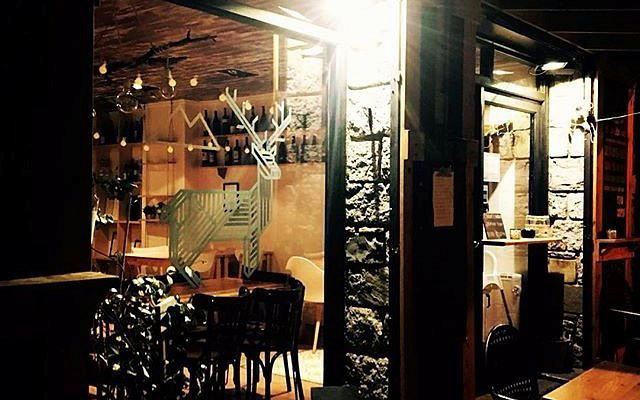
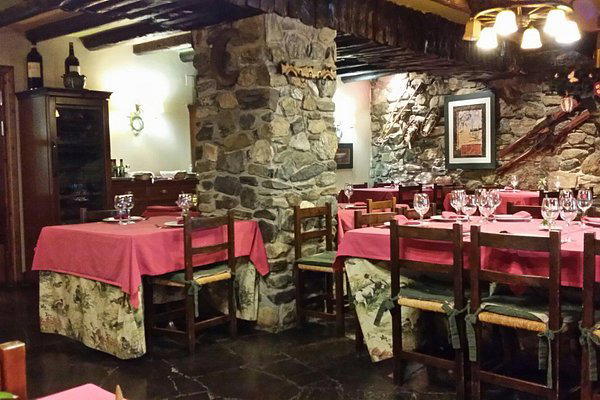
Barruera sits in the Vall de Boí, a valley in the Lleida Pyrenees better known for its cluster of Romanesque churches than for its restaurants. The main road through the village carries traffic toward ski stations and hiking trails, and most of the buildings along Passeig Sant Feliu read as functional mountain architecture: stone-fronted, low, built for weather. El Ventador occupies one of those façades at number 49, blending into the streetscape to a degree that makes it easy to walk past if you are not looking. That anonymity is, in part, the point. The restaurant does not announce itself with the visual grammar of destination dining. What it offers instead is a small dining room with a welcoming, unhurried atmosphere — the kind that reads as genuinely local rather than designed for tourists — and a kitchen that takes the Pyrenean larder seriously.
The Michelin Plate recognition, held for both 2024 and 2025, positions El Ventador inside a specific tier of Spanish regional cooking: committed, ingredient-focused, without the theatrical production budgets of the country's three-star operations. Compared to the Basque and Catalan flagships that define Spain's international dining reputation, the multi-course laboratories of Arzak in San Sebastián, El Celler de Can Roca in Girona, or Azurmendi in Larrabetzu, El Ventador operates on a different register entirely. The ambition here is not to deconstruct the Pyrenees but to cook from it with honesty and some intelligence.
Where the Ingredients Come From
The menu reads as a map of the surrounding mountains as much as a list of dishes. Pyrenean venison appears as a carpaccio, finished with tea smoking, a technique that adds a faint, dry aromatic note without masking the iron-rich quality of the meat. Venison from this altitude tends to be lean and deeply flavoured, a product of animals that cover significant ground at elevation, and the preparation respects that character. Wild mushrooms, foraged from the forest slopes that define this part of the Lleida interior, appear alongside quail, another ingredient with strong local roots in Catalan mountain cooking. The combination of poultry and fungi is a recurring motif in Pyrenean kitchens because both were historically accessible to communities in the valley.
Organic baby goat ribs and cheese from Taüll anchor the menu firmly in the valley's own production. Taüll, a village a few kilometres from Barruera and the site of two of the valley's most significant Romanesque churches, has a small but active tradition of artisan cheesemaking. Using that cheese as an ingredient rather than a footnote on a cheese board is a curatorial decision: it places El Ventador in dialogue with its immediate geography rather than sourcing from the broader Spanish premium larder. The mountain-style rice, creamy in preparation, closer in spirit to a Catalan arròs cremós than to a Valencian paella, draws on a cooking tradition that predates the modern restaurant circuit by several centuries. Rice prepared in this way, with stock reduced into the grain, reflects a peasant economy that made the most of rich broths and modest accompaniments.
The Asian touches scattered through the menu sit within a wider pattern visible across contemporary Spanish regional cooking. In the same way that DiverXO in Madrid pushed Asian-Spanish fusion to its most maximalist extreme, or Aponiente in El Puerto de Santa María applies high technique to overlooked ingredients, mid-tier regional restaurants across Spain have absorbed elements of Japanese and Southeast Asian cooking, specifically fermentation, smoking, and precise acid balance, as tools for amplifying rather than obscuring local product. At El Ventador, the tea-smoking of venison is the clearest example: an Asian smoking technique applied to a Pyrenean animal, resulting in something that does not feel incongruous because the underlying ingredient remains the subject.
Format and How to Use It
The kitchen offers two ways in: an à la carte structured for sharing, and a surprise tasting menu. The sharing format reflects how locals in this part of Catalonia tend to eat, dishes arriving at the centre of the table, portions adjusted to the group, while the tasting menu hands editorial control to the kitchen and suits solo diners or couples willing to commit an evening to the progression the kitchen wants to show. At the €€ price point, El Ventador represents strong value against comparable Michelin Plate holders in more visited parts of Spain, where proximity to Barcelona or San Sebastián tends to push prices upward regardless of the underlying ingredient cost.
It is not a star, but it is a deliberate inclusion in the guide, an acknowledgment that the kitchen is cooking at a level worth a detour, not merely a meal of convenience. In a valley where dining options are limited and most visitors arrive for outdoor activity rather than gastronomy, that designation carries particular weight. It identifies El Ventador as the serious option in its immediate geography, the table you plan around rather than settle for.
The restaurant's position on the main road through Barruera makes it the natural anchor for an evening if you are staying in the valley for hiking, skiing, or visiting the Romanesque churches. It is not a long drive from the ski station at Boí Taüll, and the valley's accommodation options are clustered nearby. For planning your stay in full, and for wider context on eating and drinking in the area, consult, and our full Barruera experiences guide.
The Broader Spanish Table
El Ventador exists at a considerable remove from the marquee addresses that give Spanish fine dining its international profile. The multi-course ambition of Cocina Hermanos Torres in Barcelona, the technique-first approach of Martin Berasategui in Lasarte-Oria, the produce obsession of Quique Dacosta in Dénia, the conceptual severity of Mugaritz in Errenteria, these are destination restaurants that draw international visitors specifically for the food. El Ventador is not in that category, and it does not pretend to be.
For readers more familiar with contemporary dining in other markets, the comparison with ingredient-driven restaurants in other cities is instructive. The approach shares something with what César in New York City or Jungsik in Seoul represent in their respective scenes: a contemporary technique applied with restraint to a specific culinary inheritance, without the technique becoming the story. The difference at El Ventador is the altitude and the isolation. Cooking from the Pyrenean larder in a valley with a population measured in hundreds imposes a discipline that urban restaurants must simulate. Here, the constraint is structural.
Planning Your Visit
El Ventador is located at Passeig Sant Feliu, 49 in Barruera, Lleida. The €€ pricing makes it one of the more accessible Michelin Plate addresses in the Catalan Pyrenees. Given the limited size of the dining room and the restaurant's recognition in the Michelin Guide for two consecutive years, booking ahead is advisable, particularly during the ski season at Boí Taüll and in the summer hiking months when the valley sees its highest visitor numbers. The sharing à la carte format works well for groups; the tasting menu suits those who want the kitchen to set the pace.
Frequently asked questions
Is El Ventador suitable for children?
The €€ price point keeps costs manageable, and the à la carte is structured for sharing, which allows more flexibility than a fixed tasting menu. Dishes such as organic baby goat ribs and mountain-style rice with wild mushrooms translate well across age groups. The stone-walled dining room in Barruera is small and welcoming rather than formally austere.
What should I expect atmosphere-wise at El Ventador?
The stone façade sits flush with the other buildings on Passeig Sant Feliu — there is no design flourish signalling a restaurant apart from its surroundings. Inside, the dining room is small and described as pleasant and welcoming, in keeping with the village scale of Barruera. The overall register is relaxed rather than ceremonial, which suits the sharing-format menu.
What do people recommend at El Ventador?
The Michelin Plate recognition for both 2024 and 2025 draws attention to several specific dishes: the carpaccio of tea-smoked Pyrenean venison, creamy mountain-style rice, wild mushrooms and quail, organic baby goat ribs, and cheese from Taüll. The tea-smoking technique on the venison is the clearest signal of the kitchen's modern and Asian-influenced approach layered over a Pyrenean base.
A Quick Peer Check
| Venue | Cuisine | Price | Awards |
|---|---|---|---|
| El VentadorThis venue — the venue you are viewing | Modern Pyrenean Mediterranean | $50–100 | Michelin Plate |
| Aponiente | Progressive - Seafood, Creative | Not listed | Michelin 3 Star |
| Arzak | Modern Basque, Creative | Not listed | Michelin 3 Star |
| DiverXO | Progressive - Asian, Creative | Not listed | Michelin 3 Star |
| El Celler de Can Roca | Progressive Spanish, Creative | Not listed | Michelin 3 Star |
| Quique Dacosta | Creative | Not listed | Michelin 3 Star |
Recognition history
Dated appearances from independent guides and award organizations, with the underlying list record or original source where available.
Michelin Plate
Michelin
Full recognition history (3 entries)
Michelin Plate
Michelin
Michelin Plate
Michelin
Continue exploring
More in Barruera
Restaurants in Barruera
Browse all →
Wineries in Barruera
Browse all →
Details
- Cozy
- Rustic
- Elegant
- Intimate
- Date Night
- Special Occasion
- Family
- Open Kitchen
- Extensive Wine List
- Local Sourcing
- A La Carte
- Tasting Menu
- Small Plates
- Gluten Free Options
- Vegetarian Friendly
Small dining room with pleasant, welcoming ambience; cozy, minimalist, relaxed zen atmosphere with low noise level.