El Racó
.png)
A multigenerational Catalan restaurant on a pedestrian street in Sant Climent de Llobregat, El Racó holds a Michelin Plate (2024) and a Google rating of 4.7 across nearly a thousand reviews. The kitchen anchors its menu in local breed ingredients and market-driven tradition, with a particular focus on the town's celebrated cherry harvest. At budget-friendly prices, it represents the kind of rooted, unfussy cooking that rarely travels beyond its own postcode.
 Discover on Pearl
Pearl is the En Primeur Club membership app — saves, bookings, and concierge access live there. Same editors, same standards.
- Address
- Carrer Pocafarina, 20, 08849 Sant Climent de Llobregat, Barcelona, Spain
- Phone
- +34 936 58 16 39
- Website
- restaurantelraco.com
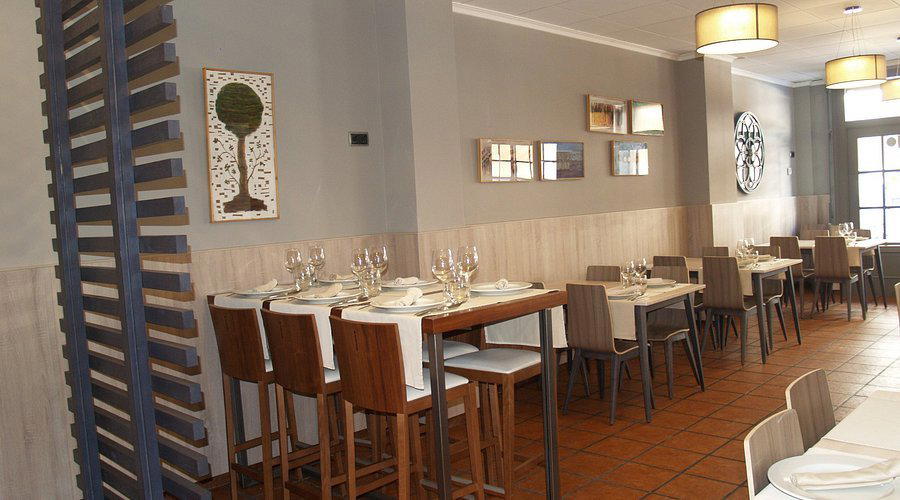
A Pedestrian Street, a Town Tradition, and the Weight of Catalan Cooking
Sant Climent de Llobregat sits in the Baix Llobregat comarca, south of Barcelona, at a remove from the city's restaurant circuit. The town's culinary identity is tied to a single seasonal product: the cherry. Each spring, the local harvest draws visitors from across the region, and the restaurants that have built menus around it occupy a specific, rooted niche in Catalan food culture. El Racó sits on Carrer Pocafarina, a pedestrian street in the centre of town, and has been doing this kind of cooking across multiple generations of the same family.
The context matters here. Catalonia has two parallel dining traditions that rarely intersect. At one end, Barcelona and its surrounds have produced some of Spain's most technically ambitious restaurants: Cocina Hermanos Torres in Barcelona and El Celler de Can Roca in Girona represent the creative, Michelin-starred tier that draws international attention. At the other end, there is a quieter tradition of market-driven, generational cooking that keeps ingredients central and technique largely invisible. El Racó operates firmly in that second register, and the Michelin Plate it received in 2024 reflects recognition of that honesty rather than a claim to tasting-menu ambition.
How the Menu Is Structured, and Why It Matters
The restaurant operates two dining rooms: one for à la carte orders, one adjacent to the kitchen dedicated to the daily menu. This division is itself a small editorial statement about how Catalan families eat. The daily menu format, a set of courses at a fixed price that changes with market availability, is the backbone of neighbourhood restaurant culture across Spain. It is the format through which cooks demonstrate real knowledge of seasonal supply and regional produce. The à la carte room allows for longer, more deliberate meals.
This two-room structure also shapes the social ritual of eating here. In the daily menu room, the pace is set by the kitchen; courses arrive in sequence, and the choice is narrow. In the à la carte room, the table controls the tempo. These are not the same meal, and the choice between them is worth making consciously rather than by default. For a first visit, the daily menu offers the clearest read on what the kitchen does.
The Dishes That Define the Kitchen
Several dishes have acquired enough regularity on the menu to be understood as signatures. The Prat breed chicken, sometimes called blue-footed chicken for the pigmentation of its feet, is a protected breed specific to the Llobregat delta. It produces meat with a firmer texture and more pronounced flavour than standard poultry, and it appears here in a form that lets the ingredient carry the dish. Grilled Butifarra sausage, a Catalan staple made from pork and seasoned with black pepper and sometimes nutmeg, is another constant: simple, direct, and deeply local.
The more compositionally interesting dish is the mountain-style chickpeas with lobster, a pairing that belongs to the Catalan mar i muntanya tradition, which combines seafood with ingredients from inland farming. The combination sounds unlikely on paper but has a long historical logic in a cuisine that had access to both the coast and the interior simultaneously. This dish positions El Racó within that tradition rather than outside or above it.
Desserts shift during cherry season to feature the town's own harvest. Chef Gèrard Solís has acquired the informal local title of the cherry chef, a designation that says something precise about how seasonal specialisation works in small-town Catalan cooking: the restaurant and the product become identified with each other over years, and the menu becomes, in season, a kind of local argument for why a single ingredient merits multiple expressions.
Where El Racó Sits in the Broader Spanish Dining Picture
Spain's restaurant recognition system has expanded significantly in the past decade. El Racó holds a Google rating of 4.7 from 1,009 reviews.
To understand the range of Spanish cooking, consider that venues such as DiverXO in Madrid, Arzak in San Sebastián, Azurmendi in Larrabetzu, Aponiente in El Puerto de Santa María, and Mugaritz in Errenteria all operate at the three-star level and in price brackets that bear no comparison to a single-euro-sign neighbourhood restaurant. The point is that Spain's food culture is broad enough to hold both ends of that spectrum.
For Catalan cooking specifically at other price points and formats, 7 Portes in Barcelona represents the long-established, higher-volume end of the tradition, while B44 in San Francisco shows how Catalan cooking translates across export markets. Also worth noting in the region: Quique Dacosta in Dénia, Ricard Camarena in València, Martin Berasategui in Lasarte-Oria, and Atrio in Cáceres each sit in distinct regional and price-tier positions.
Planning a Visit
El Racó is on Carrer Pocafarina, 20, in the centre of Sant Climent de Llobregat. The price range is at the budget end of the scale, making it accessible as a standalone lunch destination if you are already in the Baix Llobregat area or approaching Barcelona from the south. Cherry season, which typically runs from late April through June in this part of Catalonia, is the period when the menu is most distinctively itself. Visiting outside that window still gives access to the breed-specific poultry and the mar i muntanya dishes, but misses the seasonal argument the kitchen is most known for locally.
How It Stacks Up
Comparable venues nearby, for context on price, style, and recognition.
| Venue | Cuisine | Price | Awards | Notes |
|---|---|---|---|---|
| El RacóThis venue — the venue you are viewing | Traditional Catalan | $$ | Michelin Plate | |
| Benet | Modern Catalan | $$ | Michelin Plate | Les Borges Blanques |
| Windsor | Modern Catalan | $$$ | Michelin Plate | la Dreta de l'Eixample |
| L’Hostal de Ca l’Enric | Traditional Catalan | $$ | Bib Gourmand | La Vall de Bianya |
| El Portal Vell | Traditional Catalan | $$ | Michelin Plate | Lliçà d'Amunt |
| Ca L'Amagat | Authentic Catalan Mountain Cuisine | $$ | Michelin Plate | Bagà |
Continue exploring
More in Sant Climent de Llobregat
Restaurants in Sant Climent de Llobregat
Browse all →
Bars in Sant Climent de Llobregat
Browse all →
Hotels in Sant Climent de Llobregat
Browse all →

At a Glance
- Cozy
- Rustic
- Intimate
- Hidden Gem
- Family
- Business Dinner
- Special Occasion
- Open Kitchen
- Extensive Wine List
- Local Sourcing
Relaxed and intimate with warm functional lighting, stone walls, and familial atmosphere in two dining rooms.