On Bloor Street West in Toronto's Annex neighbourhood, El Furniture Warehouse occupies a price bracket and atmosphere that the city's more expensive dining rooms cannot replicate. The flat-fee model, communal energy, and unpretentious setting position it as a counterpoint to Toronto's formal restaurant culture, drawing a crowd that ranges from students to regulars who know exactly what they're getting.
Pearl is the En Primeur Club membership app — saves, bookings, and concierge access live there. Same editors, same standards.
- Address
- 410 Bloor St W, Toronto, ON M5S 1X5, Canada
- Phone
- +1 647 350 7326
- Website
- warehousegroup.ca
- Directions
- Get directions
 Saves & bookings on Pearl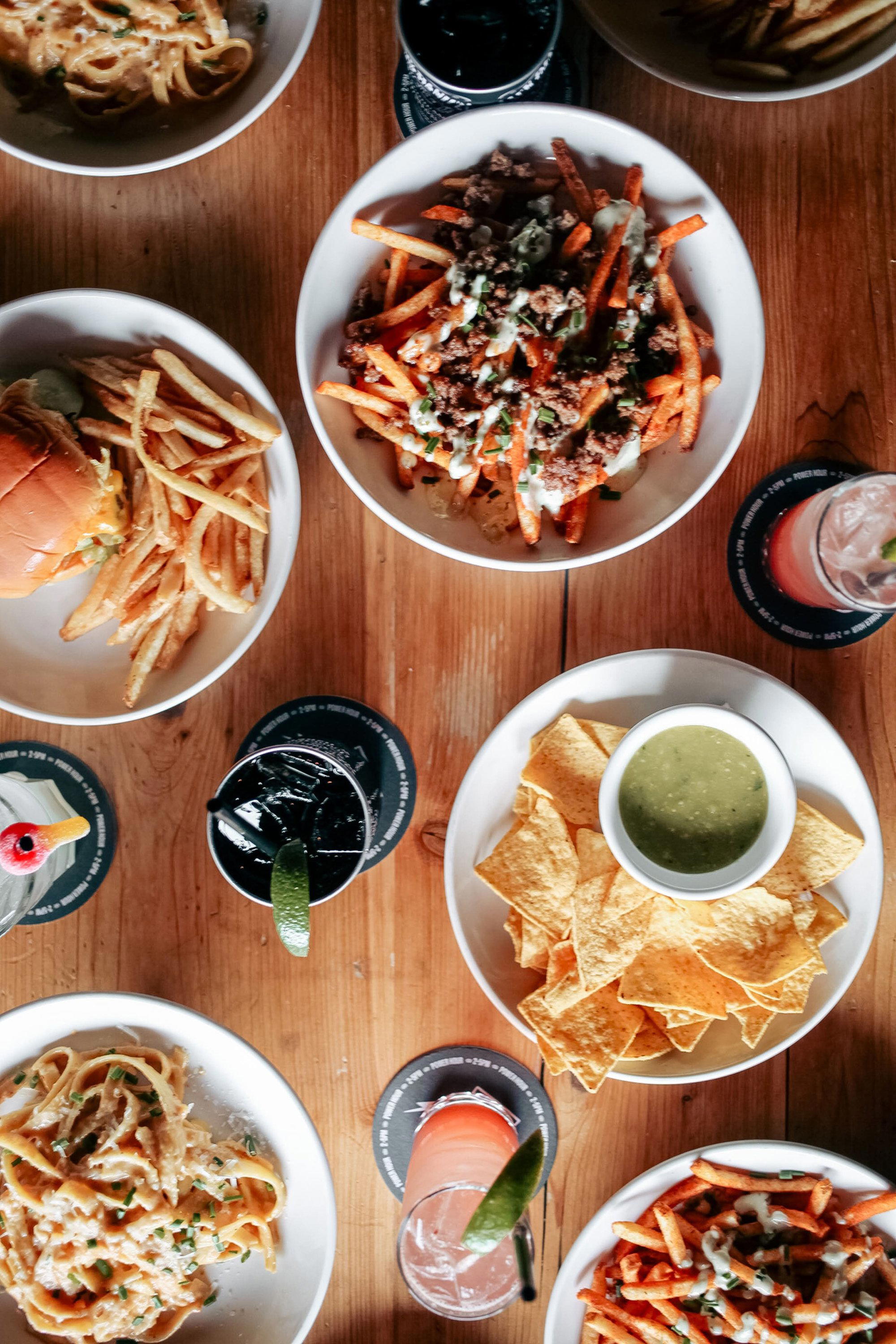
Bloor Street and the Case for Cheap Done Deliberately
El Furniture Warehouse is a restaurant in Toronto's Annex neighborhood, known for American Pub Comfort Food and a casual, walk-in-friendly format. The stretch of Bloor Street West between Bathurst and Spadina has long housed the kind of bars and restaurants that don't require a reservation two months out or a working knowledge of natural wine to feel welcome. El Furniture Warehouse at 410 Bloor St W sits squarely in that tradition: a high-volume, low-cost spot where the entire menu is priced at a flat rate, where the room is loud and deliberately unfussy, and where the point is not to impress but to deliver on a clear and consistent promise.
The Room: Reclaimed, Repurposed, Occupied
The name tells you something before you walk in. Furniture Warehouse locations across Canada have built their identity around reclaimed and mismatched furniture, bare-bones décor, and the deliberate aesthetic of spaces that look assembled rather than designed. The effect is not accidental. In an era when hospitality interiors frequently signal ambition through expensive materials and lighting consultants, the warehouse approach reads as a refusal of that logic. The room is meant to feel occupied, worn-in, and indifferent to trends. Approaching the venue on Bloor West, you're not entering a curated environment, you're entering something closer to a large, busy house where the furniture doesn't quite match and nobody cares. For a certain kind of Toronto night out, that's precisely the appeal.
The flat-pricing model, where every food item lands at the same dollar figure regardless of what it is, removes a decision layer that often creates anxiety in restaurant settings. You order more, you spend more. The relationship is transparent.
Value as an Editorial Position
High-volume rooms with fixed, simple menus tend to generate less plate waste than elaborate tasting menus with multiple courses, because portion calibration is easier and customer expectations are set at the door. Flat-fee pricing also reduces the psychological friction around ordering, which means less food left uneaten on the table.
By contrast, the kaiseki format at Aburi Hana or the Italian tasting approach at DaNico operate at a level of ingredient specificity and sourcing transparency that casual bar dining cannot match. Those are different conversations about sustainability, ones centred on provenance, seasonal sourcing, and reduced supply chains. The warehouse model operates at scale and volume, which creates its own efficiencies. Neither approach is superior; they address different problems in the food system.
Eigensinn Farm in Singhampton represents the farm-to-table end of the spectrum, where sourcing is the entire premise. Fogo Island Inn Dining Room in Newfoundland frames its menu around hyper-local marine and land ingredients as a cultural act. Tanière³ in Quebec City has built its identity around Quebec's terroir and seasonal constraints. El Furniture Warehouse is not in that conversation, but understanding where it sits relative to those venues clarifies the actual range of approaches to responsible food service that Canadian dining now encompasses.
Where It Fits in Toronto's Eating Map
On one side, a tier of serious destination restaurants that require planning: Don Alfonso 1890, the omakase rooms, the contemporary Italian tasting menus. On the other, a category of neighbourhood regulars that function as defaults, places you go when you want food and drink without the overhead of a full dining commitment. The restaurant belongs firmly to the second category, and does so without apology.
The Annex location draws from the immediate neighbourhood: University of Toronto students, Bloor Street regulars, and the kind of mixed crowd that gravitates to spaces where the bill won't require a mental calculation before ordering a second round. The flat-pricing format handles that anxiety structurally rather than relying on the goodwill of the staff to make guests feel comfortable about costs.
For context on how other Canadian cities are handling the casual-to-serious dining spectrum, AnnaLena in Vancouver, Jérôme Ferrer - Europea in Montreal, and Narval in Rimouski each represent different points on the spectrum. Further afield, Restaurant Pearl Morissette in Lincoln and The Pine in Creemore show how Ontario's dining identity extends well beyond the city.
Internationally, the contrast is equally clarifying. Le Bernardin in New York City and Lazy Bear in San Francisco represent the high-commitment, high-cost format that requires travel, planning, and budget. Cafe Brio in Victoria and Busters Barbeque in Kenora are useful Canadian data points for how regional casual dining varies outside major centres.
Visit Details
The restaurant is located at 410 Bloor St W, a short walk from Spadina subway station on the Bloor-Danforth line. The venue operates as a walk-in bar and restaurant, consistent with the flat-pricing, high-turnover model that defines the Furniture Warehouse chain. The dress code is casual. The format suits groups well, given the communal furniture and the absence of a set menu structure that requires the whole table to commit to the same format. The restaurant is open daily from 11 AM to 2 AM and welcomes walk-ins. Coming mid-week or early in the evening reduces that friction considerably.
Category Peers
Comparable venues nearby, for context on price, style, and recognition.
| Venue | Cuisine | Price | Notes |
|---|---|---|---|
| El Furniture WarehouseThis venue — the venue you are viewing | American Pub Comfort Food | $ | Not listed |
| Apiecalypse Now! | Vegan Pizza | $$ | Palmerston-Little Italy |
| Almond Butterfly Bistro | Gluten-Free American Bistro | $$ | Little Italy |
| Bobbie Sue's Mac + Cheese | Gourmet Mac and Cheese | $$ | Trinity Bellwoods |
| SCHOOL Restaurant | American Comfort Brunch | $$ | Liberty Village |
| Prohibition Gastrohouse | American Gastropub | $$ | South Riverdale |
Continue exploring
More in Toronto
Restaurants in Toronto
Browse all →
Bars in Toronto
Browse all →
Hotels in Toronto
Browse all →

At a Glance
- Lively
- Trendy
- Energetic
- Casual Hangout
- Group Dining
- Late Night
- Craft Cocktails
Current opening hours
- Monday
- 11 AM–2 AM
- Tuesday
- 11 AM–2 AM
- Wednesday
- 11 AM–2 AM
- Thursday
- 11 AM–2 AM
- Friday
- 11 AM–2 AM
- Saturday
- 11 AM–2 AM
- Sunday
- 11 AM–2 AM
Hours can change for holidays and private events. Last verified .
Chilled out and hospitable with great tunes, lively and laid-back atmosphere featuring neon signs and bar energy.