On Rue Malar in the 7th arrondissement, Dong Phat occupies a corner of Paris where Vietnamese cooking meets a neighbourhood better known for its proximity to the Eiffel Tower and grand brasseries. The address places it among the 7th's quieter dining options, offering a contrast to the high-ticket French tables that define the arrondissement's reputation.
Pearl is the En Primeur Club membership app — saves, bookings, and concierge access live there. Same editors, same standards.
- Address
- 10 Rue Malar, 75007 Paris, France
- Phone
- +33 1 45 56 16 49
- Website
- dongphat.fr
- Directions
- Get directions
 Saves & bookings on Pearl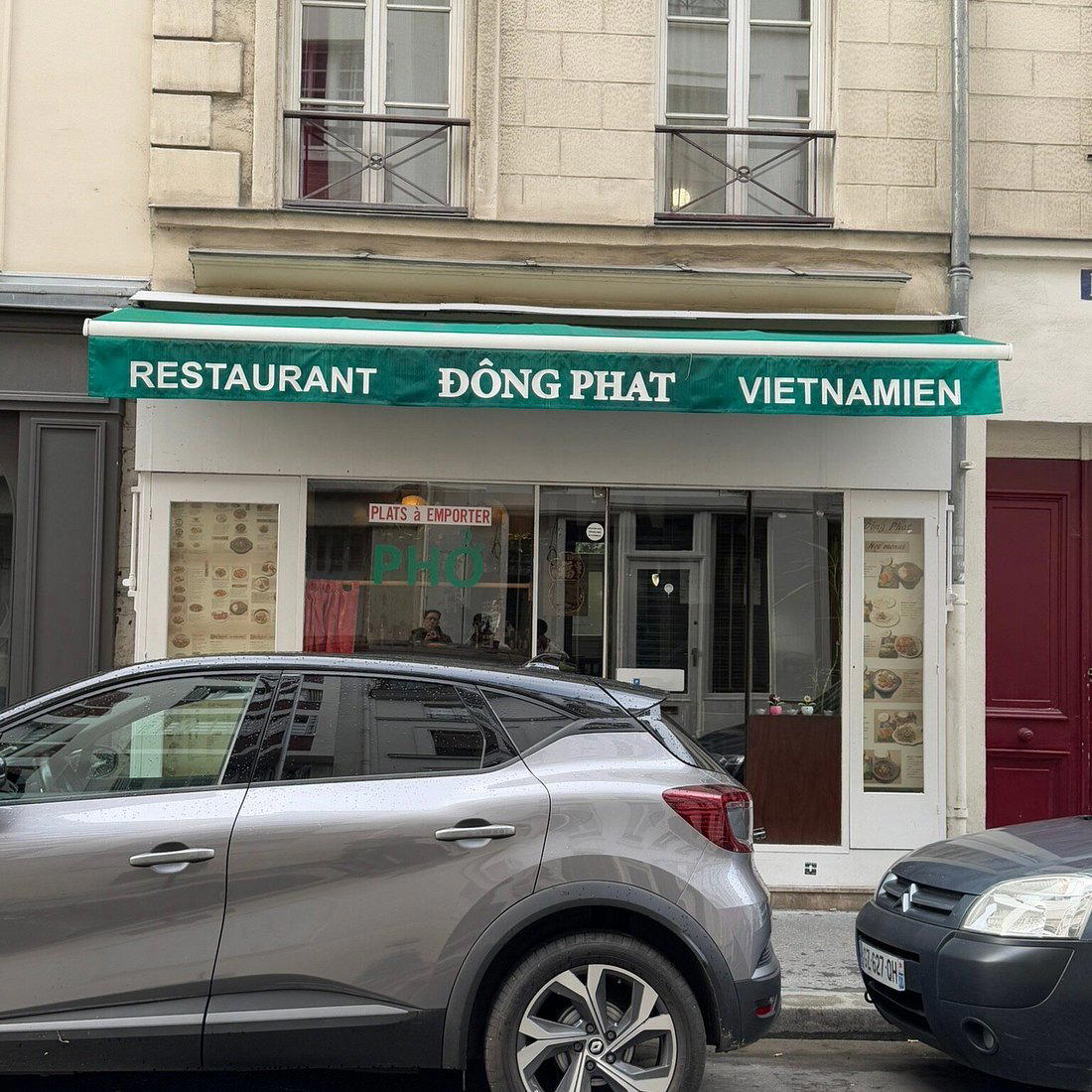
Vietnamese Dining in the 7th: Reading the Room Before the Menu
The 7th arrondissement is not where most visitors expect to find Vietnamese cooking worth seeking out. The neighbourhood's dining identity runs through grand French institutions: the kind of addresses where tasting menus carry triple-digit price tags and the wine list weighs more than the bread basket. Places like Arpège and L'Ambroisie set the tone for what serious eating in this part of Paris is supposed to look like. Against that backdrop, Dong Phat at 10 Rue Malar operates as a counterpoint, a Vietnamese restaurant in a postcode long associated with French haute cuisine.
That tension is worth understanding before you arrive. Paris has a long Vietnamese dining tradition, shaped in part by France's colonial history in Indochina and the waves of Vietnamese immigration that followed. The result, across several decades, is a city with Vietnamese restaurants distributed unevenly across arrondissements, concentrated more heavily in the 13th, around Avenue de Choisy and Avenue d'Ivry, and scattered more thinly in the wealthier western districts. The 7th's Vietnamese options are fewer, which means any address holding its own there operates in a specific context: it is not competing against a dense cluster of regional specialists, but rather against the general expectation that the neighbourhood defaults to French.
How the Menu Communicates What the Kitchen Prioritises
In Vietnamese restaurants across Paris, menu architecture tends to signal something specific about the kitchen's priorities. One direct version, a long laminated list running from spring rolls to pho to rice plates, suggests a kitchen built for throughput, designed to serve a broad diaspora audience quickly and affordably. The more focused version, where a shorter card organises dishes by method or region, suggests a different orientation: fewer covers, more attention to preparation, a kitchen that has made choices rather than accommodations.
What Dong Phat's menu communicates falls into the broader pattern of neighbourhood Vietnamese dining in Paris, where the format tends to be accessible and the price point moderate relative to the French fine-dining options nearby. Vietnamese cuisine's structural logic, the interplay between fresh herbs, fermented condiments, slow-cooked broths, and char-grilled proteins, lends itself to menus that reward ordering across multiple dishes rather than anchoring on a single centrepiece. The pho bowl, the banh mi, the bun, the goi cuon: these are not courses in the French sense, but components of a meal architecture that distributes flavour across the table rather than concentrating it on a single plate.
This is a meaningful distinction when you place Dong Phat alongside the French kitchens that dominate its postcode. At Le Cinq or Alléno Paris au Pavillon Ledoyen, the menu is a sequence, a fixed or semi-fixed progression that the kitchen controls. Vietnamese dining, by contrast, tends toward a more participatory structure, the table configures its own meal from a set of components, which changes the dynamic between kitchen and guest considerably.
Rue Malar and the Logic of the Address
Rue Malar sits in the residential core of the 7th, close to the Champ-de-Mars and within easy reach of the Seine. It is a quiet street by Parisian standards, the kind of address that supports neighbourhood restaurants serving a local clientele alongside visitors staying in the area's hotels. The proximity to major tourist infrastructure, the Eiffel Tower draws more annual visitors than almost any monument in Europe, means the street sees foot traffic from people who are not necessarily looking for the arrondissement's most ambitious French tables.
That dual audience, locals and visitors, is a useful frame for understanding how Vietnamese restaurants in this part of Paris position themselves. The 7th does not have the Vietnamese dining density of the 13th, where specialists have spent decades refining regional distinctions between northern pho and southern-style cooking, between Hue's spiced broths and the herb-heavy plates of Saigon. In that context, an address on Rue Malar functions more as a neighbourhood resource than as a destination in the specialist sense.
For anyone already in the 7th and looking to step away from the arrondissement's French defaults, the Contemporary French tables or the classic bistro formats, Dong Phat offers a different register entirely.
Where This Address Sits in the Broader Paris Vietnamese Picture
Paris's Vietnamese dining community has produced restaurants that operate at several different levels of ambition and price. The 13th's established circuit remains the reference point for volume and variety, with decades of community infrastructure behind it. But Vietnamese cooking has spread across the city in formats that range from fast-casual sandwich shops serving banh mi to more considered sit-down addresses where broth quality and sourcing matter to the kitchen.
France's own culinary geography offers useful comparisons for thinking about what proximity to a dominant tradition does to a smaller cuisine's presence. The same dynamic plays out in other contexts: at Flocons de Sel in Megève or Mirazur in Menton, the regional French tradition is so saturated with high-level technique that any kitchen in proximity has to define itself against it. Vietnamese restaurants in the 7th face a version of that pressure, not from fine dining peers in their own cuisine, but from the sheer density of accomplished French cooking around them.
The French dining establishments that have earned sustained international attention, from Troisgros to Paul Bocuse's Auberge du Pont de Collonges, from Bras in Laguiole to Auberge de l'Ill in Illhaeusern, represent one pole of what French dining can be. Vietnamese cooking in Paris occupies a different register, drawing on a distinct culinary logic, a different relationship to time, heat, and condiment. The contrast is not a hierarchy; it is a difference in kind. The restaurant's address on Rue Malar puts those two traditions in unusually close proximity.
For visitors building a Paris dining itinerary around the full range of what the city offers, not only the French fine-dining circuit but the immigrant cuisines that have shaped Parisian eating over the past century, the 7th's Vietnamese options deserve a place in the plan.
Planning Your Visit
The restaurant is located at 10 Rue Malar in the 7th arrondissement. The restaurant is recommended for reservations and has a casual dress code. As with many neighbourhood Vietnamese restaurants in Paris, the format tends toward accessible pricing relative to the 7th's French fine-dining tier, with an average spend of about $20 per person.
Side-by-Side Snapshot
Comparable venues nearby, for context on price, style, and recognition.
| Venue | Cuisine | Price | Notes |
|---|---|---|---|
| Dong PhatThis venue — the venue you are viewing | Authentic Vietnamese | $$ | Not listed |
| Paris Hanoï | Traditional Vietnamese | $$ | Bastille |
| Hanoi Cà Phê | Fusion Vietnamese Brasserie | $$ | 9th Arr. - Opéra |
| Lac-Hong | Authentic Vietnamese | $$ | 16th Arr. - Passy |
| Entre 2 Rives | Authentic Vietnamese | $$ | Gaillon |
| Le Grain de Riz | Traditional Vietnamese from Saigon | $ | Bastille |
Continue exploring
More in Paris
Restaurants in Paris
Browse all →
Bars in Paris
Browse all →
Hotels in Paris
Browse all →
Wineries in Paris
Browse all →
At a Glance
- Cozy
- Casual
- Casual Hangout
- Terrace
Current opening hours
- Monday
- 11:30 AM–4 PM, 6–11 PM
- Tuesday
- 11:30 AM–4 PM, 6–11 PM
- Wednesday
- 11:30 AM–4 PM, 6–11 PM
- Thursday
- 11:30 AM–4 PM, 6–11 PM
- Friday
- 11:30 AM–4 PM, 6–11 PM
- Saturday
- 11:30 AM–4 PM, 6–11 PM
- Sunday
- 11:30 AM–4 PM, 6–11 PM
Hours can change for holidays and private events. Last verified .
Casual family atmosphere in a small intimate space with about 6 tables and a small outdoor terrace.