Din Tai Fung's Xinyi location, set below the ATT 4 Fun complex in Taipei's Xinyi district, is where the chain's industrial-scale dumpling production meets a designed dining room built for visibility and throughput. The glass-walled kitchen has made xiao long bao assembly a public spectacle for decades, and the format remains among the more consistently replicated in Asian dining.
Pearl is the En Primeur Club membership app — saves, bookings, and concierge access live there. Same editors, same standards.
- Address
- 信義區松高路19號B2, 台北市, 110
- Directions
- Get directions
 Saves & bookings on Pearl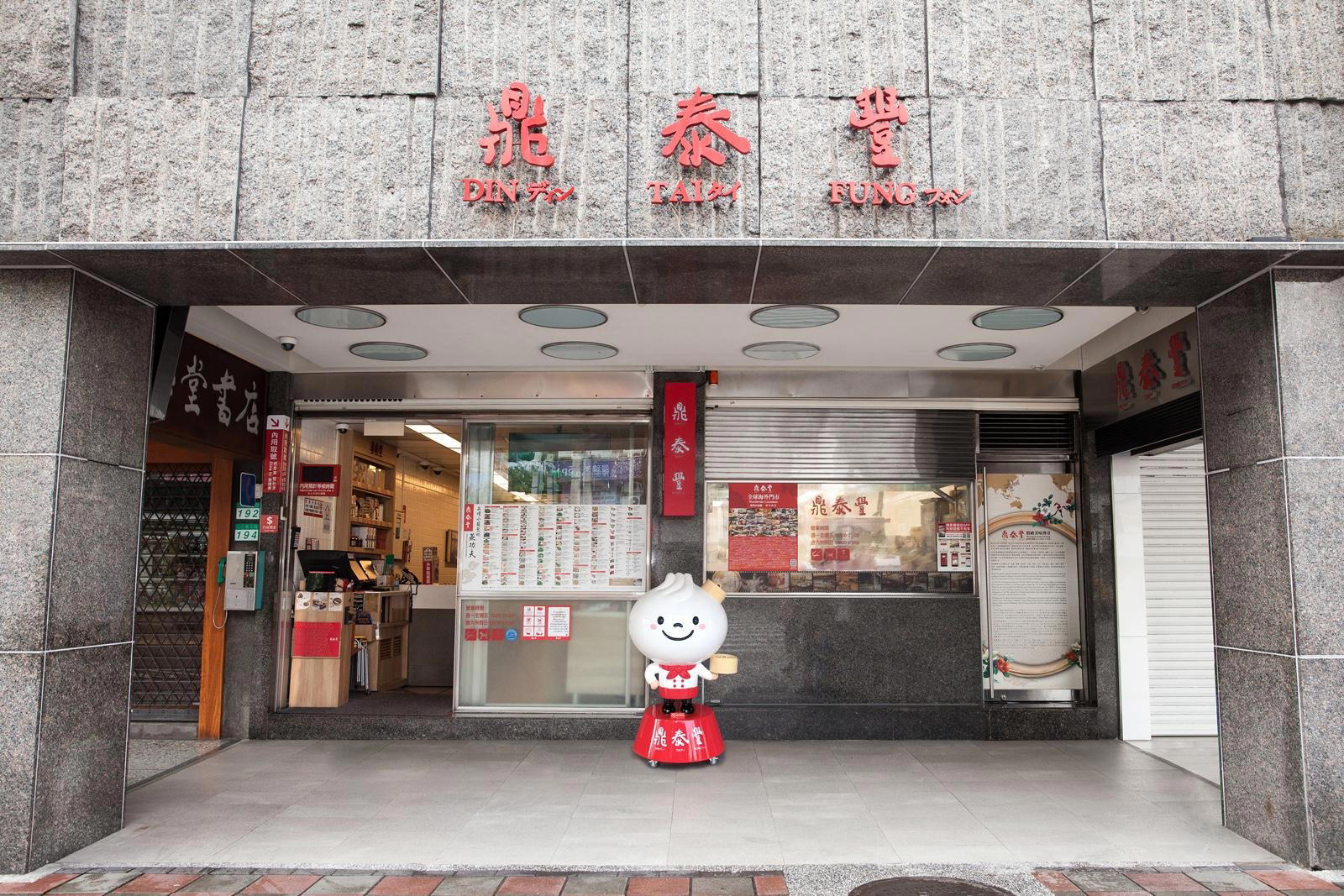
Glass, Steam, and the Architecture of the Open Kitchen
There is a particular kind of restaurant theatre that needs no host, no playlist, and no mood lighting to function. At Din Tai Fung's Xinyi branch, located below the ATT 4 Fun mall on Songgao Road in Taipei's commercial core, the performance is structural: a glass-walled production kitchen positioned so that every diner in the room has a sightline to the folding. The geometry of the space is deliberate. Rows of white-uniformed kitchen workers, visible through floor-to-ceiling glazing, pleat xiao long bao at a pace and consistency that reads more like precision manufacturing than cooking. That visibility is the design. The dining room is arranged around the spectacle of its own production.
This format, now widely imitated across Asia and beyond, was not an aesthetic gesture when Din Tai Fung first introduced it. Open kitchens in casual dining carry an implicit message about cleanliness and process transparency, signals that matter enormously in the context of a Taiwanese dumpling house building international credibility. At the Xinyi location, the architecture doubles as argument: watch the fold, count the pleats, trust the wrapper. The kitchen is the trust signal.
What Xinyi Tells You About the Chain's Ambitions
Din Tai Fung's Xinyi branch sits inside one of Taipei's highest-footfall retail corridors, adjacent to the Taipei 101 development and within a district that concentrates the city's highest-end flagship dining. Its neighbours in the area include Michelin-starred operations like Le Palais (Cantonese, with long-standing Michelin recognition) and Taïrroir, which works Taiwanese ingredients into a French-inflected tasting format. Din Tai Fung operates in a different register entirely, with a volume-led model and accessible price positioning, but the decision to anchor in Xinyi places it in conversation with Taipei's fine-dining concentration rather than retreating to a neighbourhood restaurant context.
That placement reflects a broader truth about the brand's competitive identity. Din Tai Fung occupies a tier that has almost no direct peers: a volume restaurant with consistent technical standards, international franchise infrastructure, and enough critical recognition to be discussed alongside Michelin-calibre operations in the same city. For context, the fine-dining ceiling in Taipei is occupied by operations like logy, L'Atelier de Joël Robuchon, and Molino de Urdániz. Din Tai Fung sits well below that ceiling on price and format, but well above the general casual-dining tier on execution consistency.
The Xiao Long Bao as Standard Unit
The xiao long bao, the soup dumpling that built Din Tai Fung's reputation, has been subject to an unusual degree of documented standardisation. The chain has publicly specified the target number of pleats (18), the wrapper thickness, and the ratio of filling to gelatin-based broth. Whether any individual dumpling hits exactly those parameters on any given service is not something that can be independently verified from outside the kitchen, but the specification itself is significant: it describes a restaurant operating a replicable technical process at scale, not a kitchen relying on individual cook judgment.
That model of standardised production has become among the more studied in Asian hospitality. Culinary programs and restaurant operators across the region have examined how Din Tai Fung maintains output consistency across dozens of locations globally while keeping the product recognisable. The Xinyi kitchen's visibility is part of the answer: the open format allows floor managers and production leads to monitor compliance in real time. It is a management system built into the architecture.
For diners sitting in the main room, the practical implication is predictability. The product that arrives at a table in Xinyi should be calibrated to the same specification as the one served in the chain's Tokyo, Singapore, or Los Angeles branches. That consistency across markets is rarer than it sounds in the dumpling category, where quality variance between locations is common even within Taiwan.
Where Din Tai Fung Sits in the Taiwan Dining Picture
Taiwan's restaurant culture runs deep and in multiple directions simultaneously. At the high end, Taipei's Michelin scene has grown to include operations that would register in any global dining city, from the tasting menus of JL Studio in Taichung to serious Cantonese cooking in the capital. Beyond Taipei, destinations like A Xia in Tainan and GEN in Kaohsiung demonstrate that the country's culinary depth extends well past the capital's boundaries.
Din Tai Fung occupies none of those tiers, and that is precisely what makes its model legible. It is a volume restaurant with documented technical process, accessible pricing, and a format reproducible enough to function across continents. The Xinyi branch is the version of that model placed in Taipei's most international-facing neighbourhood, which means its clientele skews heavily toward first-time visitors to Taiwan who have heard the name before landing. That is not a criticism; it is a description of how the space functions within the city's dining ecosystem.
For visitors building a broader Taiwan itinerary, the dining landscape beyond Taipei includes neighbourhood-level operations like GARDENh in Yonghe District and Volcanic Rock in Zhubei City. The contrast between those operations and Din Tai Fung's Xinyi branch is instructive: one model is rooted in place and local patronage; the other is designed to travel.
Know Before You Go
| Location | 信義區松高路19號B2, Xinyi District, Taipei 110 (below ATT 4 Fun mall) |
|---|---|
| Getting There | A short walk from Taipei City Hall MRT station (Blue Line). The basement entrance is accessible from the mall concourse. |
| Booking | Queue-based entry is standard practice at this location. |
| Price Tier | Accessible relative to the Xinyi neighbourhood average. |
| Comparable Context | For Michelin-level Taipei dining in the same district, see Le Palais or Taïrroir. For international fine-dining comparisons, Le Bernardin and Atomix in New York City represent the tasting-counter tier Din Tai Fung deliberately does not occupy. |
Comparison Snapshot
Comparable venues nearby, for context on price, style, and recognition.
| Venue | Cuisine | Price | Notes |
|---|---|---|---|
| 鼎泰豐 Din Tai FungThis venue — the venue you are viewing | Taiwanese Dim Sum | $$ | Not listed |
| 香港波記茶餐廳 | Hong Kong-Style Cha Chaan Teng | $$ | 東區 |
| Restaurant Pinecone | Modern Taiwanese Bistro | $$ | Fujin |
| æ³ ç±³é£å | Modern Taiwanese | $$$ | Longyuan |
| 吉品海鮮餐廳 Ji Pin Restaurant | Authentic Cantonese Fine Dining & Dim Sum | $$$ | Da'an District (Xinyi/Zhongshan areas) |
| Yong He Soy Milk King (永和豆漿大王) | Traditional Taiwanese Breakfast | $ | Yonghe District |
Continue exploring
More in Taipei
Restaurants in Taipei
Browse all →
Bars in Taipei
Browse all →
Hotels in Taipei
Browse all →
Wineries in Taipei
Browse all →
At a Glance
- Well Known
- Classic
- Family
- Casual Hangout
- Group Dining
- Open Kitchen
Bright, bustling atmosphere with efficient service and open kitchen views.