Changle Xin Fan Zhuang
On Eldridge Street in Manhattan's Lower East Side, Changle Xin Fan Zhuang draws a loyal neighbourhood following with Shanghainese-rooted cooking that rarely courts attention beyond its block. The dining room runs on repeat custom: regulars arrive knowing what they want before they sit down, and the kitchen obliges with the consistency that only comes from cooking the same things well for a long time.
Pearl is the En Primeur Club membership app — saves, bookings, and concierge access live there. Same editors, same standards.
- Address
- 36 Eldridge St, New York, NY 10002
- Phone
- +12122192228
- Directions
- Get directions
 Saves & bookings on Pearl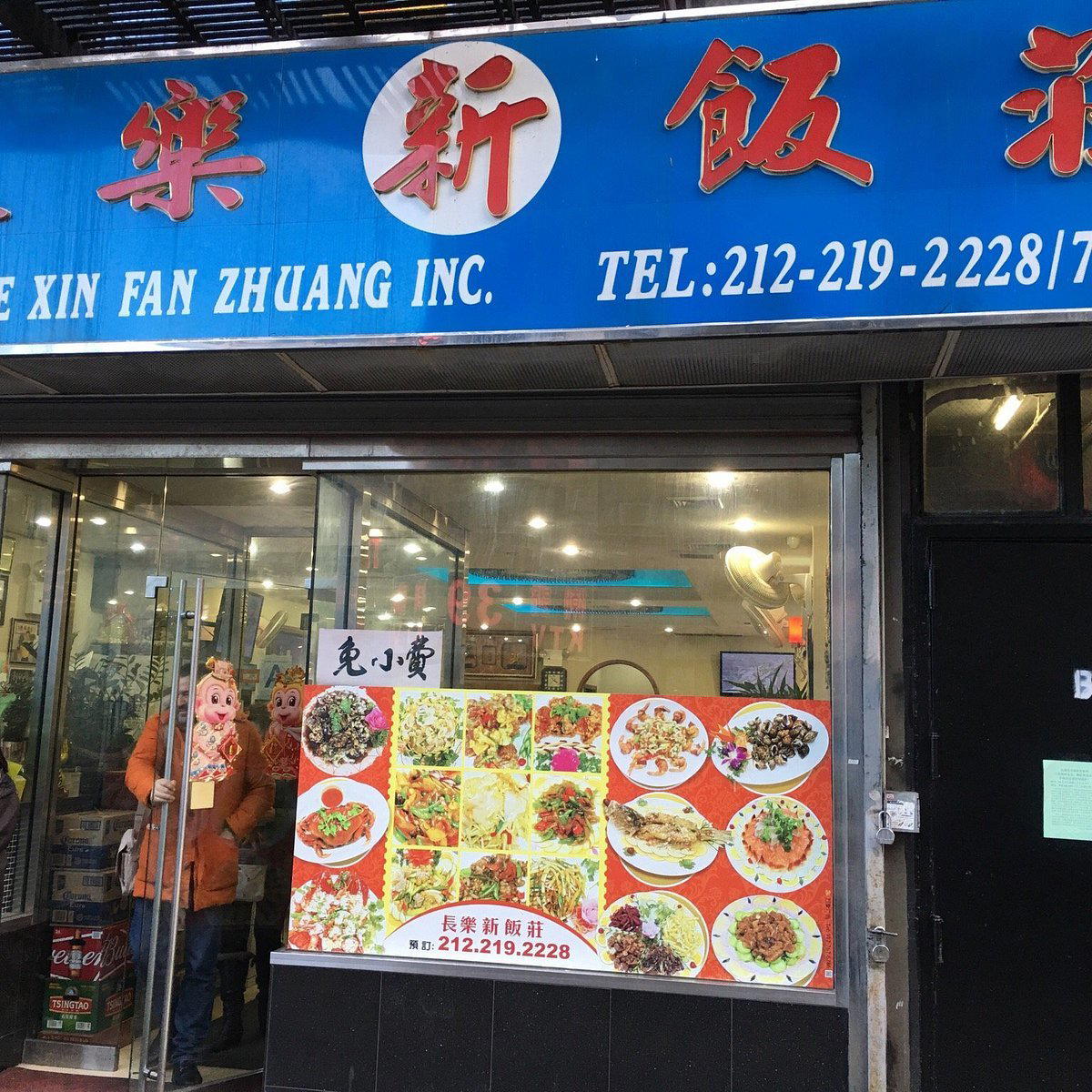
Changle Xin Fan Zhuang is a casual Authentic Fuzhou Chinese restaurant at 36 Eldridge St, New York, NY 10002, with an estimated price of about $20 per person. Eldridge Street has a longer culinary memory than most of Manhattan. Long before the Lower East Side became a destination for tasting menus and natural wine bars, this stretch of the neighbourhood was running on immigrant kitchen logic: cook what you know, price it honestly, and trust that the people who find you will come back. Changle Xin Fan Zhuang, at 36 Eldridge St, sits inside that tradition. It is not competing with the Le Bernardin tier of New York dining, nor with the precision-driven omakase model of Masa. It is operating in a different register entirely, one where the measure of quality is repeat visits, not first impressions.
The Regulars’ Contract
In Chinese neighbourhood restaurants of this type, the relationship between a loyal customer and a kitchen is transactional in the leading sense: the diner knows the menu deeply, the kitchen knows the diner’s preferences, and the exchange runs efficiently in both directions. This is not the studied hospitality of a destination restaurant. There are no tableside explanations, no printed narratives about provenance. The authority is assumed on both sides. Regulars at places like Changle Xin Fan Zhuang tend to order from a mental shortlist that has nothing to do with what’s printed on the menu and everything to do with what the kitchen does consistently well. That unwritten menu, negotiated over dozens of visits, is the real product.
This model has its parallels across the American dining spectrum. The kind of loyalty it produces is distinct from what drives repeat bookings at, say, Eleven Madison Park or Atomix. Those are occasion restaurants. A place like this is a rhythm restaurant: it fits into the week, not into a special calendar.
Shanghainese Cooking in the Lower East Side
The name Changle references Changle Road in Shanghai, one of the city’s better-known addresses for traditional home-style cooking. The connection signals an orientation toward the kind of Shanghainese food that prioritises braised and slow-cooked preparations, dishes with sweetness balanced against soy and rice wine, and textures that reward patience rather than heat. This is not the Cantonese-adjacent cooking that dominated early Chinese-American restaurant culture, nor the Sichuan-focused spice programming that has become the dominant Chinese dining narrative in many American cities over the past decade.
Shanghainese cooking in New York occupies a specific niche. It tends toward richer, stickier sauces, an emphasis on pork and freshwater fish, and a broader tolerance for sweetness in savoury dishes than most other regional Chinese traditions. For diners whose reference points are the $$$$ tasting menu circuit, represented locally by Per Se, the cooking logic here is a deliberate reorientation. The complexity is in the technique and the ingredient knowledge, not in the number of courses.
The Lower East Side Context
The Lower East Side’s Chinatown-adjacent blocks have been absorbing new restaurant concepts for years while continuing to support the older neighbourhood infrastructure. Eldridge Street specifically has held its character longer than some surrounding streets, partly because the building stock and the demographic base have remained more stable. Restaurants on this block do not generally rely on foot traffic from diners arriving by app recommendation. Discovery here still tends to happen laterally, through community networks and word of mouth, which is part of why the regular-customer model holds.
For visitors whose New York dining frame is built around the high-profile rooms covered in our full New York City restaurants guide, a block like this represents a different kind of value proposition. The comparison set is not Blue Hill at Stone Barns or The French Laundry. It is not even the ambitious mid-tier rooms that have proliferated across Brooklyn and the West Village. The frame of reference is neighbourhood utility, cultural specificity, and the kind of consistency that only comes from a kitchen not chasing anything beyond its own standard.
What Keeps People Returning
Across the category of Shanghainese neighbourhood restaurants in New York, the retention mechanism is almost always the same: a handful of dishes executed with enough precision that replication elsewhere is difficult, combined with pricing that makes return visits a low-friction decision. The emotional logic is different from what drives loyalty at destination restaurants like Smyth in Chicago or Providence in Los Angeles, where the draw is novelty, seasonal menu evolution, or a chef’s evolving point of view.
At a place like Changle Xin Fan Zhuang, the draw is the opposite of novelty. The value is in knowing exactly what you’re going to get. Regulars return not despite the predictability but because of it. That’s a different kind of culinary confidence, and it’s one that the New York dining conversation, oriented as it is toward the new and the awarded, tends to undervalue. The same pattern holds at similar operations in other cities: think of the unpretentious neighbourhood anchors that persist quietly alongside the highly programmed rooms at places like Single Thread Farm in Healdsburg or Addison in San Diego.
In New York specifically, the density of the restaurant market means that the neighbourhood restaurant that survives on regulars is making a quiet argument about quality every time it opens its doors. The high-turnover, trend-dependent model that dominates many Manhattan dining corridors is a different business entirely. A restaurant that works on repeat custom over years is, by definition, doing something right.
Comparable Options
Comparable venues nearby, for context on price, style, and recognition.
| Venue | Cuisine | Price | Notes |
|---|---|---|---|
| Changle Xin Fan ZhuangThis venue — the venue you are viewing | Authentic Fuzhou Chinese | $$ | Not listed |
| Buddha Bodai Vegetarian Restaurant | Kosher Vegetarian Chinese | $$ | Chinatown-Two Bridges |
| Baohaus | Taiwanese Gua Bao & Street Food | $$ | East Village |
| Evergreen On 38 | Shanghainese & Szechuan with Dim Sum | $$ | Midtown-Times Square |
| Breeze | Sichuan with Dim Sum | $$ | Greenpoint |
| Mazu Szechuan Cuisine | Polished Szechuan Cuisine | $$ | Murray Hill-Kips Bay |
Continue exploring
More in New York City
Restaurants in New York City
Browse all →
Bars in New York City
Browse all →
Hotels in New York City
Browse all →






At a Glance
- Lively
- Casual Hangout
Current opening hours
- Monday
- 11 AM–12 AM
- Tuesday
- 11 AM–12 AM
- Wednesday
- 11 AM–12 AM
- Thursday
- 11 AM–12 AM
- Friday
- 11 AM–12 AM
- Saturday
- 11 AM–12 AM
- Sunday
- 11 AM–12 AM
Hours can change for holidays and private events. Last verified .
Colorfully lit with a casual, no-frills Chinatown atmosphere.