
World's 50 Best #34
Our verdict
Dieter Mueller earned back-to-back placements in the World's 50 Best Restaurants in 2005 and 2006, placing German fine dining on the international map from an address in Mönchengladbach. The restaurant operates within a tradition of rigorous classical technique applied to regional German produce, sitting in the upper tier of the country's fine dining establishments alongside peers recognised by Michelin and the broader critical establishment.

Pearl is the En Primeur Club membership app, where members save venues, book tables and use the concierge.
The menu
What to order
- Amuse-Bouche Menu
- Foie gras variations
- Venison saddle
Where German Fine Dining Meets the Rhineland
Alter Markt sits at the civic heart of Mönchengladbach, a mid-sized Rhineland city that most international visitors pass over in favour of Düsseldorf or Cologne, both within easy reach by train. That geography matters when thinking about what Dieter Mueller represents: a serious fine dining address operating not within the gravitational pull of a major gastronomic capital, but in a city whose restaurant scene draws from the agricultural and cultural fabric of the lower Rhine region. The setting, at street level on one of the city's older squares, places the restaurant within walking distance of the historic centre without the performative grandeur of a country estate or a hotel lobby approach. This is a format more common in the French tradition, where a town's finest table occupies a bourgeois townhouse rather than a converted castle, and it carries with it a particular kind of authority.
The Significance of Back-to-Back 50 Best Rankings
In 2005 and 2006, Dieter Mueller appeared at number 39 and number 34 respectively in the World's 50 Best Restaurants list, at a time when that ranking was establishing itself as a serious international benchmark alongside Michelin. Germany's representation on that list during those years was limited, and an address in a city like Mönchengladbach holding that position spoke to the kitchen's capacity to generate the kind of critical attention normally associated with Berlin, Munich, or Hamburg addresses.
For comparison, German fine dining peers such as Aqua in Wolfsburg and Schwarzwaldstube in Baiersbronn have continued to hold three Michelin stars, while Vendôme in Bergisch Gladbach and JAN in Munich operate at the two-star tier. Dieter Mueller's 50 Best history places it in a lineage that predates many of those consolidated reputations, making it a reference point for understanding how German fine dining was positioning itself internationally in the mid-2000s.
Rhineland Produce and the Logic of Ingredient Sourcing
The lower Rhine region is not, at first glance, the most celebrated agricultural territory in Germany. It lacks the prestige of Baden's market gardens, the Moselle valley's wine-growing specificity, or Bavaria's dairy tradition. What it does offer is proximity: to Dutch market garden culture immediately across the border, to the river system that has historically supplied freshwater fish to this part of the country, and to the flat, fertile agricultural land of the Rhineland plain that supports root vegetables, brassicas, and livestock farming at scale. Fine dining kitchens in this region have always had to build sourcing relationships that extend slightly further than their immediate surroundings, pulling from the Eifel highlands to the south and west, the Bergisches Land to the east, and the broader network of German artisan producers that emerged more formally as a supply chain for serious kitchens in the 1990s and 2000s.
German fine dining at the level Dieter Mueller occupied in its 50 Best years was characterised by a serious engagement with classical French technique applied to those regional materials. This is a pattern visible across the country's leading addresses: Waldhotel Sonnora in Dreis, Schanz in Piesport, and Victor's Fine Dining by Christian Bau in Perl all operate in small or mid-sized towns where proximity to specific regional produce, rather than urban density, defines what the kitchen can credibly put on the plate. The sourcing logic runs in the opposite direction from a city restaurant: rather than accessing a broad urban supply network, these addresses build depth in a narrower geographic radius.
Ingredient provenance at this level of German fine dining is also, increasingly, a statement about the relationship between kitchen and producer. The supply chains that support restaurants in the 50 Best bracket are not accidental; they reflect years of direct relationships with farmers, fishmongers, and small-scale processors who understand the quality tolerances a serious kitchen requires. That infrastructure, once established in a region, tends to persist and support successive generations of serious cooking in the same area.
Placing Dieter Mueller Within German Fine Dining's Arc
German fine dining has undergone significant structural change since the mid-2000s. The country now supports a wider range of formats at the leading end, from the highly creative counter-service model represented by CODA Dessert Dining in Berlin to the classical hotel dining tradition maintained by Restaurant Haerlin in Hamburg and EssZimmer in Munich. The broader ecosystem also includes addresses like ES:SENZ in Grassau and Bülow Palais in Dresden, which suggest that serious German cooking is now distributed across the country in ways that no longer require a concentration in a handful of prestige cities.
Dieter Mueller's back-to-back 50 Best appearances came at a moment when this diversification was beginning to accelerate, and the restaurant's Mönchengladbach address was itself an argument for the geographic spread of serious cooking. The Rhineland, with its historic connections to both French and Dutch culinary traditions, and its access to the broader agricultural output of western Germany, has always had the raw materials to support fine dining at this level. What the 50 Best rankings confirmed was that the critical establishment had caught up with what the region's leading kitchens were already doing. You can find more of what this city offers across our full Gladbach restaurants guide, and the wider picture of accommodation, drinking, and experiences is covered in our full Gladbach hotels guide, our full Gladbach bars guide, our full Gladbach wineries guide, and our full Gladbach experiences guide.
For visitors planning a broader circuit of serious German cooking in the west of the country, Mönchengladbach sits within comfortable driving distance of several other reference addresses. Bagatelle in Trier and the Moselle valley addresses are roughly two hours south; the Eifel and Bergisches Land kitchens are closer. The city is also well connected by rail to Düsseldorf and Cologne, making it a realistic addition to a broader western Germany itinerary rather than a standalone destination.
Planning Your Visit
Dieter Mueller's address at Alter Markt 40, 41061 Mönchengladbach places it in the accessible centre of the city. Mönchengladbach Hauptbahnhof is the main rail hub, with direct connections to Düsseldorf in under 30 minutes and Cologne in approximately 40 minutes, meaning the restaurant is reachable as a day or evening trip from either city. Given the restaurant's 4.8 rating and its established critical reputation, advance booking is advisable; current contact details and hours are best confirmed directly with the venue before travel, as these are subject to change.
Frequently asked questions
Is Dieter Mueller a family-friendly restaurant?
Dieter Mueller operates within German fine dining at the level recognised by back-to-back World's 50 Best rankings (2005, 2006), which typically signals a formal setting oriented toward adult dining. Families with older children who are comfortable in structured restaurant environments may find it suitable, but it is not a venue designed around younger guests.
What's the overall feel of Dieter Mueller?
The address at Alter Markt 40 places the restaurant in Mönchengladbach's civic centre, grounding it in a mid-sized Rhineland city rather than a metropolitan fine dining circuit. That positioning shapes the atmosphere: the seriousness of a twice-ranked 50 Best kitchen without the metropolitan self-consciousness of Düsseldorf or Frankfurt. Expect a composed, formal room oriented around the food.
What's Dieter Mueller known for in terms of accolades?
Dieter Mueller has received recognition including: World's 50 Best Best Restaurants #34 (2006); World's 50 Best Best Restaurants #39 (2005).
What's the best thing to order at Dieter Mueller?
The kitchen's identity is rooted in German fine dining with a Rhineland ingredient logic, so courses built around regional produce have historically been central to the offer. Checking directly with the restaurant at Alter Markt 40 is the most reliable way to understand the current menu.
Side-by-Side Snapshot
| Venue | Cuisine | Price | Awards | Notes |
|---|---|---|---|---|
| Dieter MuellerThis venue (the venue you are viewing) | Contemporary French-Mediterranean Fine Dining | $200–300 | World's 50 Best #34 | Not listed |
| Schwarzwaldstube | Modern French Fine Dining | $150–200 | 3 Michelin Stars · World's 50 Best #47 | French, Classic French |
| Aqua | Contemporary German, Italian/Japanese, Creative | Not listed | Michelin 3 Star | Not listed |
| CODA Dessert Dining | Dessert-Inspired Fine Dining | $200–300 | 2 Michelin Stars · World's 50 Best #79 | Creative |
| Tantris | Modern French, French Contemporary | Not listed | Michelin 2 Star | Not listed |
| Vendôme | Modern German Haute Cuisine | $200–300 | 2 Michelin Stars · World's 50 Best #47 | Modern European, Creative |
Recognition history
Dated appearances from independent guides and award organizations, with the underlying list record or original source where available.
World's 50 Best Restaurants #34
World's 50 Best
Full recognition history (2 entries)
World's 50 Best Restaurants #39
World's 50 Best
Continue exploring
More in Gladbach
Restaurants in Gladbach
All restaurants in Gladbach →
Bars in Gladbach
Browse all →
Hotels in Gladbach
Browse all →
Wineries in Gladbach
Browse all →
Dieter Mueller
The wine
- Wine program
- Deep wine list
- Extensive wine list
- Sommelier-led
Details
- Elegant
- Sophisticated
- Intimate
- Classic
- Special Occasion
- Date Night
- Celebration
- Open Kitchen
- Garden
- Historic Building
- Hotel Restaurant
- Extensive Wine List
- Sommelier Led
- Garden
- Tasting Menu
- A La Carte
Current opening hours
- Monday
- Closed
- Tuesday
- Closed
- Wednesday
- 12–10 PM
- Thursday
- 12–10 PM
- Friday
- 12–10 PM
- Saturday
- 12–10 PM
- Sunday
- Closed
Hours can change for holidays and private events. Hours as of .
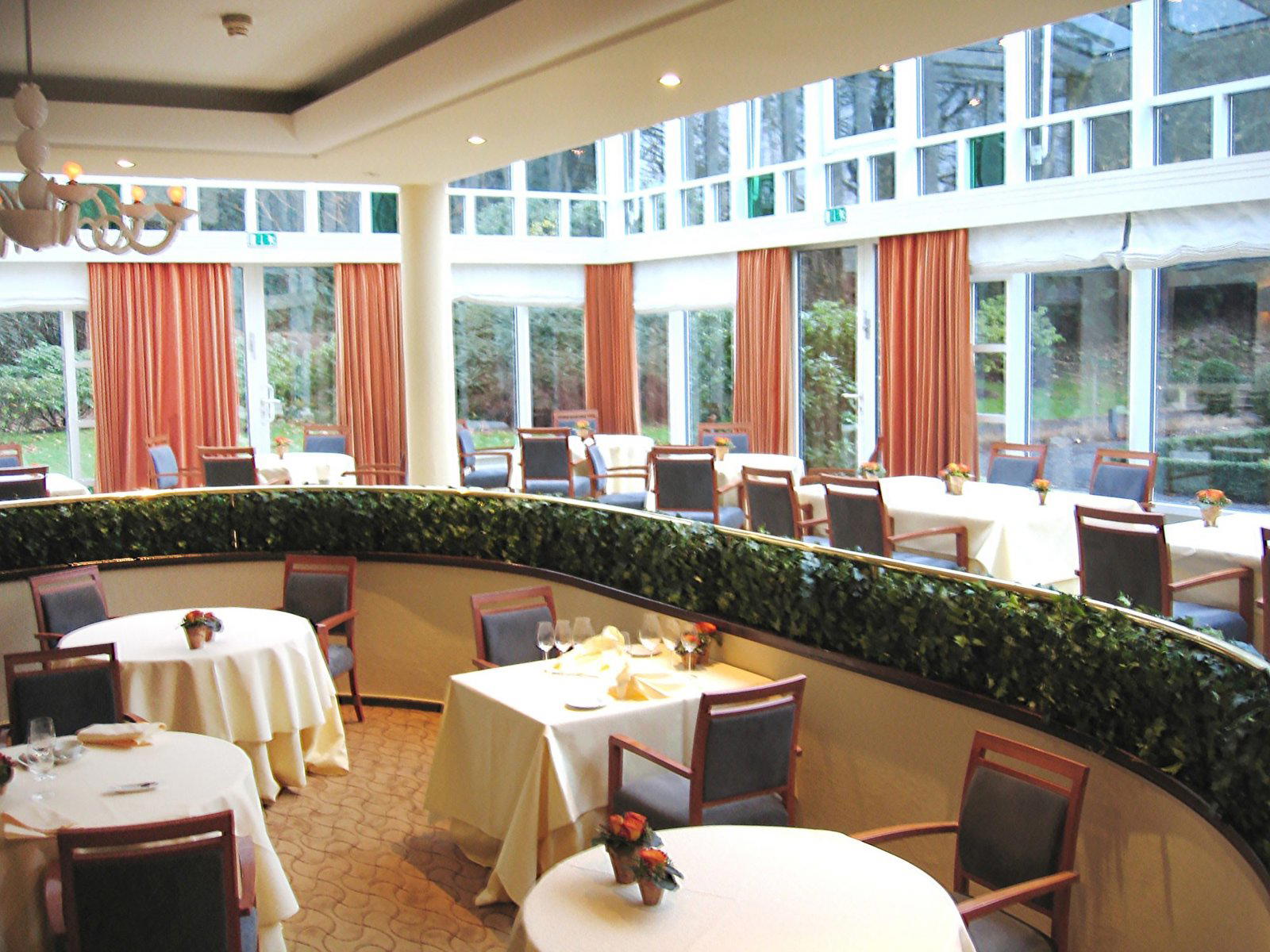
Warm conservatory dining room with garden views, candlelit tables, fresh flowers, transitioning from bright daylight to mellow low-lit evenings.