Dhaba
On Lexington Avenue in Manhattan's Curry Hill corridor, Dhaba sits in a neighbourhood that has long served as New York's most concentrated address for North Indian cooking. The restaurant draws from the regional dhaba tradition of roadside cooking, direct, unfussy, and ingredient-led, placing it in a different register from the white-tablecloth Indian dining that occupies Midtown's higher price tiers.
Pearl is the En Primeur Club membership app — saves, bookings, and concierge access live there. Same editors, same standards.
- Address
- 108 Lexington Ave, New York, NY 10016
- Phone
- +12126791284
- Website
- dhabanyc.com
- Directions
- Get directions
 Saves & bookings on Pearl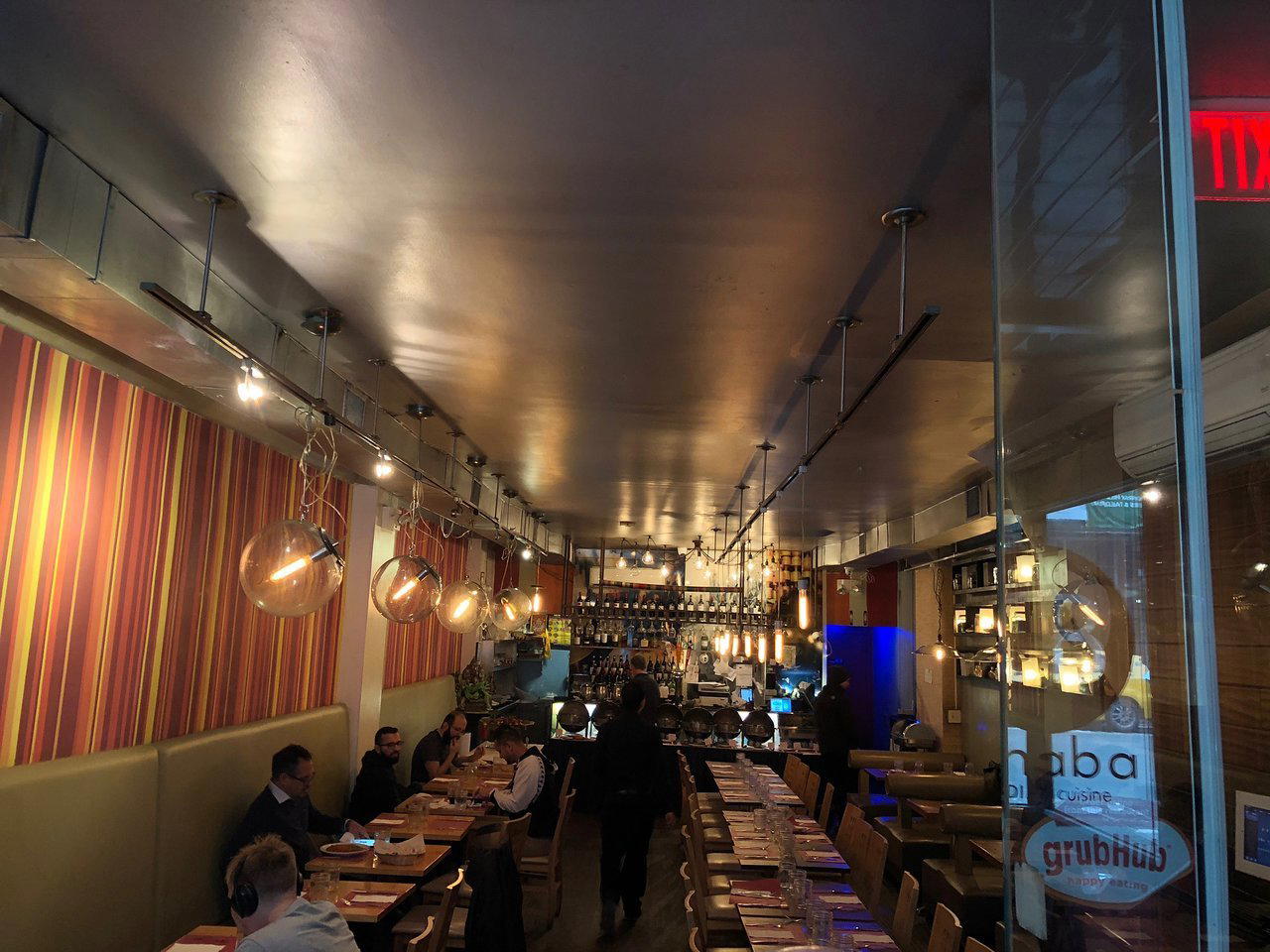
Curry Hill and the Indian Dining Spectrum in New York
Manhattan's Indian restaurant scene splits along a clear axis. At the leading edge, a small number of tasting-menu-format operations charge prices that align with Le Bernardin or Per Se. Below that tier sits a much larger, more diverse field, and within it, Lexington Avenue between 26th and 29th Streets represents the city's densest concentration of subcontinental cooking. This is the neighbourhood locally known as Curry Hill, and it functions as a competitive cluster rather than a destination street for any single address.
Dhaba, at 108 Lexington Ave, operates within that cluster. The dhaba format it references is a northern Indian tradition: roadside canteen cooking, built around high-heat preparation, tandoor work, and recipes that prioritise directness over refinement. That positioning puts Dhaba in a different conversation from the prix-fixe Indian restaurants operating at Manhattan's higher price points, and it also separates it from the fast-casual South Asian formats that have expanded across other New York neighbourhoods in recent years.
The Dhaba Tradition and What It Means at a Manhattan Address
The original dhabas of Punjab and Haryana were truck-stop kitchens, open-air or semi-enclosed, serving long-haul drivers with generous portions of dal makhani, tandoori meats, and roti cooked to order. The format travelled into Indian cities as an affordable alternative to restaurant dining, and eventually into the diaspora, where it acquired varying degrees of polish depending on the market.
In New York, the dhaba reference carries specific editorial weight. The city's Indian dining has historically been represented to international audiences either through the white-tablecloth tier or through the Jackson Heights corridor in Queens, which runs toward South Indian and Bangladeshi cooking. A Curry Hill address that maintains the dhaba format, communal, accessible, centred on northern staples, occupies a gap that neither of those poles fills. The format also reads as low-waste, built around legume-heavy proteins and bread made fresh from simple ingredients.
Sourcing, Sustainability, and the Case for Legume-Forward Kitchens
Indian cooking, particularly in its northern dhaba register, is structurally well-aligned with contemporary arguments about sustainable protein. Dal preparations, whether the slow-cooked dal makhani or the sharper, more acidic dal tadka, derive most of their body from lentils and pulses, which carry a significantly lower carbon footprint than animal proteins at equivalent volumes. This is not a recent innovation; it is a structural feature of the cuisine that long predates sustainability as a marketing category.
Venues that have built their identity explicitly around sourcing ethics, Blue Hill at Stone Barns in Tarrytown, Single Thread Farm in Healdsburg, or Atelier Moessmer Norbert Niederkofler in Brunico, make that story central to their editorial identity and their price structure. The dhaba format does not operate that way; the sustainability argument is embedded in tradition rather than foregrounded in positioning. That distinction matters for readers evaluating how Indian cooking in New York relates to the broader shift toward lower-impact menus that has shaped American fine dining at venues like Eleven Madison Park and Smyth in Chicago.
Tandoor cooking, another dhaba staple, also involves specific fuel and technique considerations. A properly maintained clay tandoor operates at temperatures above 450°C and cooks proteins rapidly, reducing total cooking time relative to lower-heat alternatives. The bread, naan, tandoori roti, is made to order in short cycles, which limits over-production waste in ways that batch-baked restaurant bread programs rarely achieve.
Curry Hill in Competitive Context
Readers planning a New York dining itinerary that includes a Curry Hill stop should understand the neighbourhood's operating logic. This is not a destination precinct in the way that Tribeca is for multi-course tasting menus or the West Village has become for natural wine bars. Curry Hill functions through density: a dozen-plus Indian, Pakistani, and Bangladeshi restaurants within a four-block radius means that any single address competes on price, consistency, and familiarity rather than on scarcity or exclusivity.
That context places Dhaba in a different competitive set than the $$$$ tier restaurants that anchor New York's fine-dining conversation, Masa, Atomix, or Per Se, and aligns it with the city's neighbourhood-restaurant tier, where repeat local custom matters as much as destination dining traffic. For visitors, that is useful framing: a Curry Hill meal is complementary to, rather than substitutable for, the high-end tasting-menu circuit. It represents a different argument about what New York Indian cooking can be.
Planning Your Visit
Dhaba is located at 108 Lexington Ave, New York, NY 10016, in the Curry Hill section of Murray Hill. The nearest subway access is the 6 train at 28th Street, one block north. The neighbourhood is walkable from Gramercy and NoMad. Regular hours run Mon to Thu 11 AM to 12 AM, Fri and Sat 11 AM to 1 AM, and Sun 11 AM to 12 AM. Reservations are recommended.
Compact Comparison
Comparable venues nearby, for context on price, style, and recognition.
| Venue | Cuisine | Price | Notes |
|---|---|---|---|
| DhabaThis venue — the venue you are viewing | Not listed | $$ | Not listed |
| Bukhara Grill | Not listed | $$ | East Midtown-Turtle Bay, North Indian Tandoori & Curry |
| Atithi Indian Cuisine | Williamsburg, Authentic Indian Cuisine | $$ | Not listed |
| Bukhara Grill: Indian Spice Rave & Catering NYC | Not listed | $$ | Murray Hill-Kips Bay, North Indian Tandoor & Curry House |
| Curry In a Hurry | Not listed | $ | Murray Hill-Kips Bay, Authentic Indian Curry House |
| Saravanaas | Not listed | $$ | Gramercy, Authentic South Indian Vegetarian |
Continue exploring
More in New York City
Restaurants in New York City
Browse all →
Bars in New York City
Browse all →

Hotels in New York City
Browse all →






At a Glance
- Lively
- Trendy
- Group Dining
- Casual Hangout
- Late Night
- Open Kitchen
Current opening hours
- Monday
- 11 AM–12 AM
- Tuesday
- 11 AM–12 AM
- Wednesday
- 11 AM–12 AM
- Thursday
- 11 AM–12 AM
- Friday
- 11 AM–1 AM
- Saturday
- 11 AM–1 AM
- Sunday
- 11 AM–12 AM
Hours can change for holidays and private events. Last verified .
Lively and trendy atmosphere with warm hospitality in a tidy, bustling space evoking Punjabi truck stop energy.