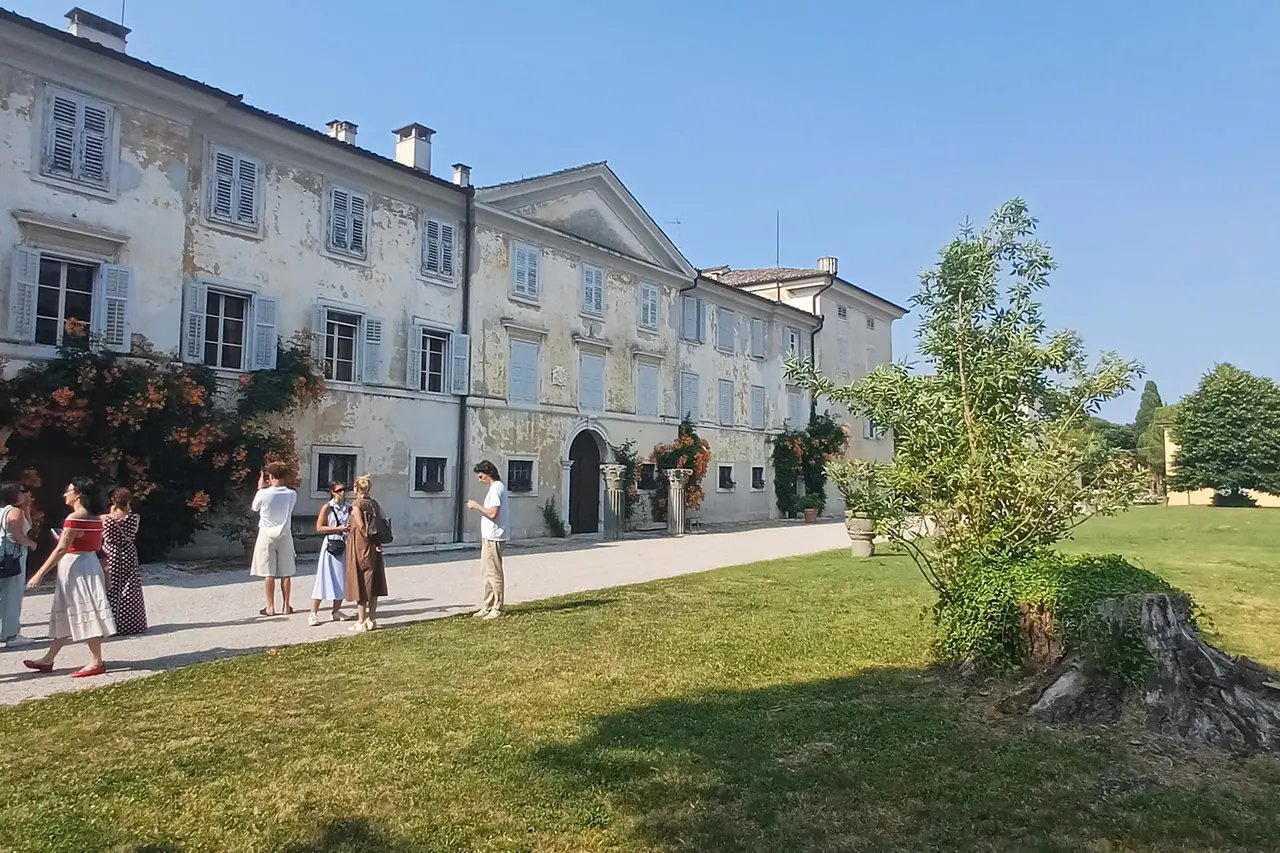
Delfin pairs Traditional Slovenian Seafood with a casual, conversational room in a historic building, making it suited to lunch or dinner without a formal dress code.
Pearl is the En Primeur Club membership app — saves, bookings, and concierge access live there. Same editors, same standards.
- Address
- Kosovelova ulica 4, 6330 Piran, Slovenia
- Phone
- +38656732448
- Directions
- Get directions
 Saves & bookings on Pearl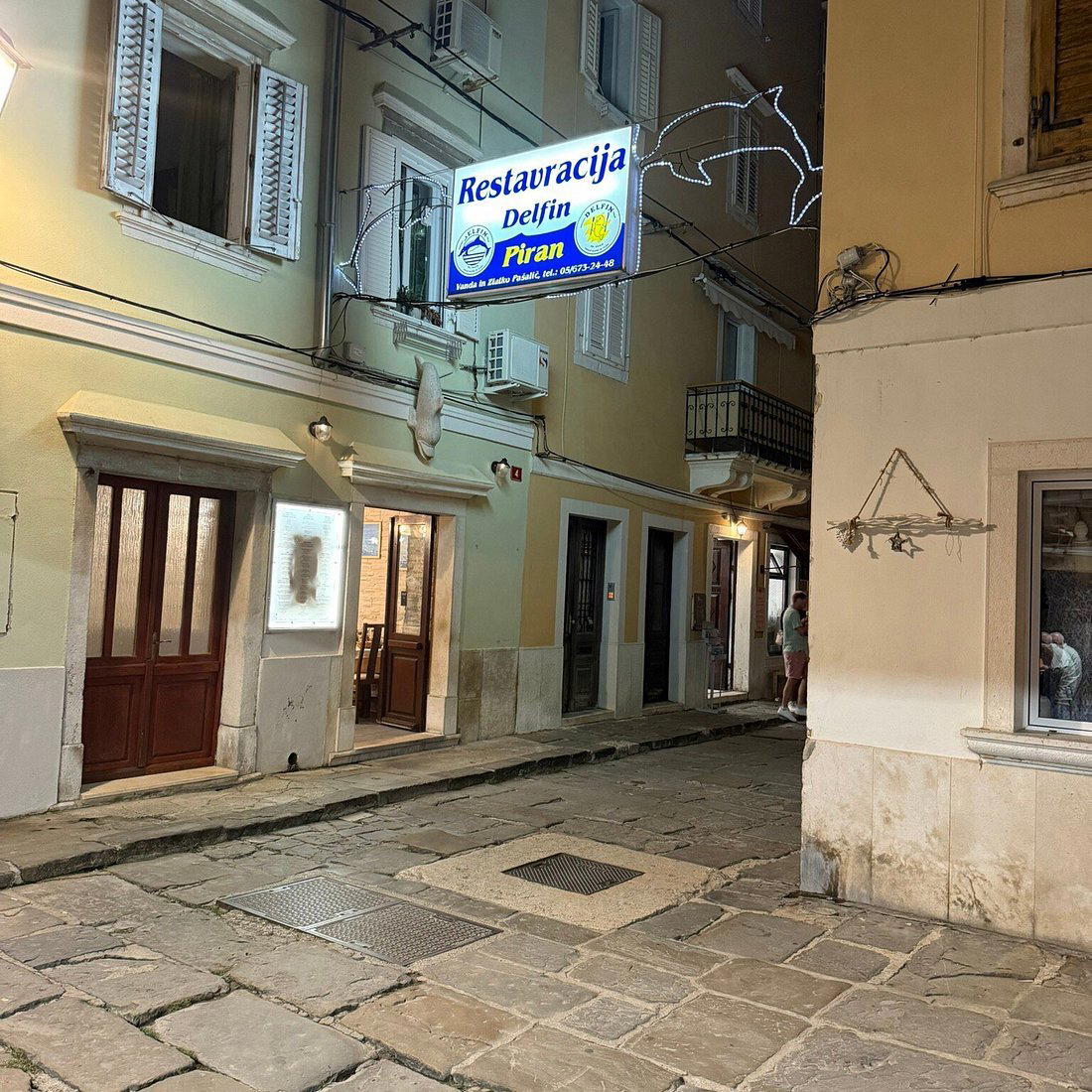
Where the Adriatic Begins on the Plate
Kosovelova ulica runs close to Piran's old waterfront, where the town's Venetian-era geometry gives way to the sea. The streets here are narrow enough that the smell of salt air arrives before any signage does. This is the sensory context in which Delfin operates. In Piran, the argument for ingredient-led Adriatic cooking does not need to be constructed, it is simply the consequence of where the town sits.
The Adriatic Pantry: What Piran's Waters Produce
Slovenia's coastline runs for just under 47 kilometres, which makes it among the shortest national seaboards in Europe. That brevity concentrates attention. Piran sits at the tip of a narrow peninsula in the Gulf of Piran, part of the northern Adriatic basin, a shallow, relatively enclosed stretch of water that produces fish and shellfish of a distinct character. The northern Adriatic's lower salinity and cooler seasonal temperatures shape seafood that regional cooks and buyers have long treated differently from Mediterranean catch further south.
The broader context for any seafood-forward table in Piran is the Secovlje saltpans, a protected natural park roughly four kilometres from the town centre. Secovlje salt has been harvested here since the medieval period and carries a recognised geographic designation. For kitchens sourcing locally, it is not a stylistic choice so much as a historical default, the same material that preserved fish for trade centuries ago now seasons tables in the restaurants that line Piran's harbour and back streets alike.
Delfin, at Kosovelova ulica 4, sits within this supply geography. Restaurants in this tier of Piran's dining scene operate in a town where tourists arrive by the busload in July and August, but where a quieter, more local rhythm reasserts itself from October through April. That seasonal swing shapes what any kitchen here can realistically do with fresh catch.
How Piran's Dining Scene Is Structured
Piran supports a range of restaurant formats across a relatively small geography. At the casual end, places like Fritolin – Ribja Kantina operate in the konoba and fish-tavern tradition, where the proposition is uncomplicated: fresh catch, minimal intervention, modest prices. Gostilna Ivo, Gostilna Park, and Gostilna Ribič each occupy a similar register, where the cooking stays close to the Istrian tradition of grilled fish, brodetto, and seasonal vegetables dressed with olive oil from the Slovenian or Croatian interior. Gostišče Neptun represents another point in the local spread.
Delfin operates within this ecosystem. It belongs to Piran's mid-range seafood dining tier, where the primary trust signal is location, seasonal sourcing, and local reputation. In a town this size, that form of credential is often more durable than a single-year award. See our full Piran restaurants guide for a mapped view of how these venues relate to each other.
Sourcing as Discipline, Not Decoration
The ingredient-sourcing argument matters more in coastal Slovenia than in many European dining markets, because the supply chain is genuinely short. Piran's fish market operates on the harbour, and the seasonal availability of species like brancin (sea bass), orada (sea bream), škampi (Adriatic prawns), and lignji (squid) is visible and immediate. Kitchens that work with this supply do not need to construct a provenance narrative, the fish is simply what arrived that morning, and a menu that reflects that is one where the sourcing is legible in real time.
This is a different discipline from the kind of provenance marketing that has become common in urban restaurant contexts, where local sourcing often means a county rather than a harbour. In Piran, the constraint is also the credential: a kitchen limited to what the northern Adriatic produces in a given week is, by definition, cooking with a transparency that more cosmopolitan menus cannot replicate.
Delfin in Slovenia's Wider Restaurant Geography
Slovenia has developed a recognisable fine-dining identity in recent years, anchored by a small number of internationally recognised kitchens. Hiša Franko in Kobarid has set a reference point for what foraging and regional sourcing can look like at the highest level of ambition. Gostilna Pri Lojzetu in Vipava represents the wine-country gostilna tradition at a similarly refined register. Other strong Slovenian kitchens, Milka in Kranjska Gora, Dam in Nova Gorica, Pavus in Lasko, Hiša Linhart in Radovljica, Hiša Denk in Zgornja Kungota, Grič in Šentjošt nad Horjulom, Restavracija Strelec in Ljubljana, and Gostilna Skaručna in Vodice, form a national comparable set that skews inland and toward the Karst and alpine traditions.
Delfin sits outside that refined inland tier, operating in a coastal town where the dominant culinary logic is Istrian and Adriatic rather than Karst or alpine. Internationally, the benchmark for seafood-first restaurant ambition tends to sit at places like Le Bernardin in New York City or, for a more democratic communal format, Lazy Bear in San Francisco, but those comparisons are more useful as a calibration of category intent than as a direct peer reference for a Piran address.
Planning a Visit
Delfin is located at Kosovelova ulica 4, in Piran's old town. The address is reachable on foot from the main Tartini Square in under five minutes. Piran's old town is largely pedestrianised, and the nearest car parks are outside the historic perimeter, so arriving on foot from a harbour-adjacent parking area is the standard approach. The town is busiest from late June through August, when tables at well-regarded addresses fill quickly in the evenings. Visiting in shoulder season, May, June, or September, gives access to the full local supply of Adriatic catch without the peak-summer crowds.
Comparison Snapshot
Comparable venues nearby, for context on price, style, and recognition.
| Venue | Cuisine | Price | Notes |
|---|---|---|---|
| DelfinThis venue — the venue you are viewing | Traditional Slovenian Seafood | $$ | Not listed |
| Gostišče Neptun | Fresh Adriatic Seafood | $$ | Piran Old Town |
| Ribja kantina Santalucia | Fresh Istrian Seafood | $$ | Portoroz |
| Gostilna Ribič | Fresh Adriatic Seafood | $$ | Piran |
| Gostilna Ivo | Traditional Slovenian Seafood | $$ | Punta |
| Neptun | Fresh Adriatic Seafood | $$ | Piran |
Continue exploring
More in Piran
Restaurants in Piran
Browse all →
Bars in Piran
Browse all →
Hotels in Piran
Browse all →
At a Glance
- Cozy
- Classic
- Casual Hangout
- Family
- Group Dining
- Standalone
- Historic Building
- Beer Program
- Local Sourcing
- Sustainable Seafood
Current opening hours
- Monday
- 11 AM–11 PM
- Tuesday
- 11 AM–11 PM
- Wednesday
- 11 AM–11 PM
- Thursday
- 11 AM–11 PM
- Friday
- 11 AM–11 PM
- Saturday
- 11 AM–11 PM
- Sunday
- 11 AM–11 PM
Hours can change for holidays and private events. Last verified .
Warm and homely atmosphere in a historic setting surrounded by medieval architecture; intimate and unpretentious with a local, lived-in feel rather than touristy polish.