De Bloemenbeek

A Michelin-starred country manor on the edge of De Lutte, De Bloemenbeek draws its identity from the Twente region's fields, forests, and farms. Game from local hunts, vegetables from nearby growers, and occasional Far Eastern inflections meet classical French technique in a room anchored by an open fireplace and glinting chandeliers. For fine dining that is genuinely rooted in its landscape, this is one of the eastern Netherlands' more compelling addresses.
Pearl is the En Primeur Club membership app — saves, bookings, and concierge access live there. Same editors, same standards.
- Address
- Beuningerstraat 6, 7587 LD De Lutte, Netherlands
- Phone
- +31 541 551 224
- Website
- bloemenbeek.nl
- Directions
- Get directions
 Saves & bookings on Pearl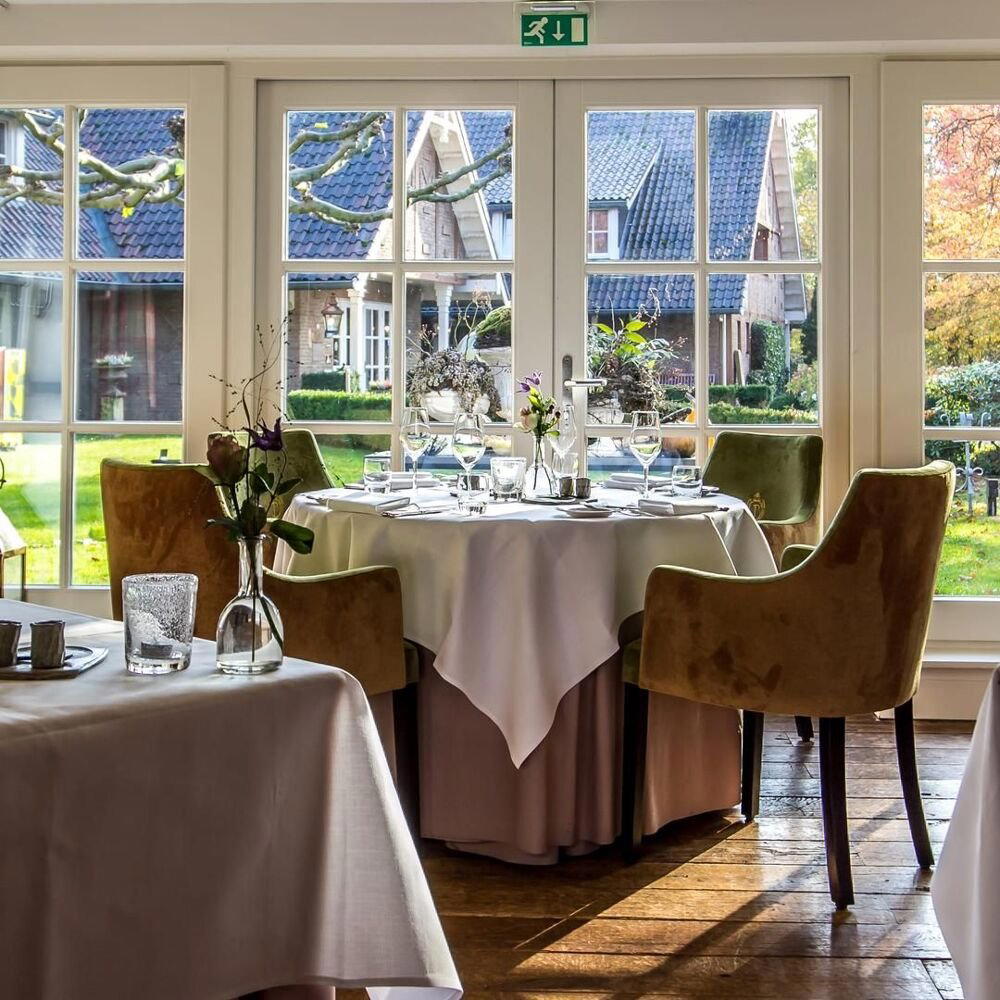
Where Twente's Fields Come to the Table
De Bloemenbeek is a one-star restaurant in De Lutte, Netherlands, where Twente game and local produce meet French-Mediterranean botanical gastronomy. The Twente region, a stretch of farmland and woodland running toward the German border, sits well outside the gravitational pull of Amsterdam's star cluster or the more travelled fine-dining corridor along the Dutch coast. That relative obscurity is precisely what gives De Bloemenbeek its character. Arriving at Beuningerstraat 6 in De Lutte, the manor house and its surrounding fields situate the meal before you have even opened a menu. Deer and hare move across the open land. The air is agricultural, unhurried. Whatever follows inside will either justify or squander that setting.
It justifies it.
The Logic of the Twente Terroir
Terroir is a concept the Dutch fine-dining scene has been working to articulate for some years, usually by drawing on the country's formidable produce infrastructure rather than any single dramatic landscape. Twente offers something more particular: a region with defined game seasons, working farms, and a food culture that has not been entirely absorbed into the national mainstream. De Bloemenbeek's kitchen works with that specificity directly. Game hunted in the Twente region appears on the menu according to season. Vegetables arrive from local farmers rather than centralised suppliers. The result is a menu whose sourcing story is not a marketing layer applied after the fact but a structural condition of what the kitchen can cook.
The kitchen approaches this material through a French classical framework, which suits the produce and the setting. Rich sauces and cream-based preparations, the kind that have been systematically stripped out of many contemporary European menus in favour of lighter, more acidic profiles, remain central here. That is a deliberate position. When the base material is game and root vegetables from cold northeastern farmland, the classical register is not nostalgia but an appropriate technique. The kitchen's occasional incorporation of Far Eastern flavour references, a practice that has become broadly common across European fine dining, functions as counterpoint to that richness rather than as the dominant note.
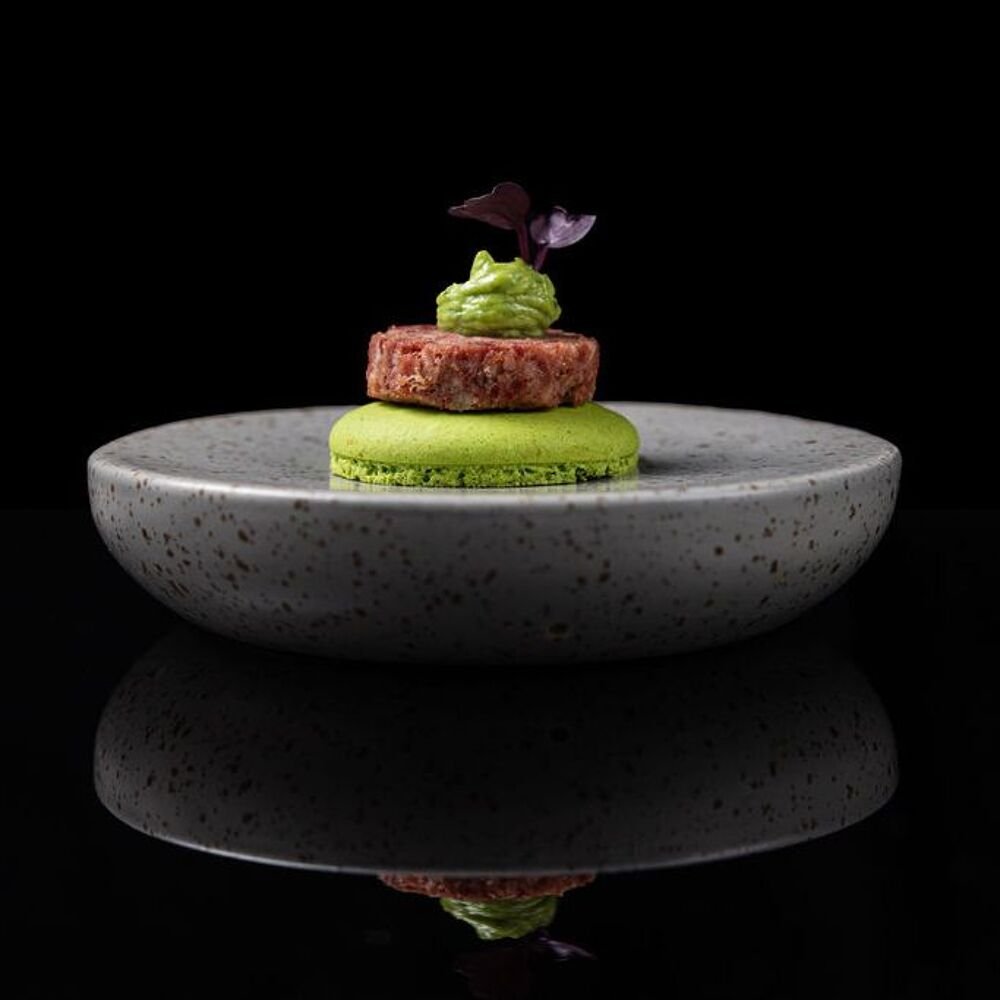
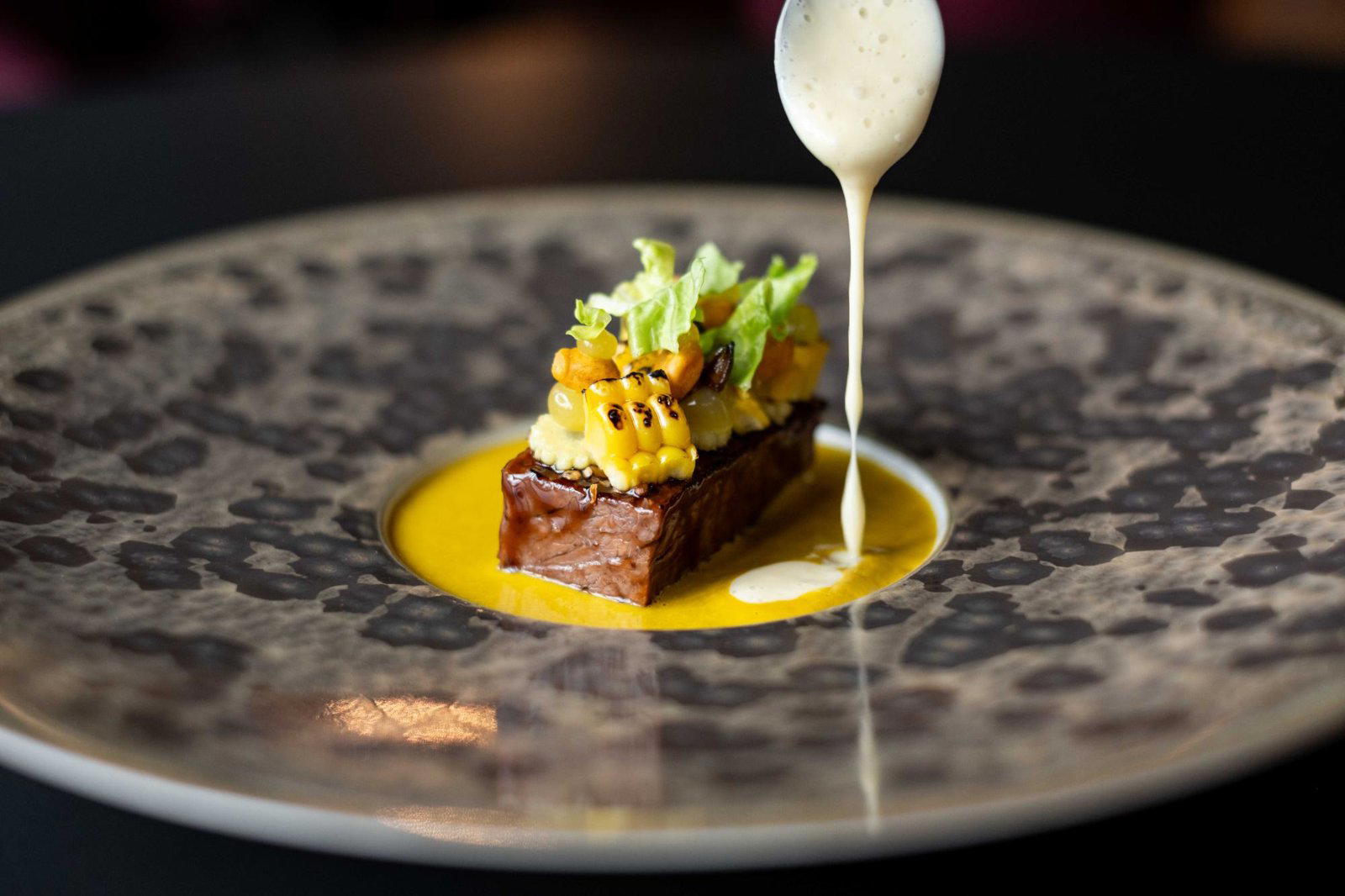
Among the dishes documented in the Michelin record, pan-fried pike-perch demonstrates the kitchen's method clearly. The fish is cooked to retain a crispy skin, a textural precision that depends on timing and temperature control. The accompaniment of white cabbage stewed in vanilla butter introduces sweetness in a register that is neither obvious nor aggressive. A warm vinaigrette built on capers and smoked eel delivers umami and acidity. Crispy Bentheim Black Pied pork belly adds a second texture and a signal of deliberate local sourcing: the Bentheim Black Pied is a heritage pig breed native to the German-Dutch border region, its presence on the plate as much a provenance statement as a culinary choice. This level of compositional specificity is consistent with what earns a Michelin star rather than what merely approaches one.
For context on where the restaurant sits within the Dutch fine-dining register, the comparison is instructive. De Librije in Zwolle operates at three Michelin stars and €€€€ pricing, representing the upper tier of Dutch fine dining. 't Nonnetje in Harderwijk and De Lindehof in Nuenen hold two stars each at the same price point. The restaurant at one star and €€€ pricing occupies a distinct bracket: starred quality at a cost structure that does not require the same financial commitment as the multi-star tier. For diners willing to drive east, that ratio is notable.
Other single-star addresses operating at the €€€ Modern French register in the Netherlands include 't Ganzenest in Rijswijk and 't Raedthuys in Duiven, both of which provide useful comparisons for anyone calibrating expectations across this tier. Further afield, Aan de Poel in Amstelveen, Ciel Bleu in Amsterdam, De Bokkedoorns in Overveen, Brut172 in Reijmerstok, and De Nieuwe Winkel in Nijmegen represent a spread of Dutch fine dining across different price tiers and culinary registers that together map the category's current range.
The Room and How to Use It
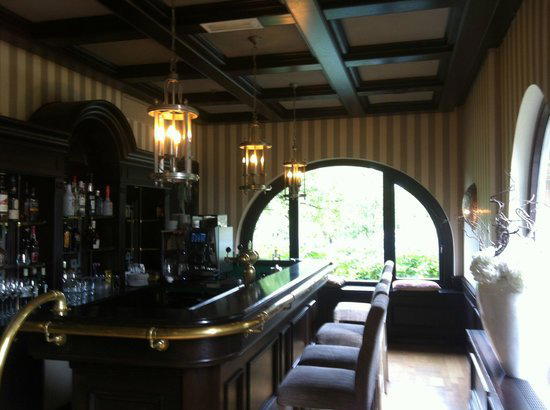
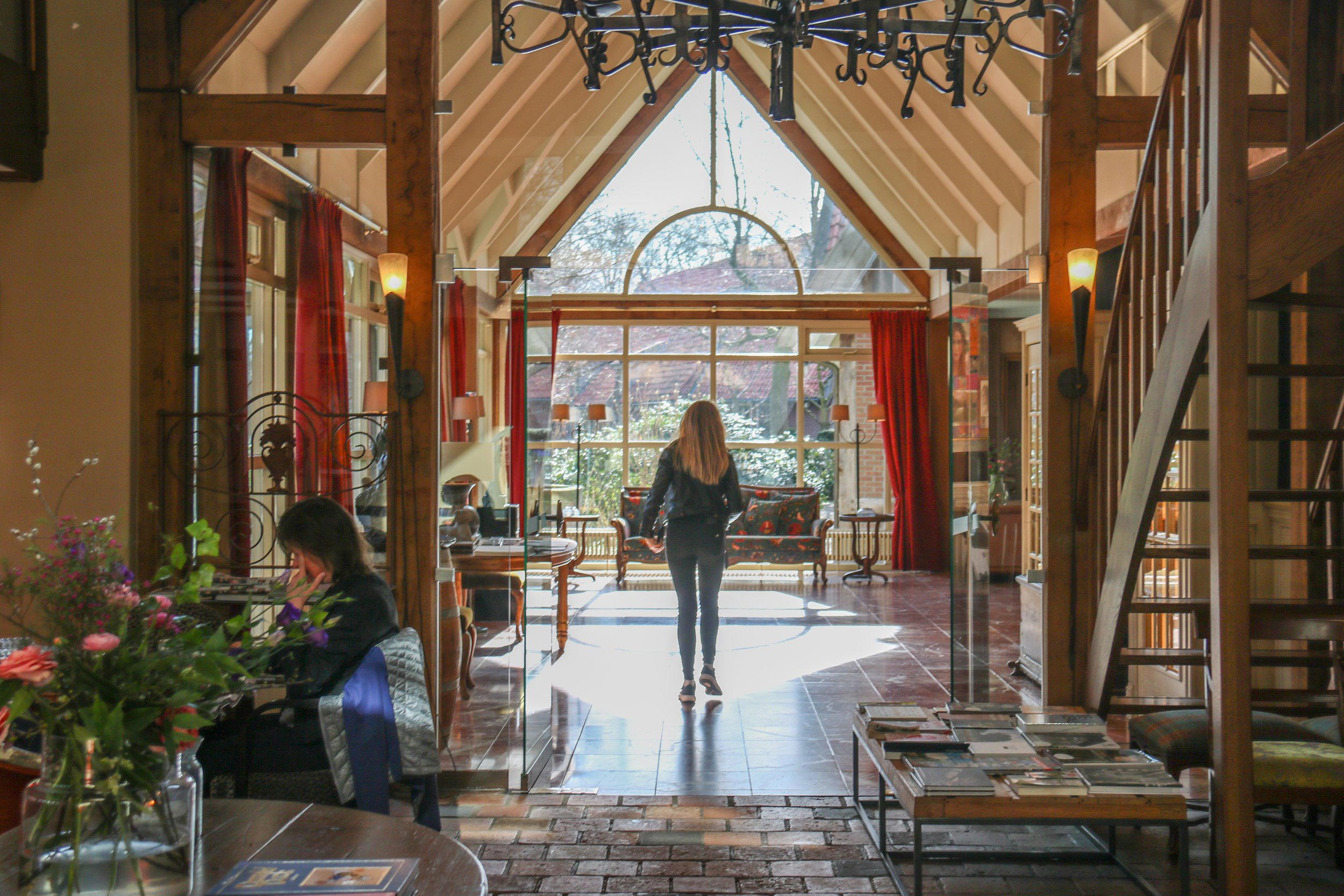
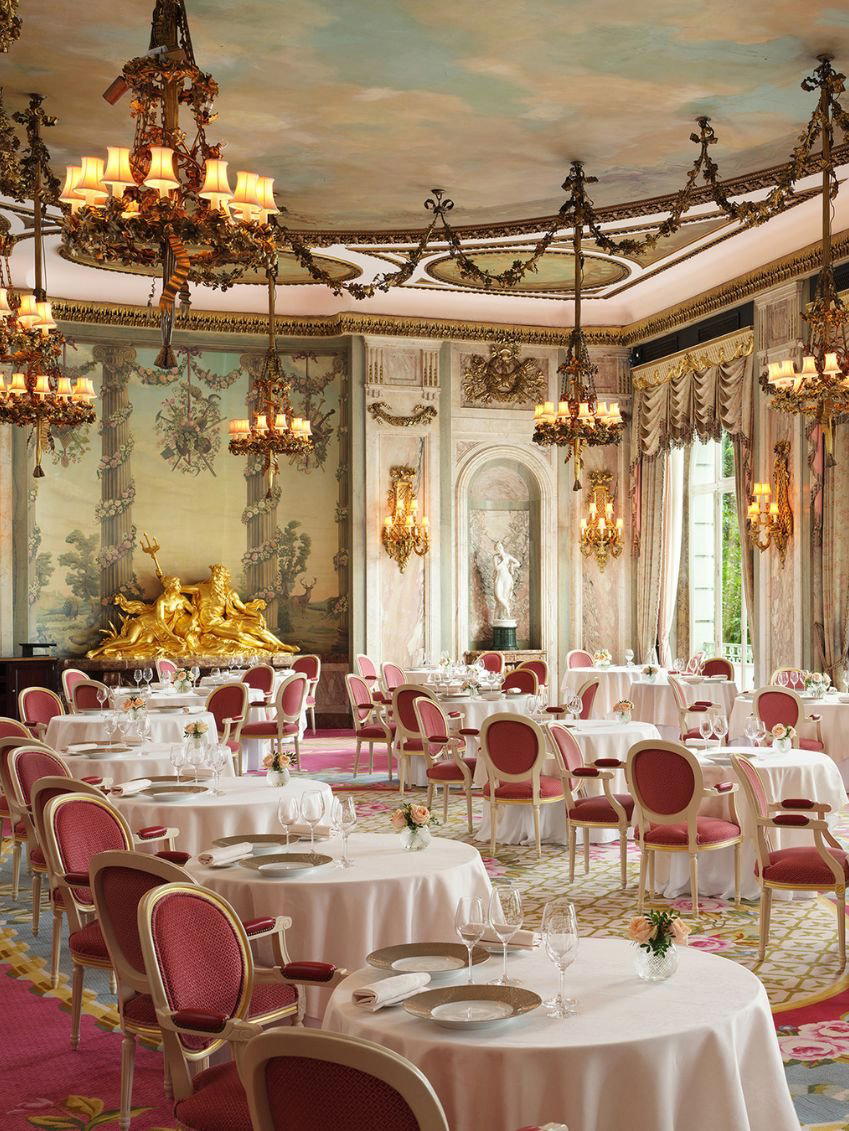
The interior at the restaurant does not attempt to flatten the manor's heritage into something contemporary. Dark carpet, glinting chandeliers, and an open fireplace define the dining room in terms that are emphatically traditional. Whether that reads as comfort or conservatism depends on the diner, but in the context of a country manor surrounded by open fields, the continuity makes sense. The room and the landscape outside it are in agreement. The lounge, where aperitifs are served, functions as a decompression space before the meal: warm, unhurried, oriented toward the transition from journey to table. That sequencing matters more than it might in an urban restaurant, because arriving in De Lutte from anywhere significant means a drive, and the lounge absorbs that time productively.
Among the local dining options, Landgoed de Wilmersberg at €€ and Modern Cuisine represents the closest alternative within De Lutte itself, positioned two price tiers below and without comparable award recognition, making the two addresses complementary rather than competitive.
Getting There and Planning the Visit
De Lutte sits in the Overijssel province, close to the German border and approximately equidistant from Enschede and Oldenzaal. It is not on a major rail line, which means a visit almost certainly involves a car. The address at Beuningerstraat 6 is findable via standard navigation and the manor's rural position means arrival in daylight has obvious advantages given the surrounding landscape. The meal runs about $90 per person. Reservations are essential. De Lutte itself warrants broader exploration:
Comparable Spots, Quickly
Comparable venues nearby, for context on price, style, and recognition.
| Venue | Cuisine | Price | Awards | Notes |
|---|---|---|---|---|
| De BloemenbeekThis venue — the venue you are viewing | Michelin-Starred French-Mediterranean Botanical Gastronomy | $$$$ | Michelin 1 Star | Not listed |
| Landgoed de Wilmersberg | Vegetarian-Focused Fine Dining | $$$ | Michelin Plate | De Lutte |
| De Heeren van Harinxma | Modern French Fine Dining | $$$$ | Michelin 1 Star | Beetsterzwaag |
| Kaatje bij de Sluis | Modern French Fine Dining | $$$$ | Michelin 1 Star | Blokzijl kern |
| Zenith | Modern French with Indonesian Influences | $$$$ | Michelin 1 Star | Koninginnelaan |
| Maeve | Modern French with Dutch influences | $$$$ | Michelin 1 Star | Binnenstad |
Recognition history
Dated appearances from independent guides and award organizations, with the underlying list record or original source where available.
Michelin 1 Star
Michelin
Michelin 1 Star
Michelin
Continue exploring
More in De Lutte
At a Glance
- Romantic
- Elegant
- Cozy
- Scenic
- Sophisticated
- Date Night
- Special Occasion
- Garden
- Private Dining
- Terrace
- Open Kitchen
- Extensive Wine List
- Farm To Table
- Local Sourcing
- Garden
Refined and relaxed atmosphere in a stylish setting with cozy salon, attentive service, and beautiful gardens.