Darchini Indian Cuisine occupies a residential stretch of Retiro, one of Madrid's more settled eastern districts, bringing Indian cooking into a neighbourhood better known for Spanish family restaurants and corner tapas bars. The address places it well outside the tourist circuits of central Madrid, which tends to filter the clientele toward locals with a specific purpose in mind.
Pearl is the En Primeur Club membership app — saves, bookings, and concierge access live there. Same editors, same standards.
- Address
- C. del Dr. Esquerdo, 140, Retiro, 28007 Madrid, Spain
- Phone
- +34915021511
- Website
- reservasdarchini.com
- Directions
- Get directions
 Saves & bookings on Pearl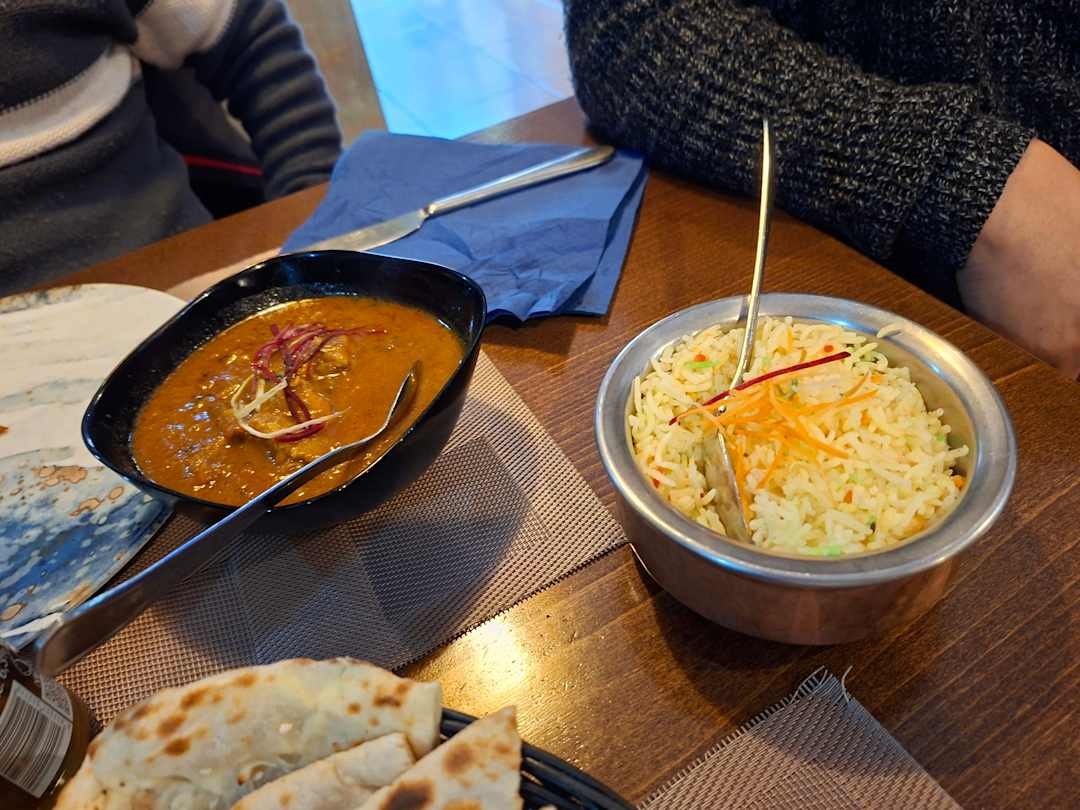
Indian Cooking in a Neighbourhood That Doesn't Chase Trends
The Retiro district east of the park is the kind of Madrid neighbourhood that international visitors rarely seek out deliberately. Calle del Doctor Esquerdo is a long residential artery lined with pharmacies, family-run hardware shops, and the sort of Spanish restaurants where the daily menu still costs under fifteen euros. Darchini Indian Cuisine sits in this context, which tells you something useful before you've even looked at the menu: this is not a restaurant positioning itself for the tourist trade or the expense-account crowd gravitating toward the city's concentrated fine-dining belt around Chamberí and Salamanca.
Madrid's Indian restaurant scene operates in a notably different register than London's or New York's. The South Asian diaspora in Spain remains smaller than in the UK, and the infrastructure of regional Indian cooking — the Keralan fish curry specialists, the Punjabi dhaba offshoots, the Hyderabadi biryani houses — that has developed over decades in British cities simply doesn't exist in the same depth here. What Madrid does have is a scattered collection of Indian restaurants that serve a clientele composed largely of Spanish diners encountering the cuisine on its own terms, without the cultural shorthand that British or American customers bring. That changes how a restaurant like Darchini functions: the kitchen isn't translating for a diaspora audience, it's making a case for Indian cooking to a city that approaches it with curiosity rather than familiarity.
What the Retiro Location Means for the Experience
Location in a residential neighbourhood carries practical implications. Retiro's dining culture runs on a different clock than central Madrid's. The area fills with locals on weekday lunchtimes and family groups at weekends; it empties when the tourist-facing districts are at their busiest. A restaurant holding ground on Doctor Esquerdo is one that has built repeat business from the surrounding blocks rather than passing foot traffic. That model tends to produce a different kind of hospitality: more consistent, less performative, calibrated to people who know what they want and return because the kitchen delivers it.
The broader Retiro district is worth understanding as a dining destination in its own right. It sits east of the park, adjacent to the Jerónimos area, and shares a certain unhurried quality with the residential sections of Chamartín and Vallecas further out. It is not where Madrid's celebrated creative kitchens have clustered. The city's highest-profile addresses, from DiverXO with its three Michelin stars to Coque, Deessa, DSTAgE, and Paco Roncero, operate in denser, more central pockets. Darchini's Retiro address positions it in a different conversation entirely, one about neighbourhood reliability rather than tasting-menu prestige.
Indian Cuisine in a Spanish Context
Spain's relationship with spice-forward cooking is more nuanced than outsiders sometimes assume. The country's culinary tradition has its own complex layers of Moorish influence, smoked paprika depth, and regional heat tolerance, particularly in the south. But Indian cooking arrives as something genuinely distinct from the Spanish palate's reference points, and Madrid's better Indian restaurants have found an audience by holding to the integrity of the source cuisines rather than softening them toward local expectations.
The question of which regional Indian traditions a given Madrid restaurant represents matters. Northern Indian cooking, with its tandoor-roasted proteins, cream-enriched curries, and leavened breads, remains the most visible and internationally legible strand. Southern traditions, including the fermented-rice preparations of Tamil Nadu or the coconut-based fish dishes of coastal Karnataka, are rarer in Spanish cities and represent a more specialist proposition. A restaurant's position on that spectrum shapes what a first visit should focus on and what regulars have presumably settled into as their standard order.
Spain also has its own strong benchmark for high-level cooking that makes the broader context worth appreciating. Restaurants like El Celler de Can Roca in Girona, Mugaritz in Errenteria, Arzak in San Sebastián, Azurmendi in Larrabetzu, and Martin Berasategui in Lasarte-Oria have trained Spanish diners to expect technical precision. Further afield, Quique Dacosta in Dénia, Aponiente in El Puerto de Santa María, Cocina Hermanos Torres in Barcelona, Ricard Camarena in València, and Atrio in Cáceres reinforce how seriously Spain treats its restaurant culture across the country. International reference points like Le Bernardin in New York City and Lazy Bear in San Francisco illustrate how different cities build their own dining identities around specific strengths. Madrid's identity is built on Spanish creative cooking; its international cuisine sector, including its Indian restaurants, operates in the space that leaves room for.
Planning a Visit
Retiro is accessible by metro on Line 6 (Circular), with the Doctor Esquerdo stop placing you close to the restaurant's address at number 140. The neighbourhood is quieter than central Madrid in terms of pre-dinner options, so arriving with specific plans rather than planning to wander is the practical approach. Given the limited publicly available data on this restaurant, confirming hours and reservation requirements directly before visiting is advisable.
| Detail | Darchini Indian Cuisine | Typical Madrid Fine Dining (e.g. DiverXO, Coque) |
|---|---|---|
| Location type | Residential Retiro | Central/Chamberí |
| Likely price tier | Not publicly confirmed | €€€€ |
| Cuisine origin | Indian | Spanish creative |
| Booking lead time | Confirm directly | Weeks to months in advance |
| Primary audience | Local neighbourhood | National and international |
How Darchini Indian Cuisine Madrid compares with similar nearby venues.
| Venue | Cuisine | Price |
|---|---|---|
| Poncio WM | Contemporary | €€ |
Continue exploring
More in Madrid
Restaurants in Madrid
Browse all →
Bars in Madrid
Browse all →
Hotels in Madrid
Browse all →

At a Glance
- Casual Hangout
- Group Dining
Current opening hours
- Monday
- 12–11 PM
- Tuesday
- 12–11 PM
- Wednesday
- 12–11 PM
- Thursday
- 12–11 PM
- Friday
- 12–11 PM
- Saturday
- 12–11 PM
- Sunday
- 12–11 PM
Hours can change for holidays and private events. Last verified .
Casual dining atmosphere suitable for standard conversations.
Know Before You Go
- Getting there
- C. del Dr. Esquerdo, 140, Retiro, 28007 Madrid, Spain