Dans la Grand'Rue
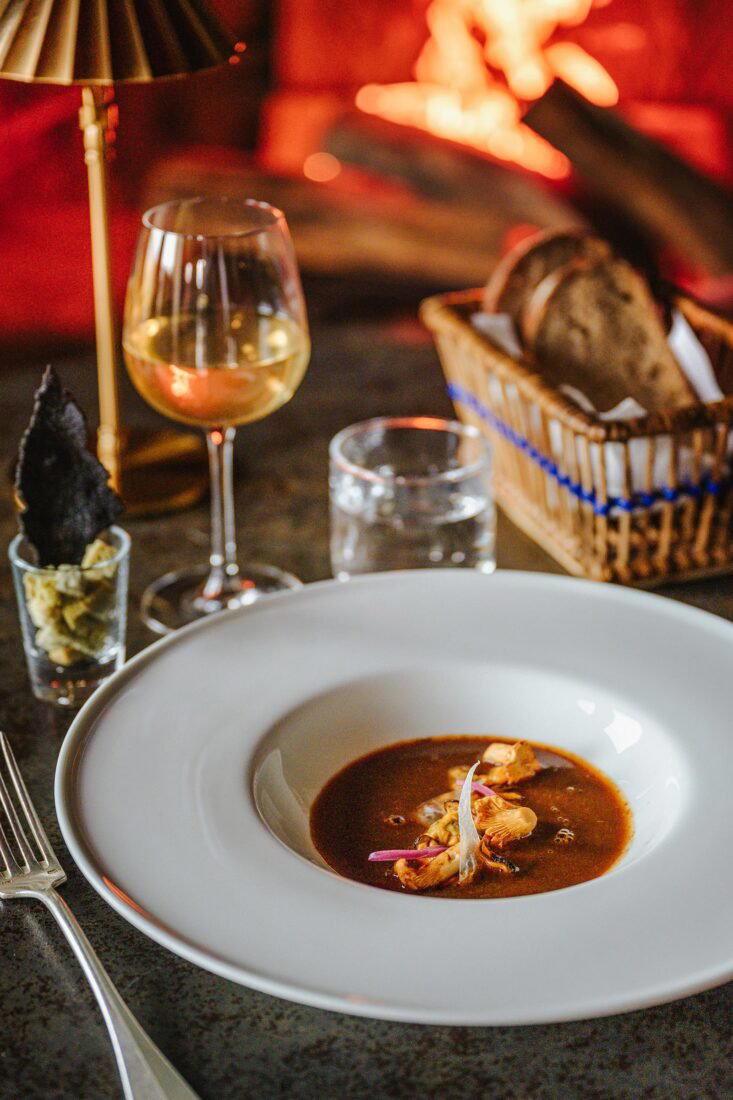
Dans la Grand'Rue sits on the main street of Saint-Pol-de-Léon, a small Breton cathedral town whose surrounding fields supply some of France's most concentrated market-garden produce. The restaurant draws on that proximity, placing Finistère's notable artichokes, onions, and coastal seafood at the centre of a menu that reflects the agricultural calendar rather than a fixed kitchen identity. For a town this size, it warrants serious attention.
Pearl is the En Primeur Club membership app — saves, bookings, and concierge access live there. Same editors, same standards.
- Address
- 8 Rue du Général Leclerc, 29250 Saint-Pol-de-Léon, France
- Phone
- +33298191624
- Website
- danslagrandrue.fr
- Directions
- Get directions
 Saves & bookings on Pearl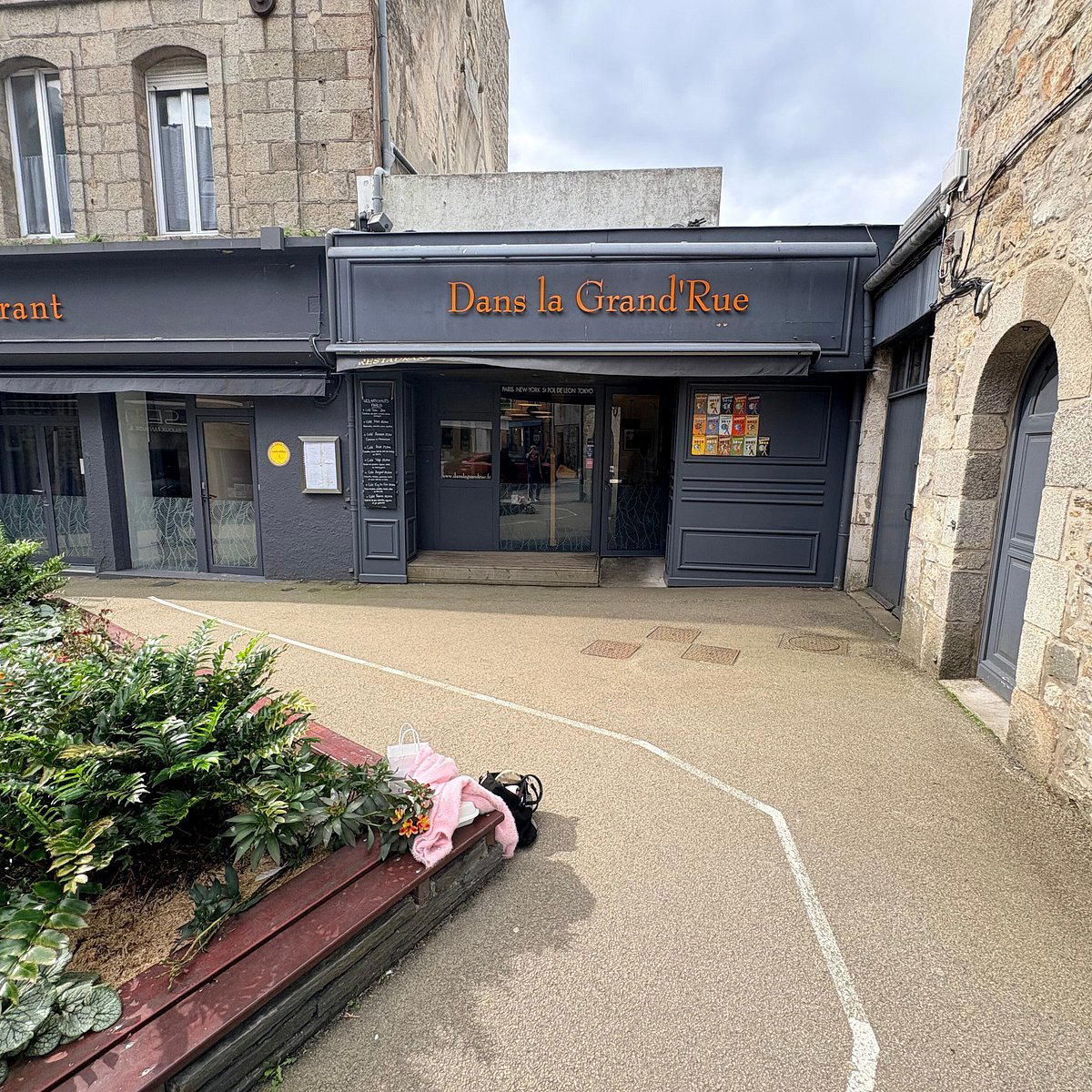
A Cathedral Town That Feeds Itself Well
The spires of the Kreisker chapel are visible from the surrounding fields long before any restaurant sign, and that ordering feels appropriate: in this corner of northern Finistère, the land does most of the talking. The Ceinture dorée, the so-called golden belt of intensive market-garden agriculture stretching across the Léon plateau, produces a disproportionate share of France's artichokes, cauliflowers, onions, and early vegetables. Any serious kitchen in this town operates with that supply chain as its foundation, not as a selling point. Dans la Grand'Rue, at 8 Rue du Général Leclerc, sits on the main commercial artery where the old quarter opens toward the market square, a physical position that mirrors the restaurant's relationship to the surrounding produce economy.
They are not auberges in the rural French sense, but they are not destination restaurants either. They exist because the ingredients warrant them, and because Breton food culture, more than most regional traditions in France, has retained a genuine relationship between what grows locally and what appears on the plate.
Where the Ingredients Come From and Why That Matters
The agricultural geography around Saint-Pol-de-Léon is specific enough to be worth understanding before you sit down anywhere in town. The Léon plateau benefits from the temperate influence of the English Channel and the Bay of Biscay simultaneously, producing a mild, humid climate that extends growing seasons and concentrates flavour in brassicas and alliums in ways that more continental climates do not replicate. The camus de Bretagne artichoke, one of France's most commercially significant, is grown within a short distance of the town. Oignons de Roscoff, which hold a protected designation of origin, come from fields a few kilometres to the northwest. The coast adds a second supply axis: the waters between the Île de Batz and the mainland are productive fishing grounds, and the broader Finistère coastline contributes lobster, crab, sea bass, and the bivalves for which Brittany has been a reliable source for centuries.
A kitchen in this location that does not anchor its menu to these inputs is working against its own context. The ingredient-driven approach that has become fashionable in urban European dining as a point of differentiation is simply the default operating logic for a well-run provincial French restaurant here. That is a distinction worth marking: where a three-star house in Paris like Alléno Paris au Pavillon Ledoyen must construct sourcing relationships across distances, or where a destination property like Mirazur in Menton builds its identity partly on the editorial power of provenance, a restaurant in Saint-Pol-de-Léon has proximity as a structural condition rather than a curated narrative.
That same logic applies, in different registers, to kitchens as varied as Bras in Laguiole, where the Aubrac plateau defines the menu's character, or Auberge du Vieux Puits in Fontjoncouse, where the remote Corbières landscape imposes its own seasonal discipline. Place-driven cooking in France is not a single style; it is a condition of geography that expresses itself differently depending on what the land and sea provide.
The Breton Provincial Dining Register
Brittany's dining culture has always sat slightly apart from the French mainstream. The region resisted the Escoffier-era standardisation that homogenised much of French restaurant cooking through the twentieth century, partly because its ingredients, buckwheat, salted butter, shellfish, pig, were too specific to fold neatly into classical French frameworks, and partly because Breton identity, linguistic and cultural, maintained a productive distance from Parisian culinary authority. The result is a regional tradition that is genuinely its own: crêperies that function as serious eating, charcuterie with a distinct salt profile from Guérande, and fish preparations that prioritise freshness over elaboration.
Within that tradition, a restaurant on a main street in a market town occupies a clear and honourable position. It is not the destination format of Flocons de Sel in Megève or the historic institutional weight of Auberge de l'Ill in Illhaeusern. It is the kind of address that feeds the town's professionals at lunch and hosts celebratory meals for local families on weekends, a function that French restaurant culture has always regarded as legitimate and worth doing well. The nearby Ty Breizh represents the same local dining ecology in Saint-Pol-de-Léon; between the two, the town sustains a dining scene more substantive than its population size would suggest.
France's most acclaimed provincial restaurants, Georges Blanc in Vonnas, Maison Lameloise in Chagny, Les Prés d'Eugénie in Eugénie-les-Bains, built their identities over decades in similarly unglamorous geography. The towns themselves became relevant because the restaurants were serious. The inverse is also possible: a town with notable primary produce creates the conditions for serious cooking without requiring the formal apparatus of starred ambition.
Planning Your Visit
Saint-Pol-de-Léon sits roughly 60 kilometres north of Brest on the D58 coastal road, accessible by car or by train via Morlaix with a connecting service. The town's market, one of the more serious wholesale produce operations in northern Finistère, runs through the week and gives context to what serious seasonal cooking in this area actually draws on. Visitors arriving from further afield often combine Saint-Pol-de-Léon with the nearby Château de Kerjean or the crossing to the Île de Batz. Open Monday and Tuesday from 12 to 1:30 PM and 7 to 8 PM, closed Wednesday, open Thursday through Saturday from 12 to 1:30 PM and 7 to 8 PM, and Sunday from 12 to 1:30 PM; reservations are recommended.
For those building a broader itinerary around French fine dining, the contrast between a working Breton market-town restaurant and the rarefied formats of Le 1947 à Cheval Blanc in Courchevel, L'Oustau de Baumanière in Les Baux, or Troisgros in Ouches is instructive. French gastronomy does not exist only at its most decorated tier. It also exists here, in a small cathedral town, with artichokes from the next field over. The same ingredient logic applies here too, in a quieter key.
A Quick Peer Check
Comparable venues nearby, for context on price, style, and recognition.
| Venue | Cuisine | Price | Awards | Notes |
|---|---|---|---|---|
| Dans la Grand'RueThis venue — the venue you are viewing | Regional French Bistro | $$ | Not listed | Not listed |
| Ty Breizh | Breton Crêperie | $ | Not listed | Saint-Pol-de-Léon |
| La Pomme d'Api | Fine Dining French Breton | $$$$ | Michelin 1 Star | Saint-Pol-de-Léon |
| Crêperie du Port | Breton Crêperie | $$ | Not listed | Vieux Port |
| Café de la Cale | French Seafood Bistro | $$ | Not listed | Sauzon |
| Relais Saint Aubin | Traditional French Bistro | $$ | Not listed | Erquy |
Continue exploring
More in Saint-Pol-de-Léon
Restaurants in Saint-Pol-de-Léon
Browse all →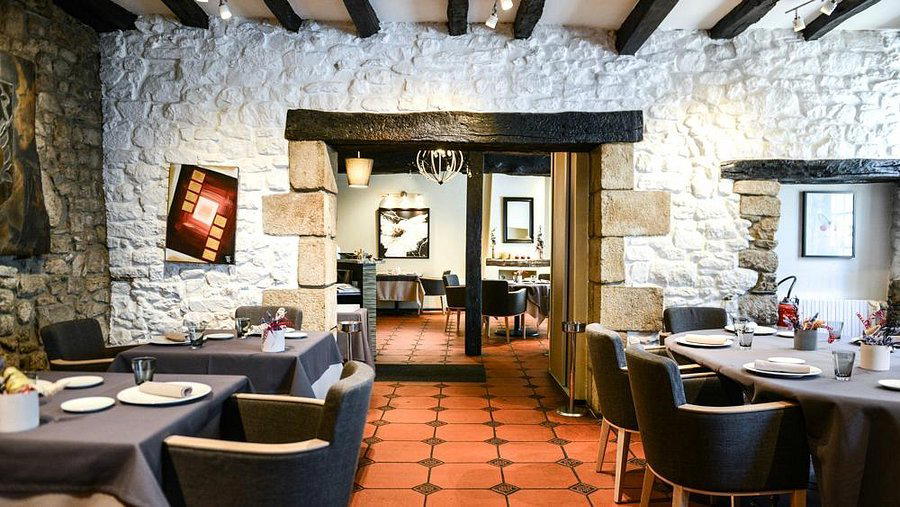
At a Glance
- Modern
- Cozy
- Casual Hangout
- Family
- Open Kitchen
- Local Sourcing
Current opening hours
- Monday
- 12–1:30 PM, 7–8 PM
- Tuesday
- 12–1:30 PM, 7–8 PM
- Wednesday
- Closed
- Thursday
- 12–1:30 PM, 7–8 PM
- Friday
- 12–1:30 PM, 7–8 PM
- Saturday
- 12–1:30 PM, 7–8 PM
- Sunday
- 12–1:30 PM
Hours can change for holidays and private events. Last verified .
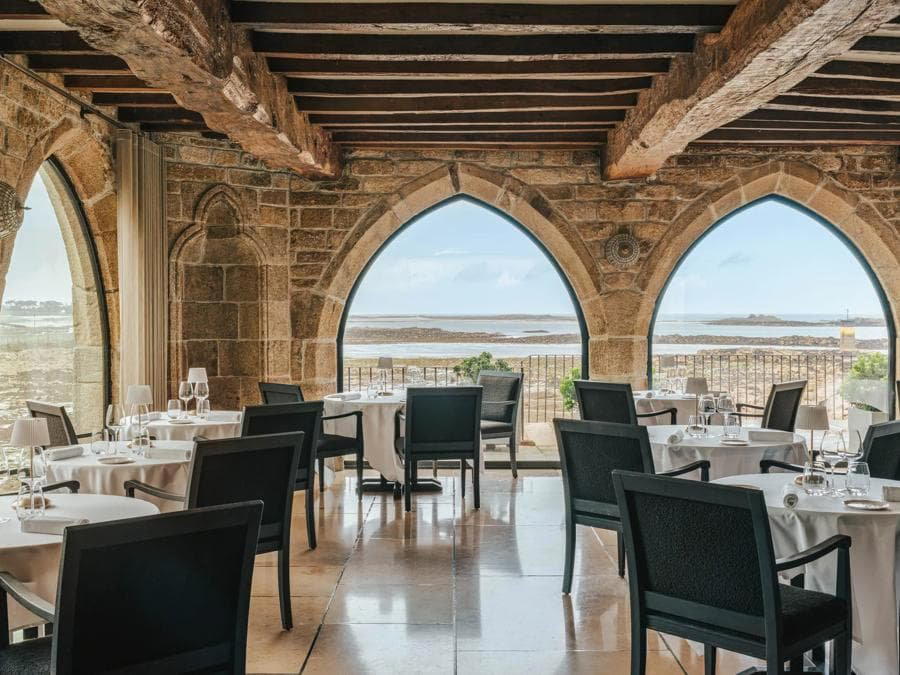
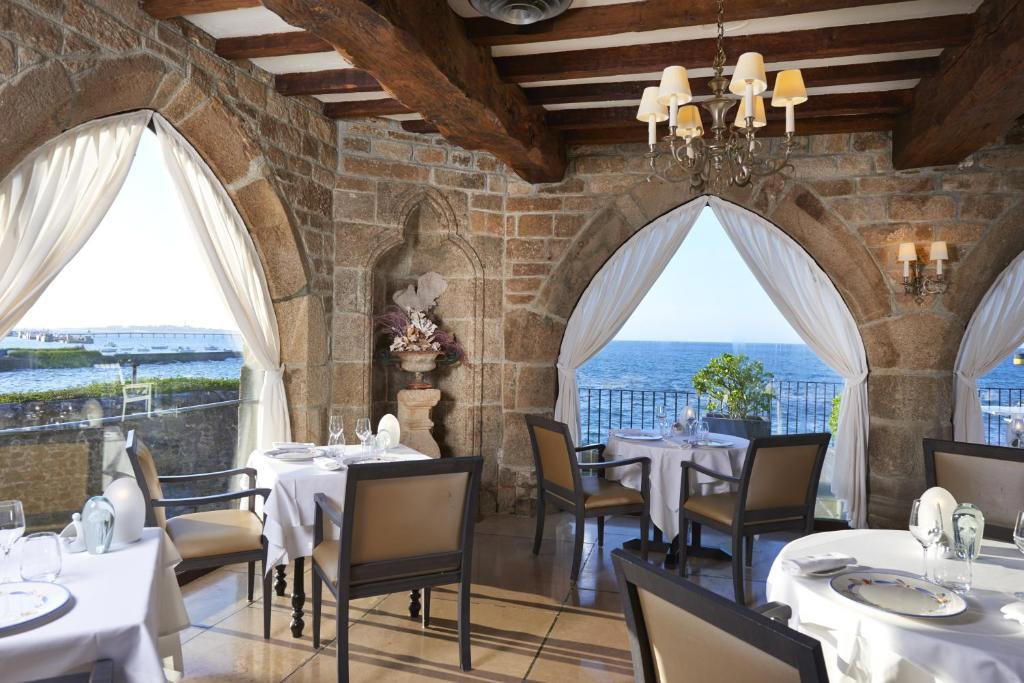
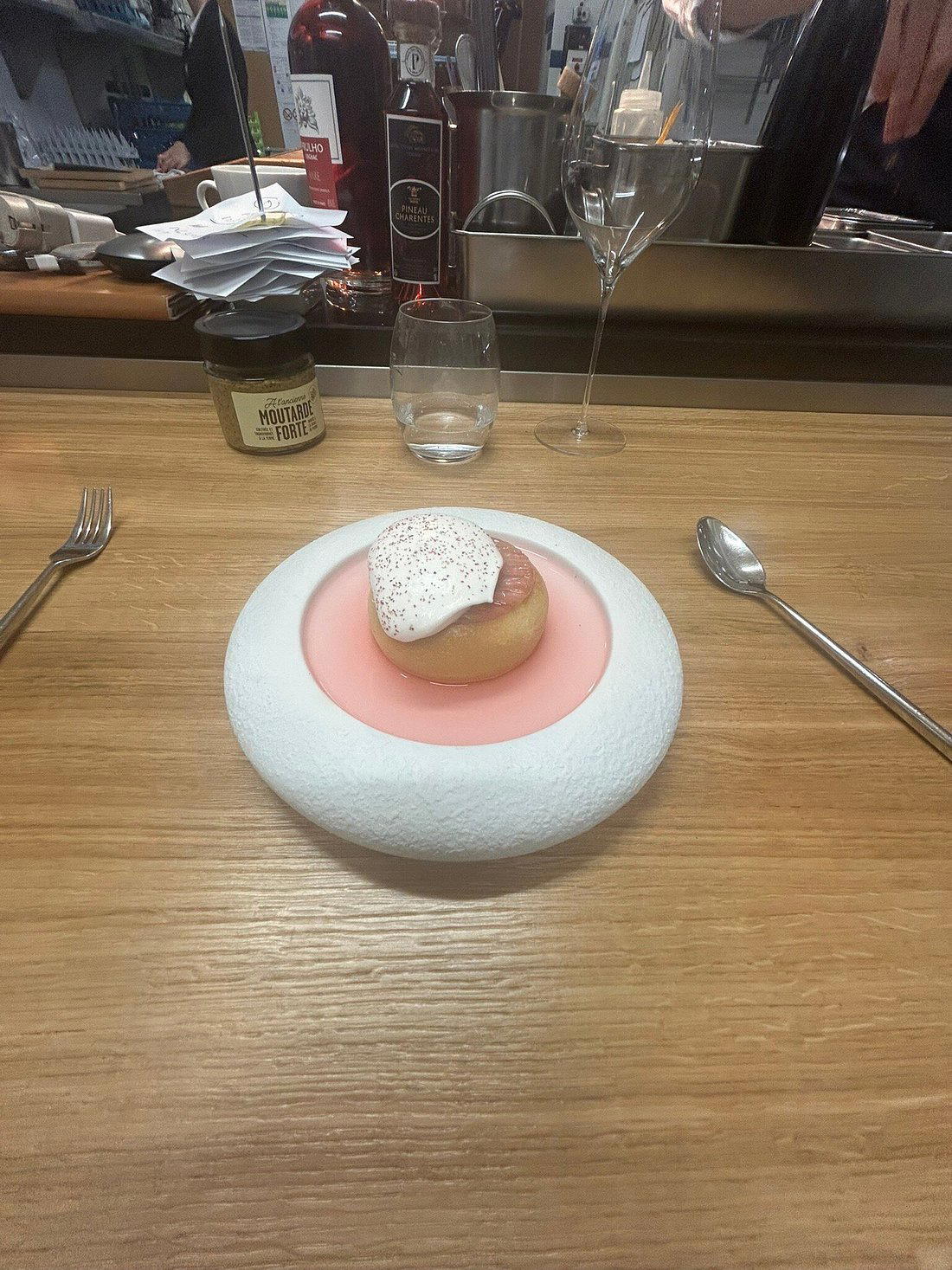
Chaleureux atmosphere with modern orange-toned decoration and an open central kitchen.