Dannebro
Dannebro sits at Kongebrovej 63 in Middelfart, a small Funen city where the Little Belt strait sets the rhythm for local sourcing and seasonal cooking. The setting, on the edge of a town better known for its bridge than its dining scene, positions this address within Denmark's wider provincial fine-dining conversation, where ingredient provenance increasingly drives the menu logic.
Pearl is the En Primeur Club membership app — saves, bookings, and concierge access live there. Same editors, same standards.
- Address
- Kongebrovej 63, 5500 Middelfart, Denmark
- Phone
- +4563416341
- Website
- comwell.com
- Directions
- Get directions
 Saves & bookings on Pearl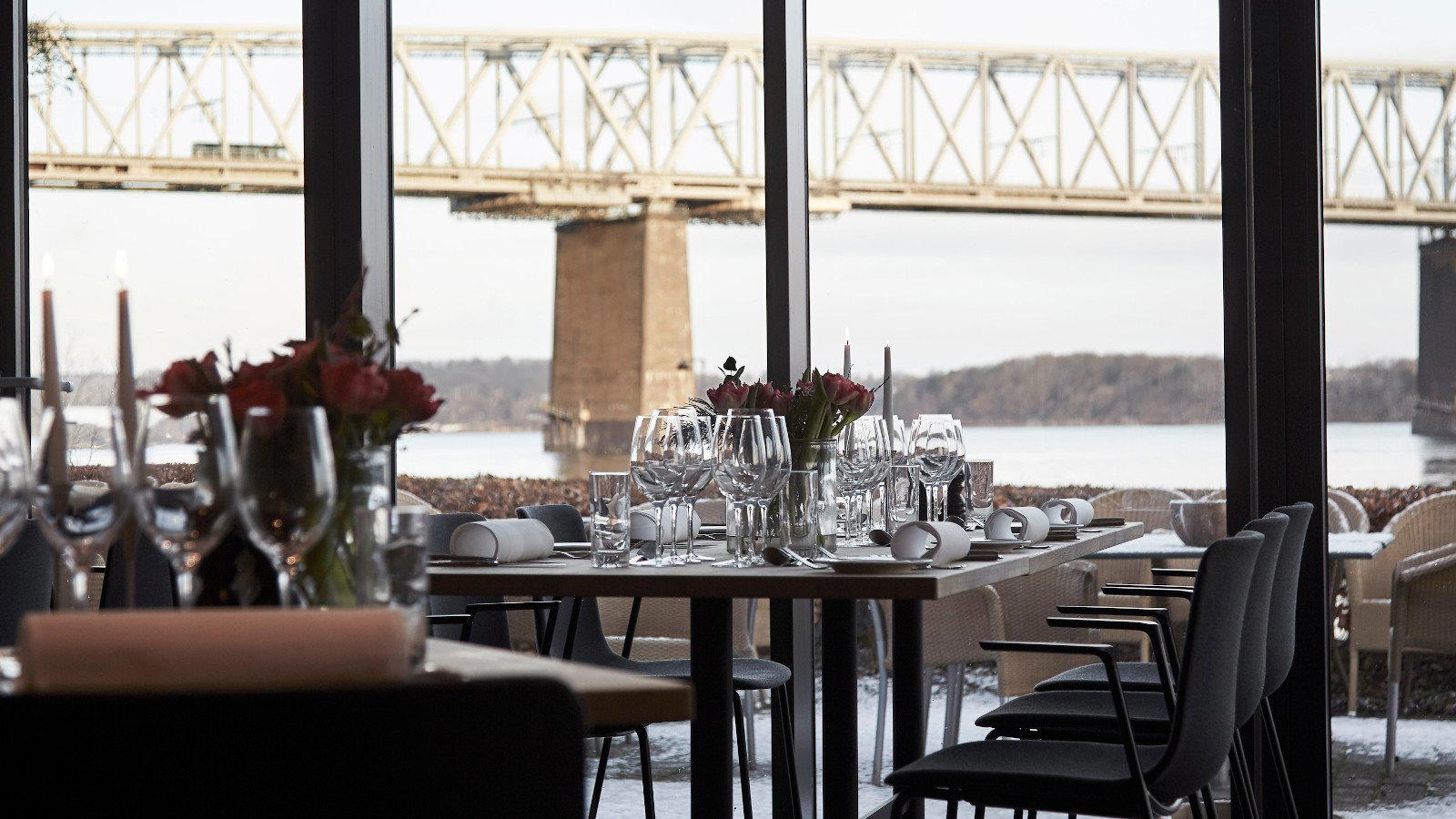
Where the Belt Dictates the Menu
Middelfart occupies a particular position in Danish geography: it is neither Copenhagen nor Aarhus, yet it sits at the crossing point between Funen and Jutland, a location that has historically shaped how local kitchens source and think. The Little Belt strait, whose tidal rhythms and cold northern waters have fed this coastline for centuries, remains the defining reference point for serious cooking in this part of Denmark. In the broader Danish dining scene, the restaurants that have held attention outside the capital tend to be those that treat their immediate geography as a sourcing brief rather than a backdrop. That logic applies here, on Kongebrovej, where Dannebro operates along the waterfront edge of a city that rarely appears on the international fine-dining circuit.
The Provincial Sourcing Argument
Denmark's most discussed restaurants have, for more than a decade, built their reputations around hyper-local sourcing. Geranium in Copenhagen has demonstrated that the country can compete at the highest international level when the sourcing brief is disciplined and the kitchen has the technique to match. Jordnær in Gentofte has made a comparable case from a suburban address. What these Copenhagen-adjacent restaurants share is access to well-developed supplier networks and a density of media attention that provincial Denmark rarely receives. The more interesting question, and the one that Middelfart poses, is whether the sourcing argument holds when you move the kitchen closer to the actual source. On the Funen coastline, shellfish, saltwater fish, and the agricultural produce of one of Denmark's most fertile islands are available at shorter supply distances than most urban kitchens can claim. Frederikshøj in Aarhus and Henne Kirkeby Kro in Henne have both made this provincial proximity argument credibly, each drawing on the agricultural and coastal character of their respective Jutland settings. Funen has the same raw material, with richer coastal access.
Kongebrovej 63 and the Waterfront Context
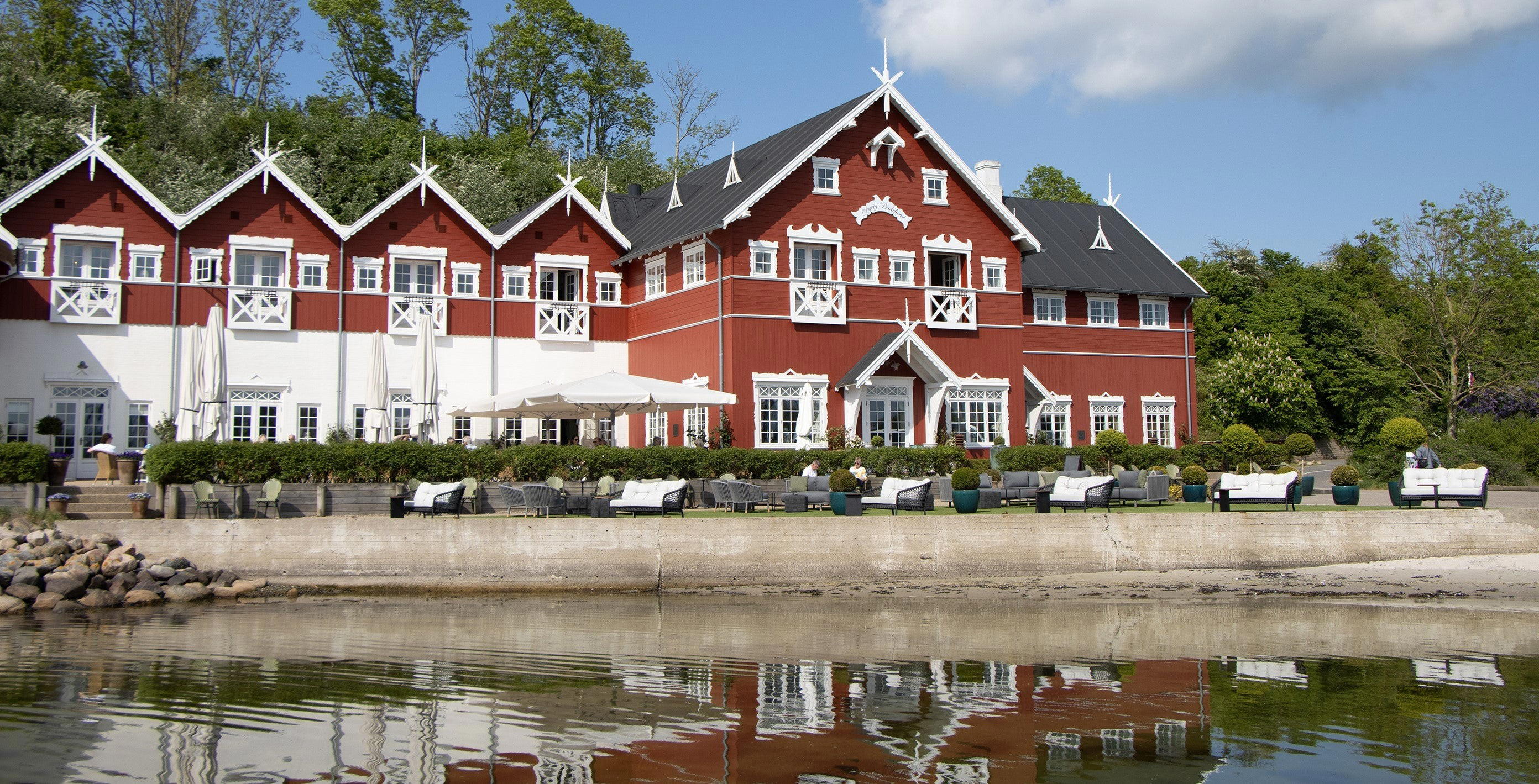
The address itself carries weight. Kongebrovej runs along the edge of the Little Belt, and a restaurant at number 63 is positioned with the strait as its immediate reference point rather than an amenity to reference in marketing copy. In Scandinavian dining culture, waterfront addresses have a specific meaning: they signal proximity to the source and, at least implicitly, a kitchen that should be accountable to what the water and the surrounding land provide. The approach along Kongebrovej gives visitors a reading of the setting before they arrive at the door. The belt is wide here, the light particular in the way it moves across northern water, and the scale of the bridge overhead provides the kind of industrial contrast that smaller Scandinavian restaurants have learned to play against rather than ignore. This is not a setting designed to disappear into prettiness. It has a specific character, and the kitchen at Dannebro inherits that character whether it chooses to acknowledge it or not.
Danish Provincial Fine Dining: The Wider Pattern
The past decade has produced a recognisable pattern across Danish provincial dining. Restaurants operating outside the capital have increasingly adopted the language and sourcing ethics of New Nordic cooking while developing their own local variations. LYST in Vejle has built a reputation around its fjord-facing position and the sourcing opportunities it creates. Dragsholm Slot Gourmet in Hørve operates with an on-site farm as its sourcing infrastructure. Ti Trin Ned in Fredericia sits close enough to Middelfart's own territory to represent a comparable dining ambition in a neighbouring city. Tri in Agger and Frederiksminde in Præstø extend the same pattern to Denmark's extremities. What connects these addresses is not a shared format but a shared logic: the local geography is the menu, and the kitchen's credibility rests on how seriously it takes that constraint. Dannebro, at its Middelfart address, enters that conversation by geography alone. The question any kitchen in this position has to answer is whether the execution matches the location's implicit promise.
Funen's Larder and What It Implies
Funen is sometimes called Denmark's garden island, a description earned by centuries of agricultural production on some of the country's most productive soil. The island's coastline adds a second sourcing register: cold-water shellfish, eel from the belt, and the smaller flatfish species that have fed local kitchens long before New Nordic gave them a curatorial framework. For a restaurant on Kongebrovej, these are not distant ingredients accessed through a network of suppliers. They are the immediate environment. The comparison that travels well here is with coastal kitchens elsewhere in Scandinavia that have turned geographic specificity into a competitive position. Pearl by Paul Proffitt in Kruså and Syttende in Sønderborg both operate in the southern Jutland border region with a comparable relationship to local identity and produce. Alimentum in Aalborg and ARO in Odense, the latter also on Funen, extend the provincial ambition across different formats and price registers. Internationally, the model of waterfront-sourced tasting menus is well established: Le Bernardin in New York City built its entire identity on the argument that fish deserved the same technical seriousness as meat, while Lazy Bear in San Francisco demonstrated that a communal, narrative-driven format could carry serious culinary ambition outside conventional restaurant structures. Domæne in Herning and Parsley Salon in Hellerup round out Denmark's range of approaches to the same underlying question about how local identity translates into dining format.
Planning Your Visit
Middelfart is accessible by train from both Odense (approximately 20 minutes) and Fredericia (under 10 minutes), placing it on the main Copenhagen-Aarhus rail corridor and making it a realistic stopping point rather than a dedicated detour. Kongebrovej 63 is on the waterfront side of the city, accessible on foot from the town centre. Dannebro is open daily from 11:30 AM to 9 PM, and reservations are recommended. Advance contact is advisable.
Frequently Asked Questions
- Would Dannebro be comfortable with kids? Dannebro is a smart-casual restaurant where advance reservations are recommended.
- What kind of setting is Dannebro? Dannebro is a waterfront address in Middelfart, a small Funen city on the Little Belt strait. Denmark's provincial fine-dining addresses at comparable coastal locations typically offer a quieter, more intimate setting than their Copenhagen counterparts, with the geography doing considerable atmospheric work.
- What do people recommend at Dannebro? Specific dish recommendations are not listed in the current record. For a waterfront kitchen in Funen, the coastal and agricultural produce of the island is the natural reference point for what the kitchen should be doing well.
- Can I walk in to Dannebro? Walk-in availability at provincial Danish fine-dining addresses is generally limited, particularly in summer when coastal destinations see increased demand. Reservations are recommended. Contacting ahead is the practical approach.
- Is Dannebro worth visiting specifically for its location on the Little Belt? The Kongebrovej address places Dannebro directly on the waterfront, which in Danish coastal dining carries a specific implication: kitchens in these positions are, at their most credible, sourcing from the immediate maritime environment. The geographic premise is strong for a waterfront restaurant in Funen's dining scene.
In Context: Similar Options
Comparable venues nearby, for context on price, style, and recognition.
| Venue | Cuisine | Price | Notes |
|---|---|---|---|
| DannebroThis venue — the venue you are viewing | French-Nordic Fusion | $$ | Not listed |
| Pincho Nation | International Tapas | $$ | Randers |
| Restaurant Nero | Authentic Italian Trattoria | $$ | Midtbyen |
| Pepes Cantina | Mexican Tex-Mex | $$ | Billund |
| Vægterkælderen | Traditional Danish Cellar Bistro | $$ | Torvet |
| Mini Chef | Modern Danish Family Dining | $$ | LEGO House area |
Continue exploring
More in Middelfart
Restaurants in Middelfart
Browse all →
Hotels in Middelfart
Browse all →
At a Glance
- Elegant
- Scenic
- Date Night
- Special Occasion
- Waterfront
- Hotel Restaurant
- Local Sourcing
- Waterfront
Current opening hours
- Monday
- 11:30 AM–9 PM
- Tuesday
- 11:30 AM–9 PM
- Wednesday
- 11:30 AM–9 PM
- Thursday
- 11:30 AM–9 PM
- Friday
- 11:30 AM–9 PM
- Saturday
- 11:30 AM–9 PM
- Sunday
- 11:30 AM–9 PM
Hours can change for holidays and private events. Last verified .
Elegant atmosphere with harbor and sea views, surrounded by beautiful park surroundings.