

A 16th-century inn on the South Funen coast that has been remaking itself since 1744, Falsled Kro pairs 26 individually styled rooms with a Michelin-starred restaurant where French technique meets Danish coastal produce. Rates start from US$584 per night, and the Relais & Châteaux membership positions it within a comparable set that takes both food and setting as equal obligations.
Pearl is the En Primeur Club membership app — saves, bookings, and concierge access live there. Same editors, same standards.
- Address
- Assensvej 513, 5642 Millinge
- Phone
- +45 62 68 11 11
- Website
- falsledkro.dk
- Directions
- Get directions
 Saves & bookings on Pearl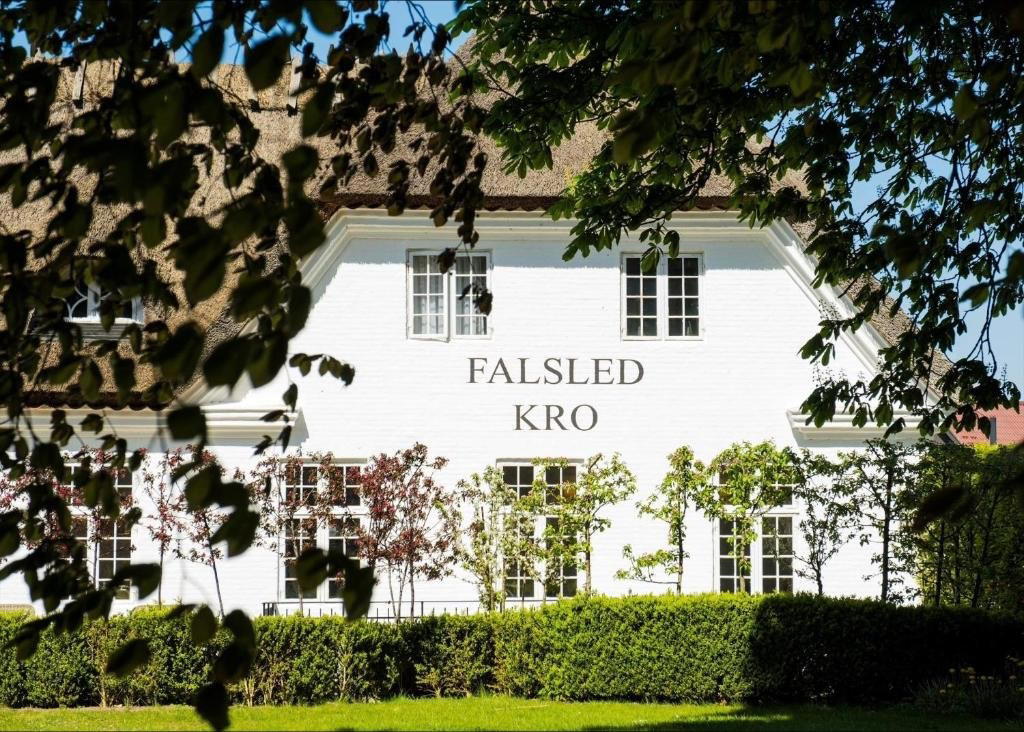
A Farm Cluster That Outlasted Its Own History
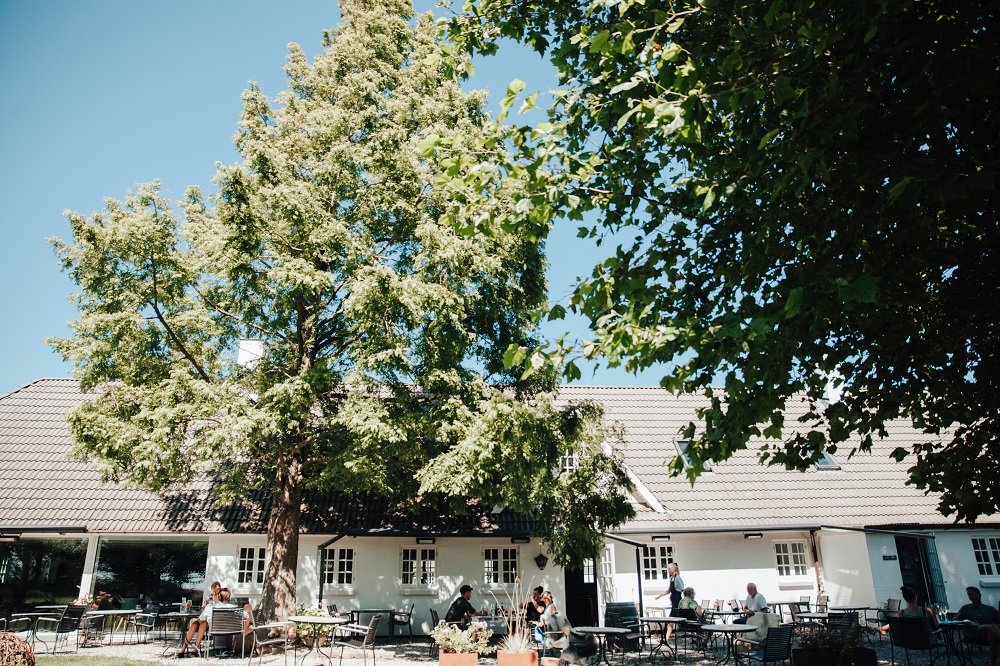
The southern coast of Funen is not where most international travellers think to look for serious hospitality. That is, in part, what makes Falsled Kro notable. The property sits at the water's edge on a stretch of coastline that hasn't been groomed for tourism in the way that Danish cities have, and it arrives with a physical character that no renovation budget alone could manufacture: low-slung farm buildings arranged around a central core, original timber and stone, and the kind of settled quiet that only comes from nearly three centuries of continued use.
Founded in 1744, the inn has functioned at various points as a tavern, a general store, a boarding house, and even a local cinema. That layered biography is legible in the architecture. The buildings don't pretend to a single coherent period or style; they carry the marks of successive reinventions, which gives the compound a texture that purpose-built boutique hotels rarely achieve. Today it holds 26 rooms within that cluster of farm structures, a configuration that keeps the property human in scale without tipping into the kind of deliberate rusticity that can feel performed.
How the Rooms Sit in the Space
Within the broader slow-travel tier of European inn accommodation, individually styled rooms have become a baseline expectation rather than a distinguishing feature. What matters is how well the styling responds to the specific physical logic of the building it inhabits. At Falsled Kro, the 26 rooms are distributed across structures that face in different directions and occupy different positions relative to the sea and the kitchen gardens, which means the room choice carries real consequence. Sea-facing rooms operate on a different register from those positioned near the gardens, the latter offering a more enclosed, working-farm quietude against the former's open-water exposure.
The rate structure, starting from US$584 per night, places Falsled Kro in a bracket that requires it to hold its own against properties with more overtly dramatic settings or more immediately legible luxury signals. Its answer to that comparison is architectural continuity: the sense that the space has not been imposed on the landscape but has grown from it across generations. That is a different proposition from, say, a converted castle or a design-forward coastal resort, and it appeals to a specific kind of traveller who finds authenticity in material history rather than in spectacular views alone.
For guests weighing comparable Danish countryside properties, Dragsholm Slot in Hørve and Dyvig Badehotel in Nordborg occupy adjacent territory in the coastal-heritage inn category, while Allinge Badehotel in Allinge extends the comparison to the island of Bornholm. None of them share the specific combination of Relais & Châteaux membership and Michelin-starred dining that Falsled Kro carries, which is a meaningful distinction in how the property is positioned within its comparable set.
The Restaurant as a Product of Its Geography
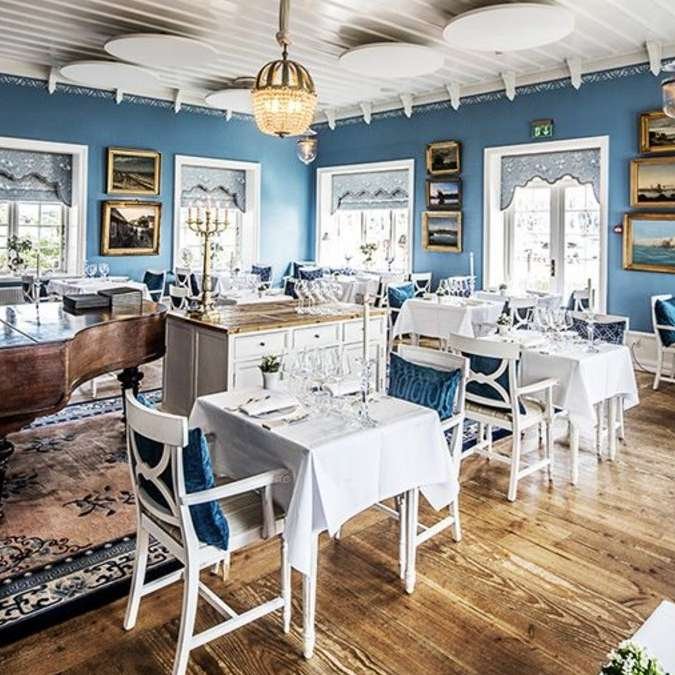
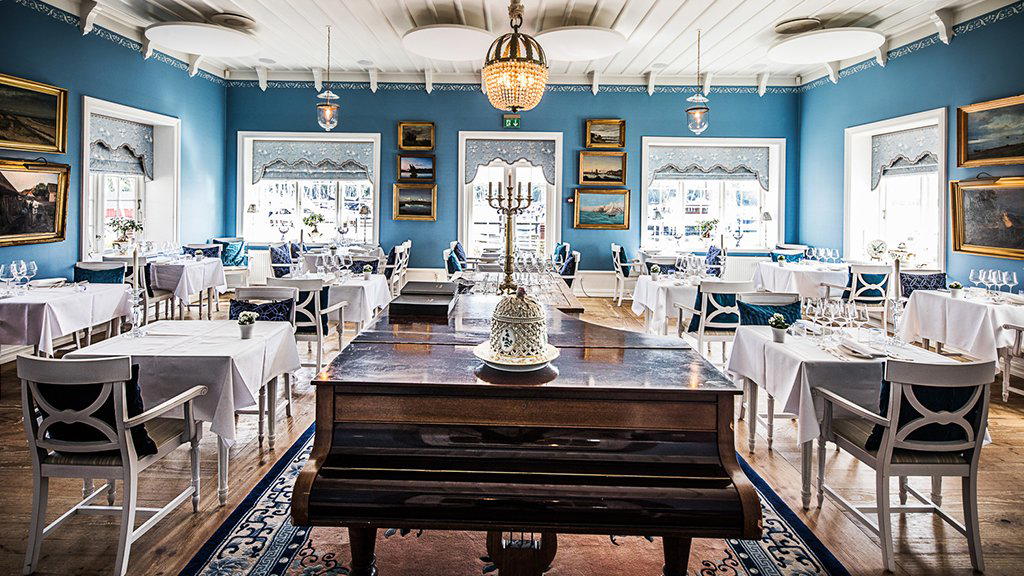
Denmark's emergence as a reference point for serious European dining over the past two decades has been well documented, but the conversation has concentrated heavily on Copenhagen. What the hotel represents is an earlier, quieter strand of that story. The Michelin-starred restaurant at the property has long operated at the intersection of French culinary technique and Danish coastal produce, a pairing that preceded the New Nordic moment and has not required rebranding to remain relevant. That positioning, French precision applied to hyperlocal materials, is now a widely understood grammar, but here it is practiced in a context where the kitchen gardens are visible from the guest rooms and the coastline that supplies much of the produce is within walking distance.
The culinary tradition the hotel represents helped lay early groundwork for the wider credibility that Danish gastronomy now carries internationally. Guests arriving from Copenhagen, approximately 1.5 hours by car, or from Odense, around 45 minutes south, are not making a compromise in dining quality; they are accessing a different register of the same national conversation, one rooted in landscape rather than urban ambition. For those building a Denmark itinerary that extends beyond the capital, Herman K in Copenhagen and Kokkedal Castle Copenhagen in Horsholm offer points of comparison for what the city's own heritage hospitality looks like before the Funen detour.
The Hygge Argument Made Physical
Hygge, the Danish concept that approximates a quality of warmth, ease, and presence, is frequently invoked in travel writing and almost as frequently reduced to a cliché. The hotel is one of the places where the idea finds a physical correlative rather than a marketing application. Fireside cocktails after dinner, long walks along the South Funen coast, slow mornings with no particular agenda: these are not amenities in the conventional hotel sense, they are byproducts of the setting and pace that the property has maintained across its long history. The Relais & Châteaux affiliation, which carries its own set of standards around hospitality culture and food quality, provides an international framework for evaluating what the hotel offers without flattening it into generic luxury.
For travellers whose reference point for slow-travel inn hospitality is drawn from beyond Scandinavia, the comparison set expands considerably. Properties like Castello di Reschio in Lisciano Niccone or Hotel Esencia in Tulum occupy different climatic and cultural contexts but share the underlying logic of a property where the physical environment and the pace of time are the primary offerings. At the hotel, the environment in question is the northern European coastal farmstead: grey-green water, kitchen garden rows, low timber eaves, and a dining room where the cooking takes French classical form and fills it with what the surrounding land and sea supply.
Planning a Stay
The hotel is reachable by car from Odense in under an hour, which makes it accessible for travellers flying into Odense Airport or arriving by train from Copenhagen. The property's Relais & Châteaux membership means reservations and further information are available through that network as well as directly via the property's own channels; the website at falsledkro.dk and email at falsled@relaischateaux.com provide particularly reliable booking routes, with the direct telephone line at +45 6268 1111 available for complex enquiries. Given the limited room count of 26, and the restaurant's Michelin recognition drawing dining guests from across the region, advance booking is advisable, particularly across summer and the autumn harvest period when South Funen's coastal appeal peaks. Rates from US$530 per night.
For those assembling a broader Scandinavia and northern Europe itinerary, Park Lane Copenhagen in Hellerup and Herman K cover the capital end; the hotel anchors the rural south. Beyond Denmark, properties like Cheval Blanc Paris, Le Bristol Paris, and La Réserve Paris carry the French classical tradition that informs the restaurant's culinary approach, providing a useful frame of reference for the cooking style visitors will encounter.
How It Stacks Up
Comparable venues nearby, for context on price, style, and recognition.
| Venue | Cuisine | Price | Awards | Notes |
|---|---|---|---|---|
| Falsled KroThis venue — the venue you are viewing | Historic Mediterranean-styled heritage inn reimagined as a luxury retreat, blending 18th-century charm with contemporary comfort across charming farm buildings. | $$$$ | Michelin 1 Key | Not listed |
| Park Lane Copenhagen | Renovated historic boutique hotel with timeless elegance and personal service. | $$$$ | Michelin 1 Key | Hellerup |
| Nobis Hotel Copenhagen | Contemporary five-star luxury blending Danish classicism with modern minimalism, designed by Swedish architect Gert Wingårdh. | $$$$ | Michelin 1 Key | Indre By |
| 1 Hotel Copenhagen | Nature-inspired sustainable luxury | $$$$ | Michelin 1 Key | Indre By |
| Hotel Sanders | Neoclassical townhouse with bespoke local craftsmanship celebrating Danish heritage. | $$$$ | Michelin 1 Key | Indre By |
| Nimb Copenhagen | Moorish-inspired palace with Venetian marble façade, blending 1909 heritage architecture with contemporary luxury and Danish design minimalism. | $$$$ | Michelin 1 Key | Indre By |
Recognition history
Dated appearances from independent guides and award organizations, with the underlying list record or original source where available.
Relais Chateaux Award
Relais Chateaux
Michelin 1 Key
Michelin
Relais Chateaux Award
Relais Chateaux
Continue exploring
More in Falsled
Hotels in Falsled
Browse all →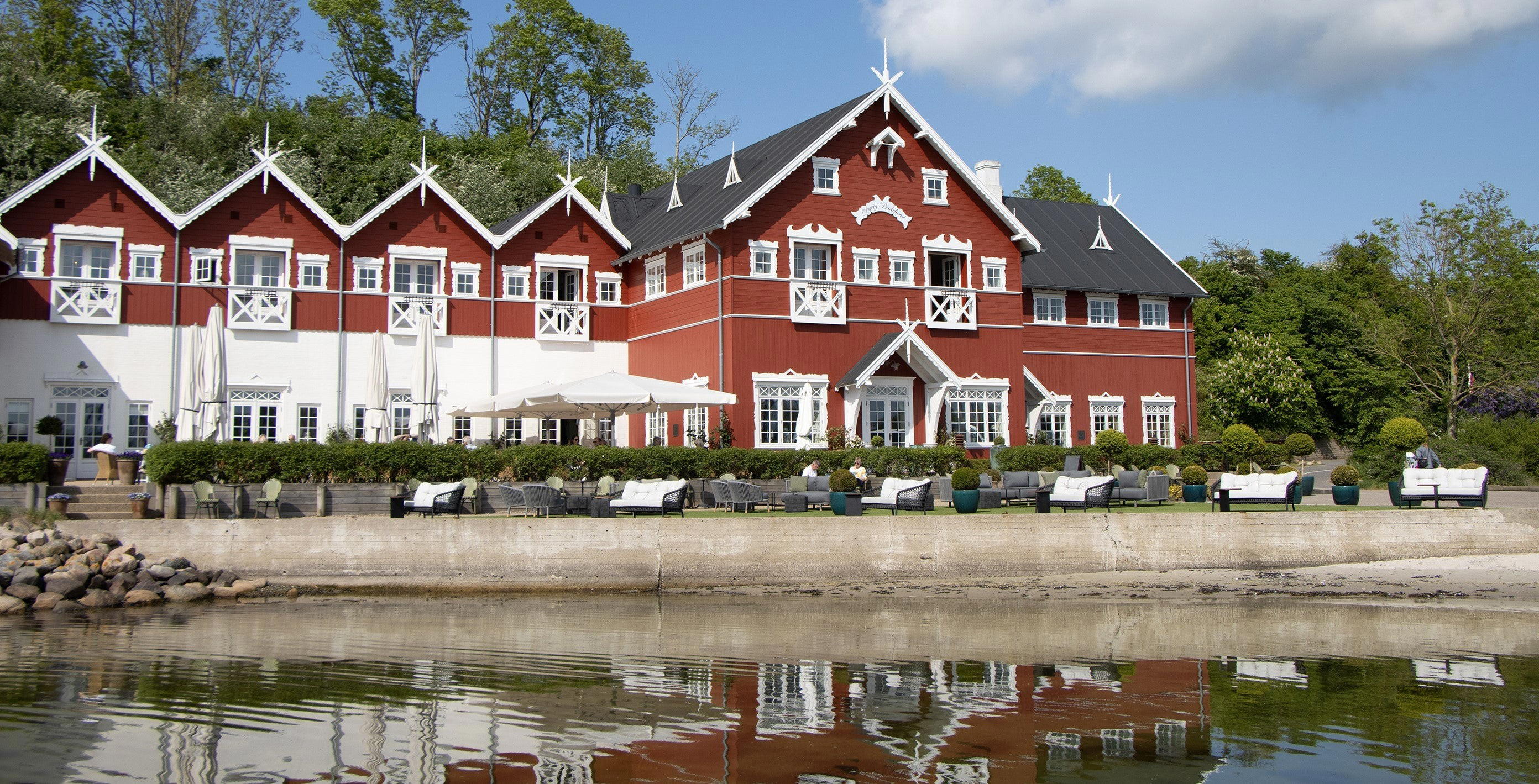
Bars in Falsled
Browse all →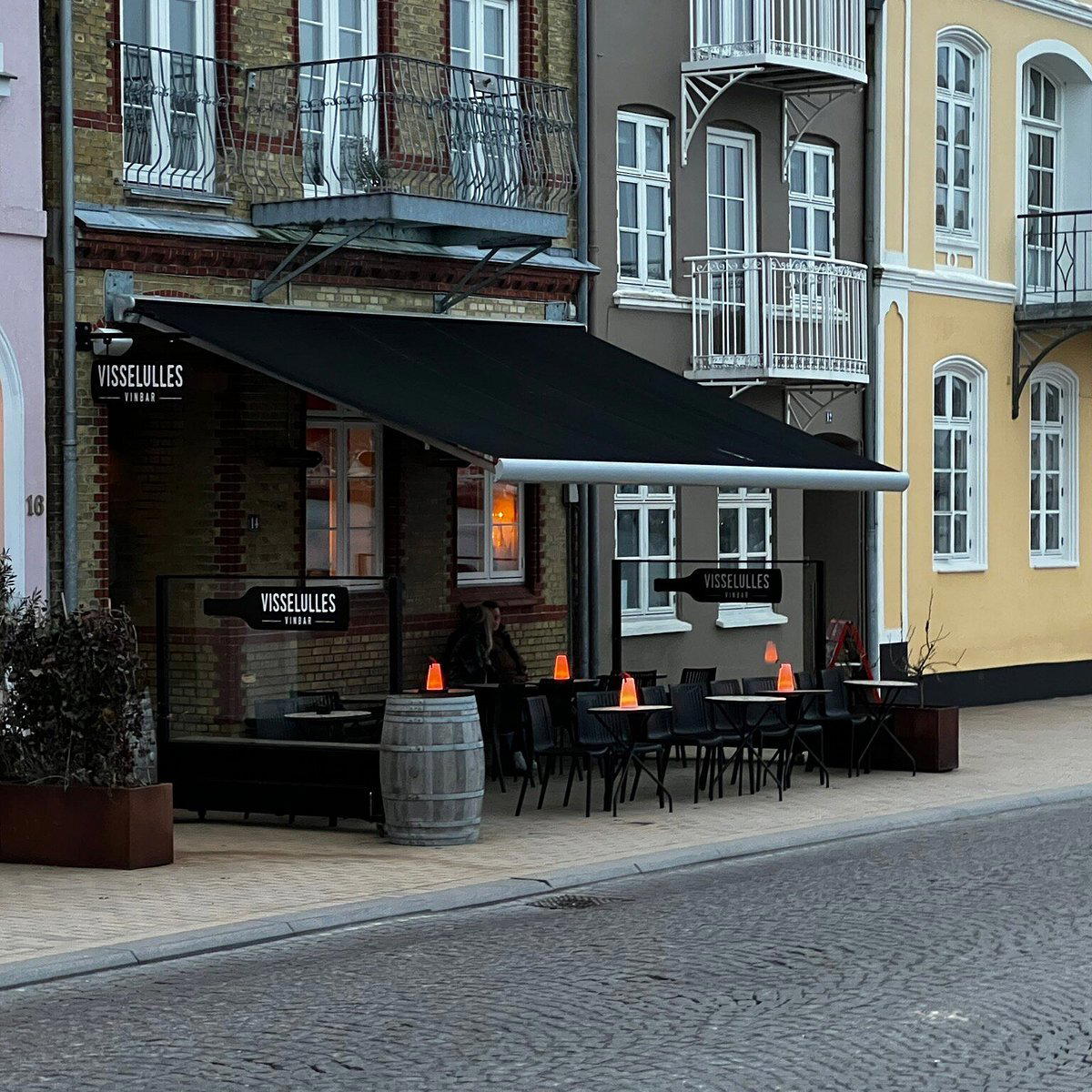
Restaurants in Falsled
Browse all →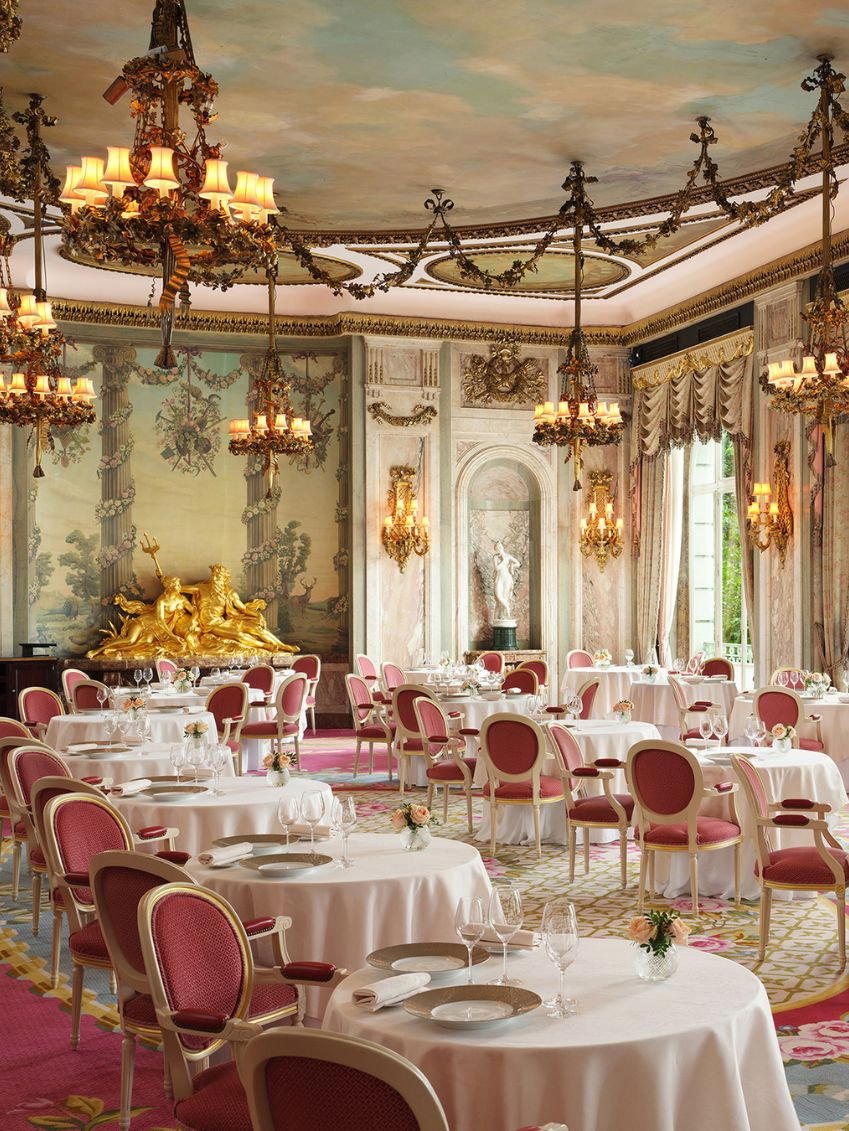
Wineries in Falsled
Browse all →
At a Glance
- Romantic
- Quiet
- Classic
- Scenic
- Elegant
- Romantic Getaway
- Anniversary
- Weekend Escape
- Wellness Retreat
- Waterfront
- Garden
- Terrace
- Historic Building
- Destination Spa
- Panoramic View
- Private Dining
- Wi Fi
- Spa
- Fitness Center
- Restaurant
- Bar
- Room Service
- Bicycle Rental
- Hot Tub
- Sauna
- Massage
- Garden
- Beach Access
- Waterfront
- Garden
- Wi Fi
- Spa
- Fitness Center
- Restaurant
- Bar
- Room Service
- Bicycle Rental
- Hot Tub
- Sauna
- Massage
- Garden
- Beach Access
Serene and intimate with warm hospitality; guests describe charming, cozy cottages with fireplaces, terraces overlooking the sea and gardens, creating a peaceful retreat atmosphere.