Daikoku Miguel Angel
Our verdict
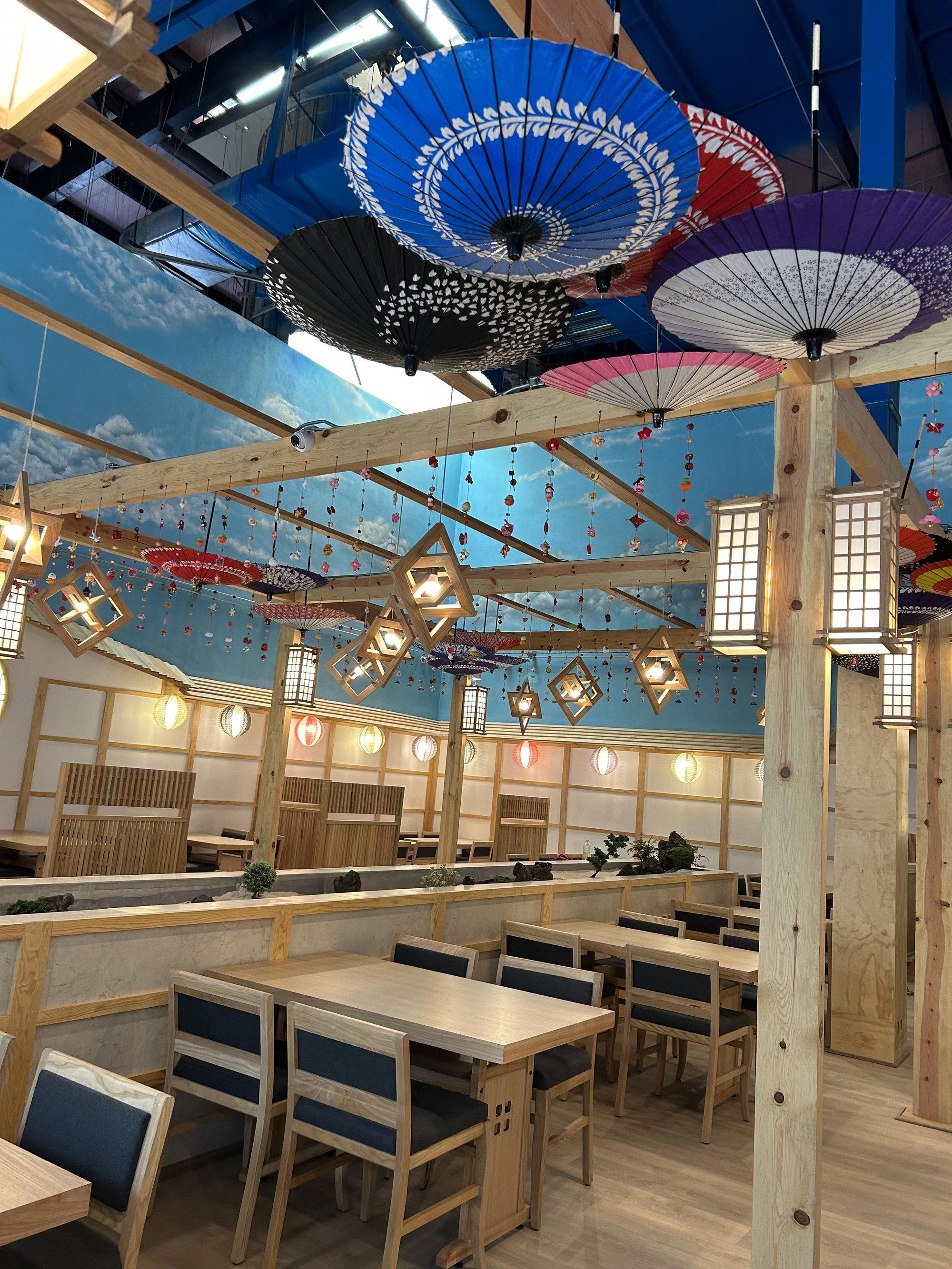
On Avenida Miguel Angel de Quevedo in Coyoacán's commercial fringe, Daikoku Miguel Angel occupies a plaza address that positions it differently from the capital's fine-dining corridor. Against a Mexico City scene defined by tasting-menu ambition and indigenous ingredient narratives, Daikoku offers a counterpoint: a Japanese-inflected format rooted in the city's longstanding appetite for ramen and izakaya-style eating.

Pearl is the En Primeur Club membership app, where members save venues, book tables and use the concierge.
Where Coyoacán Meets the Japanese Dining Shift
The stretch of Avenida Miguel Angel de Quevedo that runs through the southern edge of Coyoacán has long functioned as a commercial buffer between the neighbourhood's bohemian core and the denser residential blocks beyond. Plaza Cielo, where Daikoku Miguel Angel occupies its address at number 247, sits in that transitional zone: accessible by metro and metrobús, surrounded by the kind of everyday retail that keeps a neighbourhood honest. Arriving here, you are not in the polished corridor of Polanco or the gallery-lined streets of Roma Norte. That distinction matters for understanding what kind of dining operation this address can sustain and what kind of audience it draws.
Mexico City's Japanese food scene has undergone a quiet but meaningful consolidation over the past decade. Where earlier iterations of ramen and izakaya culture leaned heavily on novelty, the current generation of Japanese-format restaurants in the capital has split into clearer tiers: high-concept omakase operations targeting the same clientele as Pujol or Quintonil, and more accessible neighbourhood formats built around repeat custom and casual frequency. Daikoku Miguel Angel belongs to the latter category, positioned in the southern city rather than the premium dining belt.
The Evolution of a Southern City Address
The trajectory of Japanese dining in Mexico City mirrors a pattern visible in several Latin American capitals: an initial wave of sushi bars aimed at upper-middle-class consumers, followed by a ramen and izakaya moment driven by younger audiences, and now a more differentiated scene in which format, neighbourhood, and price tier each carry distinct signals. Daikoku, operating under a brand name that references the Japanese deity of fortune and abundance, participates in that third phase. Its plaza location in Romero de Terreros, a colonia that sits administratively within Coyoacán, places it outside the zones where Rosetta or Em set their competitive benchmarks.
What this geographic positioning implies is a different relationship with its clientele. Southern Mexico City restaurants serving Japanese formats tend to draw from a broader residential catchment than their Polanco or Condesa counterparts. The audience is less likely to be mapping the meal against a recent visit to a tasting-menu counter and more likely to be establishing a regular rotation. That dynamic shapes everything from portion logic to service tempo, and it is the lens through which Daikoku Miguel Angel makes most sense as a dining proposition.
The evolution of this kind of venue in Mexico City is also shaped by how the city's palate has changed. A decade ago, the capital's appetite for Japanese food was largely satisfied by Americanised sushi rolls and a handful of formal Japanese restaurants in hotel settings. The intervening years brought ramen culture, yakitori, and tonkatsu into widespread circulation, creating a consumer base that now reads Japanese menus with considerably more fluency. Daikoku operates in the wake of that education, in a city where Japanese formats no longer need to explain themselves but do need to differentiate within an increasingly crowded category.
Reading the Coyoacán Context
Understanding where Daikoku Miguel Angel sits requires some familiarity with how Coyoacán functions as a dining district. The neighbourhood's reputation rests on its historic centre, the markets, and the cluster of cafés and cantinas that have served its intellectual and artistic communities for generations. Serious restaurant openings in Coyoacán tend to succeed when they align with the area's preference for substance over spectacle, and when they offer something the immediate residential population cannot easily access elsewhere in the southern city.
That calculus has historically favoured neighbourhood-scale operations over ambitious fine-dining formats. The latter tend to cluster in Polanco, Roma, and Condesa, where the concentration of expense-account dining and international visitors supports higher price points. Venues like Sud 777, which has operated in the Pedregal area with a creative format and strong critical attention, demonstrate that southern Mexico City can sustain serious cooking, but the model there involves a destination proposition rather than a neighbourhood anchor. Daikoku's plaza address and format suggest a different ambition: to function as part of the fabric of the southern city rather than as a destination from outside it.
Across Mexico more broadly, the geographic spread of serious dining has accelerated. Restaurants like Levadura de Olla Restaurante in Oaxaca, Alcalde in Guadalajara, and KOLI Cocina de Origen in Monterrey have demonstrated that the country's dining ambition is no longer concentrated in the capital. Within Mexico City itself, the same decentralisation is visible, with interesting openings appearing in colonias that would have been overlooked by the dining press five years ago. Daikoku Miguel Angel's Coyoacán address is part of that pattern.
Planning a Visit
Practical information about Daikoku Miguel Angel, including current hours, reservation requirements, and pricing, is not available in verified form at the time of publication. Direct confirmation with the venue before visiting is advisable. The address at Plaza Cielo, Avenida Miguel Angel de Quevedo 247, Romero de Terreros, is accessible from the Miguel Angel de Quevedo metro station on Line 3, making it one of the more transit-accessible dining addresses in the southern city.
For readers building a broader Mexico City itinerary, our full Mexico City restaurants guide maps the capital's dining scene across neighbourhoods and price tiers. Those extending travel beyond the capital will find points of comparison at Animalón in Valle de Guadalupe, Le Chique in Puerto Morelos, HA' in Playa del Carmen, Arca in Tulum, Olivea Farm to Table in Ensenada, Pangea in San Pedro Garza Garcia, and Lunario in El Porvenir. For those tracking how Mexican-format ambition compares to international benchmarks, Le Bernardin in New York City and Lazy Bear in San Francisco offer useful reference points for how neighbourhood-rooted formats can build critical standing over time.
Logistics at a Glance
| Venue | Zone | Price Tier | Format |
|---|---|---|---|
| Daikoku Miguel Angel | Coyoacán / Romero de Terreros | Not confirmed | Japanese-inflected, plaza setting |
| Pujol | Polanco | $$$$ | Mexican tasting menu |
| Quintonil | Polanco | $$$$ | Modern Mexican, à la carte and tasting |
| Rosetta | Roma Norte | $$ | Italian-creative, neighbourhood scale |
| Em | Juárez | $$$ | Mexican, chef-led |
Frequently asked questions
Where is Daikoku Miguel Angel located?
Daikoku Miguel Angel is located at Avenida Miguel Angel de Quevedo 247 Plaza Cielo, Romero de Terreros, 04310 CDMX, Mexico, Mexico City.
Is Daikoku Miguel Angel the same group as other Daikoku locations in Mexico City?
Daikoku operates multiple addresses across Mexico City, and the Miguel Angel de Quevedo location at Plaza Cielo, Romero de Terreros, CDMX 04310, is a distinct outpost serving the Coyoacán area.
What dish is Daikoku Miguel Angel famous for?
Verified dish-level detail for Daikoku Miguel Angel is not in our current editorial record. The restaurant sits within a Coyoacán dining corridor where Japanese kitchens have progressively moved beyond basic sushi formats toward more considered Japanese cooking.
Do I need a reservation for Daikoku Miguel Angel?
Reservation policy for Daikoku Miguel Angel has not been confirmed in verified form at time of publication. Given the restaurant's address within Plaza Cielo on Avenida Miguel Angel de Quevedo, a commercial stretch that draws steady foot traffic from the surrounding Romero de Terreros and Coyoacán neighbourhoods, booking ahead during peak evening hours is a reasonable precaution. check the venue's official channels to confirm current availability and booking procedures.
What do critics highlight about Daikoku Miguel Angel?
No named critical reviews or award citations for Daikoku Miguel Angel are documented in our editorial record at this time. The restaurant occupies a part of Mexico City's southern dining circuit that has attracted increasing attention as Japanese dining in CDMX has matured beyond its earliest sushi-bar phase. EP Club will update this listing as verified critical recognition becomes available.
Do they accommodate allergies at Daikoku Miguel Angel?
For any dietary requirements, contacting the restaurant at Avenida Miguel Angel de Quevedo 247, Plaza Cielo, Romero de Terreros before your visit is the reliable route, this is standard practice across Mexico City's Japanese dining venues regardless of scale or format.
At a Glance
Comparable venues nearby, for context on price, style, and recognition.
| Venue | Cuisine | Price | Notes |
|---|---|---|---|
| Daikoku Miguel AngelThis venue (the venue you are viewing) | Japanese-Mexican Fusion | $20–30 | Not listed |
| Rokai Santa Fe | Japanese Izakaya | Not listed | Res Parque Santa Fe, Japanese Izakaya |
| El Japonez Santa Fe | Modern Japanese Fusion | $30–50 | Centro Comercial Santa Fe, Modern Japanese Fusion |
| Mikado | Classic Japanese Teppanyaki & Sushi | $20–30 | Cuauhtemoc, Classic Japanese Teppanyaki & Sushi |
| Ishi-Ko | Japanese with Mexican Taste | Not listed | Lomas de Virreyes, Japanese with Mexican Taste |
| Teppan Grill | Premium Japanese Teppanyaki | $50–100 | Polanco Chapultepec, Premium Japanese Teppanyaki |