
Tabelog 100 #77
Our verdict
Kyoto’s wagashi culture rewards precision over spectacle, and Daigokuden Honpo Rokkaku ten sits in that quieter register: a Japanese sweets cafe with repeated Tabelog 100 recognition and a monthly Kohaku Nagashi format that makes seasonality explicit. It suits travelers who want Kyoto’s sweet tradition at modest scale rather than a long-form restaurant sitting.

Pearl is the En Primeur Club membership app, where members save venues, book tables and use the concierge.
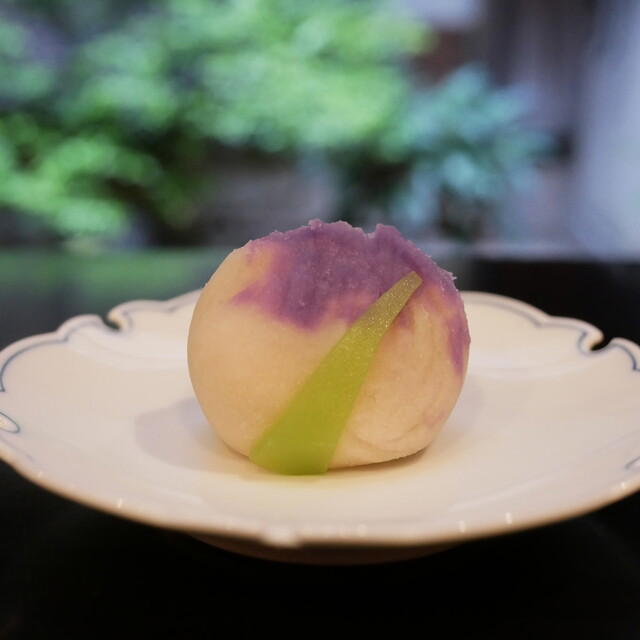
The menu
What to order
- Warabi-mochi
- Zenzai
- Shaved ice
- Kanten jelly
Kyoto has a compressed rhythm: shopfronts close to the street, bicycles slipping past, and old confectionery habits folded into daily errands. Here, the Japanese sweets cafe corrects Kyoto’s tasting-menu image. The point is not luxury theatre, but restraint, seasonality, and wagashi’s calibrations: sweetness held in check, texture carrying as much meaning as flavor, and choices shaped by the calendar rather than visual excess.
Daigokuden Honpo Rokkaku ten belongs to that tradition, not the dessert-counter fashion common in bigger Japanese cities. Its 2023 recognition from Tabelog’s Hyakumeiten for Japanese traditional sweets and Japanese sweets cafe places it among venues judged within a regional craft category, not against French patisserie or hotel afternoon tea. That distinction matters in Kyoto, where confectionery is tied to tea culture, seasonal customs, gift-giving, and coded understatement.
Seasonal sweets turn Kyoto's calendar into a cafe format
The clearest expression of the house style is often the way a Japanese sweets cafe lets seasonality lead, with flavors and textures changing in step with the calendar. Rather than treating a sweet as a fixed object, the format can become a compact map of the Japanese year: familiar references, restrained sweetness, and a sense that the calendar has moved. This is choice and timing as editorial structure, with Japanese sweets marking season through balance rather than visual excess.
That monthly cadence explains why Kyoto wagashi shops cannot be judged only by signatures. A fixed “order this” mentality misses the craft. A better reading is comparative: Kame Hironaga occupies the same Kyoto sweets culture, while Daigokuden Honpo Rokkaku ten is most useful for travelers interested in how a cafe can turn a recurring sweets format into a seasonal archive. For a different old-Kyoto sweets ritual, other Kyoto dining and sweets stops can point to formats beyond cafe service.
Wagashi’s logic is quieter than farm-to-table rhetoric. Seasonal elements are not novelties but part of a shared vocabulary. In Kyoto, that vocabulary carries social information: spring can be suggested before blossom tourism becomes spectacle; autumn can be signaled without elaborate plating; end-of-year sweets bring the calendar toward New Year associations. The attraction is the discipline of that cycle, not a new dessert language.
A small cafe format, not a restaurant performance
The venue is best understood as a cafe featuring Japanese sweets and Japanese traditional sweets. That scale shapes the experience. Kyoto has many small dining rooms where scarcity is manufactured through reservation systems and chef-counter intimacy; this is a different constraint. For a sweets cafe, timing is practical rather than status-driven. Treat it as a Kyoto stop, not the anchor of an entire dining day.
The category also changes expectations. This is not for a long savory progression, wine pairings, or chef biography as narrative. It sits closer to Kyoto’s everyday craft economy: a specialist sweets setting priced for a short pause rather than a formal meal. The listed budget is dinner at JPY 1,000 - JPY 1,999 and lunch up to JPY 999, a range that keeps the focus on craft rather than occasion dressing.
Within Kyoto, this stop pairs naturally with a broader day of eating rather than competing with dinner. Nearby planning might include other Kyoto dining rooms, casual stops, formal meals, or a later bar plan. Kyoto rewards sequencing: sweets, tea, casual lunch, formal dinner, and bar time each occupy their own lane. For full-city planning, use Our full Kyoto restaurants guide, with parallel context in Our full Kyoto hotels guide, Our full Kyoto bars guide, Our full Kyoto wineries guide, and Our full Kyoto experiences guide.
Why ingredient timing matters more than decoration
Kyoto’s sweet tradition can look minimal to diners trained on plated-dessert drama. That is the wrong lens. The craft sits in the relationship between sweetness, texture, format, and season. Daigokuden Honpo Rokkaku ten is useful because its Japanese sweets cafe format makes that relationship legible. The calendar is not garnish; it is the organizing principle. Two visits in different seasons can produce different readings of the same format without requiring reinvention.
That continuity gives the place editorial weight. Its 2023 selection in Tabelog’s Hyakumeiten sweets context signals relevance within Japan’s sweets category. The Tabelog score of 3.77 is also meaningful in Japan’s review culture, where scores cluster lower than many international travelers expect. Together, the recognition and category fit point to a specialist cafe that belongs in a Kyoto itinerary for craft literacy, not spectacle.
Travelers building a wider Japan sweets-and-casual-food map can compare the Kyoto register with other regional addresses generically, rather than forcing every cafe or sweets shop into the same hierarchy. Kyoto’s version of the category is especially tied to tea culture, gift-giving, restraint, and seasonal codes. In other cities, Japanese food categories can shift toward different rhythms, but Daigokuden Honpo Rokkaku ten is best read through Kyoto’s own sweets culture.
The editorial case is simple: Kyoto’s serious food culture is not confined to kaiseki counters and temple-adjacent dining rooms. A sweets cafe can teach as much about the city when it treats the calendar as a seasonal marker and keeps the format disciplined. Daigokuden Honpo Rokkaku ten is strongest for travelers who notice those codes: the season, the texture, the category, and how a short stop can carry more cultural information than a longer meal built for spectacle.
Frequently asked questions
What should I budget for a meal at Daigokuden Honpo Rokkaku ten?
Budget at Daigokuden Honpo Rokkaku ten is listed as dinner at JPY 1,000 - JPY 1,999 and lunch up to JPY 999.
What are the operating hours at Daigokuden Honpo Rokkaku ten?
Specific operating hours are not listed here; confirm directly with Daigokuden Honpo Rokkaku ten before visiting.
What part of town is Daigokuden Honpo Rokkaku ten in?
Kyoto.
What makes Daigokuden Honpo Rokkaku ten worth seeking out?
Its strongest credential is the 2023 Tabelog Hyakumeiten recognition for Japanese traditional sweets and Japanese sweets cafe. The format is compact in spirit, focused on Japanese sweets and Japanese traditional sweets rather than a long restaurant-style meal.
Is Daigokuden Honpo Rokkaku ten good for vegetarians?
The venue is a cafe featuring Japanese sweets and Japanese traditional sweets. Because specific menu details are not listed here, vegetarian diners should confirm ingredients directly and focus on the sweets format rather than assuming every item is suitable.
Is Daigokuden Honpo Rokkaku ten suitable for children?
The ground-truth record here identifies Daigokuden Honpo Rokkaku ten as a cafe featuring Japanese sweets and Japanese traditional sweets, but does not provide a specific children policy. Families should confirm directly before visiting.
Quick Comparison
Comparable venues side-by-side for orientation.
| Venue | Cuisine | Price | Awards | Notes |
|---|---|---|---|---|
| Daigokuden Honpo Rokkaku tenThis venue (the venue you are viewing) | Japanese Sweets Cafe | $10–20 | Tabelog 100 #77 | Not listed |
| Fuka Nishiki ten | Traditional Kyoto nama-fu & Japanese sweets | $1–10 | Tabelog 100 #1 | Nakagyō |
| suba | Contemporary standing soba | $10–20 | Tabelog 100 #33 | Shimogyō |
| Seabura no Kami Mibu honten | Back-fat niboshi ramen | $10–20 | Tabelog 100 #96 | Nakagyō |
| Curry Senmon Ten Biyanto | Japanese Curry | Not listed | Tabelog 100 #32 | Sakyō |
| Okonomiyaki Yoshino | Traditional Okonomiyaki & Teppanyaki | $10–20 | Tabelog 100 #52 | Higashiyama |
Recognition history
Dated appearances from independent guides and award organizations, with the underlying list record or original source where available.
Tabelog 100 #77 · No. 77
Tabelog · Tabelog 100 - Japanese traditional sweets / Japanese sweets cafe - WEST - 2023
Continue exploring
More in Kyoto
Restaurants in Kyoto
All restaurants in Kyoto →



Bars in Kyoto
All bars in Kyoto →


Hotels in Kyoto
All hotels in Kyoto →



Wineries in Kyoto
Browse all →
Details
- Classic
- Cozy
- Casual Hangout
- Solo
- Family
- Standalone
- Historic Building
- Sake Program
- Street Scene
- A La Carte
- Counter Dining
- Tea
- Vegetarian Friendly
Current opening hours
- Monday
- 9:30 AM–6 PM
- Tuesday
- 9:30 AM–6 PM
- Wednesday
- Closed
- Thursday
- 9:30 AM–6 PM
- Friday
- 9:30 AM–6 PM
- Saturday
- 9:30 AM–6 PM
- Sunday
- 9:30 AM–6 PM
Hours can change for holidays and private events. Last verified .
A small, traditional, house-style café with a calm, low-key atmosphere centered on Japanese sweets service.