Da Giuseppe delicatesse & Catering
"Da Giuseppe, Oost by Los Bangeles & Fourteen. A cozy Italian deli in the heart of Kralingen. All products are prepared with care and taste, from a genuine love and passion for food. Delicious antipasti, homemade sandwiches, pizzas, salads, pastas, meat and fish specialties and delightful dolce."
Pearl is the En Primeur Club membership app — saves, bookings, and concierge access live there. Same editors, same standards.
- Address
- Chris Bennekerslaan 3, 3061 EA Rotterdam, Netherlands
- Phone
- +31 10 411 1881
- Website
- dagiuseppe.nl
- Directions
- Get directions
 Saves & bookings on Pearl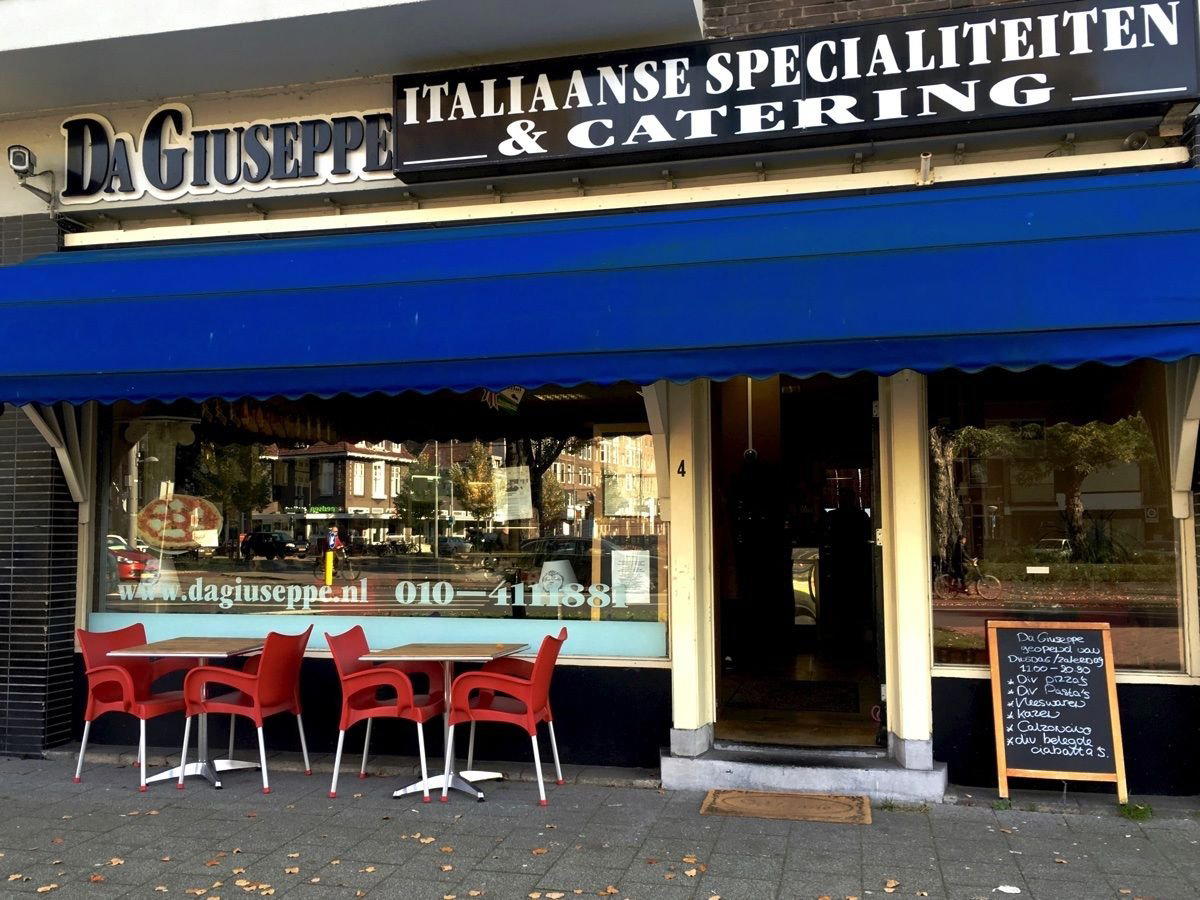
Italian Deli Culture in Rotterdam's Eastern Residential Belt
The deli-and-catering format has a particular rhythm to it, one that sits apart from the seated restaurant tradition. There is no fixed menu pacing, no sommelier circling with suggestions, no choreographed arrival of courses. Instead, the ritual is built around the act of selection: reading a counter, weighing choices, deciding how much is enough. In cities with a mature Italian food culture, this format has sustained itself alongside fine dining for generations, serving a different kind of appetite — one that wants provenance and craft without the ceremony of a full-service meal. Da Giuseppe delicatesse & Catering, addressed at Chris Bennekerslaan 3 in the 3061 EA postal district of Rotterdam, occupies that deli-and-catering position in a city that has historically leaned toward its restaurant scene rather than its specialist food retail.
Rotterdam's Dining Scene and Where the Deli Fits
Rotterdam's culinary reputation is anchored at the high end. The city's Michelin-starred tier, which includes venues like Parkheuvel (Modern Cuisine), FG — François Geurds (Creative), Fred (Creative French), and Amarone (Modern French), operates at the €€€€ price bracket and demands advance booking, tasting-menu commitment, and a multi-hour evening. Fitzgerald represents the Modern French offering at a slightly different register. These are seated, structured dining experiences. A delicatessen-and-catering operation like Da Giuseppe sits in an entirely different competitive space, closer to the provisioner tradition, where the meal is assembled rather than served, and the relationship with food is direct and unhurried. In a city where the restaurant conversation dominates, that kind of specialist food retail fills a gap that many residents and food-aware visitors notice only when they go looking for it. For our full Rotterdam restaurants guide, including context on the city's broader dining options, see the EP Club Rotterdam city page.
The Delicatessen Ritual and What It Demands of the Visitor
The deli format asks something different of you than a restaurant does. You arrive with a degree of existing knowledge, or at least curiosity, rather than sitting down to be guided by a kitchen's logic. The pacing is self-directed. A well-run Italian delicatessen, the kind that takes the delicatesse designation seriously, will have an arranged counter or display that functions as a kind of menu in itself: cured meats at different stages of aging, cheeses from specific regional producers, prepared items that reflect the kitchen's seasonal priorities. Reading the counter is part of the ritual. Asking questions is expected, even encouraged. The Italian deli tradition, rooted in regional specificity (the mortadella from one province, the formaggio from another), rewards exactly that kind of conversational engagement in a way that a plated tasting menu rarely can. The catering side of the operation adds a further layer of ritual: the planning of a meal for a group, the negotiation of quantities and formats, the translation of an event's social logic into food choices. These are decisions that unfold over days or weeks, not the course of an evening.
The Netherlands and the Italian Food Tradition
Italian food retail has a longer history in the Netherlands than the country's dining reputation might suggest. Cities like Rotterdam and Amsterdam have supported Italian specialist importers and deli operators since the postwar decades, when Italian immigration brought not just labour but food knowledge. The result is a scattered but consistent presence of Italian provisions in Dutch urban life, often operating at neighbourhood scale, as is the case on a residential street like Chris Bennekerslaan, rather than in the high-traffic tourist corridors. This neighbourhood positioning is not a limitation; it is part of the model. The regulars who depend on a deli like Da Giuseppe are not visiting from across the city on a special occasion. They are building a food relationship over time, which is closer to how Italians themselves relate to their salumerie and alimentari. The Dutch context adds its own layer: a pragmatic approach to food quality, a preference for directness in the transaction, and an openness to specialist food that the broader retail environment does not always satisfy. Comparable Italian deli traditions in other European cities, whether in London's older Italian neighbourhoods or in Paris's specialist food streets, suggest that venues positioned this way tend to build loyalty over years rather than generating footfall from outside their catchment area.
Comparing the Format Across Dutch Fine Dining
It is useful to set Da Giuseppe against the wider Dutch specialist food scene rather than only its Rotterdam peers. The Netherlands has a genuinely strong fine-dining tradition at the restaurant level: De Librije in Zwolle, Inter Scaldes in Kruiningen, De Nieuwe Winkel in Nijmegen, De Lindenhof in Giethoorn, and others including Tribeca in Heeze, De Groene Lantaarn in Staphorst, Brut172 in Reijmerstok, De Lindehof in Nuenen, De Bokkedoorns in Overveen, and De Treeswijkhoeve in Waalre, all operating in the seated, structured format. The specialist deli-and-catering model occupies a separate tier entirely, measured not by covers or kitchen creativity but by sourcing consistency, product knowledge, and the trust built with a regular clientele. Internationally, the catering format has moved in two directions: high-volume event catering with standardised menus, and artisan provisioning for private occasions where sourcing specificity is the primary value offered. Italian-named operators in Western European cities have generally positioned toward the latter, using regional Italian product knowledge as the differentiating factor. For reference points outside the Dutch scene, Le Bernardin in New York City and Lazy Bear in San Francisco represent the opposite end of the format spectrum: structured, chef-driven, reservation-dependent. Da Giuseppe's model is closer to the provisioner tradition than either of those.
Planning a Visit
Da Giuseppe delicatesse & Catering is located at Chris Bennekerslaan 3, 3061 EA Rotterdam, in the eastern residential part of the city. Given the absence of confirmed booking information, website, or phone details in the public record at the time of writing, the most practical approach for first-time visitors is to arrive during standard Dutch retail hours, generally Tuesday through Saturday, mid-morning to early afternoon, and to treat the visit as a counter-led experience rather than a sit-down meal. For catering enquiries, a direct visit or local recommendation from regular customers is the most reliable route to establishing contact. Current hours, pricing, and availability should be confirmed locally before making a special trip from the city centre.
Continue exploring
More in Rotterdam
Restaurants in Rotterdam
Browse all →
Bars in Rotterdam
Browse all →
Hotels in Rotterdam
Browse all →
Wineries in Rotterdam
Browse all →
At a Glance
- Cozy
- Classic
- Casual Hangout
Current opening hours
- Monday
- Closed
- Tuesday
- 10:30 AM–3 PM, 3:30–8 PM
- Wednesday
- 10:30 AM–3 PM, 3:30–8 PM
- Thursday
- 10:30 AM–3 PM, 3:30–8 PM
- Friday
- 10:30 AM–3 PM, 3:30–8 PM
- Saturday
- 10:30 AM–3 PM, 3:30–8 PM
- Sunday
- 3–8 PM
Hours can change for holidays and private events. Last verified .
Cozy neighborhood spot with a welcoming, homely atmosphere focused on pure Italian flavors.
Know Before You Go
- Getting there
- Chris Bennekerslaan 3, 3061 EA Rotterdam, Netherlands