Cvi.Che 105
Our verdict
Cvi. Che 105 serves Award-Winning Peruvian Ceviche with craft cocktails and an open kitchen at 105 NE 3rd Ave, suited to lunch, dinner, or late-night plans.

Pearl is the En Primeur Club membership app, where members save venues, book tables and use the concierge.
The menu
What to order
- Trilogia De Tiraditos
- Corvina Ceviche
- Arroz con Mariscos Especial
Downtown Miami's Ceviche Standard
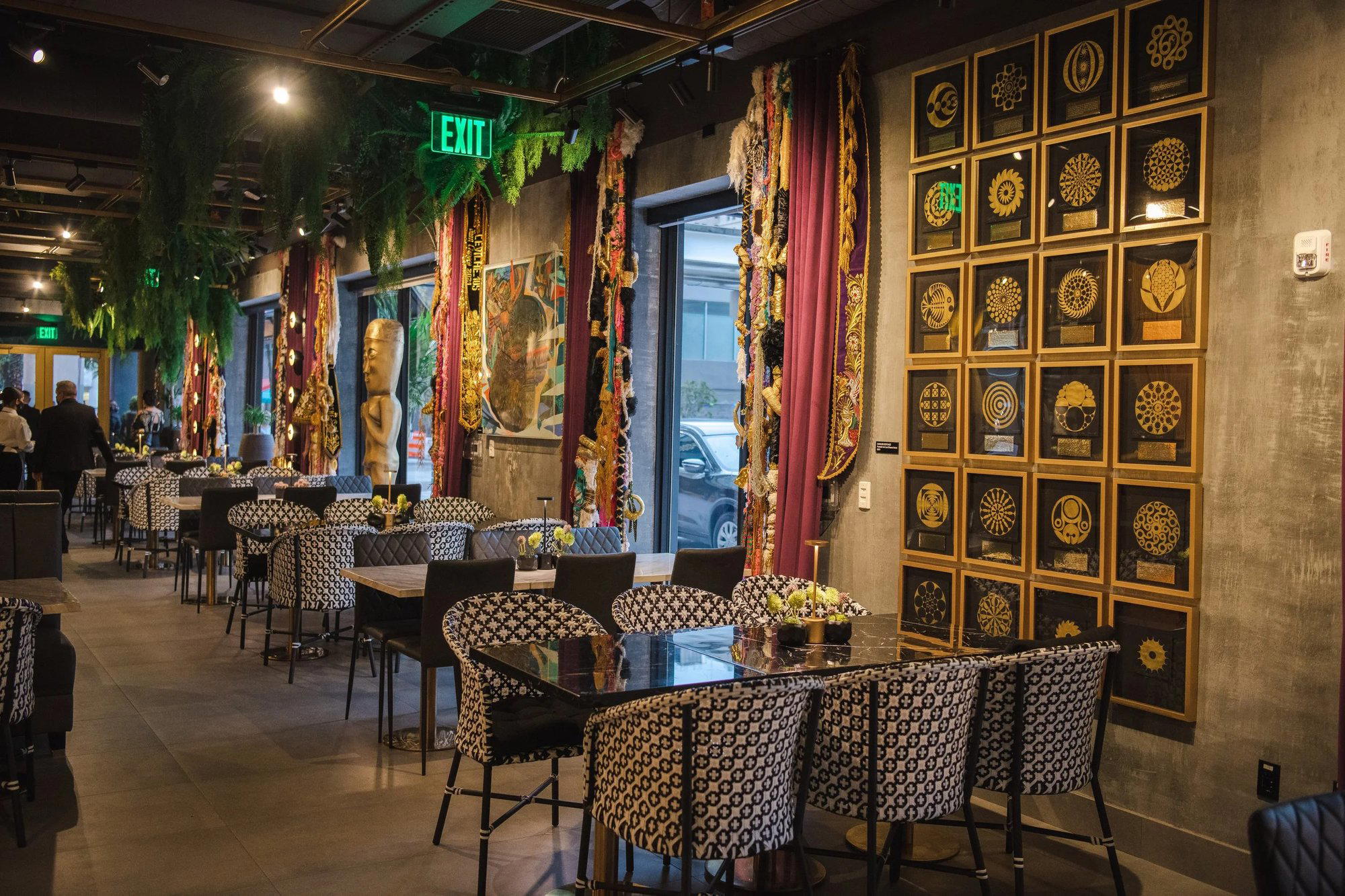
The stretch of NE 3rd Avenue running through downtown Miami has shifted considerably over the past decade. What was once a corridor of commuter lunch spots and unremarkable quick-service counters has absorbed a wave of restaurants that draw on Miami's Latin American demographic depth rather than serving tourist expectations. Cvi. Che 105 sits at 105 NE 3rd Ave, and the address itself signals something about its positioning: this is a downtown address, not a Brickell showroom or a Wynwood weekend destination. The room functions as a daily reality for the neighborhood's working population as much as it does a discovery for visitors tracing Miami's Peruvian food thread.
Peruvian cuisine in Miami has followed a recognizable arc across American cities. In its first generation, restaurants here served the community that brought the food. In a second wave, Peruvian techniques entered fine-dining vocabulary, with leche de tigre and nikkei preparations appearing on menus far outside their original context. What has since emerged is a middle tier: restaurants that hold culinary seriousness without tipping into tasting-menu formality. Cvi. Che 105 has occupied that space for long enough that it now functions as a reference point rather than a discovery for those who follow Miami's Latin dining scene closely. For context on how the Peruvian tradition reads at a more formal register in Miami, ITAMAE operates in the same city with a sharper omakase-influenced format.
How the Format Has Shifted
The evolution angle matters here because Cvi. Che 105 has not stood still. Peruvian restaurants that opened in downtown Miami during the mid-2000s faced a different competitive moment: there were fewer high-profile Latin American alternatives, less diner familiarity with Peruvian technique, and less pressure to differentiate within the category. The restaurant now operates in a city where downtown dining has matured around it, and where the broader Miami scene includes Korean steakhouses like Cote Miami, Italian contemporary spots like Boia De, and progressive American kitchens like Ariete. That competitive shift has pushed every restaurant in the city to clarify what it is actually doing and for whom.
For Cvi. Che 105, the answer has remained anchored to Peruvian ceviche tradition rather than fusion elaboration. The restaurant's name is not incidental: the core of the menu orbits the ceviche format and its variants, with tiradito, leche de tigre preparations, and cooked Peruvian plates extending the offer. In a city that has watched French technique land with considerable fanfare at addresses like L'Atelier de Joël Robuchon Miami, the decision to hold a single culinary identity rather than expand into multi-cuisine territory is itself a positioning choice.
The Peruvian Ceviche Tradition in Context
Ceviche as a category deserves some precision, because the word covers considerable ground. Classical Peruvian ceviche is a discipline: fish cut to size, cured in citrus acid for a controlled time, finished with ají amarillo, red onion, and choclo, then served immediately. The leche de tigre, the curing liquid, is itself a preparation that serious kitchens treat as a standalone product rather than a byproduct. Tiradito diverges from ceviche by omitting the onion and slicing the fish in the Japanese sashimi manner, a reflection of the nikkei influence that has shaped Peruvian coastal cooking since the late nineteenth century. A restaurant that works seriously in this category is dealing with timing, acid balance, and sourcing in ways that are not visible on the plate but are immediately apparent in the eating. The broader Peruvian-inflected register in American fine dining has reached considerable sophistication; for contrast, restaurants operating at the chef's-counter level nationally, such as Le Bernardin in New York City or Providence in Los Angeles, demonstrate how seafood-led cooking can command a different price tier and format entirely.
Cvi. Che 105 is not positioning itself against that formal tier. Its relevance is as a sustained, downtown-accessible address for this specific culinary tradition, one that has maintained a customer base through a period of significant change in Miami's restaurant market. That longevity is its own credential in a city where restaurant turnover runs high.
Downtown Miami's Dining Geography
The NE 3rd Avenue location places Cvi. Che 105 in the core of downtown rather than in Miami's more trafficked dining districts. Brickell pulls a financial district crowd with expense-account expectations. Wynwood draws weekend visitors drawn by the gallery and bar scene. Downtown proper serves a more mixed population: courthouse workers, hotel guests, residents of the condominium towers that have risen steadily around Biscayne Boulevard. A restaurant at this address that has maintained relevance over time has done so by serving that population consistently, not by riding the wave of a particular neighbourhood moment. For those who want to understand how Miami's dining geography maps across districts, the full Miami restaurants guide covers the city's key areas in greater detail.
Nationally, the sustained downtown address is a particular kind of restaurant achievement. Many of the most-discussed American kitchens operate in destination-dining zones where the audience is pre-motivated: Lazy Bear in San Francisco, The French Laundry in Napa, Smyth in Chicago, Blue Hill at Stone Barns in Tarrytown, Single Thread Farm in Healdsburg, Addison in San Diego, The Inn at Little Washington, Atomix in New York City, Emeril's in New Orleans, or Atelier Moessmer Norbert Niederkofler in Brunico. A downtown Miami address with a working-population lunch crowd and an evening dinner service operates in a different register entirely, and the metrics for success are different as well.
Know Before You Go
| Address | 105 NE 3rd Ave, Miami, FL 33132 |
|---|---|
| Neighbourhood | Downtown Miami |
| Cuisine Focus | Peruvian, ceviche-led |
| Reservations | |
| Dietary Notes | Inquire directly for vegetarian options; menu is seafood-forward |
| Leading Timing | Weekday lunch for a quieter room; weekend evenings draw fuller crowds |
Frequently asked questions
Where is Cvi. Che 105 located?
Cvi. Che 105 is located at 105 NE 3rd Ave, Miami, FL 33132, Miami.
How does Cvi. Che 105 compare to other Peruvian restaurants in Miami?
Cvi. Che 105 occupies a distinct position by placing a Peruvian ceviche-focused format in downtown Miami rather than in Brickell or Wynwood, where most of the city's higher-profile Latin dining has clustered. The 105 NE 3rd Ave address puts it closer to Miami's civic and financial core, drawing a local weekday crowd alongside destination diners. Among Miami's Peruvian restaurants, its long-running downtown presence gives it a different neighbourhood context than newer arrivals to the scene.
What do regulars order at Cvi. Che 105?
The focus at Cvi. Che 105 is classical Peruvian ceviche, so fish-forward preparations with leche de tigre, the citrus-cured marinade central to Lima's ceviche tradition, are what the kitchen is built around. Regulars at Peruvian-leaning counters in Miami typically anchor their order there before moving to causas or tiraditos. The NE 3rd Ave location draws a downtown crowd that tends to order across the ceviche range rather than treating it as a single dish.
Do I need a reservation for Cvi. Che 105?
Cvi. Che 105 sits in downtown Miami's core on NE 3rd Ave, a corridor that draws both lunch-hour office traffic and dinner diners. Peruvian ceviche bars at this address profile tend to fill quickly on weekday lunches and weekend evenings. Contacting the restaurant directly before arrival is advisable, particularly for groups.
What is Cvi. Che 105 known for?
Cvi. Che 105 is known for anchoring a disciplined Peruvian ceviche format in downtown Miami at 105 NE 3rd Ave, a location outside the more trafficked Brickell and Wynwood dining corridors. The name itself signals the address and the category simultaneously, which is a fairly deliberate positioning move in a city where Peruvian cooking has built a serious local following over the past two decades.
Can Cvi. Che 105 handle vegetarian requests?
Traditional Peruvian ceviche menus are heavily fish- and seafood-driven, which is the structural base of the cuisine. Most Peruvian restaurants at this format level offer vegetable causas or corn-based sides that can anchor a vegetarian order, though the kitchen's primary identity is protein-forward. Checking directly with the restaurant before visiting is advisable if dietary restrictions are a central consideration.
At-a-Glance Comparison
Comparable venues nearby, for context on price, style, and recognition.
| Venue | Cuisine | Price | Awards | Notes |
|---|---|---|---|---|
| Cvi. Che 105This venue (the venue you are viewing) | Award-Winning Peruvian Ceviche | $50–100 | Not listed | Not listed |
| Aromas del Peru | Traditional Peruvian | $20–30 | Not listed | West Miami |
| Taipa Peruvian Restaurant- | Authentic Peruvian Seafood | $20–30 | Not listed | Ludlum |
| Aviv | Modern Middle Eastern | $50–100 | Wine Spectator Award of Excellence | Miami Beach |
| ATRIO RESTAURANT AND WINE ROOM | Modern New American with Global Influences | Not listed | Not listed | Miami Financial District |
| Gold Coast Kitchen and Cocktails | Modern Coastal Seafood | $30–50 | Not listed | Media and Entertainment District |