
Curry Daiya puts Osaka’s everyday curry culture into a sharper frame: modest pricing, small-room service, and recognition on Tabelog Curry WEST 100 in both 2023 and 2024. In Asahi-ku, away from the city’s luxury dining circuit, it reads as a neighbourhood curry address with enough critical traction to justify a cross-town detour.
Pearl is the En Primeur Club membership app — saves, bookings, and concierge access live there. Same editors, same standards.
- Address
- 2 Chome-27-17 Omiya, Asahi-ku, Osaka, 535-0002, Japan
- Phone
- +81 6-6956-4074
- Website
- tabelog.com
 Saves & bookings on Pearl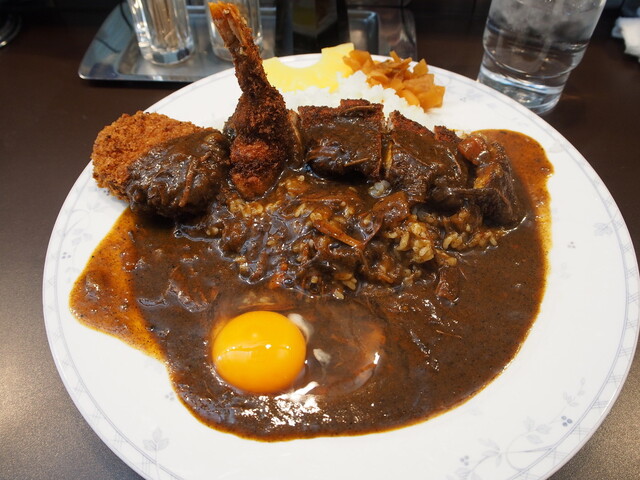
The approach to Sembayashi Omiya shifts Osaka into a local register: shopping-street rhythms, station-side errands, and lunch rooms built for repeat customers, not ceremony. Curry in Japan is both comfort food and specialist obsession. In Osaka, where value, speed, and personal preference matter as much as pedigree, a curry counter can carry more cultural information than a formal tasting room.
Curry Daiya fits that Osaka category: compact, accessible, and judged by regular use as much as awards. Its Tabelog Curry WEST 100 selections in 2023 and 2024 give it a public marker in western Japan’s crowded curry field, but its position matters more. This is everyday Osaka, not the city’s high-polish end: execution must earn loyalty without ceremony.
Osaka curry after the comfort-food phase
Japanese curry has moved beyond home-style roux and chain-restaurant efficiency. Across major cities, specialist shops now divide into spice-forward interpretations influenced by South Asian cooking, katsu-and-curry formats built around texture, and hybrid rooms folding curry into café or yoshoku-adjacent habits. Osaka is especially receptive to that middle ground, where curry can stay casual without becoming generic.
The category listing here, curry with steak and café elements, places the room in that evolution: less rigid than a single-dish specialist, more deliberate than a general lunch café. Osaka’s curry audience is unusually demanding at the low-to-mid price level. At comparable everyday tables, Kadoya and Odoru Udon Takii honten operate in a sub-¥1,000 bracket, while Udon Kurajuu sits in a similar JPY 1,000 to JPY 1,999 range. Curry Daiya is priced in that latter band, so the award recognition matters: the case rests on repeatable value, not rare ingredients or destination-service theatre.
The recognition pattern also matters. Consecutive Tabelog Curry WEST 100 selections in 2023 and 2024 show the shop has not been treated as a single-season curiosity. In a category where new spice-curry openings draw quick attention, repeat selection favors consistency. For travelers, that is the stronger signal: not novelty, but a curry shop holding its place in a region-wide conversation.
A 21-seat room built for lunch discipline
Physical format explains much of the appeal. Twenty-one seats, including seven at the counter, keep the experience close to a neighbourhood lunch room rather than a destination restaurant. Counter seating matters in Japanese curry culture because it shortens the distance between kitchen rhythm and diner expectation: ordering, serving, eating, and turnover proceed without full-service choreography.
The format sets expectations. Private rooms are not offered, and private use is not the point. Non-smoking status, children welcome, and take-out service place it in the practical Osaka dining lane, suited to focused lunch rather than a long evening of wine or courses. Payment by credit cards, transport IC cards, and QR systems adds convenience beyond many old-school cash rooms, though the editorial reason to go remains the curry itself.
Asahi-ku adds another layer. Much Osaka restaurant attention clusters around Umeda, Namba, Kitashinchi, and the central wards where visitors move between hotels, bars, and department-store dining floors. A curry room near Sembayashi Omiya asks for a different itinerary: less spectacle, more neighbourhood specificity. The city’s polished counters tell one story; station-adjacent specialists tell another.
On Osaka’s broader food map, this sits closer to everyday craft than to the reservation-driven tier. Tonkatsu Fujii shows how single-category Japanese comfort dishes can support destination interest without luxury framing. Udon specialists such as Teuchi Udon Beniy and Udon Kurajuu show the same local logic in another register: narrow focus, modest spend, strong repeat use. Curry Daiya belongs in that ecosystem, not in a fine-dining comparison set.
How to read it against a wider Osaka itinerary
For travelers building meals around contrast, a curry stop in Asahi-ku offers more than the plate; it calibrates the rest of the city. Osaka can move from department-store sweets to street snacks, refined Italian rooms to casual bakery counters, in one day. The useful itinerary pairs a curry lunch with other low-ceremony addresses rather than forcing it into luxury sequence. Nearby in editorial spirit, not necessarily geography, 551 Horai (551蓬莱) explains the city’s appetite for high-volume comfort food, while 52CHO-ME BAKERY and .cafe show how casual formats can carry serious local attention.
The contrast sharpens beside Osaka’s international dining vocabulary. a canto (Italian) and 99 Pizza Napoletana Gourmet reflect a city comfortable with imported forms, while curry remains one of Japan’s adopted dishes now fully domestic in practice. Osaka dining is not a hierarchy from casual to formal, but parallel specialisms.
Readers mapping the city should use Our full Osaka restaurants guide for dining context, then cross-check the trip against Our full Osaka hotels guide, Our full Osaka bars guide, Our full Osaka wineries guide, and Our full Osaka experiences guide. The lesson from a curry address like this is simple: serious eating often happens below the price point where visitors expect it.
For wider Japan context, compare how focused casual formats travel across cities: [Curry Senmon Ten] Maruyama Kyoju. in Sapporo frames curry through a northern lens, [ki:] in Kyoto sits in a different Kyoto register, and.know in Kumamoto shows how smaller-city restaurants carry their own rhythm. Farther afield, (Shoku) Vietnam in Kawasaki. 鮪と炭火焼き うお炭 秋葉原店 in Tokyo, and -Grilled beef Sukiyaki- KAMAKURA TANUKIAN 鎌倉 たぬき庵 in Kamakura underline the same editorial rule: category focus matters more than grandeur. Even outside Japan, Jōdo Saké Bar in Los Angeles and Onigiri Time in Pasadena show how Japanese casual forms gain meaning when the format is specific.
The verdict is practical but not bland. The restaurant is for travelers who want Osaka beyond the obvious food checklist and understand that a 21-seat curry room can say as much about the city as a harder-to-book counter. The Tabelog Curry WEST 100 selections provide the trust signal; the neighbourhood format provides the reason to care.
A Quick Peer Check
Comparable venues at a glance for context.
| Venue | Cuisine | Price | Notes |
|---|---|---|---|
| Curry DaiyaThis venue — the venue you are viewing | Classic Japanese curry house | $ | Not listed |
| Sodaisho | Traditional Shoyu Ramen Shop | $ | Kita |
| Bumble Bee | Spice-forward Japanese curry house | $ | Nishi |
| Ankera So | Osaka standing bar (tachinomi) with horumon and tripe dishes | $ | Chūō |
| Yuiitsu Muni no Ramen Senmon Ten Ibukuro Washizukami | Specialty Ramen Shop | $ | Tennōji |
| Ramen Shin | Traditional Japanese Ramen Shop | $ | Osaka |
Recognition history
Dated appearances from independent guides and award organizations, with the underlying list record or original source where available.
Tabelog 100 #36 · No. 36
Tabelog · Tabelog 100 - Curry - WEST - 2024
Continue exploring
More in Osaka
Restaurants in Osaka
Browse all →



Bars in Osaka
Browse all →




Hotels in Osaka
Browse all →



Wineries in Osaka
Browse all →
At a Glance
- Cozy
- Classic
- Solo
- Family
- Casual Hangout
- Standalone
- Street Scene
Current opening hours
- Monday
- 11:30 AM–3 PM
- Tuesday
- Closed
- Wednesday
- Closed
- Thursday
- 11:30 AM–3 PM
- Friday
- 11:30 AM–3 PM
- Saturday
- 11:30 AM–3 PM
- Sunday
- 11:30 AM–3 PM
Hours can change for holidays and private events. Last verified .