Current Fish and Oyster
Our verdict
Current Fish and Oyster on 300 South brings serious seafood to a landlocked city, anchoring Salt Lake City's most ambitious dining stretch with a raw bar program and kitchen that treats coastal sourcing as a point of discipline rather than novelty.
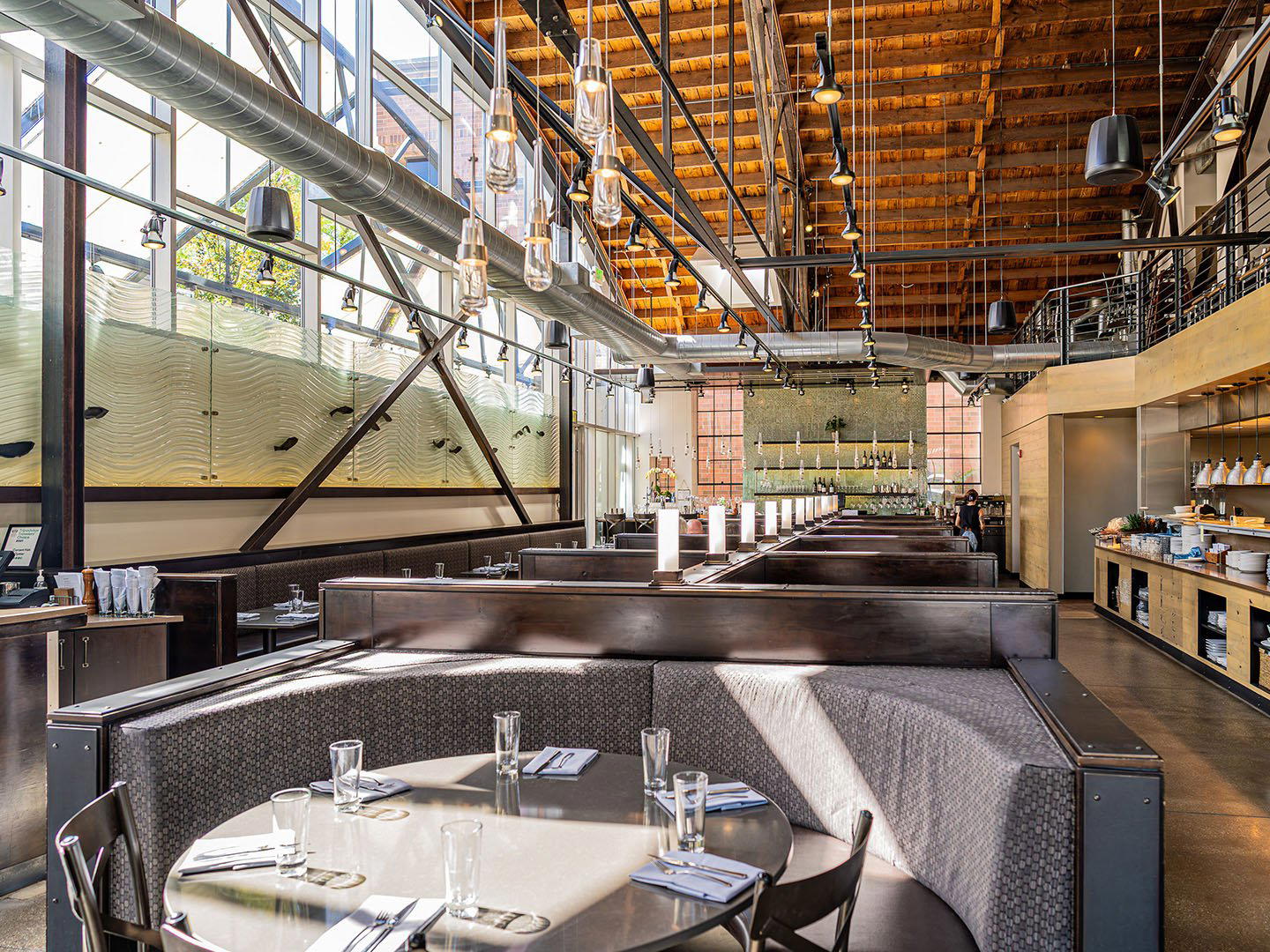
The menu
What to order
- Chilled seafood platter
- Oysters
- Shrimp and grits
Seafood, Far From the Shore
Salt Lake City sits roughly 700 miles from the nearest coastline, a fact that has historically defined the ceiling of its seafood culture. For most of the city's restaurant history, fish arrived as an afterthought on menus built around red meat and mountain-harvest produce. The past decade has seen that change, not because geography shifted, but because supply chains, sourcing discipline, and diner expectations did. Current Fish and Oyster, at 279 E 300 S in the central downtown corridor, belongs to that correction. It operates on the premise that a serious raw bar and a fish-forward kitchen can function at a high level in an inland city, provided the commitment to sourcing is treated as a structural requirement rather than a seasonal feature.
That premise matters more in Salt Lake City than it would in, say, Boston or Seattle, where proximity to the source does some of the work for you. Here, the cultural argument for a seafood-focused restaurant has to be made on the plate, repeatedly, and the bar for credibility is set by what diners have tasted elsewhere. Salt Lake City's dining scene has grown substantially more sophisticated since the mid-2010s, driven partly by an influx of residents from coastal cities and partly by a local hospitality community that has raised its own technical standards. Current Fish and Oyster sits inside that shift, positioned at the more considered end of the downtown dining corridor that also includes Bambara Salt Lake City, Arlo Restaurant, and Avenues Proper.
The Oyster Bar as Cultural Anchor
Raw bar culture in the United States carries a specific set of associations: the long zinc counter, the practiced shuckers working through a rotating selection of East and West Coast bivalves, the cold glass of something crisp alongside. It is one of the oldest formats in American fine dining, with roots in the oyster saloons of 19th-century New York and New Orleans, and it has survived every wave of culinary fashion because it depends on something no technique can replicate: freshness and provenance, delivered without interference. The oyster you eat at a raw bar is either good because it arrived in good condition from a good growing region, or it is not. There is no sauce, no resting time, no plating trick that covers a weak product.
That transparency is precisely what makes the raw bar format a credibility test for an inland restaurant. Coastal institutions like Le Bernardin in New York City or Providence in Los Angeles operate within ecosystems where supplier relationships are dense and logistics are mature. A fish restaurant in Salt Lake City has to build those relationships across greater distances and maintain them with the same discipline. Current Fish and Oyster's positioning as a raw bar destination in this market is a statement about supply chain management as much as it is about menu philosophy.
The broader American seafood restaurant conversation has moved toward region-specific sourcing and named-origin presentation. Diners at venues operating in this register expect to know whether their oysters come from Wellfleet or Kumamoto, from Puget Sound or the Gulf Coast. That level of specificity, standard now at coastal restaurants, represents a meaningful operational commitment when the kitchen is located in Utah.
Downtown Placement and the 300 South Dining Corridor
The address at 279 E 300 South places Current Fish and Oyster within a stretch of downtown Salt Lake City that has become the city's most concentrated zone of serious dining. The corridor runs through a neighborhood that transitions between the central business district and the historic Capitol Hill residential area, and it draws a mix of after-work professionals, pre-theater diners, and destination visitors who have done their research. The walkability of the area makes it accessible without a car, unusual in a city whose urban fabric is shaped by wide blocks and significant distances between points of interest.
For context on what the broader Salt Lake City dining scene offers, the full Salt Lake City restaurants guide maps the range from neighborhood spots like Blind Rabbit Kitchen and Adelaide to the more destination-oriented tier. Current Fish and Oyster occupies the latter category, drawing diners who are making a specific choice rather than filling a casual weeknight slot.
The National Reference Points
To understand what a serious American seafood restaurant looks like at the highest tier, the reference points are instructive. Emeril's in New Orleans helped codify the modern American fish kitchen in the 1990s, merging French technique with Gulf Coast sourcing. The French Laundry in Napa, Smyth in Chicago, Single Thread Farm in Healdsburg, Addison in San Diego, Blue Hill at Stone Barns in Tarrytown, The Inn at Little Washington, Atomix in New York City, and Atelier Moessmer Norbert Niederkofler in Brunico each represent the kind of sourcing seriousness and format discipline that shapes what diners with broad experience expect when they sit down at a seafood-focused counter. Lazy Bear in San Francisco demonstrates how format innovation in dining can reframe expectations around the meal itself. These are not direct comparisons to Current Fish and Oyster; they are the reference frame within which a sophisticated diner situates any seafood-focused restaurant they encounter.
At the regional level, what Current Fish and Oyster represents is an argument that Salt Lake City can support a seafood restaurant that takes its sourcing and format as seriously as the city's better-regarded meat and farm-to-table programs. That argument has been harder to make in the Mountain West than in either coast, but the diner base has shifted enough to make it viable.
Planning a Visit
Current Fish and Oyster is located at 279 E 300 S in central Salt Lake City, within walking distance of the main downtown hotel corridor and accessible by the TRAX light rail system, with City Center and Gallivan Plaza stations both within reasonable walking range. The 300 South address puts it close to the density of the downtown dining scene, so combining a visit with other stops along the corridor is direct. Given the restaurant's profile in the market, booking ahead is advisable, particularly for weekend seatings, as the combination of a relatively contained downtown dining footprint and a loyal regular base means walk-in availability can be limited on busy nights.
Frequently asked questions
Is Current Fish and Oyster suitable for children?
The raw bar format at Current Fish and Oyster skews toward adult dining, where the focus is on oysters, fish, and a counter-driven atmosphere more suited to older diners. Families with older children who eat seafood will find more to work with than those with young kids. The 300 South location in central Salt Lake City means the surrounding area has broader options if the menu doesn't fit the group.
Is Current Fish and Oyster formal or casual?
Current Fish and Oyster reads as a polished-casual seafood house rather than a white-tablecloth room. The raw bar format in American dining tradition historically favors a relaxed but purposeful atmosphere, and the 300 South corridor in downtown Salt Lake City trends toward that register. Dress is not ceremonial, but the seafood focus signals a deliberate dining occasion rather than a drop-in.
Does Current Fish and Oyster source oysters from multiple coasts?
Serious American raw bars in this format typically rotate oysters from both the East and West coasts, offering the salinity and texture contrast between, say, a Pacific Kumamoto and an Atlantic Wellfleet. Given Current Fish and Oyster's positioning as a dedicated seafood restaurant in Salt Lake City, a multi-regional oyster program is consistent with the raw bar model the restaurant operates within. For the current oyster selection and sourcing, contacting the restaurant directly at 279 E 300 S will give the most accurate picture.
What do regulars order at Current Fish and Oyster?
The oysters are the central draw, as they are at any serious raw bar operating under this format in the American tradition. Beyond the raw selections, regulars at fish-focused restaurants in this category typically anchor their meals around the daily fish preparations, where sourcing and handling separate the kitchen from casual competitors. Specific menu details for Current Fish and Oyster are best confirmed directly with the restaurant.
Where is Current Fish and Oyster in Salt Lake City?
Current Fish and Oyster is located at 279 E 300 S, Salt Lake City, UT 84111, Salt Lake City.
How hard is it to get a table at Current Fish and Oyster?
Current Fish and Oyster holds a strong position along the 300 South dining corridor, which is downtown Salt Lake City's most concentrated stretch of serious restaurants, and demand reflects that placement. Reservations are advisable, particularly on weekend evenings when the corridor draws both locals and hotel guests from the nearby downtown hotel cluster. Booking ahead by several days is a reasonable baseline.
What makes Current Fish and Oyster worth seeking out?
Salt Lake City sits roughly 700 miles from the nearest coastline, which has historically capped the ambition of its seafood culture. Current Fish and Oyster operates against that constraint, running a raw bar program in a city where doing so requires a serious commitment to sourcing logistics. That positioning, at 279 E 300 S in a neighborhood that has drawn the city's strongest dining operators, signals a kitchen that has made seafood a deliberate identity rather than a secondary offering.
Price Lens
| Venue | Cuisine | Price | Awards |
|---|---|---|---|
| Current Fish and OysterThis venue (the venue you are viewing) | Modern Seafood and Oyster Bar | Not listed | Not listed |
| Cosmica | Modern Roman & Southern Italian | $30–50 | New York Times America's Best Restaurants · Wine Enthusiast Best Wine Restaurants |
| Caputo's Market & Deli | Italian Deli | $10–20 | Not listed |
| Avenues Proper | Elevated Gastropub | $20–30 | Not listed |
| Bambara Salt Lake City | Modern European Bistro with Contemporary American Influences | $50–100 | Not listed |
| Feldman's Deli | New York-Style Jewish Deli | $20–30 | Michelin Bib Gourmand |
Continue exploring
More in Salt Lake City
Restaurants in Salt Lake City
All restaurants in Salt Lake City →
Bars in Salt Lake City
All bars in Salt Lake City →
Hotels in Salt Lake City
All hotels in Salt Lake City →

Wineries in Salt Lake City
Browse all →
Details
- Modern
- Sophisticated
- Date Night
- Business Dinner
- Special Occasion
- Private Dining
- Open Kitchen
- Craft Cocktails
- Sustainable Seafood
- A La Carte
- Small Plates
- Vegetarian Friendly
Urban chic with pared-down sophistication in a historic atmosphere.