Feldman's Deli

Michelin Bib Gourmand
Our verdict
Feldman's Deli operates out of the Sugar House neighborhood at 2005 E 2700 S, occupying a corner of Salt Lake City's casual dining scene where Jewish deli traditions and mountain-West appetite meet. The menu architecture follows the logic of a working deli, built around cured meats, housemade preparations, and the kind of abundance that has defined the format for generations. For a city that skews toward either fine-dining polish or fast-casual convenience, Feldman's lands somewhere deliberate in between.

Pearl is the En Primeur Club membership app, where members save venues, book tables and use the concierge.
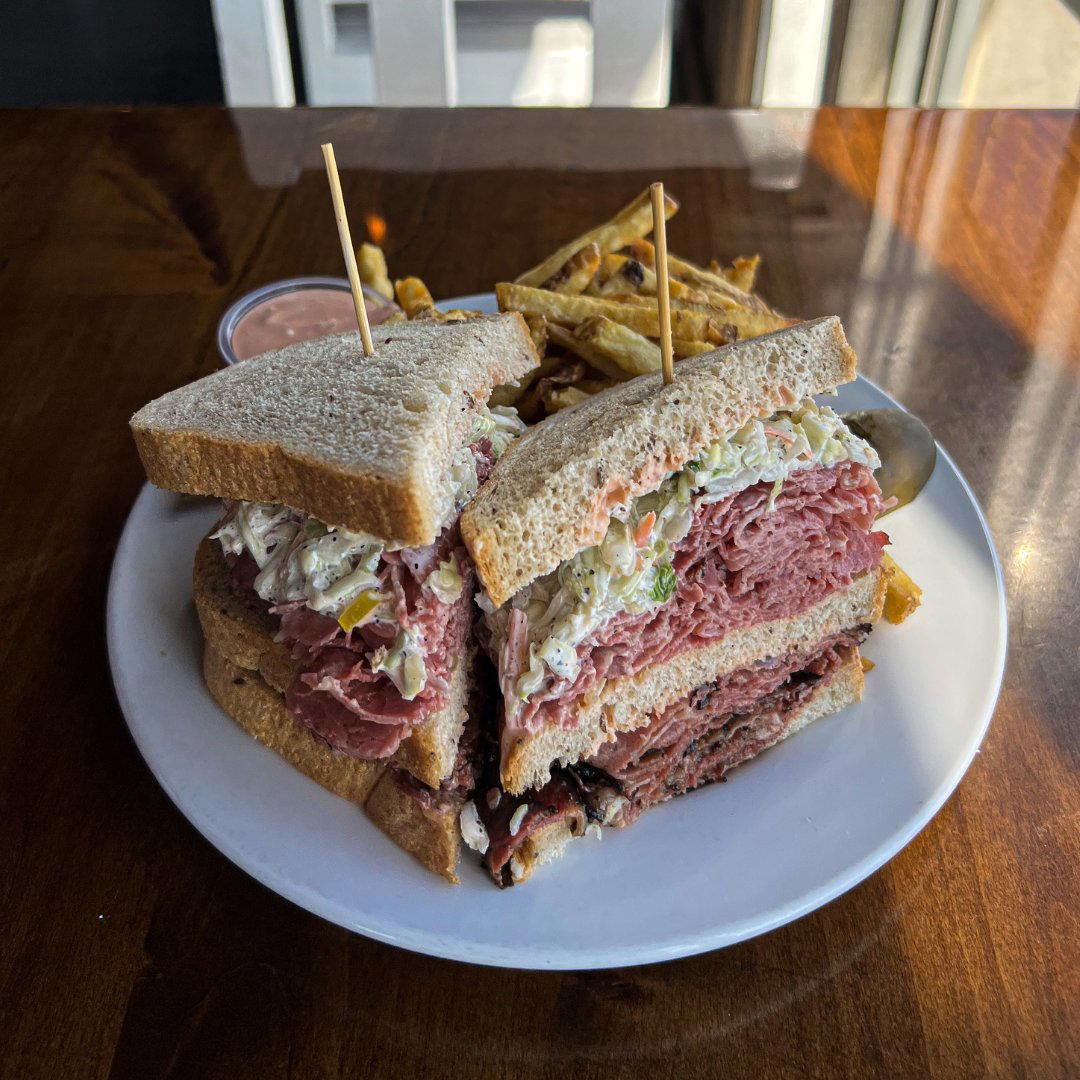
The menu
What to order
- Pastrami Sandwich
- Corned Beef Sandwich
- Reuben
- Matzo Ball Soup
Sugar House sits southeast of downtown Salt Lake City, a neighborhood that has accumulated enough independent restaurants and food shops over the past decade to operate as its own dining destination rather than a satellite of the city center. On the corner of 2700 South and 2005 East, Feldman's Deli occupies the kind of address that works for a deli, accessible, unpretentious, anchored to a residential grid where regulars can arrive on foot or by short drive. The physical geography matters because the American deli, as a format, has always been a neighborhood institution rather than a destination property. It feeds the block before it feeds the city.
What the Deli Format Reveals About the Menu
The Jewish-American deli is one of the most architecturally consistent formats in American casual dining. Its menu logic is almost codified: cured and smoked meats as the structural center, rye bread as the delivery mechanism, pickles and coleslaw as the acidic counterpoint, egg dishes carrying the morning and early afternoon, and soups, particularly matzo ball and chicken noodle, acting as the emotional anchor of the whole operation. That architecture predates any individual restaurant by decades. When a deli works, it works because the kitchen honors those proportions rather than subverting them. Feldman's operates within that tradition, which in Salt Lake City's context is meaningful: the city does not have a dense deli culture the way Chicago or New York does, so each entry in that category carries more weight by default.
Salt Lake City's dining scene has expanded considerably since 2015, with restaurants like Adelaide, Arlo Restaurant, and Avenues Proper defining a more ambitious upper tier. Venues like Bambara Salt Lake City and Blind Rabbit Kitchen have filled the middle register with polished casual cooking. Against that spread, a deli occupies a distinct lane, comfort-forward, portion-generous, and priced against function rather than atmosphere. The deli format doesn't compete with tasting menus at places like Smyth in Chicago or The French Laundry in Napa. It competes with itself, with the institutional memory diners carry in from wherever they last ate a good pastrami sandwich. That is a harder standard in some ways.
Sandwiches, Proportions, and the Problem of Scale
The sandwich is the organizing principle of any serious deli menu, and the way a deli builds its sandwiches reveals nearly everything about its intentions. Thickness of the meat slice, the ratio of fat to lean in the pastrami or corned beef, the moisture content of the rye, these are not stylistic decisions so much as operational commitments. Housemade preparations, where they exist, signal a kitchen willing to invest the curing and smoking time that separates a working deli from a sandwich shop that sources everything pre-sliced. The deli category in the American West has historically leaned toward the latter, which makes each kitchen that goes further in the other direction notable in its local context.
Soup programs are the secondary test. A matzo ball that holds its texture from the steam table to the table without collapsing is harder to execute than it sounds. The broth underneath it, whether it carries the depth of a long chicken reduction or reads thin and salty, tells you whether the kitchen treats the dish as a foundation or an afterthought. Across American food cities, the deli format has seen something of a revival, driven partly by nostalgia and partly by a generation of cooks who trained in fine-dining kitchens and turned back toward comfort formats with technique. That dynamic has produced strong deli programs in cities like Salt Lake City and beyond, where the category had previously been underloved.
Sugar House and the Neighborhood Fit
The neighborhood context shapes the deli experience in ways that are easy to underestimate. Sugar House is a lived-in part of Salt Lake City, with enough foot traffic and residential density to support a lunch-heavy operation without depending on destination diners or hotel guests. That stands in contrast to downtown properties, which tend to calibrate to convention visitors and expense-account meals. A deli in Sugar House answers to a different constituency: families, the late-morning crowd, regulars who know exactly what they want before they sit down. The leading deli experiences in American cities share that quality, they are self-evidently local in a way that fine-dining rooms, for all their excellence, cannot always claim. Blue Hill at Stone Barns in Tarrytown and Le Bernardin in New York City operate at the opposite end of formality, but none of them could replace what a functioning neighborhood deli provides on a Tuesday at noon.
The comparison venues in Salt Lake City, Caputo's Market and Deli in particular, show that the city has an appetite for the deli-adjacent category, including Italian provisions and cured goods. That broader interest in preserved, prepared, and assembled foods positions Feldman's within a small but coherent local food culture that values the craft behind the counter as much as the plate. It is a different kind of credentialing than a Michelin star, but it is credentialing nonetheless. Venues like Emeril's in New Orleans, Providence in Los Angeles, Lazy Bear in San Francisco, Addison in San Diego, Atomix in New York City, Single Thread Farm in Healdsburg, The Inn at Little Washington, and Atelier Moessmer Norbert Niederkofler in Brunico occupy a formal register where awards and tasting menu architecture drive the conversation. Feldman's operates on entirely different terms, and the standards by which it should be judged are proportionally different.
Planning a Visit
Feldman's Deli is located at 2005 E 2700 S in the Sugar House neighborhood, accessible by car from central Salt Lake City in roughly fifteen minutes depending on traffic, and reachable via the Sugar House streetcar corridor for those arriving by public transit. Given the neighborhood's residential character, parking is generally available on surrounding streets. The format suggests a walk-in, counter-order operation typical of the deli category, the kind of lunch stop where timing matters more than reservations. Visiting mid-morning or just before the peak lunch window generally produces the most consistent experience at operations of this type. Current hours, contact details, and any updates to the menu or format should be confirmed directly with the venue before visiting.
Frequently asked questions
What part of town is Feldman's Deli in?
Feldman's Deli is located at 2005 E 2700 S, Salt Lake City, UT 84109, Salt Lake City.
Is Feldman's Deli a good option for kosher or Jewish-style eating in Salt Lake City?
Feldman's operates within the Jewish-American deli tradition, a format built around the cured-meat and sandwich repertoire that defines the category across cities like New York, Chicago, and Los Angeles. Salt Lake City has limited representation in this specific dining category, which makes the Sugar House location at 2005 E 2700 S a practical reference point for anyone seeking that format in Utah.
What's the must-try dish at Feldman's Deli?
The sandwich program is where Feldman's commitments are most legible. Jewish-American deli menus are organized around cured and smoked meats, pastrami, corned beef, brisket, and the sandwich is the format that puts all of that work on display. That's where to start on a first visit to the 2005 E 2700 S location.
Can I walk in to Feldman's Deli?
Yes. The deli category in the United States operates almost universally on a walk-in basis, and Feldman's format and Sugar House location align with that convention. Arriving during peak lunch hours on weekends may mean a short wait, but reservations are not part of the traditional deli model.
Standing Among Peers
Comparable venues nearby, for context on price, style, and recognition.
| Venue | Cuisine | Price | Awards | Notes |
|---|---|---|---|---|
| Feldman's DeliThis venue (the venue you are viewing) | New York-Style Jewish Deli | $20–30 | Michelin Bib Gourmand | Not listed |
| Finn's Cafe | Scandinavian-Norwegian American Breakfast & Brunch Café | $10–20 | Not listed | Sugar House |
| Avenues Proper | Elevated Gastropub | $20–30 | Not listed | The Avenues |
| Market Street Grill - Terminal Plaza at SLC International Airport | American Seafood Grill | $20–30 | Not listed | Salt Lake City International Airport |
| Van Ryder | American Gastropub with Local Sourcing | Not listed | Not listed | Downtown |
| Oasis Cafe | Healthy American Cafe | $20–30 | Not listed | Central City |
Recognition history
Dated appearances from independent guides and award organizations, with the underlying list record or original source where available.
Michelin Bib Gourmand
Michelin
Continue exploring
More in Salt Lake City
Restaurants in Salt Lake City
All restaurants in Salt Lake City →
Bars in Salt Lake City
All bars in Salt Lake City →
Hotels in Salt Lake City
All hotels in Salt Lake City →

Wineries in Salt Lake City
Browse all →
Details
- Rustic
- Cozy
- Lively
- Casual Hangout
- Family
- Brunch
- Live Music
- A La Carte
- Kosher
Current opening hours
- Monday
- Closed
- Tuesday
- 8 AM–8 PM
- Wednesday
- 8 AM–8 PM
- Thursday
- 8 AM–8 PM
- Friday
- 8 AM–8 PM
- Saturday
- 8 AM–8 PM
- Sunday
- Closed
Hours can change for holidays and private events. Hours as of .
Rustic-chic cafe blending New York chic with ski chalet comfort, featuring a hip, bright, and lively atmosphere.