Cumbrae's on Queen Street West has anchored Toronto's serious butchery tradition for decades, drawing cooks and diners who treat sourcing as seriously as technique. The shop's position on one of the city's most culinarily literate corridors places it in a comparable set that includes specialty food retailers well above the supermarket tier. It is a reference point for anyone building a considered meal from first principles.
Pearl is the En Primeur Club membership app — saves, bookings, and concierge access live there. Same editors, same standards.
- Address
- 714 Queen St W, Toronto, ON M6J 1E8, Canada
- Phone
- +1 416 681 1111
- Website
- cumbraes.com
- Directions
- Get directions
 Saves & bookings on Pearl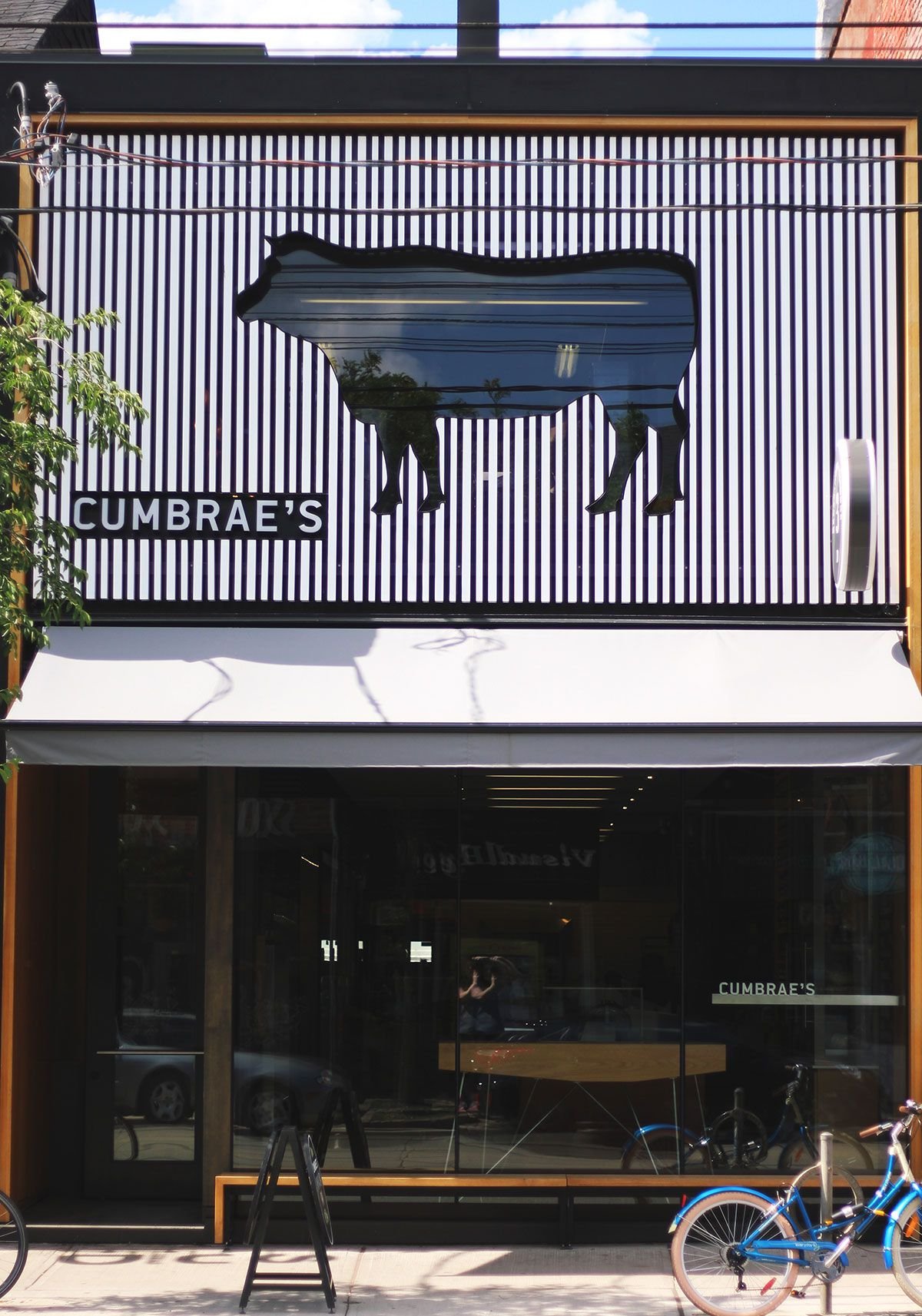
Queen West's Butchery Benchmark
Queen Street West has long operated as one of Toronto's more culinarily self-aware corridors, a stretch where independent food retail has coexisted with restaurant culture long enough to develop its own standards. In that context, Cumbrae's at 714 Queen St W sits as a longstanding reference point for the city's serious home cook and professional kitchen alike. The address alone signals intent: this is not a neighbourhood convenience but a deliberate destination, the kind of shop where the conversation at the counter tends to run longer than the transaction.
The physical experience of a premium independent butcher in a major North American city has a specific character that supermarket meat counters do not replicate. You enter into a space organized around product rather than volume, where the cuts in the case reflect decisions about breed, feed, and aging rather than logistics and shelf-life. Cumbrae's fits that template and has done so long enough that its presence on Queen West reads less as a retail operation than as an institution with a point of view.
Sourcing as the Editorial Argument
Toronto's premium food retail sector has split, over the past two decades, into two broad approaches: the large-format specialty grocer that aggregates quality across categories, and the single-discipline specialist that goes deeper on one subject. Cumbrae's belongs firmly to the second cohort. The argument its product makes is essentially curatorial: that the selection of animal, the relationship with the farm, and the handling of the carcass from slaughter through aging constitutes a craft worth paying attention to and paying for.
This approach places the restaurant in a different competitive conversation than the supermarket meat aisle, and closer in spirit to the sourcing philosophies you find at Toronto's higher-end restaurant tables. Kitchens at the level of Alo (Contemporary) or DaNico (Italian) make sourcing decisions that prioritize provenance and traceability, and the retail specialist that takes the same line gives serious home cooks access to the same ingredient conversation. That alignment is not incidental, it reflects a broader shift in how Toronto's food culture thinks about protein as an ingredient rather than a commodity.
The Toronto Butchery Tradition in Context
Canadian meat culture has historically skewed toward volume and price efficiency, which makes the specialist butcher operating at premium tier a genuinely niche proposition. The comparison points are fewer than in, say, London or Paris, where the independent boucherie sits inside a longer cultural tradition. In Toronto, the restaurant operates without much direct competition at the same level of depth, which gives the shop an authority in its category that peer cities might distribute across several operators.
That authority has practical implications. When Toronto cooks, professional or domestic, want to have a serious conversation about dry-aged beef, heritage pork breeds, or the difference between a grass-finished and grain-finished animal, the restaurant is one of the city's few retail environments where that conversation is possible at the counter level. It functions, in other words, as both a retail operation and a knowledge resource, the kind of dual role that defines the leading specialist food shops in any major city.
For broader context on how Toronto's dining culture integrates this level of ingredient seriousness, The through-line, increasingly, is sourcing transparency, and the restaurant sits at the retail end of that same thread.
How It Sits Against Canadian Peers
The specialist food producer and retailer operating at premium tier is not distinctive to Toronto, but it takes different forms across Canada's major food cities. In Quebec, operations like those associated with Tanière³ in Quebec City have built menus around hyper-local sourcing in a way that parallels what the restaurant does in retail. On the West Coast, the sourcing philosophies embedded in restaurants like AnnaLena in Vancouver reflect a similar commitment to ingredient provenance. These are different formats, restaurant versus retail, but they share an orientation toward the supply chain as a primary creative and ethical decision.
Further afield, the farm-to-table logic that animates Eigensinn Farm in Singhampton and the hyper-local focus of Restaurant Pearl Morissette in Lincoln represent the Ontario food scene's broader argument that quality is inseparable from geography and handling. The restaurant makes that argument in retail form, at a Queen West address that puts it in daily contact with a customer base already sensitized to that conversation by the restaurant culture around it.
Thinking About Wine Alongside the Counter
A specialist butcher of this orientation invites a parallel conversation about what to drink with the product. The aging profiles, breed characteristics, and fat structures of premium cuts suggest specific wine directions: the long-finished tannins of a serious Bordeaux or Barolo against dry-aged beef; the cooler acidity of a Burgundy-style Pinot against heritage pork. Toronto's more considered wine programs, including those at Don Alfonso 1890 (Contemporary Italian) and Aburi Hana (Kaiseki, Japanese), build their cellar thinking around the specific demands of their ingredient profiles. The home cook working from the restaurant product faces the same pairing logic, which makes the question of what to open alongside a specific cut as editorial a decision as the cut itself.
That pairing sensibility connects the restaurant to a wider North American conversation about ingredient-led dining. Restaurants like Le Bernardin in New York City and Lazy Bear in San Francisco have built international reputations on exactly this premise: that the quality of the base ingredient determines everything that follows. The restaurant operates in retail rather than restaurant format, but the underlying argument is identical.
Planning a Visit
The restaurant sits at 714 Queen St W in Toronto's Queen West neighbourhood, walkable from Ossington and Bathurst stations on the streetcar lines that run the length of Queen. The surrounding blocks include some of the city's most active independent food and restaurant culture, which makes a visit to the butcher a natural anchor for a broader afternoon in the area. The restaurant is open Monday to Friday from 10 AM to 7 PM, Saturday from 10 AM to 6 PM, and Sunday from 10:30 AM to 6 PM.
Peers in This Market
Comparable venues nearby, for context on price, style, and recognition.
| Venue | Cuisine | Price | Notes |
|---|---|---|---|
| Cumbrae'sThis venue — the venue you are viewing | Premium Butcher & Deli | $$$ | Not listed |
| Animl | Modern Steakhouse | $$$$ | Fashion District |
| Bisteccheria Sammarco | Modern Italian Steakhouse | $$$$ | St. Lawrence |
| 156 ONEFIVESIX | Modern Korean Fusion | $$$ | Little Portugal |
| Jazz Bistro | French Bistro with Live Jazz | $$$ | Downtown Yonge |
| Pukka | Modern Indian | $$$ | Humewood |
Continue exploring
More in Toronto
Restaurants in Toronto
Browse all →

Bars in Toronto
Browse all →
Hotels in Toronto
Browse all →


At a Glance
- Classic
- Cozy
- Casual Hangout
- Local Sourcing
Current opening hours
- Monday
- 10 AM–7 PM
- Tuesday
- 10 AM–7 PM
- Wednesday
- 10 AM–7 PM
- Thursday
- 10 AM–7 PM
- Friday
- 10 AM–7 PM
- Saturday
- 10 AM–6 PM
- Sunday
- 10:30 AM–6 PM
Hours can change for holidays and private events. Last verified .
Warm and inviting atmosphere with impeccably-designed interior featuring wood and marble displays.