
Michelin Bib Gourmand
Our verdict
A Michelin Bib Gourmand recipient in 2024 and 2025, Corrutela sits in the mid-price tier of Vila Madalena's serious dining scene, ranked #56 and #61 in OAD's South America list across those same years. Chef César Costa runs a seasonal Brazilian kitchen where the menu shifts with market supply rather than calendar convenience. Open Wednesday through Sunday for lunch and dinner, with an accessible price point that makes it one of the more compelling entries in São Paulo's ingredient-led cooking movement.

Pearl is the En Primeur Club membership app, where members save venues, book tables and use the concierge.
The menu
What to order
- Oyster ceviche with pink pitaya and purple sweet potato
- Smoked wagyu tongue
- Biodynamic bean-to-bar ice cream
Where the Market Dictates the Menu
Vila Madalena has long occupied a specific position in São Paulo's dining geography: loose enough for creative risk-taking, residential enough to keep rents from pricing out independent operators. The neighbourhood sits at a different register from the Jardins corridor, where $$$$ tasting menus and two Michelin stars cluster around a more formal international dining clientele. Here, the mid-tier operators working with serious intent tend to earn their following through consistency and sourcing discipline rather than spectacle. Corrutela belongs to that cohort. Located on Rua Medeiros de Albuquerque, it holds a Michelin Bib Gourmand (awarded in both 2024 and 2025) and appeared in Opinionated About Dining's South America rankings at #56 in 2024 and #61 in 2025, a credentialled position for a restaurant that prices at $$.
Comparable in price to Fame Osteria and A Casa do Porco, but evaluated by critics in the same breath as the city's more expensive seasonal kitchens, it represents something the city's dining scene produces only occasionally: a restaurant where the price point and the critical standing don't quite match, in the reader's favour.
The Logic of the Seasonal Kitchen
Seasonal Brazilian cooking, as practised at its more considered end, is less about trend and more about a genuine constraint: the Brazilian interior produces ingredients with short, climate-driven windows, and the country's north-to-south stretch means what's available in any given week in São Paulo depends on supplier relationships maintained over years. The kitchens that take this seriously operate closer to the logic of a mercado than a fixed menu restaurant. Dishes are built around what arrived that morning rather than what the menu promised last month.
Chef César Costa runs Corrutela on this premise. The kitchen's reputation in São Paulo's food press rests on its responsiveness to supply rather than adherence to a fixed signature. That approach carries real risk: the dining room can't rely on a hero dish that regulars return for unchanged. It demands that sourcing relationships function as the backbone of the operation, with producers and market vendors occupying the structural role that a standardised supply chain plays elsewhere. The result, when it works, is a restaurant that reflects what Brazilian land and season actually produce rather than a curated version of Brazilian cuisine assembled from stable inventory.
For context on how this approach sits within São Paulo's broader dining spectrum: D.O.M. operates at the $$$$, two-Michelin-star end of modern Brazilian cooking, with a decades-long archive of native ingredient research; Maní sits at the $$$ tier with a single Michelin star and a more internationally inflected Brazilian menu. Corrutela's position at $$ with equivalent critical recognition from OAD signals a different kind of value proposition, one where the rigor is in the sourcing and daily execution rather than in the theatre of the dining format.
The Room and the Rhythm
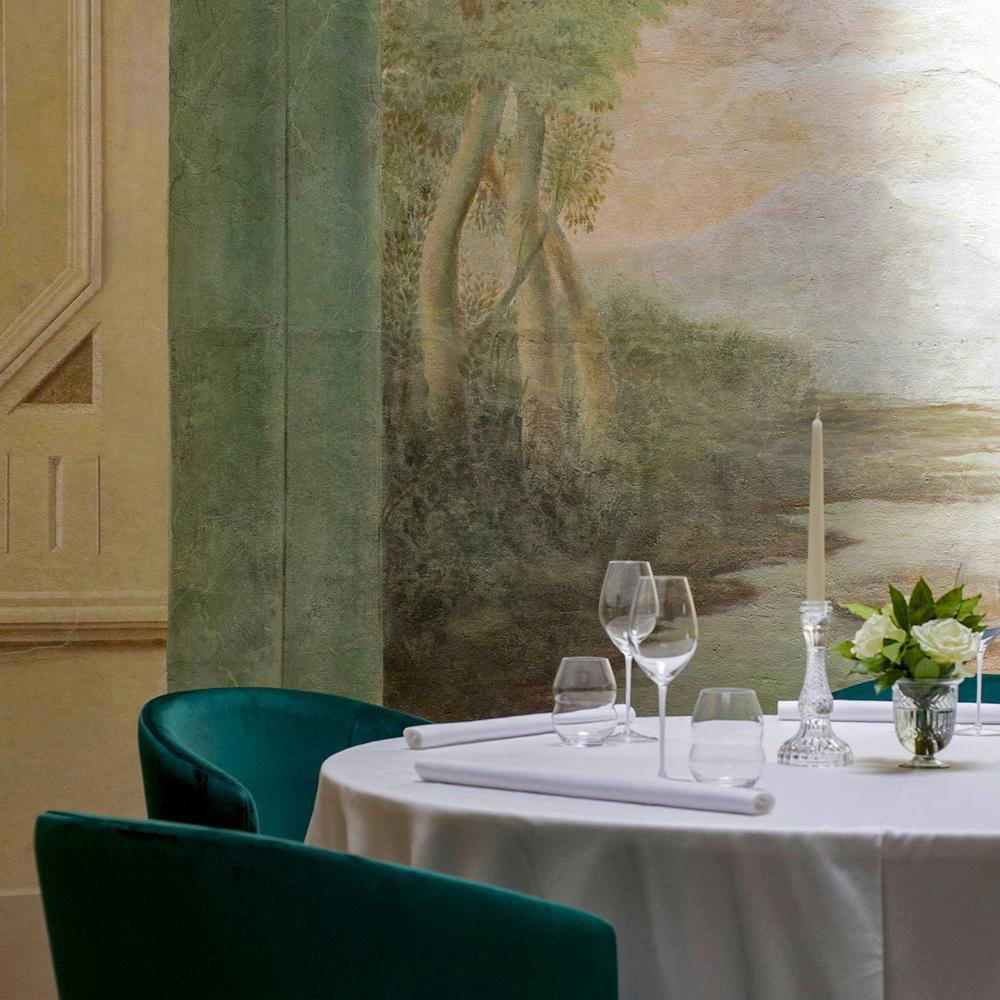
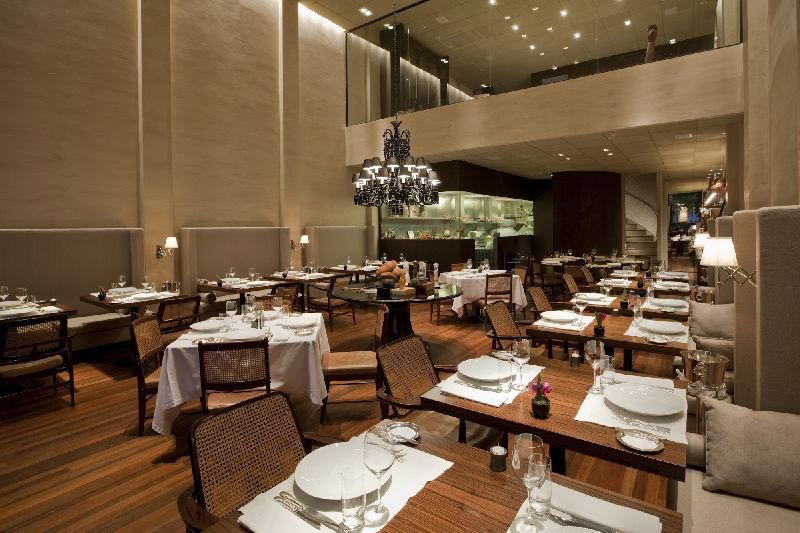
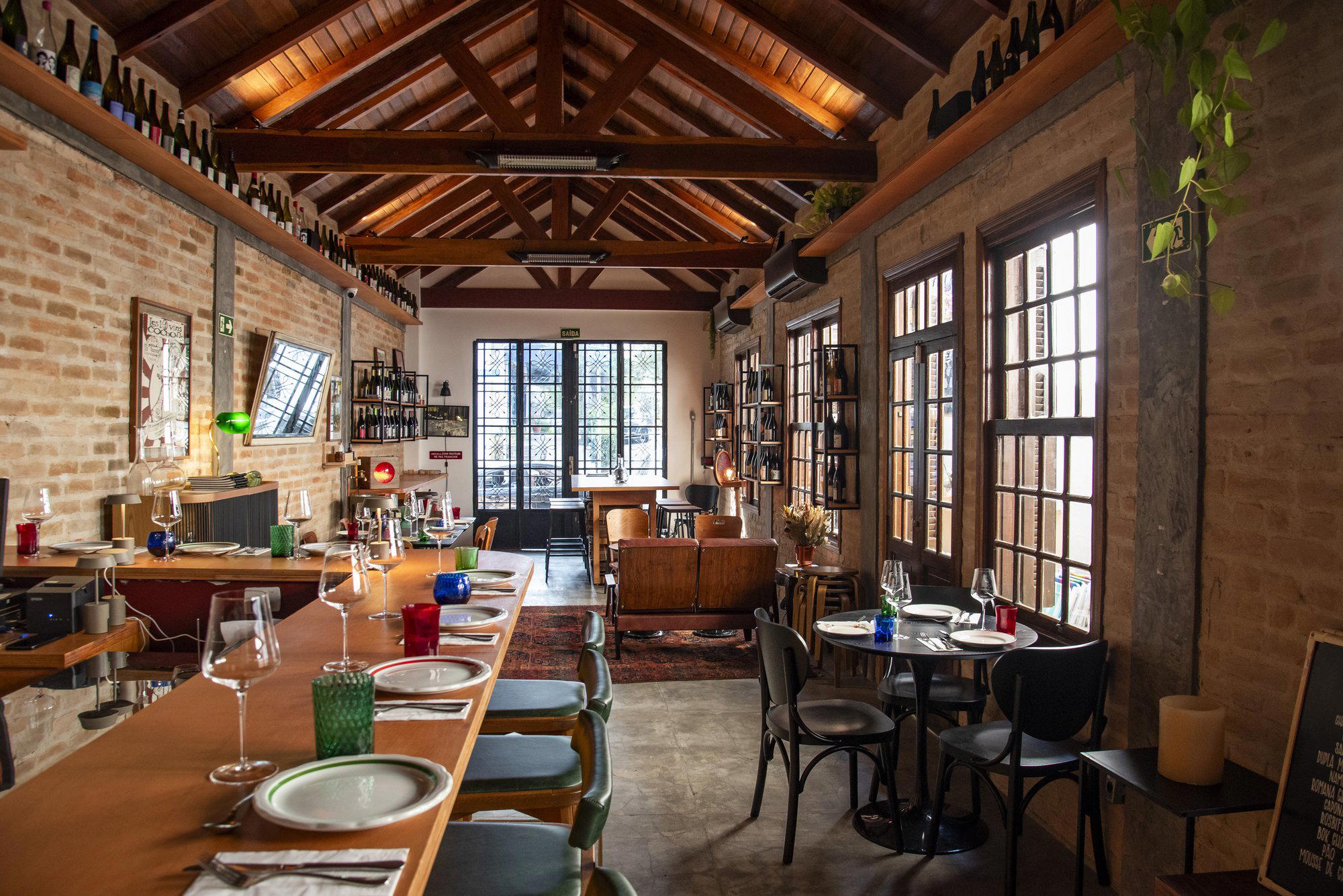
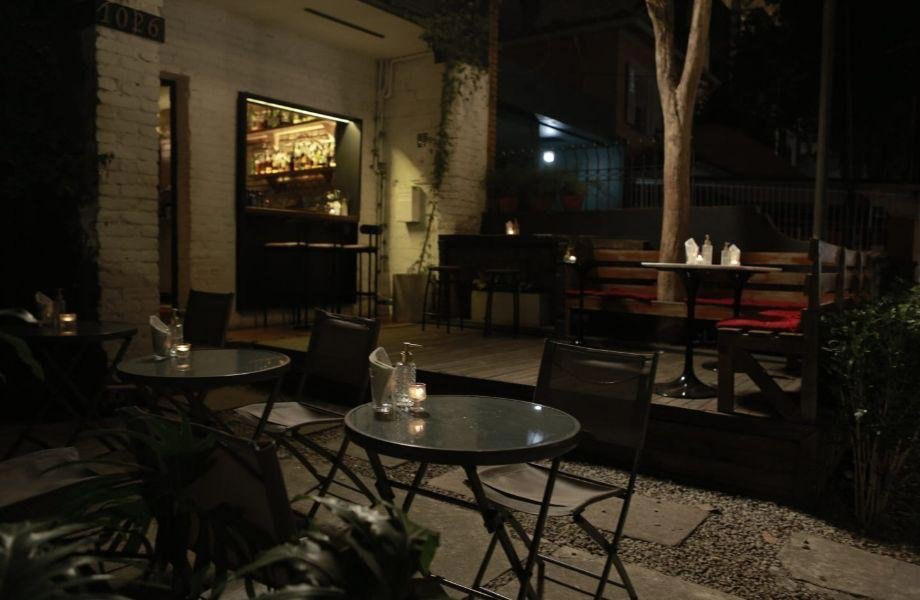
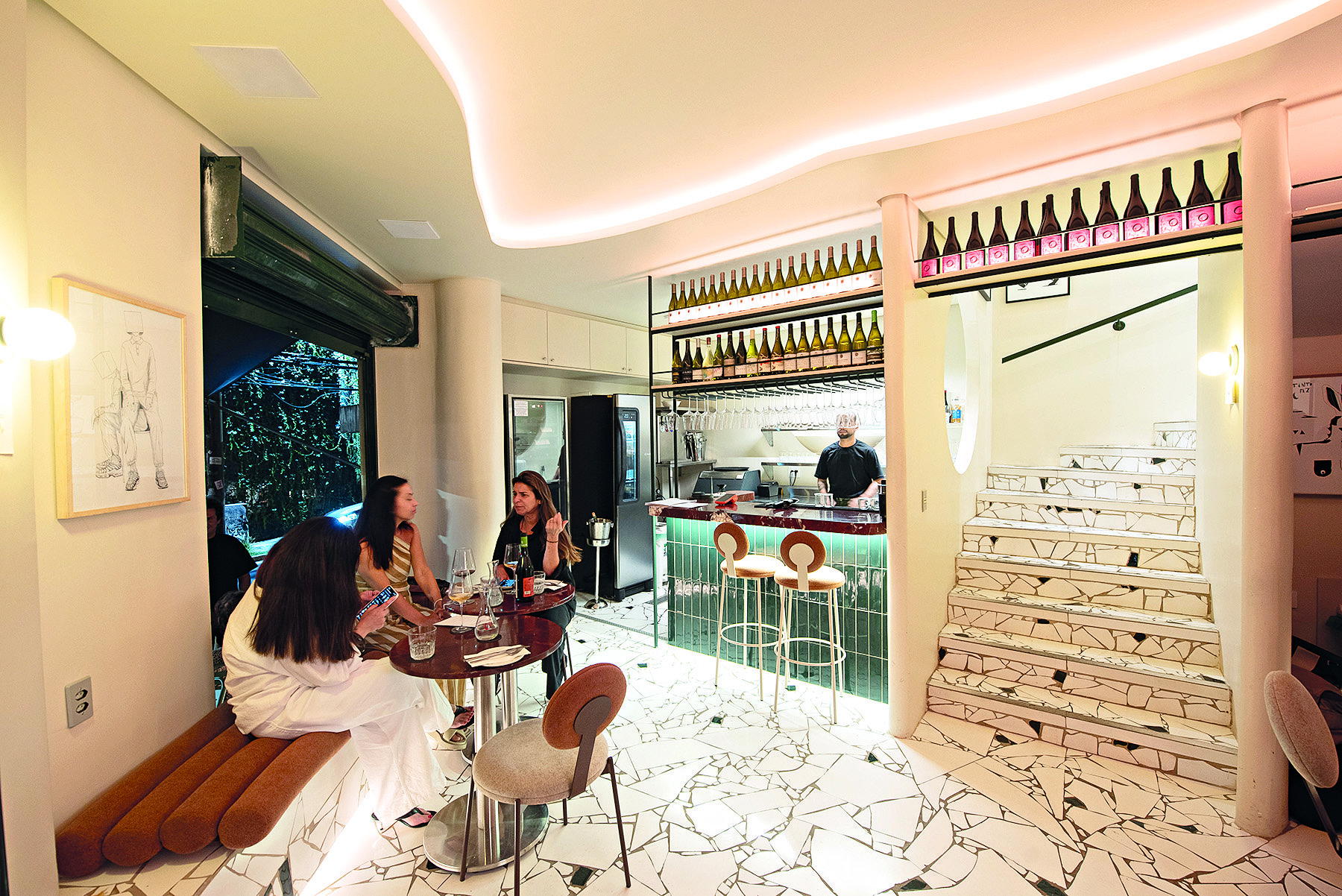
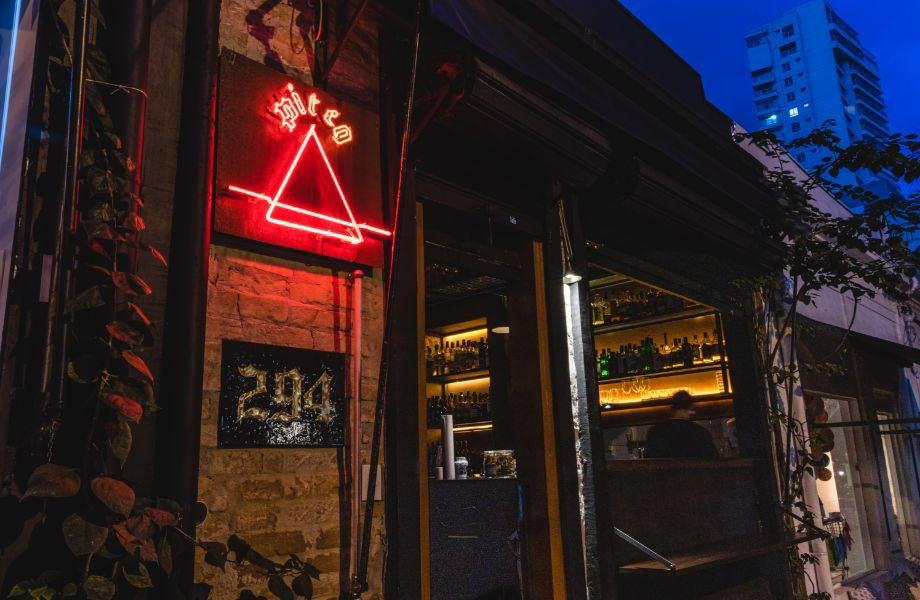
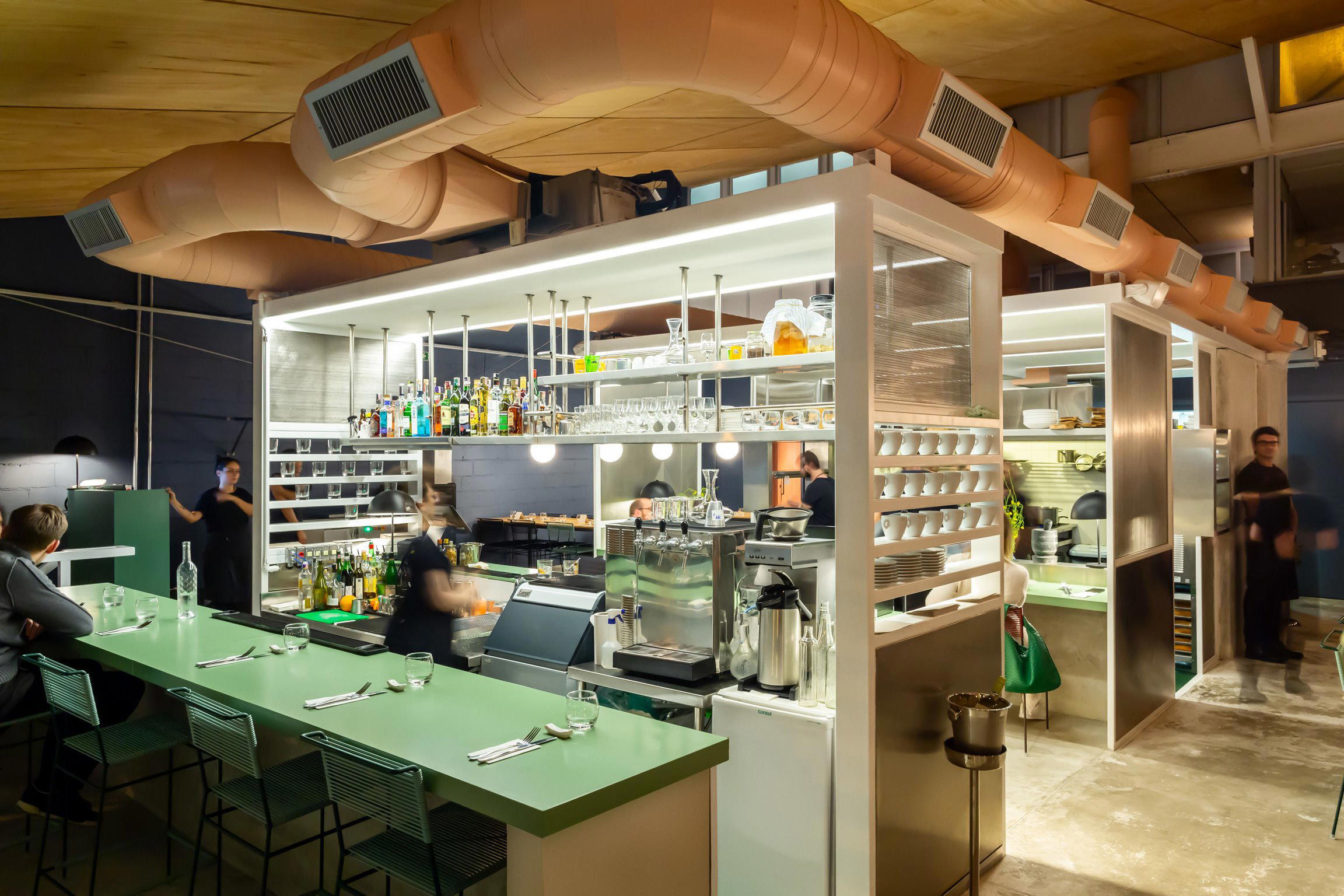
The address on Rua Medeiros de Albuquerque sits in the quieter residential stretch of Vila Madalena, away from the higher-traffic gallery and bar zone. Approaching on foot, the neighbourhood reads as genuinely local rather than curated for dining traffic. The building itself carries the low-key register typical of the area's serious independents: this is not a room designed to photograph well on arrival. The visual cues are secondary to what happens at the table.
The service window runs Wednesday through Sunday, with lunch from midday to 4pm (4:30pm on Sundays) and dinner from 7 to 11pm. Monday and Tuesday are closed. That schedule reflects the practical demands of market-driven cooking: sourcing relationships, prep cycles, and the physical limits of a kitchen operating without the buffer of frozen or standardised inventory.
Corrutela operates in the same city as Tuju and Evvai, both of which work at higher price points and with more formal tasting formats. The contrast is instructive. At $$$$ with two Michelin stars, Evvai's Italian-contemporary format targets a different dining occasion altogether. Corrutela operates closer to the everyday end of the serious eating spectrum, accessible enough that a table here doesn't require an occasion, but credentialled enough that it functions as one.
São Paulo in the Broader Brazilian Context
São Paulo's seasonal cooking scene doesn't exist in isolation. Across Brazil, a generation of chefs has been building market-anchored menus that reference regional supply chains rather than European technique as the primary organising logic. Lasai in Rio de Janeiro, Manga in Salvador, and Manu in Curitiba each represent versions of this approach calibrated to their own regional ingredient environments. So do Mina in Campos do Jordão and Orixás North Restaurant in Itacaré. The São Paulo version, as Corrutela practises it, operates in a city with the country's deepest network of specialty importers and domestic producers, which means the sourcing options are broader but the competition is also more concentrated.
For readers moving between São Paulo and other destinations, the comparison with something like Le Bernardin in New York City or Atomix helps calibrate expectations: those are $$$$ operations with fixed tasting formats and deep wine programs. Corrutela operates at a fundamentally different register, where the value is in seasonal responsiveness at an accessible price. Closer in spirit to Castelo Saint Andrews in Gramado as a regionally anchored operation, though the urban São Paulo context produces a different kind of sourcing network and dining culture.
Planning a Visit
Corrutela is open Wednesday through Sunday, lunch seatings run from noon, dinner from 7pm, with the kitchen closing at 11pm on weekdays and 4:30pm on Sunday afternoons. The $$ price range puts it within reach for most dining budgets in São Paulo's competitive mid-market tier. Booking is advisable given the OAD and Michelin recognition, though the closed Monday-Tuesday schedule means the week's demand concentrates into five service days. For readers building a wider São Paulo itinerary, our full São Paulo restaurants guide maps the city's dining tiers, and separate guides cover hotels, bars, wineries, and experiences across the city.
Frequently asked questions
Is Corrutela suitable for children?
Corrutela's residential Vila Madalena setting and mid-range price point ($$) make it a reasonable choice for older children comfortable with a sit-down lunch or dinner. The market-driven menu changes with the season, so there is no fixed children's menu to anticipate. Families with young children should factor in the dinner service running until 11pm on weekdays.
Is Corrutela formal or casual?
Corrutela carries the register of a serious neighbourhood restaurant rather than a formal dining room. The Michelin Bib Gourmand recognition, awarded in both 2024 and 2025, specifically identifies value-conscious cooking without white-tablecloth formality, and the $$ price range reinforces that positioning. Come presentable but not dressed for a gala.
What distinctions does Corrutela have?
Corrutela has received recognition including: Opinionated About Dining Top Restaurants in South America Ranked #61 (2025); Michelin Bib Gourmand (2025); Opinionated About Dining Top Restaurants in South America Ranked #56 (2024); Michelin Bib Gourmand (2024).
What's the must-try dish at Corrutela?
Because Chef César Costa's menu is built around seasonal Brazilian produce that shifts with availability, no single dish is a permanent fixture. The OAD Top Restaurants in South America ranking (no. 56 in 2024, no. 61 in 2025) reflects the kitchen's consistency across changing menus rather than a signature plate. Ask the floor team at the time of your visit what's driving the current menu.
What type of food is Corrutela known for?
Is Corrutela expensive?
Pricing at Corrutela is listed as $$.
What are Corrutela's hours?
Hours at Corrutela: Hours: Monday Closed Tuesday Closed Wednesday 12–4 pm, 7–11 pm Thursday 12–4 pm, 7–11 pm Friday 12–4 pm, 7–11 pm Saturday 12–4 pm, 7–11 pm Sunday 12–4:30 pm.
Cost Snapshot
| Venue | Cuisine | Price | Awards | Notes |
|---|---|---|---|---|
| CorrutelaThis venue (the venue you are viewing) | Modern Brazilian Farm-to-Table | Not listed | Michelin Bib Gourmand | Not listed |
| Evvai | Modern Italian-Brazilian Fusion | $200–300 | 3 Michelin Stars · World's 50 Best #95 | Contemporary Italian, Modern Cuisine |
| D.O.M. | Modern Brazilian Amazonian Fine Dining | $150–200 | 2 Michelin Stars · World's 50 Best #74 | Modern Brazilian, Creative |
| Maní | Modern Creative Brazilian | $50–100 | 1 Michelin Star · World's 50 Best #67 | Brazilian - International, Creative |
| Jun Sakamoto | Japanese Omakase | $100–150 | 1 Michelin Star · La Liste Top Restaurants | Sushi, Japanese |
| A Casa do Porco | Modern Brazilian Pork-Centric | $30–50 | Michelin Bib Gourmand · World's 50 Best #25 | Regional Brazilian, Brazilian |
Recognition history
Dated appearances from independent guides and award organizations, with the underlying list record or original source where available.
Michelin Bib Gourmand
Michelin
Opinionated About Dining Top Restaurants in South America Ranked #70
Opinionated About Dining
Full recognition history (6 entries)
Michelin Bib Gourmand
Michelin
Opinionated About Dining Top Restaurants in South America Ranked #61
Opinionated About Dining
Michelin Bib Gourmand
Michelin
Opinionated About Dining Top Restaurants in South America Ranked #56
Opinionated About Dining