Comedor María Teresa occupies a stall inside Oaxaca City's Mercado 20 de Noviembre, one of the city's most historically rooted market halls. The format is traditional comedor dining: a sequence of market-kitchen dishes served at communal tables, in a setting where the cooking is visible and the pace is set by the kitchen, not the clock. For travellers comparing polished restaurant experiences with something closer to daily Oaxacan eating, this is the other end of that spectrum.
Pearl is the En Primeur Club membership app — saves, bookings, and concierge access live there. Same editors, same standards.
- Address
- 20 de Noviembre Loc. 39, Centro, 68000 Oaxaca de Juárez, Oax., Mexico
- Phone
- +52 951 516 6574
- Directions
- Get directions
 Saves & bookings on Pearl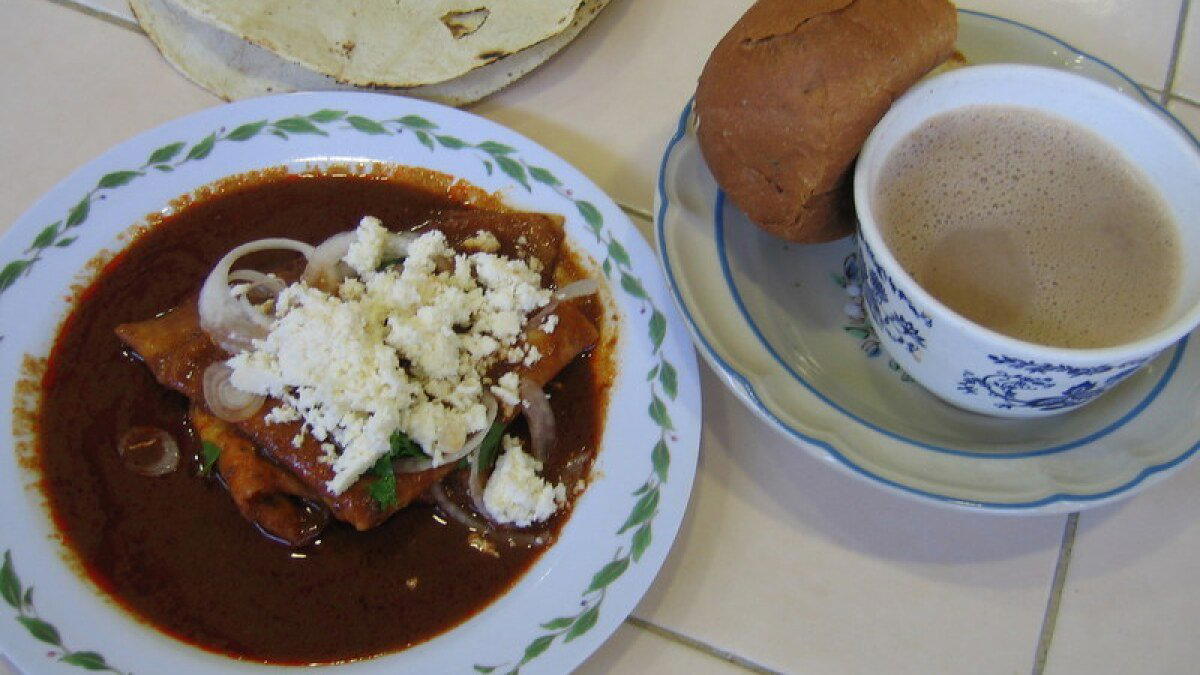
Market Kitchens and the Unscripted Meal
Inside Oaxaca's Mercado 20 de Noviembre, the organisation of eating is immediate and sensory. Smoke rises from the charcoal grills at the meat corridor. Vendors call from adjacent stalls. The smell of chiles negro and pasilla toasting on a dry comal arrives before you've had time to orient yourself. Comedor María Teresa occupies stall 39 in this structure, and the experience of eating here is inseparable from the noise, the movement, and the cooking smells that define Oaxacan market life. The physical environment is the first course, in a sense: the chaos of the hall settles you into a register of eating that is entirely different from a tasting menu in a formal dining room.
Mexico's most discussed restaurants — Pujol in Mexico City, Le Chique in Puerto Morelos, HA' in Playa del Carmen — operate in a mode of controlled progression and technical elaboration. The comedor tradition operates on entirely different logic. There is no printed menu with a narrative arc, no amuse-bouche signalling what follows. The meal at a comedor takes its shape from what has been prepared that morning, what the market supplied, and what the kitchen judged worth making. That informality is not a limitation. It is the format's defining characteristic.
How the Meal Takes Shape
The tasting progression in a comedor setting follows a structure that is implicit rather than announced. Most diners begin with a sopa, a brothy or masa-thickened soup that sets a baseline of warmth and chile heat. This transitions into a guisado, a braised or slow-cooked protein in one of Oaxaca's canonical mole or sauce traditions. At Mercado 20 de Noviembre, the mole negro and coloradito are recurring presences across the market's comedor stalls, reflecting the regional hierarchy where complex, long-cooked sauces represent the highest domestic cooking effort. Black beans, served separately or alongside, act as a stabilising note through the meal. Tortillas, pressed and cooked to order or in batches throughout service, function as both utensil and carbohydrate base.
What this structure lacks in fine-dining choreography, it recovers in coherence. Each element has a defined role in Oaxacan home cooking tradition, and eating through these courses in sequence in a market setting gives the meal an integrity that is arguably harder to achieve in a restaurant context, where the same dishes would need to be re-contextualised for a different audience. At Comedor María Teresa, you are eating within the original context. That distinction matters.
Oaxacan cuisine operates through a logic of controlled complexity: chiles, chocolate, and spices layered through slow cooking into sauces that require hours of preparation. Restaurants in the city's Centro Histórico, including Casa Crespo and Catedral Restaurant, adapt this tradition for a sit-down restaurant format, often with a broader menu and longer wine lists. The comedor model compresses that tradition into a tighter offering: fewer dishes, more repetition across the week, higher turnover. The editing is part of the point.
Position in Oaxaca's Eating Hierarchy
Oaxaca City has developed a dual eating culture over the past decade. On one side, internationally recognised restaurants and bakeries have positioned the city as a serious food destination in the broader Mexico conversation. Boulenc draws a breakfast and coffee crowd increasingly international in composition. Levadura de Olla Restaurante in Oaxaca works in a more elaborated tradition. Cafe Los Cuiles offers a polished mid-range option in the Centro. On the other side, the city's markets, 20 de Noviembre and the adjacent Benito Juárez, continue operating according to a different logic entirely, one where price, speed, and daily cooking rhythm take precedence over atmosphere design or menu curation.
Comedor María Teresa sits firmly in the second category. That positioning is not a compromise. Across Mexico's most admired culinary traditions, the same traditions that underpin what Alcalde in Guadalajara and KOLI Cocina de Origen in Monterrey are doing at the formal-dining level, the market kitchen is the source document. The techniques, the sauces, and the ingredient combinations that high-end Mexican restaurants interpret were developed and preserved in exactly this format.
For travellers who arrive from dining environments like Lazy Bear in San Francisco or Le Bernardin in New York City, the contrast is instructive rather than jarring. The Mercado 20 de Noviembre comedor format demands a recalibration of what constitutes a meaningful eating experience. Service efficiency replaces hospitality choreography. Shared tables replace private dining rooms. The absence of a drinks programme is compensated by the immediacy of the cooking.
What to Know Before You Go
Stall 39 in Mercado 20 de Noviembre is accessible directly from the market's main hall, which occupies a block in Oaxaca's Centro Histórico near the Zócalo. The market operates primarily as a daytime destination, with comedor activity concentrated around midday, which is when Oaxacans eat their principal meal. Arriving between noon and 1:30pm gives the leading probability of catching dishes at full production, before the guisados begin to deplete. The market draws a high volume of international visitors, but the comedor row retains a predominantly local clientele at peak lunch hours.
Walk-in is the norm across Mercado 20 de Noviembre's comedor stalls, including at Comedor María Teresa. The format does not accommodate advance reservation by design. If the stall is at capacity, adjacent options within the same market offer comparable cooking in the same tradition. Nearby in the Centro, Bar Jardin Zocalo represents a different register of the same neighbourhood, with a more structured drinks focus and sit-down format. For a broader view of the city's eating options across price points and formats, the full Oaxaca City restaurants guide covers the range in detail, from market stalls to tasting menus.
The market format also connects outward to the Mexican dining tradition in a way that informs travel decisions beyond the city. The same mole lineage visible in a comedor guisado is what draws food researchers to Oaxaca from across the country. Visitors who have already eaten at refined Mexican tables, Animalón in Valle de Guadalupe, Lunario in El Porvenir, Olivea Farm to Table in Ensenada, will find the comedor context useful as a reference point, not a step down. The Mercado 20 de Noviembre meal is not a rough draft of Oaxacan cooking. It is the original.
Standing Among Peers
| Venue | Awards |
|---|---|
| Comedor María TeresaThis venue — the venue you are viewing | This venue |
Continue exploring
More in Oaxaca
Restaurants in Oaxaca
Browse all →

Bars in Oaxaca
Browse all →
Hotels in Oaxaca
Browse all →

At a Glance
- Rustic
- Lively
- Casual Hangout
- Family
- Historic Building
Current opening hours
- Monday
- 6 AM–8:30 PM
- Tuesday
- 6 AM–8:30 PM
- Wednesday
- 6 AM–8:30 PM
- Thursday
- 6 AM–8:30 PM
- Friday
- 6 AM–8:30 PM
- Saturday
- 6 AM–8:30 PM
- Sunday
- 6 AM–8:30 PM
Hours can change for holidays and private events. Last verified .
Casual and lively atmosphere in the busy Mercado 20 de Noviembre food hall.
Know Before You Go
- Getting there
- 20 de Noviembre Loc. 39, Centro, 68000 Oaxaca de Juárez, Oax., Mexico