Columbia Tower Club
Seventy-Five Floors Above the Sound There is a particular quality of light that enters Seattle from the northwest in the late afternoon, cutting low across Elliott Bay and turning the Olympic Mountains the color of hammered copper. From the 75th...
Pearl is the En Primeur Club membership app — saves, bookings, and concierge access live there. Same editors, same standards.
- Address
- 701 5th Ave 75th floor, Seattle, WA 98104
- Phone
- +12066222010
- Website
- invitedclubs.com
- Directions
- Get directions
 Saves & bookings on Pearl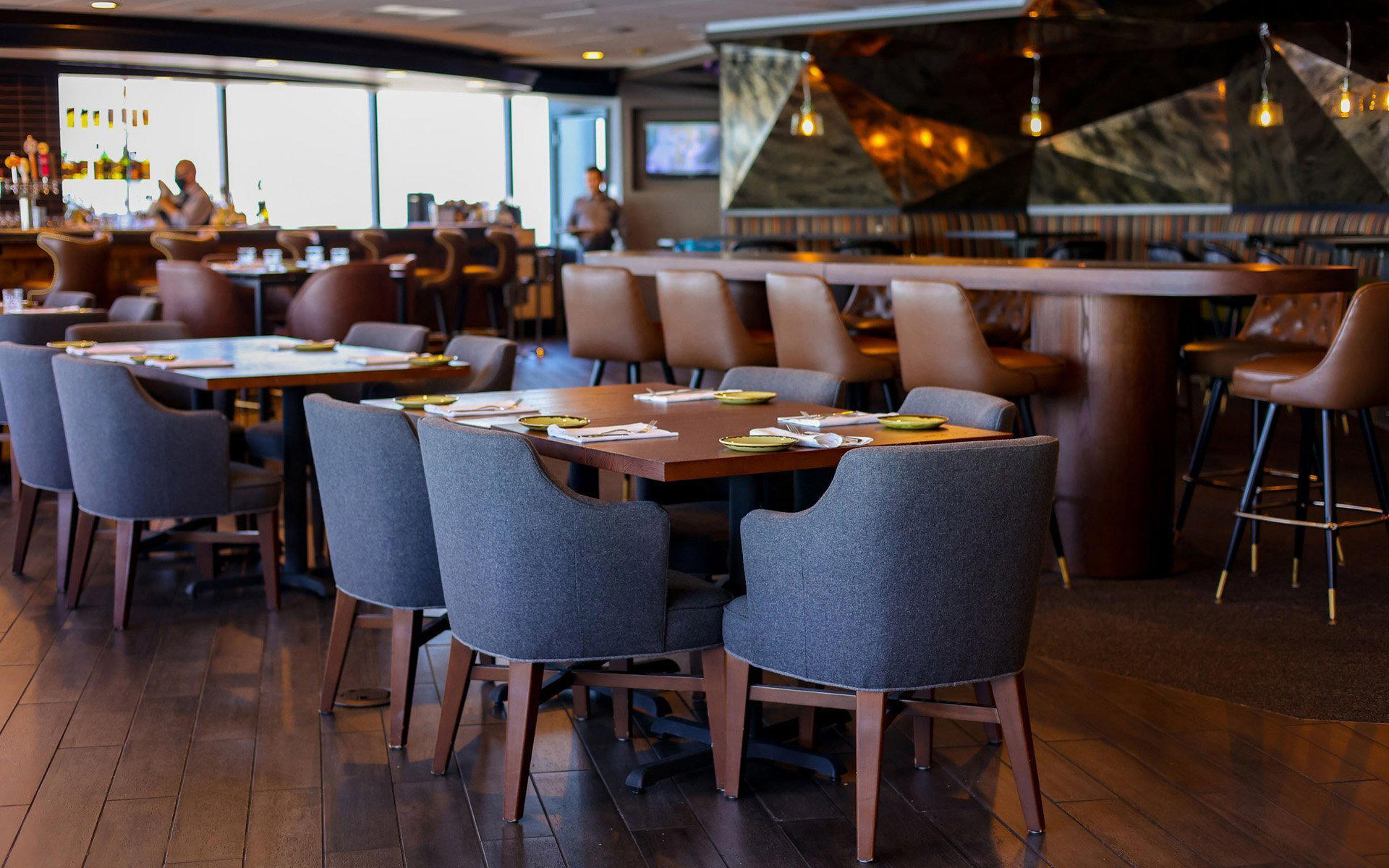
Seventy-Five Floors Above the Sound
There is a particular quality of light that enters Seattle from the northwest in the late afternoon, cutting low across Elliott Bay and turning the Olympic Mountains the color of hammered copper. From the 75th floor of the Columbia Tower, that view does not frame the room so much as consume it. The city below reads as a grid of wet slate and green canopy; the water beyond it shifts between silver and pewter depending on cloud cover. Before a single dish arrives, the physical context of dining here has already made an argument about what kind of evening this will be.
Private club dining at altitude occupies a specific niche in American urban hospitality. At venues like Canlis, Seattle's long-running benchmark for occasion dining, the elevation is metaphorical. Here, it is literal. The Columbia Tower Club operates on the 75th floor of Columbia Center. That historical fact is not incidental to the experience; it is the architectural premise around which everything else is arranged.
Menu Architecture: What the Structure Reveals
Private club menus tend to reveal their priorities in their architecture more honestly than restaurant menus do, because they are not performing for anonymous guests. They are maintaining a relationship with a fixed membership. The Columbia Tower Club's menu operates in that logic: it is built for repeat visits, not first impressions. That means breadth over novelty, legibility over ambition, and enough continuity that a member ordering their usual at lunch does not find it absent at dinner.
This stands in deliberate contrast to the tasting-menu format that defines Seattle's more decorated dining rooms. At Joule in Capitol Hill, the kitchen controls sequence and pacing; the diner surrenders to a fixed progression. The Columbia Tower Club inverts that relationship. The menu gives the member authority: choose your own path through courses, return to the same dishes across seasons, build habits. The structure signals stability over surprise.
This architecture also reflects the dual-service reality of club dining. Lunch service and dinner service at a private city club draw different constituencies with different expectations. A working lunch at the 75th floor of a downtown financial tower has different rhythm requirements than a weekend dinner against a lit-up skyline. A menu that spans both services must be versatile without being diffuse, familiar without being static. The category comparisons that illuminate this come from similar urban club formats across the country: the member-focused dining rooms at institutions in New York and Chicago operate on the same principle, building menus that function across the full arc of a business day rather than peaking at a single nightly service window.
For context on what high-commitment tasting formats look like at the national level, Le Bernardin in New York City, Lazy Bear in San Francisco, and Smyth in Chicago all operate in the single-path progression model. The Columbia Tower Club sits at the opposite structural pole: optionality over sequence, membership continuity over one-time dramatic impact.
Position in Seattle's Dining Spectrum
Seattle's premium dining tier has sharpened considerably over the past decade. The city now supports a range of formats from destination tasting counters to neighborhood-rooted bistros, with a growing cluster of addresses that command serious national attention.
Within that spectrum, the restaurant occupies territory that few other Seattle venues touch: private, vertically positioned, and oriented toward a business-professional membership base rather than the broader dining public. The comparison set is not Canlis or the city's independent chef-driven rooms; it is other urban private clubs, a category that prizes consistency, service reliability, and discretion over culinary provocation.
For a sense of how other high-achieving American dining rooms handle the architecture of ambition and accessibility, the contrast with venues like The French Laundry in Napa, Providence in Los Angeles, or Addison in San Diego is instructive. Those rooms push hard on culinary identity as the primary value proposition. The restaurant's value proposition is different: it is access, continuity, and a view that no independent restaurant in the city can replicate.
Farm-to-concept formats at venues like Single Thread Farm in Healdsburg and Blue Hill at Stone Barns in Tarrytown invest heavily in sourcing narrative as a menu organizing principle. That is a different kind of menu architecture, one built around provenance as story. The restaurant does not operate in that register; its story is the room and the relationship, not the supply chain.
The View as Context, Not Gimmick
Altitude dining has a complicated reputation. In many cities, the formula collapses into a simple transaction: pay a premium for the window seat and accept that the kitchen is not the reason you came. The more serious version of altitude dining insists that the food and service must hold up to scrutiny independent of the glass, so that the view functions as context rather than compensation.
Seattle's position as a city defined by water, mountains, and weather means that the view from the Columbia Tower changes character across seasons and times of day in ways that flat-city skyline views do not. Summer evenings extend past nine o'clock, keeping the panorama lit well into dinner service. Winter brings low cloud cover that can drop visibility to the immediate city grid, turning the room inward. These seasonal shifts affect the experience in ways that are worth factoring into timing.
Altitude club dining is less common in the American context, which gives the restaurant a degree of singularity in the Pacific Northwest market. In the American context, the format is less common, which gives the restaurant a degree of singularity in the Pacific Northwest market that it would not claim in a denser global city.
Planning Your Visit
The restaurant operates as a private membership club. 1415 1st Ave, 1744 NW Market St, and 2963 4th Ave S for comparison.
Reputation First
Comparable venues nearby, for context on price, style, and recognition.
| Venue | Cuisine | Price | Notes |
|---|---|---|---|
| Columbia Tower ClubThis venue — the venue you are viewing | Contemporary American with Pacific Northwest Influences | $$$ | Not listed |
| Salt Harvest | Pacific Northwest Hearth-Inspired Grill | $$$ | Pioneer Square |
| Six Seven | Pacific Northwest Seafood | $$$ | Seattle Waterfront |
| Great State Burger | Organic Grass-Fed Burger Joint | $$ | Denny Triangle |
| No Anchor | Sophisticated Pub Grub | $$ | Belltown |
| Local 360 | Modern American Comfort Food | $$ | Belltown |
Continue exploring
More in Seattle
Restaurants in Seattle
Browse all →
Bars in Seattle
Browse all →
Hotels in Seattle
Browse all →
At a Glance
- Elegant
- Sophisticated
- Scenic
- Modern
- Business Dinner
- Special Occasion
- Celebration
- Group Dining
- Panoramic View
- Open Kitchen
- Private Dining
- Extensive Wine List
- Craft Cocktails
- Sommelier Led
- Local Sourcing
- Farm To Table
- Skyline
Current opening hours
- Monday
- 8 AM–3 PM
- Tuesday
- 8 AM–10 PM
- Wednesday
- 8 AM–10 PM
- Thursday
- 8 AM–10 PM
- Friday
- 8 AM–10 PM
- Saturday
- Closed
- Sunday
- Closed
Hours can change for holidays and private events. Last verified .
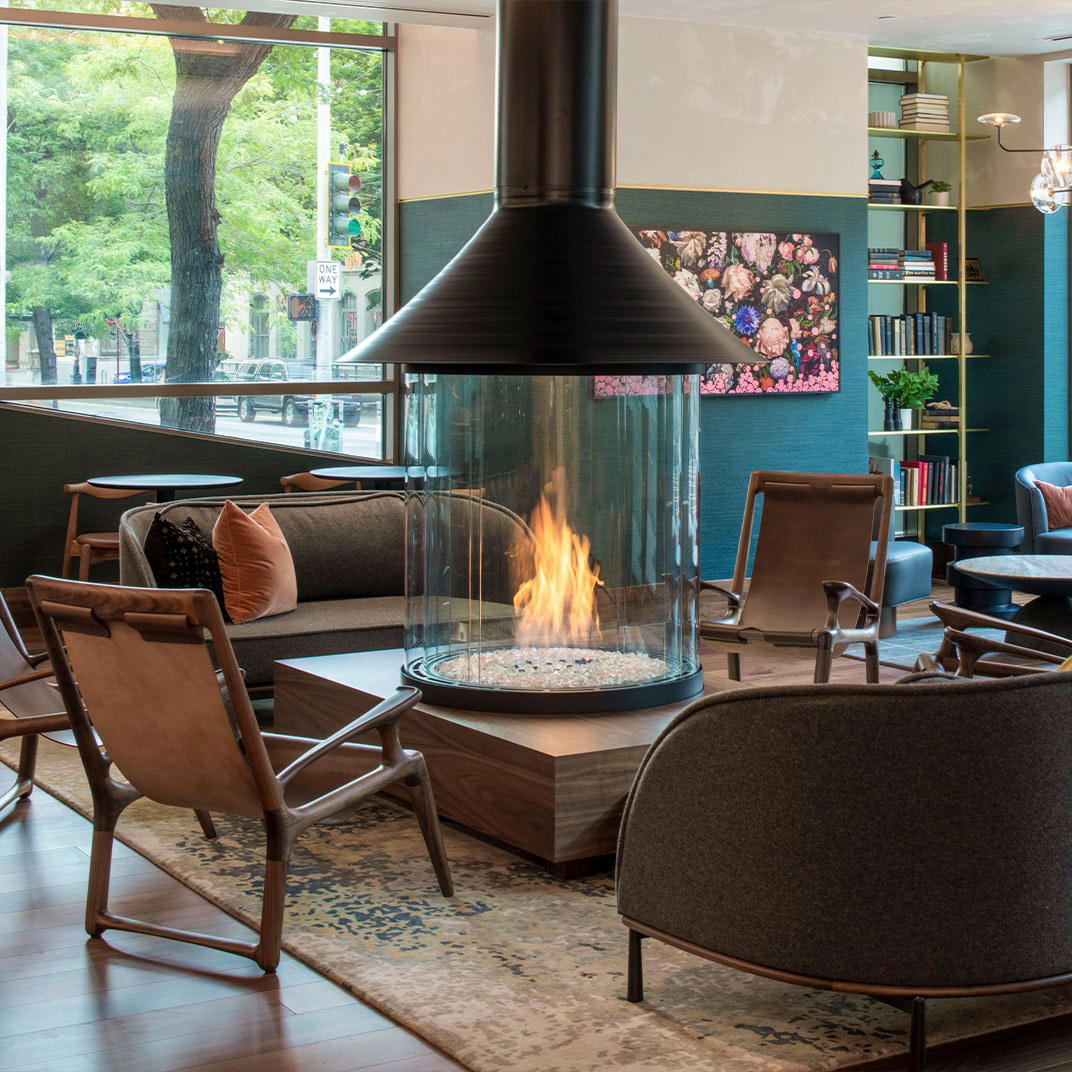
Upscale yet approachable atmosphere with modern design, bright natural lighting from floor-to-ceiling windows, and an energetic but refined social environment.