Class Act


James Beard Award Semi Finalist · Wine Spectator Award of Excellence
Our verdict
Class Act occupies a quietly observed address on North Damen Avenue in Chicago's Bucktown corridor, a neighborhood that has long supported serious independent dining without the marquee visibility of the West Loop. The venue operates in a city where the intersection of classical European training and Midwestern agricultural depth defines the upper tier of progressive American cooking, placing it in a competitive set that includes some of the country's most closely watched dining rooms.

Pearl is the En Primeur Club membership app, where members save venues, book tables and use the concierge.
The menu
What to order
- Peking duck
- Oysters and Apples
- The Duck
Bucktown's Relationship with Serious Independent Dining
Chicago's independent dining scene has historically concentrated in two zones: the West Loop, where media attention and foot traffic converge, and a quieter arc running through Wicker Park and Bucktown, where leases have allowed smaller operators to build without the pressure of destination-district rents. North Damen Avenue sits in that second corridor. Addresses here tend to attract a neighborhood-first clientele and a secondary wave of diners who seek out venues that haven't yet been absorbed into the city's promotional apparatus. Class Act, at 1737 N Damen Ave, occupies that position in the 60647 zip code, a stretch of Chicago that has supported credible independent work without requiring the diner to treat the visit as an expedition.
That geographic context matters more than it might initially seem. In cities with strong dining cultures, the address is often a signal about the operator's priorities. A West Loop placement reads as a declaration of ambition and visibility. A Bucktown placement on Damen reads as a bet on the neighborhood, on repeat business, and on word-of-mouth over press. The city's most closely watched rooms, including Alinea and Smyth, operate in districts that were themselves transformed by dining investment. Bucktown's trajectory has been slower, which is part of its appeal to operators who want a particular kind of guest relationship.
The Technique-and-Terroir Framework in Chicago's Upper Tier
The most instructive editorial angle for understanding Chicago's progressive American tier is the intersection of imported culinary method and Midwestern agricultural depth. The Great Lakes region, the Illinois prairie, and the broader upper Midwest supply a specific seasonal calendar: morel season in late spring, stone fruit in summer, root vegetables and game through the colder months. The restaurants that have built the most durable reputations in this city, from Oriole to Next Restaurant, have consistently drawn on classical French and Japanese technique applied to that local supply chain. It is a framework that rewards kitchens with strong sourcing relationships and technical discipline in equal measure.
That same framework connects Chicago's dining culture to a broader national conversation. Blue Hill at Stone Barns in Tarrytown built an entire identity around this intersection of agricultural specificity and French-influenced preparation. Single Thread Farm in Healdsburg applies Japanese kaiseki principles to Northern California's seasonal calendar. In Chicago, the same logic plays out against a different set of ingredients and a different climate, one defined by hard winters, brief but intense growing seasons, and a meat and grain culture that predates the city's restaurant industry by generations. Venues that work seriously within this framework tend to distinguish themselves from the broader progressive American category, which can default to novelty over coherence.
Class Act's address in the 60647 zip code places it within reach of the city's independent produce and specialty supply networks, which have become increasingly sophisticated over the past decade as farm-to-table sourcing has moved from marketing language to operational infrastructure. The farmers markets at Lincoln Square and Logan Square, both within a short radius of North Damen, are established sourcing touchpoints for kitchens that work with seasonal Midwestern ingredients. Whether a given venue uses those networks is a matter of operational commitment, but the geography makes it available.
Peer Context in Chicago's Contemporary Dining Tier
Chicago's top-tier independent dining now operates in a small, expensive bracket. The comparison venues most relevant to Class Act's position include Kasama, which brought a Filipino-American tasting format to the city's conversation about what progressive American cooking can absorb, and Moody Tongue, which built a beverage-forward contemporary program in the South Loop. Both operate at the $$$$ price tier, which has become the standard for tasting-menu and multi-course formats in the city's upper independent bracket.
Each of those rooms has built a distinctive identity around the local-technique intersection: French Laundry through hyper-local Northern California sourcing and classical French structure, Le Bernardin through a seafood-first philosophy that imports French method to American waters, and Providence through Pacific Rim ingredients filtered through French-trained precision. The pattern holds across geographies: the most durable upper-tier rooms in American cities have found a specific local ingredient story and applied a rigorous technical framework to it. Chicago's version of that story is Midwestern in its raw materials and cosmopolitan in its technique, a combination that the city's dining culture has been refining for the better part of three decades.
For diners comparing options in the city's contemporary tier, the relevant question is not simply which room has the most awards, but which venue's sourcing and technical approach align most closely with what they want to understand about the region. Lazy Bear in San Francisco, Addison in San Diego, and Frasca Food and Wine in Boulder each answer that question differently within their own regional frameworks. In Chicago, the answer has historically been rooted in the agricultural calendar of the upper Midwest and the technical lineage that the city's serious kitchens have accumulated.
Planning a Visit: What to Know Before You Go
Bucktown and the North Damen corridor are accessible via the Blue Line CTA, with Damen station placing visitors within a short walk of the 1737 address. The neighborhood rewards arriving early for a pre-dinner walk through the commercial stretch; the area's independent retail and bar density makes it a coherent destination rather than a single-stop visit. Reservations at venues in this tier of Chicago dining typically open three to four weeks in advance, though high-profile tasting rooms in the city can book out further, particularly during the late spring and early autumn seasons when the local ingredient calendar is at its most compelling.
| Venue | Neighborhood | Price Tier | Format | Booking Lead Time |
|---|---|---|---|---|
| Class Act | Bucktown / N Damen Ave | N/A | N/A | |
| Smyth | West Loop | $$$$ | Progressive tasting menu | 4-6 weeks |
| Oriole | Near West Side | $$$$ | Contemporary tasting menu | 4-8 weeks |
| Kasama | Ukrainian Village | $$$$ | Filipino-American tasting menu | 3-5 weeks |
| Next Restaurant | West Loop | $$$$ | Rotating concept, ticketed | Variable |
For a broader map of Chicago's serious dining rooms, including the full West Loop cluster and the city's outlying independent addresses, see our full Chicago restaurants guide. Diners with an interest in how global technique applies to local ingredients across different American cities may also find useful context in Atomix in New York, which applies Korean fine dining discipline to a North American framework, and Atelier Moessmer Norbert Niederkofler in Brunico, which is among the most instructive examples internationally of classical European technique applied to a specific and constrained regional larder. Emeril's in New Orleans and The Inn at Little Washington in Virginia represent older models of the same intersection, useful for understanding how the American fine dining tradition has evolved. Seasonal timing in Chicago favors late May through June for spring produce, and October for the transition into root-vegetable and game-focused menus, both periods when the Midwestern ingredient calendar and serious kitchen technique are most visibly in dialogue.
Frequently asked questions
What's Class Act's location?
Class Act is located at 1737 N Damen Ave, Chicago, IL 60647, Chicago.
What kind of dining experience does Class Act offer compared to Chicago's West Loop restaurant corridor?
Class Act occupies the North Damen corridor in Bucktown rather than the West Loop, which historically draws heavier media attention and foot traffic in Chicago's contemporary dining tier. That positioning tends to attract a neighborhood-rooted clientele and a format built on repeat visits rather than destination hype. For diners seeking serious independent cooking outside the West Loop's concentrated press circuit, the 1737 N Damen Ave address represents a different relationship between room and guest.
What's the must-try dish at Class Act?
At Chicago's upper-tier independent addresses on corridors like North Damen, the most revealing dishes tend to be those anchored to Midwest sourcing with a clear technical point of view.
Is Class Act reservation-only?
At this address in Bucktown, 1737 N Damen Ave, demand for serious independent rooms typically outpaces walk-in availability, particularly on weekends. Contacting the venue directly ahead of your visit is the reliable approach.
City Peers
Comparable venues nearby, for context on price, style, and recognition.
| Venue | Cuisine | Price | Awards | Notes |
|---|---|---|---|---|
| Class ActThis venue (the venue you are viewing) | Avant-Garde Fusion Tasting Menu | Not listed | James Beard Award Semi Finalist · Wine Spectator Award of Excellence | Not listed |
| FIRE | Avant-garde open-fire tasting menu | Not listed | Not listed | Chicago |
| Arla | Seaside Mediterranean with Japanese influences | Not listed | Not listed | Gold Coast |
| Osaka Nikkei | Peruvian-Japanese Nikkei | Not listed | Not listed | Fulton Market |
| Sunda New Asian | Modern Southeast Asian | $30–50 | Not listed | River North |
| Beatnik On The River | Mediterranean-Moroccan-Italian Fusion | $50–100 | Not listed | Loop |
Recognition history
Dated appearances from independent guides and award organizations, with the underlying list record or original source where available.
James Beard Award Semi Finalist
James Beard Award
Wine Spectator Award of Excellence
Wine Spectator
Continue exploring
More in Chicago
Restaurants in Chicago
All restaurants in Chicago →
Bars in Chicago
All bars in Chicago →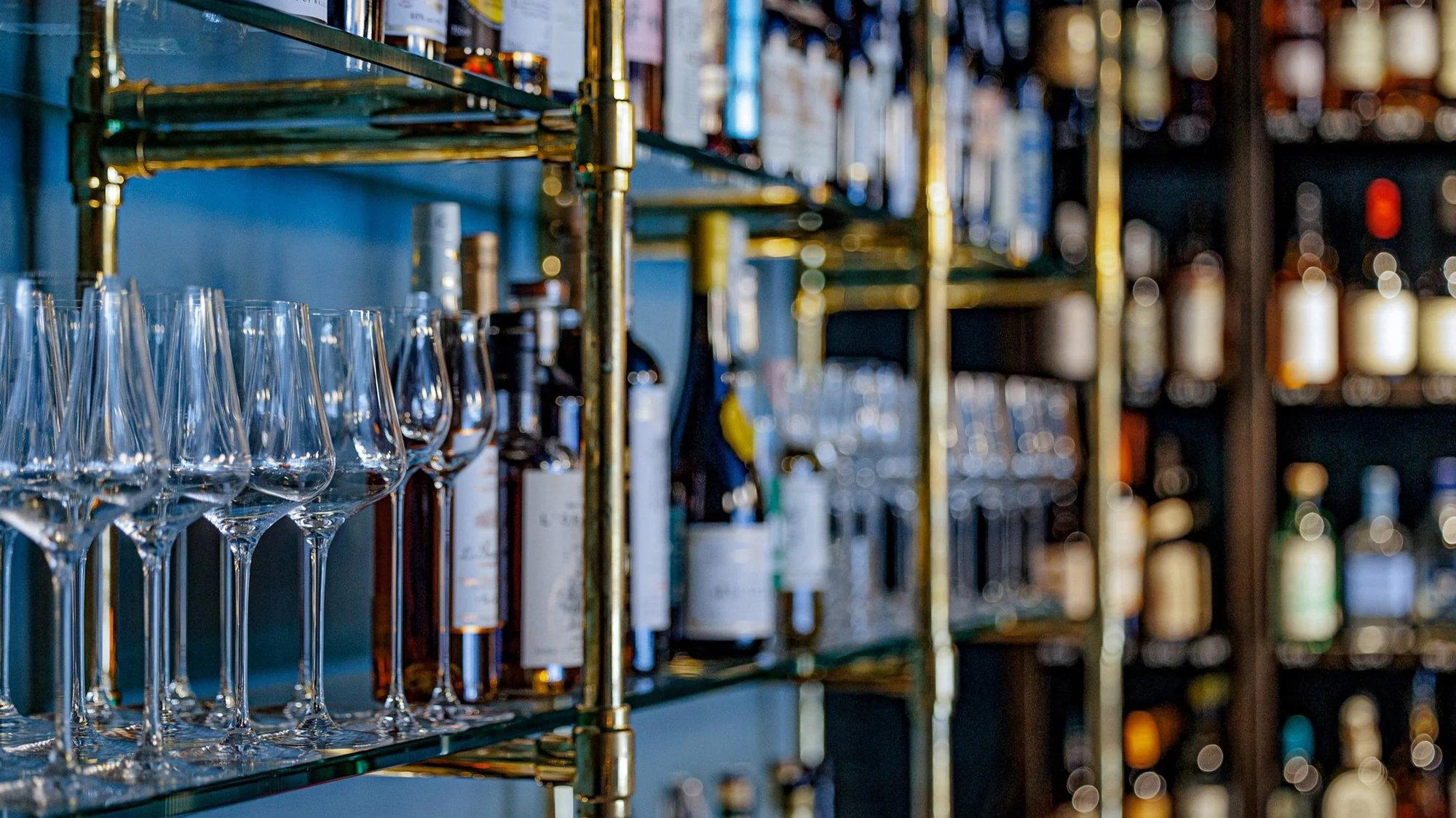



Class Act
The wine
Class Act holds the Wine Spectator Award of Excellence, which Wine Spectator gives to lists of usually 90 or more selections.
- Wine Spectator
- Wine Spectator Award of Excellence
- Extensive wine list
- Craft cocktails
Details
- Whimsical
- Lively
- Intimate
- Modern
- Elegant
- Special Occasion
- Date Night
- Celebration
- Open Kitchen
- Chefs Counter
- Craft Cocktails
- Extensive Wine List
- Tasting Menu
Current opening hours
- Monday
- Closed
- Tuesday
- Closed
- Wednesday
- 5 PM–12 AM
- Thursday
- 5 PM–12 AM
- Friday
- 5 PM–12 AM
- Saturday
- 5 PM–12 AM
- Sunday
- 5 PM–12 AM
Hours can change for holidays and private events. Hours as of .
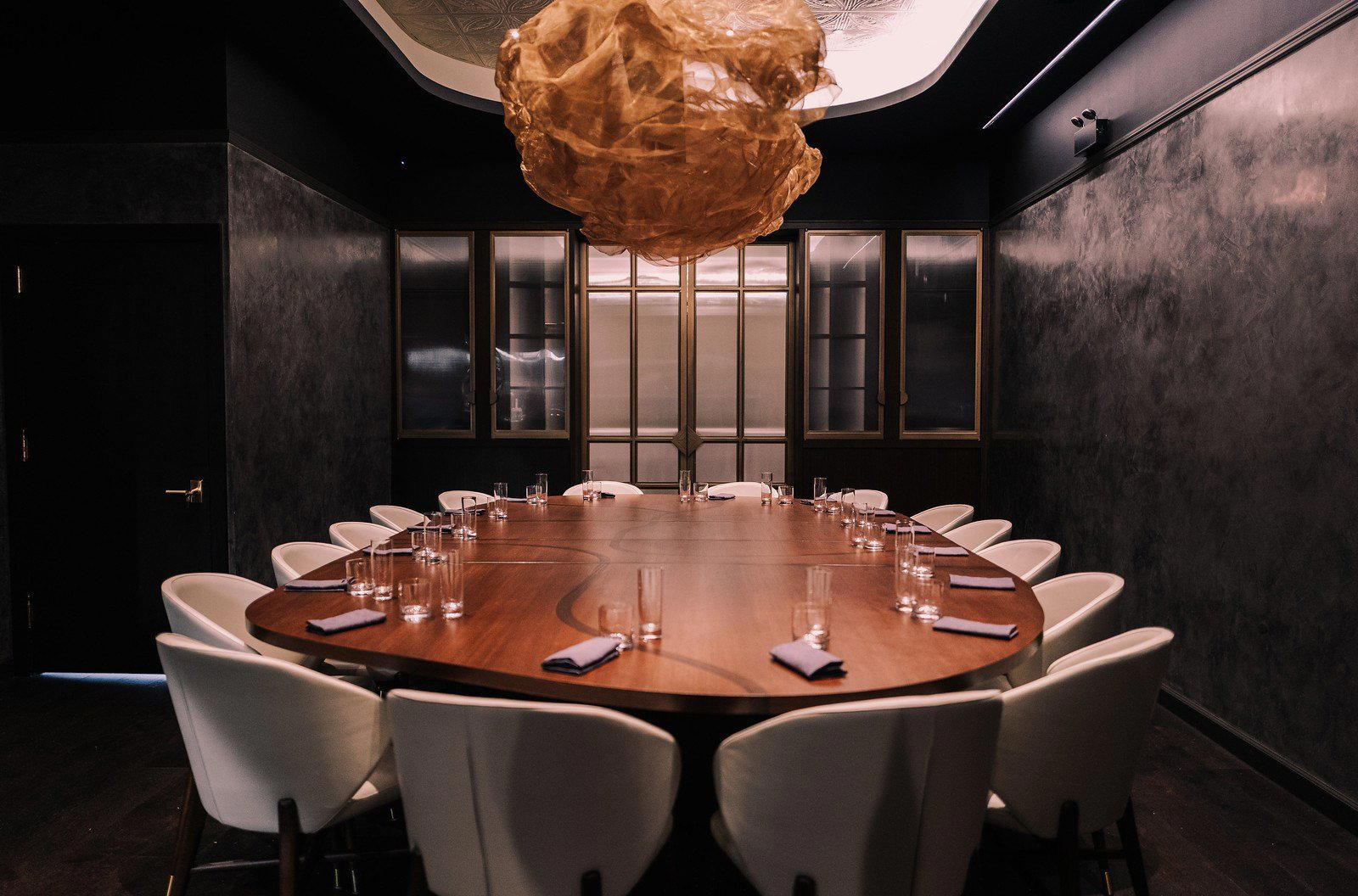
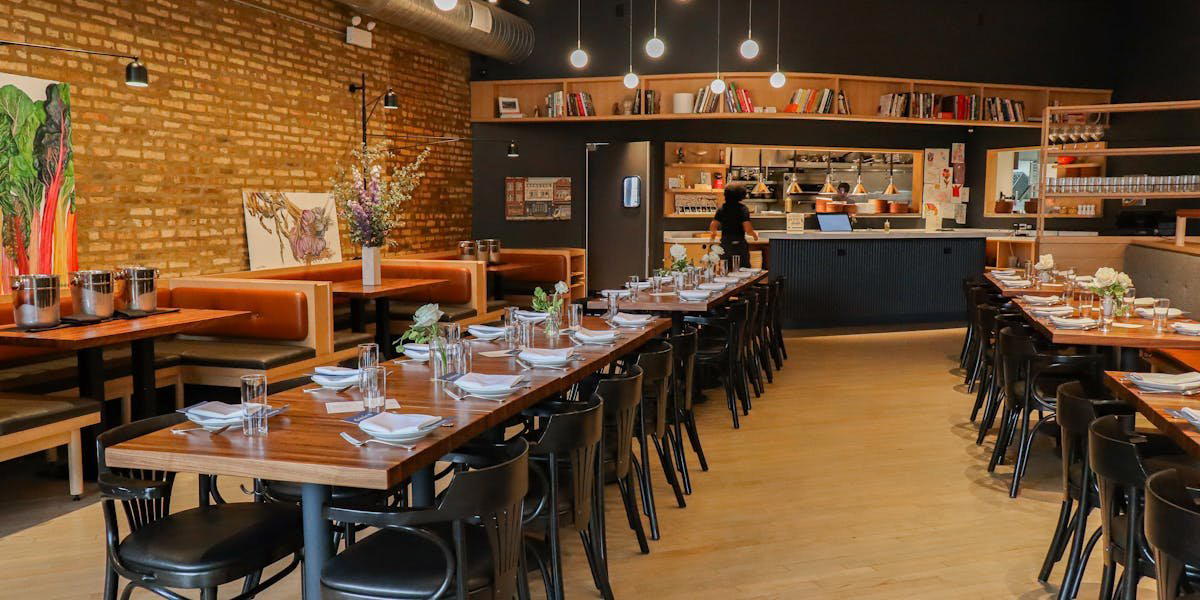
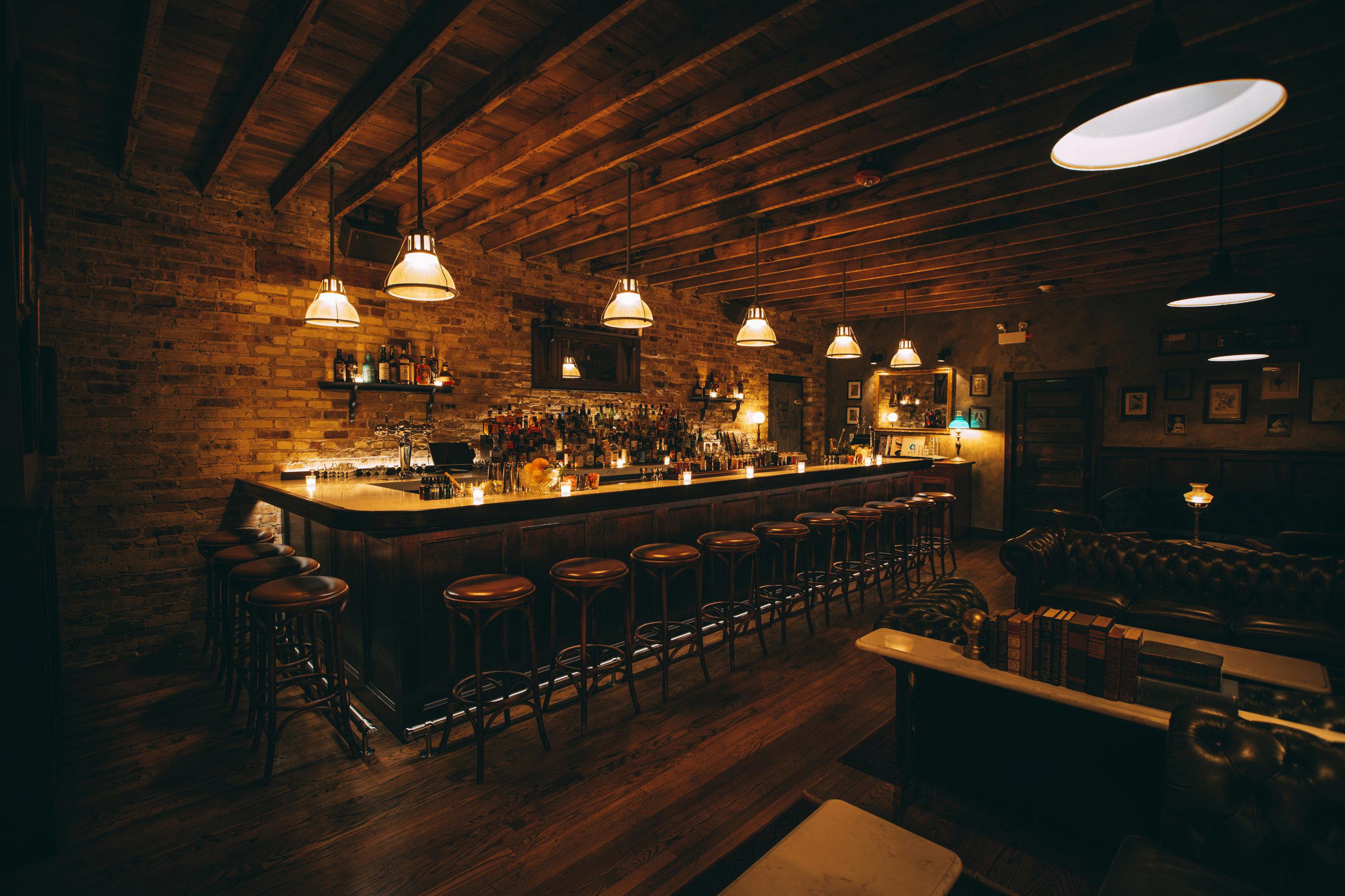
Sleek wooden communal dining room under a floating gold cloud-like sculpture, with lively open kitchen views fostering conversation among guests.