Cigalon
On Chancery Lane, Cigalon brings Provençal cooking into the heart of London's legal district, occupying a converted auction house that reads more like a sun-drenched brasserie than a City restaurant. Against a comparable set dominated by French fine dining in Mayfair and Fitzrovia, this is a quieter, more regionally specific proposition, southern France rather than Paris, lunch-led rather than occasion-driven.
Pearl is the En Primeur Club membership app — saves, bookings, and concierge access live there. Same editors, same standards.
- Address
- 115 Chancery Ln, London WC2A 1PP, United Kingdom
- Phone
- +442072428373
- Website
- cigalon.co.uk
- Directions
- Get directions
 Saves & bookings on Pearl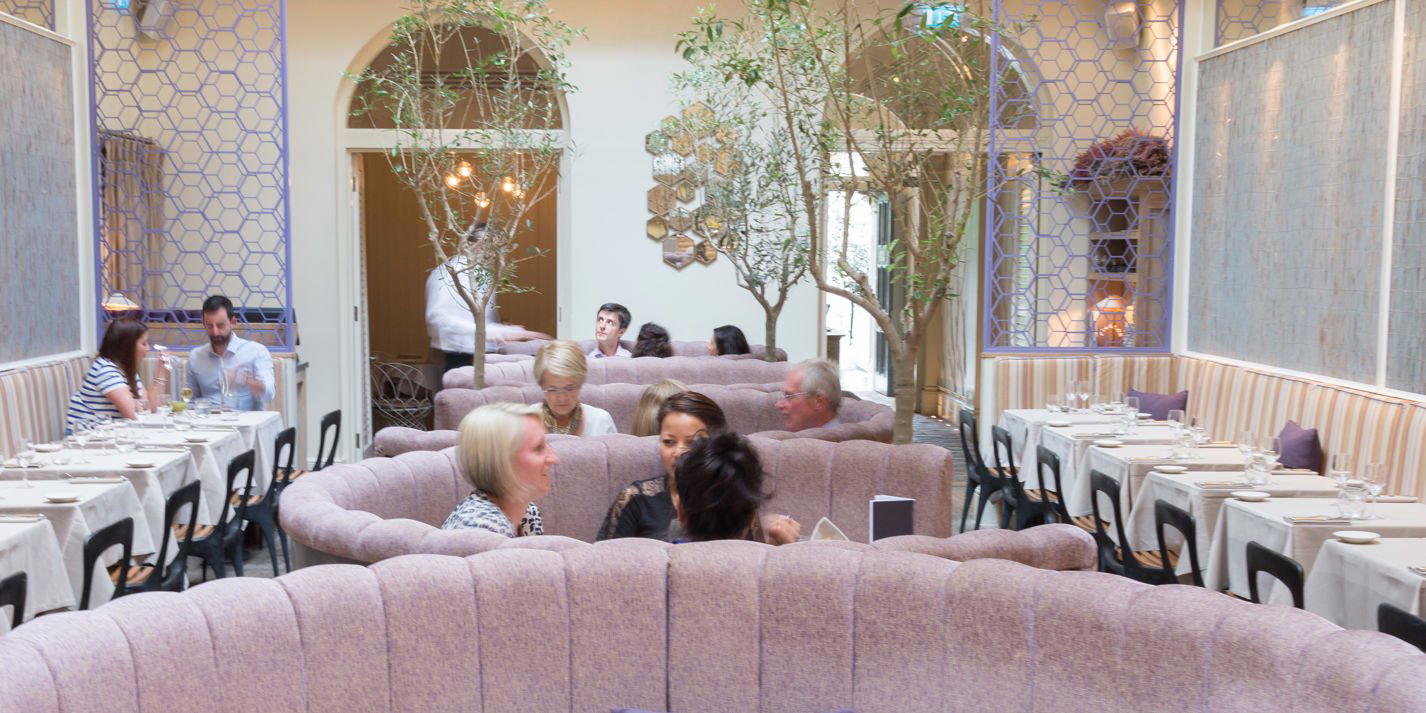
Chancery Lane and the Case for Provençal London
Chancery Lane sits at the edge of the City and the Inns of Court, a street that deals in legal history rather than restaurant culture. That makes the presence of a Provençal brasserie at number 115 somewhat counterintuitive, and, for that reason, instructive. London's French restaurant tier has long clustered in Mayfair and Fitzrovia, where Sketch, The Lecture Room and Library and Restaurant Gordon Ramsay represent the capital's most decorated end of French-influenced cooking. Cigalon occupies a different register entirely: not classical haute cuisine, but the sunnier, olive-oil-driven cooking of the south, a tradition that rarely gets serious representation in the UK outside of festival menus and holiday nostalgia.
The building itself sets the tone before the menu arrives. Cigalon occupies a former saleroom, and the space retains that airy, high-ceilinged quality that auction houses share with Provençal courtyard restaurants, a coincidence of architecture that works considerably in the room's favour. Natural light, where London permits it, does what candlelight does in basements elsewhere: it makes the food look like the food it is rather than a theatre prop.
What Provençal Cooking Actually Means in a London Context
Provence is not simply a French region that uses garlic and rosemary. It is a culinary tradition shaped by proximity to the Mediterranean, to Italy, to North Africa, and to centuries of market culture built around vegetables rather than protein as the primary event. Dishes like daube, tapenade, ratatouille, bouillabaisse, and socca each carry specific geographic logic: the olives come from specific valleys, the fish from specific ports, the herbs from specific hillsides. When that tradition travels, something is always lost in transit, the ingredients, the altitude, the seasonal rhythm, but what remains is still a distinct culinary language, recognisably different from the butter-and-stock classicism of northern French cooking.
In London, that distinction matters. The dominant French influence on the city's high-end restaurant scene runs through classical technique: The Ledbury and CORE by Clare Smyth work in idioms shaped partly by that northern European fine-dining grammar, even when they break from it. A restaurant drawing from Provence instead is drawing from a different grammar entirely, one that prioritises aromatics over richness, freshness over reduction, and the vegetable as a featured player rather than a garnish.
Cigalon's position on Chancery Lane means its lunch trade is anchored by the legal and financial communities of WC2, a crowd that historically rewards reliability over experiment. That creates a particular kind of pressure: to serve food that reads as seriously southern French without requiring the diner to have spent time in Aix-en-Provence to understand it. The restaurants that manage that balance, regional specificity without regional exclusivity, tend to become fixtures rather than fashions.
Where Cigalon Sits in the Wider French Dining Picture
London's French restaurant scene is not monolithic. At the summit of the price and recognition tier, the Michelin-starred addresses skew classical or modern-French-technique. Below that, the brasserie and bistro format has largely converged on a similar Parisian template: steak-frites, moules, crème brûlée. The regional specificity that distinguishes French cooking at its leading, the difference between a Lyon bouchon, an Alsatian winstub, and a Provençal mas, rarely survives the crossing to London with its detail intact.
That gap is where Cigalon operates. Compare it to the Michelin-starred tier represented by Dinner by Heston Blumenthal or the formal French classicism of the Waterside Inn in Bray, and the contrast in register is clear: Cigalon is not competing for trophies. It is competing for a specific kind of loyalty, the diner who wants southern France in London without the occasion-dining overhead that comes with the capital's decorated addresses.
Internationally, the closest parallel might be the way that Le Bernardin in New York City holds a specific culinary identity within a dense competitive market: not the broadest possible audience, but one committed one for a particular tradition. Cigalon's tradition is narrower and its profile lower, but the logic is the same.
The Chancery Lane Address and What It Implies
Location in London carries pricing and audience signals that are difficult to separate from a restaurant's identity. Chancery Lane is not a destination dining street in the way that Mayfair or Soho streets are. It benefits from a dense office population during the week and relative quiet at weekends, a pattern that shapes a restaurant's rhythm, its wine list, its booking window, and often its menu format. Lunch here is a serious meal. Dinner is a different proposition, slower and more considered, less reflex and more deliberate.
For travellers rather than office regulars, the WC2 location places Cigalon within reasonable reach of several areas. The Inns of Court are immediately adjacent; the City is a short walk east; Covent Garden and the Strand are close to the west. For anyone building a day around that part of central London, the British Museum, the Courtauld, the Temple, the restaurant offers a logical anchor for lunch without requiring a cross-city detour.
Across the UK, the venues that develop the deepest reputations for regional cooking often sit slightly outside the main dining circuits: L'Enclume in Cartmel, Moor Hall in Aughton, Gidleigh Park in Chagford. London doesn't reward that geographic remove in the same way, but it does reward restaurants that occupy a niche with enough specificity to become the go-to address for a particular culinary tradition. Cigalon holds that position for Provençal cooking in the capital.
Planning a Visit
Cigalon is located at 115 Chancery Lane, London WC2A 1PP, directly on Chancery Lane with Chancery Lane Underground station (Central line) as the nearest Tube stop. The restaurant draws a professional lunch crowd on weekdays; for a more relaxed experience, an evening booking mid-week tends to offer better service pacing. Those planning a broader UK trip can cross-reference with Midsummer House in Cambridge, Opheem in Birmingham, or further afield, Restaurant Andrew Fairlie in Auchterarder and Ynyshir Hall in Machynlleth.
The restaurant is open Tuesday through Friday for lunch and dinner, with Monday, Saturday, and Sunday closed. For those who want to benchmark the experience against the broader French-influenced tier in the UK, Hand and Flowers in Marlow, hide and fox in Saltwood, and the California comparison point of Lazy Bear in San Francisco each illustrate how regional culinary specificity translates across different market contexts.
A Minimal comparable set
Comparable venues nearby, for context on price, style, and recognition.
| Venue | Cuisine | Price | Notes |
|---|---|---|---|
| CigalonThis venue — the venue you are viewing | Holborn, Contemporary Provençal French | $$$ | Not listed |
| Bebe Bob | Soho, French Rotisserie Chicken | $$$ | Not listed |
| The Wallace | Marylebone, Modern French Brasserie | $$$ | Not listed |
| Le Boudin Blanc | Mayfair, Classic French Bistro | $$$ | Not listed |
| Colbert | Sloane Square, Classic French Brasserie | $$$ | Not listed |
| Le Salon Prive | Not listed | $$$ | St. Margaret's, Classic French Brasserie |
Continue exploring
More in London
Restaurants in London
Browse all →
Bars in London
Browse all →
Hotels in London
Browse all →


At a Glance
- Elegant
- Cozy
- Sophisticated
- Intimate
- Date Night
- Business Dinner
- Special Occasion
- Open Kitchen
- Private Dining
- Historic Building
- Extensive Wine List
- Local Sourcing
Current opening hours
- Monday
- Closed
- Tuesday
- 12–2 PM, 5:30–9 PM
- Wednesday
- 12–2 PM, 5:30–9 PM
- Thursday
- 12–2 PM, 5:30–9 PM
- Friday
- 12–2 PM, 5:30–9 PM
- Saturday
- Closed
- Sunday
- Closed
Hours can change for holidays and private events. Last verified .
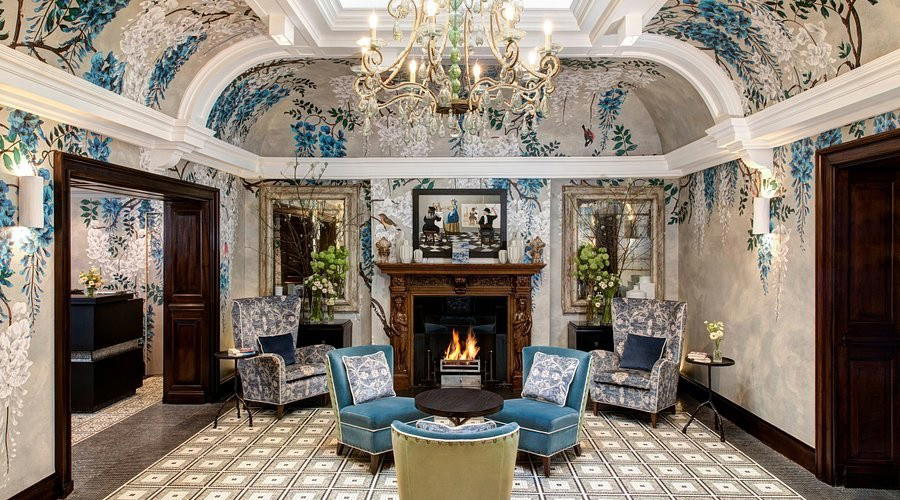
Double-height dining room with greenhouse-style glass ceiling, reed fence walls, and piped singing cicadas evoking the Mediterranean, featuring secluded booths and cosy banquettes.