Colbert

On Sloane Square, Colbert operates as Chelsea's most reliable all-day brasserie, drawing on the French café tradition with a menu that runs from breakfast croissants to late-night steak frites. The room rewards those who want to watch the square's well-heeled foot traffic as much as those focused on the plate. It sits comfortably in the neighbourhood's mid-to-upper casual tier, a step below the city's Michelin-weighted rooms but several steps above a tourist-facing café.
Pearl is the En Primeur Club membership app — saves, bookings, and concierge access live there. Same editors, same standards.
- Address
- 50-52 Sloane Square, London SW1W 8AX, United Kingdom
- Phone
- +44 20 7730 2804
- Website
- colbertrestaurant.com
- Directions
- Get directions
 Saves & bookings on Pearl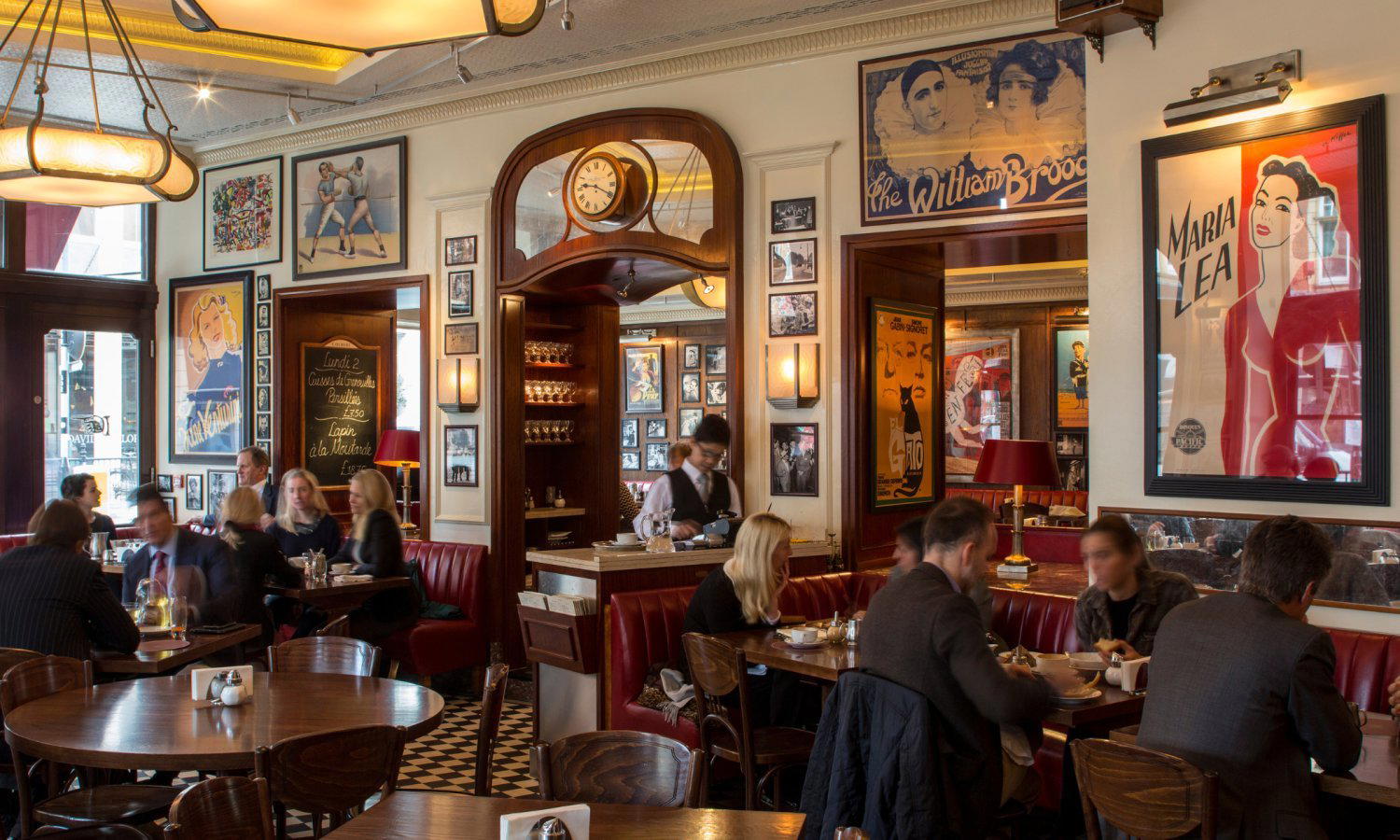
Sloane Square and the Art of the Neighbourhood Brasserie
The French brasserie format has proven harder to transplant successfully to London than the tasting-menu restaurant or the small-plates wine bar. The model demands something specific: a room that works from breakfast through late dinner. Colbert, a Classic French Brasserie at 50-52 Sloane Square in London, is one of the few London rooms that has genuinely committed to that format rather than simply borrowing its visual vocabulary. The wide pavement frontage, the dark wood and mirrored interior visible from the street, and the steady rotation of customers from morning to close all point to a serious attempt at reproducing the rhythm of a Paris or Brussels brasserie in SW1.
That commitment matters because Sloane Square is a particular kind of London location. It sits at the intersection of Chelsea's residential money and the cultural foot traffic that the Royal Court Theatre and the Duke of York's Square generate. The clientele is local in a way that few central London restaurants can claim. The test for any room on this square is whether the neighbourhood actually uses it, or merely tolerates it as a tourist convenience. Colbert has, by most measures, passed that test.
The Room: Reading a French Interior in a British Postcode
The physical environment at Colbert does much of the editorial work before a plate arrives. The design reads as a considered homage to the grand café tradition: banquette seating arranged for people-watching rather than privacy, large windows that open the room to the square, and a general sense that lingering is not just tolerated but expected. This is a meaningful choice in a city where table-turn pressure has tightened in most mid-to-upper casual rooms over the past decade.
The all-day brasserie model, when it works, depends on front-of-house teams that can shift register across service periods. The morning customer wants efficiency; the lunch table may want a full arc from aperitif to dessert; the late-night table wants permission to slow down. Managing those transitions without visible friction is a service discipline that is harder than it looks. The teams at rooms operating in this format, whether in London, Paris, or New York, tend to develop a particular fluency in reading tables quickly. That floor-level intelligence is as much a part of the brasserie format as the menu itself.
The Menu in Context: French Café Classics and Their London Interpretation
Brasserie menu is among the more stable formats in European dining. Onion soup, steak frites, croque monsieur, roast chicken, tarte tatin: the canon changes slowly and resists the seasonal disruption that defines tasting-menu restaurants. That stability is a feature, not a limitation. It allows a room to build genuine regulars, people who return not in search of novelty but in search of consistency. In London's premium dining tier, where novelty is frequently the primary proposition, this is a genuinely different offering.
To understand where Colbert sits in the wider London restaurant hierarchy, it helps to sketch stronger examples from the market. CORE by Clare Smyth, Restaurant Gordon Ramsay, Sketch, The Lecture Room and Library, and The Ledbury all carry three Michelin stars and occupy the ££££ tier. Dinner by Heston Blumenthal operates at two stars within a similar price bracket. Colbert operates well below that bracket in both ambition and price point, which is precisely the point. It is not competing for the same occasion. Its competition is the neighbourhood brasserie, the reliable French-leaning room that a Chelsea resident books for a Tuesday lunch without much deliberation.
Outside London, the country's serious destination restaurants occupy a different register entirely. The Fat Duck in Bray, L'Enclume in Cartmel, Moor Hall in Aughton, Gidleigh Park in Chagford, and Hand and Flowers in Marlow all demand considered travel and forward planning. Colbert asks for neither. The comparison is useful precisely because it clarifies what kind of room this is: a local institution, not a destination in the destination-dining sense.
The Team Dynamic in a High-Turnover All-Day Room
The editorial angle most instructive for understanding Colbert is the one that concerns the collaboration between kitchen, floor, and bar across an extended service window. In a tasting-menu room, the interaction between chef, sommelier, and front-of-house tends to be tightly choreographed around a single nightly service. The brasserie format is structurally different and, in some ways, more demanding. The kitchen must produce reliably across multiple distinct meal periods. The bar must handle coffee service in the morning and cocktails and wine by the evening. The floor must modulate pace and formality across a single day.
This kind of operational coherence does not happen by accident. In the French brasserie tradition, it is a product of a certain kind of training culture: staff who have absorbed the expectation that a room should feel the same at 8am and 11pm, steady and capable without theatrics. London has relatively few rooms that have genuinely built this culture. The all-day brasserie format is more common in Paris, Brussels, and in the American cities that have invested in importing it, such as New York, where rooms like Le Bernardin and Atomix demonstrate different but equally serious approaches to long service disciplines. Colbert is working within a tradition that has limited local precedent, which makes its longevity on Sloane Square a meaningful data point.
Where Colbert Sits in the Broader London Scene
London's restaurant scene has expanded and stratified considerably since Colbert opened. The city now has a far denser population of serious neighbourhood restaurants than it did a decade ago, many of them operating in east and south London postcodes that were not previously part of the premium dining conversation. Chelsea and Sloane Square have remained more stable, anchored by residential wealth and conservative tastes. That stability suits the brasserie format, which thrives in neighbourhoods where the customer base turns over slowly and values consistency.
the full London restaurants guide covers the city's range across price tiers and neighbourhoods. For those already committed to the Chelsea postcode, hide and fox in Saltwood offers an interesting regional counterpoint for those planning day trips from London toward the Kent coast.
Planning Your Visit
Colbert is located at 50-52 Sloane Square, directly on the square itself and within a short walk of Sloane Square Underground station on the Circle and District lines. The room operates across breakfast, lunch, and dinner. For the Royal Court Theatre, Colbert is the obvious before-and-after option given its position on the square.
Comparable Spots
Comparable venues nearby, for context on price, style, and recognition.
| Venue | Cuisine | Price | Notes |
|---|---|---|---|
| ColbertThis venue — the venue you are viewing | Classic French Brasserie | $$$ | Not listed |
| La Fromagerie Bloomsbury | French Cheese & Charcuterie Bistro | $$$ | Bloomsbury |
| Galvin Bistrot & Bar | Modern French Bistro | $$$ | Spitalfields |
| Orrery | Modern French Fine Dining | $$$$ | Marylebone |
| Cafe Boheme | Classic French Bistro | $$ | Soho |
| Oslo Court | Traditional French-British | $$$ | St. John's Wood |
Recognition history
Dated appearances from independent guides and award organizations, with the underlying list record or original source where available.
Opinionated About Dining Casual in Europe Recommended
Opinionated About Dining
Continue exploring
More in London
Restaurants in London
Browse all →
Bars in London
Browse all →
Hotels in London
Browse all →



At a Glance
- Classic
- Cozy
- Elegant
- Lively
- Date Night
- Business Dinner
- Casual Hangout
- Standalone
- Extensive Wine List
- Street Scene
Current opening hours
- Monday
- 8 AM–10:30 PM
- Tuesday
- 8 AM–10:30 PM
- Wednesday
- 8 AM–10:30 PM
- Thursday
- 8 AM–10:30 PM
- Friday
- 8 AM–10:30 PM
- Saturday
- 8 AM–10 PM
- Sunday
- 8:30 AM–9:30 PM
Hours can change for holidays and private events. Last verified .
Cozy and charming with dark woods, red banquettes, linen tablecloths, tiled floors, and a lively buzz; beautifully decorated evoking traditional French bistro elegance.