
Tabelog 100 #84
Our verdict
Chuka Soba Menya Shokudo Honten gives Atsugi a serious ramen address with roots older than its current ramen format. Its Tabelog 100 Ramen Kanagawa 2025 selection, 30-seat mix of counter and tables, and chuka soba plus tsukemen focus place it in the city’s everyday-but-demanding noodle culture rather than the luxury dining lane.

Pearl is the En Primeur Club membership app, where members save venues, book tables and use the concierge.
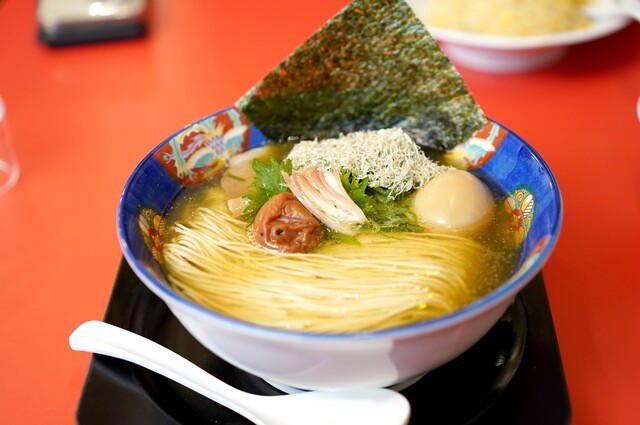
The menu
What to order
- Chuka soba (shoyu ramen)
- Tsukemen
- Pork chashu
- Chicken chashu
The room reads as a working ramen shop before it reads as a destination: counter seats for solo bowls, tables for small groups, no private-room ceremony, and a rhythm built around turnover rather than lingering. In Atsugi, that matters. The city’s stronger casual dining addresses tend to serve residents first and travelers second, so the useful question is not whether a ramen shop feels grand, but whether it has enough discipline to justify a detour from the station-side routine.
Chuka Soba Menya Shokudo Honten sits in that category. Its current identity is ramen and tsukemen, but the lineage reaches back to a public cafeteria founded in 1951, then reshaped in November 2001 by the third-generation owner into a ramen-focused restaurant. That kind of conversion is common in Japan’s regional food cities: older neighborhood food businesses survive not by freezing themselves in nostalgia, but by tightening around a format with clearer demand, clearer sourcing pressure, and a higher bar for repeat custom.
A cafeteria lineage sharpened into Kanagawa ramen
Kanagawa ramen does not operate as a single style in the way outsiders sometimes want it to. The prefecture absorbs Tokyo chuka soba grammar, Yokohama’s heavier house traditions, coastal seafood habits, commuter-town lunch economics, and suburban family dining. Atsugi adds another layer: it is close enough to Tokyo to be judged against serious noodle standards, but local enough that convenience, price sensitivity, and parking still shape the dining culture.
That context explains the importance of a shop built around chuka soba and tsukemen rather than a broad casual menu. Chuka soba rewards balance: broth, tare, oil, noodle texture, and toppings have to read as a single system. Tsukemen shifts the pressure to concentration and noodle structure, because the dipping format exposes weak seasoning and limp texture faster than soup ramen does. No specific ingredient list is needed to understand the sourcing burden. In this tier, procurement is not a romantic talking point; it is the operational backbone that lets a low-priced bowl feel composed instead of merely filling.
The Tabelog 100 Ramen Kanagawa 2025 selection gives the restaurant a clear external signal inside a crowded prefectural field. The same recognition appears across multiple recent Tabelog ramen lists, which is more useful than a single spike of attention. Ramen shops can flare quickly on novelty; repeat selection suggests durability, consistency, and a local audience willing to keep returning after the first wave of curiosity has passed.
Where it fits in Atsugi's casual dining circuit
Atsugi’s restaurant map is more varied than a quick transfer through Hon-Atsugi suggests. For a ramen comparison inside the city, Atsugi Honmaru Tei and Ramen Atsugiya keep the conversation in the same everyday noodle economy. ZUND-BAR pulls the ramen conversation toward a more destination-led format, while Cafe Suzuki shows how Atsugi’s quieter independent dining can work outside the ramen frame. At the other end of the spend spectrum, Yakiniku Waganse belongs to a different decision entirely: a planned meat dinner rather than a focused bowl.
That spread is the point. Chuka Soba Menya Shokudo Honten is not trying to compete with celebratory dining; it competes on repeatability, format clarity, and the quality expectation attached to a sub-JPY 2,000 ramen bracket. In Japanese regional cities, this is often where the sharper food culture lives. A shop has to serve quickly, price within everyday reach, and still give regulars a reason to choose it over the next station-area option.
The seating layout also signals the intended audience. Ten counter seats keep it friendly to solo diners, while table seating makes it workable for friends and families rather than a narrow enthusiast counter. Children are explicitly welcome, and a kids menu is listed, which moves the experience away from the austere ramen-bar model. Non-smoking status helps, too, particularly for travelers using Atsugi as a base rather than a single meal stop.
How to read the recognition without overcomplicating the bowl
Ramen awards can distort expectations when readers import fine-dining logic into a format that works by repetition and restraint. The Tabelog 100 signal should be read as a sorting tool, not as a promise of theater. It says that within Kanagawa’s ramen field, this address has enough support and consistency to be part of the serious conversation. It does not mean white-tablecloth pacing, elaborate service choreography, or a tasting-menu mentality.
For travelers, the practical appeal is precision without fragility. The restaurant is near Hon-Atsugi Station on the Odakyu Odawara Line, and it also lists parking, making it easier to fold into a Kanagawa day than many small urban ramen counters. Reservations are not part of the format, so timing matters more than planning weeks ahead. The hours cover lunch through evening, which makes it useful for a mid-trip meal rather than only a dinner target.
Readers building a wider Atsugi itinerary can use Our full Atsugi restaurants guide for the city’s dining range, then separate eating from lodging and nightlife through Our full Atsugi hotels guide, Our full Atsugi bars guide, Our full Atsugi wineries guide, and Our full Atsugi experiences guide. For a broader Japan and overseas casual-dining comparison, the useful contrast runs from -Grilled beef Sukiyaki- KAMAKURA TANUKIAN 鎌倉 たぬき庵 in Kamakura and. 鮪と炭火焼き うお炭 秋葉原店 in Tokyo to.cafe in Osaka.know in Kumamoto, (Shoku) Vietnam in Kawasaki, [Curry Senmon Ten] Maruyama Kyoju. in Sapporo, Jōdo Saké Bar in Los Angeles, and Onigiri Time in Pasadena.
The editorial read is simple: this is the Atsugi ramen choice for travelers who care about craft but do not need ceremony around it. The case rests on format, long operating lineage, family usability, and repeated Tabelog 100 ramen recognition, not on luxury cues. In a city where daily dining carries much of the character, that is enough reason to pay attention.
Frequently asked questions
Is Chuka Soba Menya Shokudo Honten okay with children?
Yes. the public record lists children welcome and a kids menu, and the room is set up for 30 seats, including 20 at tables, which makes it workable for families in Atsugi. Check the venue's official channels for the latest details.
Is Chuka Soba Menya Shokudo Honten better for a quiet night or a lively one?
It reads as more practical than lively: 30 seats, counter seating, and all-day hours from 11 AM to 10 PM. The Tabelog 100 Ramen Kanagawa 2025 selection gives it credibility, but the format suits a casual meal rather than a late-night scene.
What's the pricing like at Chuka Soba Menya Shokudo Honten?
Pricing at Chuka Soba Menya Shokudo Honten is listed as JPY 1,000 - JPY 1,999 - JPY 999.
Is Chuka Soba Menya Shokudo Honten open every day?
Hours at Chuka Soba Menya Shokudo Honten: Mon: 11 AM–10 PM; Tue: 11 AM–10 PM; Wed: 11 AM–10 PM; Thu: 11 AM–10 PM; Fri: 11 AM–10 PM; Sat: 11 AM–10 PM; Sun: 11 AM–10 PM.
Comparable Spots, Quickly
Comparable venues by cuisine and price in the same metro.
| Venue | Cuisine | Price | Awards | Notes |
|---|---|---|---|---|
| Chuka Soba Menya Shokudo HontenThis venue (the venue you are viewing) | Classic Japanese ramen (chuka soba) shop | $10–20 | Tabelog 100 #84 | Not listed |
| Yakiniku Waganse | Japanese Yakiniku / BBQ | $50–100 | Tabelog 100 #76 | Naka-cho, Atsugi |
| Ramen Atsugiya | Iekei-style Japanese Ramen | $1–10 | Tabelog 100 #30 | Atsugi |
| Atsugi Honmaru Tei | Traditional shio ramen shop | $10–20 | Tabelog 100 #32 | Saiwaicho |
| Cafe Suzuki | Japanese kissaten-style coffee shop | $10–20 | Tabelog 100 | Hon Atsugi |
| ZUND-BAR | Japanese Ramen | $20–30 | Tabelog 100 #40 | Nanasawa, Atsugi |
Recognition history
Dated appearances from independent guides and award organizations, with the underlying list record or original source where available.
Tabelog 100 #84 · No. 84
Tabelog · Tabelog 100 - Ramen - KANAGAWA - 2025
Continue exploring
More in Atsugi
Restaurants in Atsugi
All restaurants in Atsugi →




Bars in Atsugi
Browse all →




Details
- Classic
- Cozy
- Lively
- Well Known
- Solo
- Family
- Casual Hangout
- After Work
- Group Dining
- Late Night
- Standalone
- Local Sourcing
- A La Carte
- Counter Dining
Current opening hours
- Monday
- 11 AM–10 PM
- Tuesday
- 11 AM–10 PM
- Wednesday
- 11 AM–10 PM
- Thursday
- 11 AM–10 PM
- Friday
- 11 AM–10 PM
- Saturday
- 11 AM–10 PM
- Sunday
- 11 AM–10 PM
Hours can change for holidays and private events. Hours as of .
A nostalgic, neighborhood ramen shop atmosphere with counter and table seating, casual and bustling but warm, reflecting its roots as a long‑established local cafeteria.