
Cherry Street Bar-B-Que holds consecutive Michelin Bib Gourmand awards for 2024 and 2025, placing it among a small group of Toronto restaurants where serious technique meets accessible pricing. Operating out of the city's eastern waterfront district, the kitchen is led by Tomoyuki Nishino and Manabu Sato, whose Japanese culinary backgrounds bring a precise, detail-oriented approach to North American smoke cookery.
Pearl is the En Primeur Club membership app — saves, bookings, and concierge access live there. Same editors, same standards.
- Address
- 275 Cherry St, Toronto, ON M5A 3L3, Canada
- Phone
- +1 416-461-5111
- Website
- cherrystbbq.com
- Directions
- Get directions
 Saves & bookings on Pearl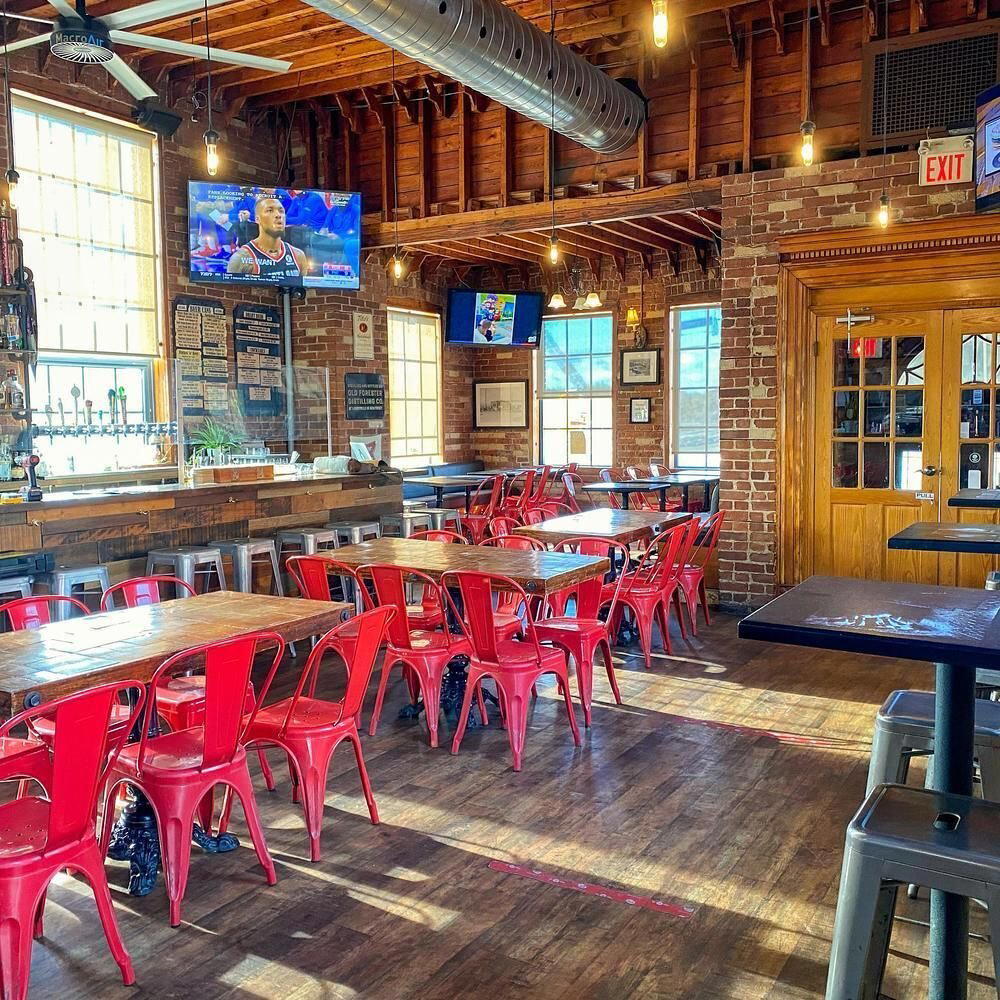
Where Smoke Meets the Waterfront
Cherry Street Bar-B-Que is a Toronto barbecue restaurant at 275 Cherry St, recognized with Michelin Bib Gourmand awards in 2024 and 2025. The stretch of Cherry Street that runs south toward the lake sits at some remove from the dense restaurant corridors of King West or the Annex, and the industrial character of the surrounding port lands does not suggest an evening out. That context matters, because it explains something essential about what Cherry Street Bar-B-Que is: a place that earns its audience through the quality of what comes off the smoker, not through neighbourhood foot traffic or ambient scene appeal. The drive or bike ride down to 275 Cherry St is deliberate, and the people who make it tend to know exactly why they're there.
Two consecutive Michelin Bib Gourmand awards, in 2024 and 2025, formalized what regular visitors had already understood. The Bib Gourmand designation is Michelin's marker for high-quality cooking at a price point below the star tier, and at a $$ price range, Cherry Street sits well within that bracket. In Toronto's current dining climate, where a tasting menu at Alo or an omakase at Sushi Masaki Saito demands a four-figure spend for two, a Michelin-recognized barbecue counter at accessible prices occupies a genuinely different tier of the city's food offer.
The Fuel Question: Why Cherry Wood Is Not a Coincidence
Barbecue's regional identities across North America are, at their core, arguments about fuel. Central Texas tradition built its reputation on post oak, a dense hardwood that burns long and clean, producing a smoke that stays in the background and lets the beef fat do the work. The Carolinas historically favored hickory, whose sharper, more assertive smoke suits pork and the vinegar sauces that balance it. Mesquite, associated with the far west of Texas and northern Mexico, burns hot and fast, delivering a more intense, slightly bitter smoke character that demands shorter cooking times on thinner cuts.
Cherry wood occupies a different register entirely. It burns at moderate temperatures, produces a mild, slightly sweet smoke, and imparts a deeper mahogany color to the bark of long-smoked meats. The name of this restaurant is not incidental. Cherry wood's flavor profile is subtle enough to complement rather than dominate, which creates space for other variables, the seasoning, the quality of the animal, the management of the fire over many hours, to express themselves. That subtlety aligns with how chefs Tomoyuki Nishino and Manabu Sato approach the craft. Both bring Japanese culinary training to an American form, and Japanese cooking at its most considered operates through restraint and precision rather than assertion. Cherry wood smoke is, in that sense, a philosophically coherent choice for this kitchen.
The discipline required to manage a wood-fired smoker over twelve or more hours, temperature consistency, fire reading, timing, maps cleanly onto the patience and attention to process that Japanese culinary culture prizes. The results, at their leading, tend toward a particularly clean execution: smoke that is present but controlled, bark that is built rather than applied, and a texture in the finished meat that reflects the care of the cook rather than the forgiving nature of the cut.
Cherry Street in Toronto's Wider Barbecue Picture
Canada's serious barbecue operations remain thin on the ground compared to the American south and southwest. The country lacks the deep regional traditions that give places like Austin or the Carolinas their reference points, and the short summer season in most of the country has historically limited the cultural foothold of outdoor smoke cookery. Toronto's restaurant scene, which has built genuine international credibility across Japanese formats, see Aburi Hana for kaiseki, or Sushi Masaki Saito for high-end omakase, and across Italian and contemporary fine dining at venues like DaNico and Don Alfonso 1890, has been slower to develop a barbecue identity of equivalent standing.
Cherry Street's consecutive Bib Gourmand awards position it as the clearest marker of serious barbecue in the city's Michelin framework. For comparison, InterStellar BBQ in Austin operates in a city with dozens of credentialed smokehouses and a culture of barbecue obsession stretching back generations. CorkScrew BBQ in Spring, Texas similarly operates within that dense competitive context. Cherry Street's achievement is meaningful precisely because it is not propped up by a regional barbecue culture, it has built its credentials in a market where the form has no established local tradition to lean on.
For travelers moving through Canada's dining scene more broadly, Cherry Street fits a pattern of regional specificity: Tanière³ in Québec City applies haute technique to northern terroir, AnnaLena in Vancouver operates in a West Coast idiom, and Restaurant Pearl Morissette in Lincoln anchors serious dining to Niagara wine country. Cherry Street is Toronto's entry in that category of places where the cooking is doing something specific and doing it with evident skill.
The Ratings Picture
4 across 3,186 reviews is a meaningful data point at this volume. At over three thousand reviews, statistical noise has largely been absorbed, and a 4.4 average reflects a consistent experience rather than a lucky run. For a restaurant operating in an industrial waterfront location, that volume of reviews also confirms that people are actively seeking it out.
Planning a Visit
Cherry Street Bar-B-Que sits at 275 Cherry Street in Toronto's port lands district. The area is accessible by streetcar, the 504 King route connects to the eastern waterfront, and by bike along the lakefront trail, which makes the approach considerably more pleasant in warmer months. The restaurant is walk-in friendly and open Mon to Fri 11:30 AM to 10 PM, Sat and Sun 11 AM to 10 PM. The $$ price positioning means a full meal remains well within reach compared to the city's star-level dining, for context, the price point is around $25 per person. For dining beyond the city, The Pine in Creemore, Narval in Rimouski, and Jérôme Ferrer - Europea in Montreal represent the range of serious Canadian cooking outside Toronto's immediate orbit.
Cost Snapshot
Comparable venues nearby, for context on price, style, and recognition.
| Venue | Cuisine | Price | Awards | Notes |
|---|---|---|---|---|
| Cherry Street Bar-B-QueThis venue — the venue you are viewing | South Riverdale, Smoked BBQ | $$ | Bib Gourmand | Not listed |
| Conejo Negro | Not listed | $$ | Bib Gourmand | Palmerston-Little Italy, Caribbean-Creole-Latin Fusion |
| Enoteca Sociale | Little Portugal, Roman-Inspired Italian | $$ | Bib Gourmand | Not listed |
| Chica's Chicken | The Junction, Nashville Hot Chicken | $$ | Bib Gourmand | Not listed |
| Aloette Go | Not listed | $$ | Not listed | Liberty Village, Modern American Burgers & Fried Chicken |
| The Lakeview Diner | Little Italy, Classic American Diner | $$ | Not listed | Not listed |
Recognition history
Dated appearances from independent guides and award organizations, with the underlying list record or original source where available.
Michelin Bib Gourmand
Michelin
Michelin Bib Gourmand
Michelin
Continue exploring
More in Toronto
Restaurants in Toronto
Browse all →
Bars in Toronto
Browse all →
Hotels in Toronto
Browse all →

At a Glance
- Rustic
- Lively
- Cozy
- Casual Hangout
- Group Dining
- Family
- Open Kitchen
- Terrace
- Craft Cocktails
- Beer Program
- Local Sourcing
- Skyline
Current opening hours
- Monday
- 11:30 AM–10 PM
- Tuesday
- 11:30 AM–10 PM
- Wednesday
- 11:30 AM–10 PM
- Thursday
- 11:30 AM–10 PM
- Friday
- 11:30 AM–10 PM
- Saturday
- 11 AM–10 PM
- Sunday
- 11 AM–10 PM
Hours can change for holidays and private events. Last verified .
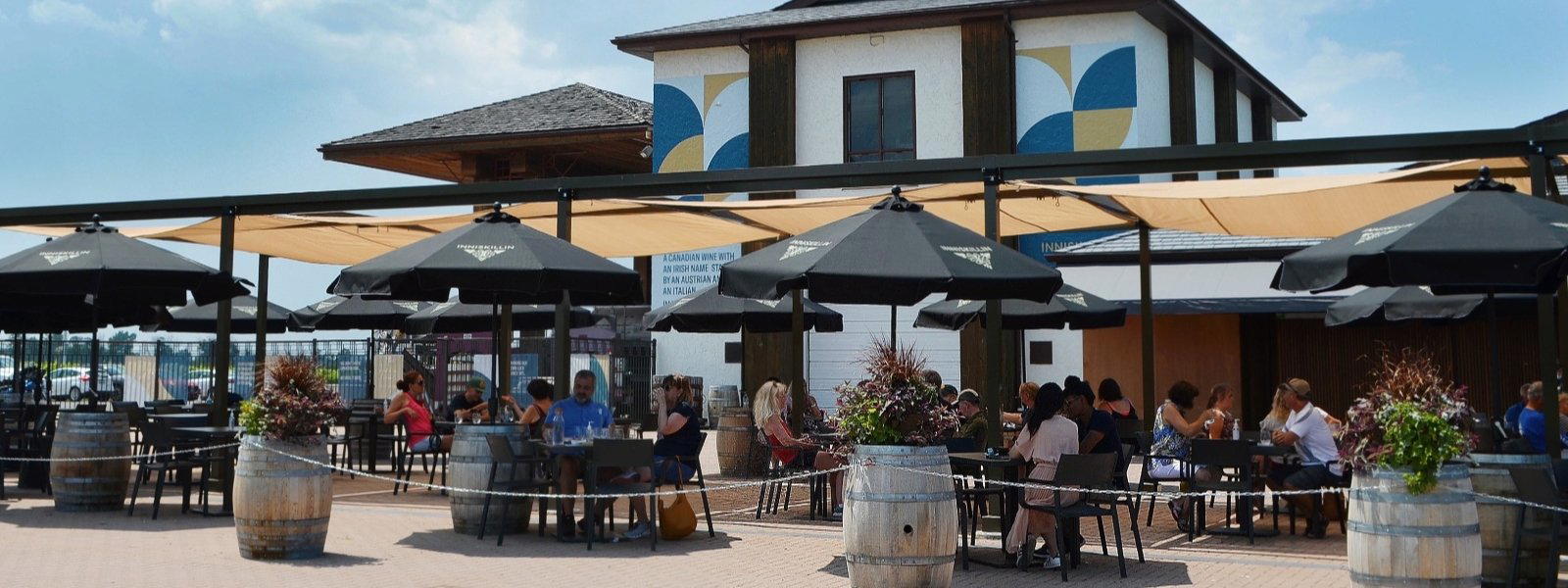
Casual and cool with exposed brick walls, open layout, and a laid-back vibe enhanced by friendly staff and patio skyline views.