Chat Thai on Campbell Street has anchored Haymarket's Thai dining scene for decades, drawing a steady crowd of regulars who know that the neighbourhood's density of Asian grocers and wet markets translates directly into fresher, more ingredient-faithful cooking than most of the city can offer. The room is loud, the service is fast, and the food is the point, which is exactly why the queues form before the doors open.
Pearl is the En Primeur Club membership app — saves, bookings, and concierge access live there. Same editors, same standards.
- Address
- 20 Campbell St, Haymarket NSW 2000, Australia
- Phone
- +61 2 9127 1808
- Website
- chatthai.com.au
- Directions
- Get directions
 Saves & bookings on Pearl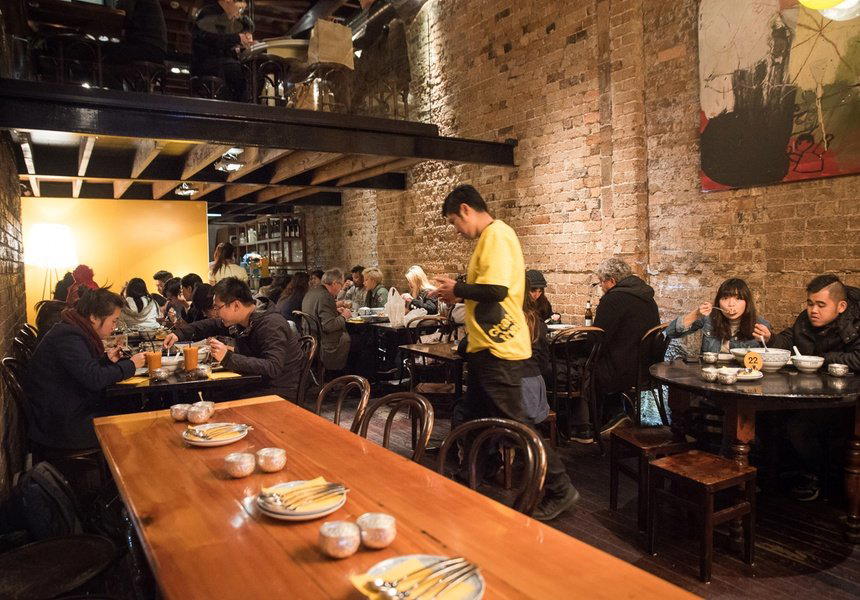
Campbell Street After Dark
Haymarket's Campbell Street does not ease you in gently. By early evening, the footpath outside Chat Thai is already stacked with people who have made the calculation that waiting in the open air is worth it. The street itself operates as a kind of extended market corridor: fruit and vegetable traders spill produce onto the pavement, Cantonese roast duck hangs lacquered in windows, and the smell of charcoal and fish sauce arrives before any signage does. For a Thai restaurant operating inside this ecosystem, proximity to that supply chain is not incidental. It is the operating condition that shapes what ends up on the plate.
Sydney's Chinatown precinct has long functioned as the city's most ingredient-dense neighbourhood, with wholesale Asian grocery suppliers, specialist herbalists, and wet market traders all within walking distance of each other. That concentration benefits every kitchen on the block, but it particularly advantages Thai cooking, which depends on aromatics, galangal, fresh turmeric, kaffir lime leaf, lemongrass, that degrade quickly once separated from a reliable fresh source. Chat Thai sits at 20 Campbell St, Haymarket, which places it inside that supply radius in a way that suburban Thai restaurants simply cannot replicate.
Where the Ingredients Come From and Why It Matters
Thai cuisine's complexity is largely aromatic rather than technique-driven in the European sense. The difference between a competent green curry and a genuinely calibrated one usually comes down to whether the paste was built from fresh rhizomes or dried powder, whether the coconut cream was pressed that day or opened from a long-life carton, whether the Thai basil arrived that morning or has been sitting in cold storage. Haymarket's proximity to Sydney's Flemington wholesale markets and its own street-level Asian produce trade means the supply chain for these ingredients is shorter here than almost anywhere else in the city.
That shorter supply chain is the editorial argument for Chat Thai's longevity. Restaurants that have operated in Haymarket for decades have done so partly because the neighbourhood self-selects for ingredient-literate customers and ingredient-available suppliers simultaneously. The crowd at Chat Thai on any given weeknight includes Thai-Australian families, international students from the nearby University of Technology Sydney campus, and regulars from the broader inner city who make the trip specifically because they know the difference between what they are eating here and what passes for Thai elsewhere in Sydney. This is a crowd that notices when something is off, and the restaurant has held its following for this long without the scaffolding of awards or tasting menus.
Across Australia, the restaurants drawing critical attention tend to emphasise their sourcing relationships explicitly: Brae in Birregurra grows a substantial portion of its produce on site, Attica in Melbourne has built a program around native Australian ingredients, and Hentley Farm in Seppeltsfield integrates the estate's agricultural output directly into the kitchen. The restaurant operates in a different register entirely, no farm partnerships, no sourcing narrative on the menu, but the access to fresh aromatics that Haymarket's trading ecosystem provides produces a comparable result at a fraction of the price point and formality. The sourcing is structural rather than curated.
The Room and How It Works
The format at the restaurant is the opposite of the considered fine-dining sequence that defines places like Rockpool in Sydney or Ormeggio at The Spit in Mosman. Tables turn quickly. The room runs at a noise level that makes conversation across a large group workable precisely because everyone is at the same volume. Orders arrive in the Thai fashion, not sequenced as European courses but assembled at the table as dishes come from the kitchen, which means the table fills up fast and eating begins before everyone has finished ordering. This is not a format failure; it is how the cuisine is meant to be eaten, with shared plates informing each other, the heat of a larb cutting through the richness of a coconut-based curry.
The neighbouring Golden Century Seafood Restaurant operates on a similarly high-volume, ingredient-led model. Both restaurants have built their followings on consistency and fresh product rather than on evolving menus or chef personality.
Where Chat Thai Sits in the Sydney Thai Hierarchy
Sydney's Thai dining options span a wide range: from fast-casual strip-mall operators to more composed contemporary interpretations that approach the register of places like Pipit in Pottsville or Blackwood Pantry in Cronulla in their attention to ingredient provenance. The restaurant occupies a middle position that is more accurately described as a Haymarket institution than a casual restaurant: the prices remain accessible, the menu covers the full range of regional Thai dishes rather than editing down to a Western-friendly shortlist, and the clientele reflects the neighbourhood's genuine diversity rather than a single demographic.
The absence of a tasting menu or a chef-driven narrative works in the restaurant's favour from an ingredient perspective. The menu's breadth, across soups, salads, stir-fries, curries, and noodle dishes, requires consistent access to a wide ingredient base. Maintaining that consistency across a large menu, night after night, is a logistical discipline that single-dish specialists do not face. It also means the kitchen is buying and turning over a wider range of fresh produce regularly, which is particularly reliable guard against ingredients sitting too long.
For travellers comparing ingredient-driven dining across Australia, the contrast is instructive. At Salt Water Restaurant in Cairns or Laura at Pt Leo Estate in Merricks, sourcing is a foregrounded part of the dining proposition, communicated explicitly through menu language and service patter. At the restaurant, the sourcing is embedded in the neighbourhood itself and communicated through the food alone.
Planning Your Visit
The restaurant is at 20 Campbell Street, Haymarket, a short walk from Town Hall and Central stations, which makes it accessible without a car in a neighbourhood where parking is reliably difficult. The restaurant does not take reservations for smaller groups, which means arriving before the main dinner rush, or accepting the queue as part of the experience, is the practical approach. The Haymarket precinct is dense with dining options if the wait is longer than expected, but regulars tend to wait rather than redirect, which says something about the specificity of what is on offer here. For context on how the restaurant compares to other ingredient-focused destinations further afield, Wills Domain in Yallingup, Provenance in Beechworth, and Botanic in Adelaide each represent the more formal end of the sourcing-led spectrum across the country.
Quick Comparison
Comparable venues nearby, for context on price, style, and recognition.
| Venue | Cuisine | Price | Notes |
|---|---|---|---|
| Chat ThaiThis venue — the venue you are viewing | Authentic Thai Street Food | $$ | Not listed |
| Golden Century Seafood Restaurant | Traditional Cantonese Seafood | $$ | Haymarket |
| Khao Thai Little Bay | Authentic Thai | $$ | Little Bay |
| THAI 44 | Authentic Thai Street Food | $$ | Sydney |
| Baptist Street Rec Club | Thai-inspired bar snacks in a retro cocktail bar | $$ | Redfern |
Continue exploring
More in Haymarket
Restaurants in Haymarket
Browse all →
Bars in Haymarket
Browse all →
Hotels in Haymarket
Browse all →


Wineries in Haymarket
Browse all →

At a Glance
- Lively
- Trendy
- Energetic
- Casual Hangout
- Group Dining
- Late Night
- Open Kitchen
- Sake Program
Current opening hours
- Monday
- 10 AM–10 PM
- Tuesday
- 10 AM–10 PM
- Wednesday
- 10 AM–10 PM
- Thursday
- 10 AM–10 PM
- Friday
- 10 AM–2 AM
- Saturday
- 10 AM–2 AM
- Sunday
- 10 AM–10 PM
Hours can change for holidays and private events. Last verified .
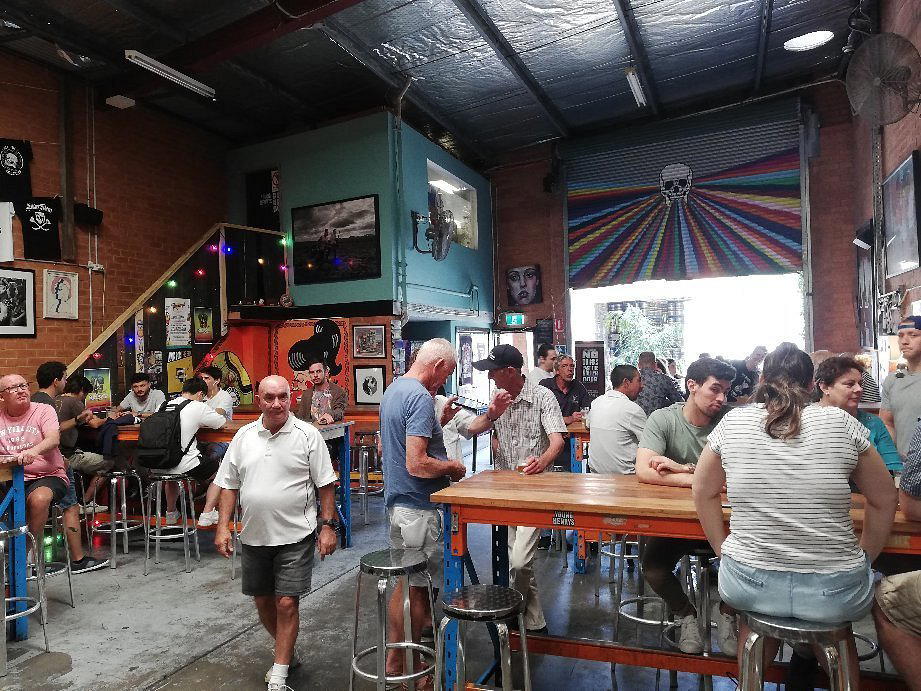
Energetic atmosphere in a narrow, cramped space with exposed brick walls, bustling with plates and crowds.