Our verdict
Shop 44 inside Dixon Street's Chinatown complex puts THAI 44 at the geographic centre of Sydney's most concentrated Southeast Asian dining corridor. The kitchen works within a tradition where Thai technique meets the produce rhythms of the Australian east coast, placing it in a category of casual Thai dining that punches well above its shopping-arcade address. For visitors working through Sydney's Asian food precinct, it earns a considered stop.

Pearl is the En Primeur Club membership app — saves, bookings, and concierge access live there. Same editors, same standards.
- Address
- Shop 44/1 Dixon St, Sydney NSW 2000, Australia
- Phone
- +61451678831
- Hours
- Mon–Wed 11:30 AM–12 AMThu 11:30 AM–1 AMFri–Sat 11:30 AM–3 AMSun 11:30 AM–2 AM
- Website
- opentable.com
- Directions
- Get directions
- Booking
- Book on OpenTable
Dixon Street and the Thai Dining Tradition It Hosts
Dixon Street in Sydney's Chinatown has operated as a de facto food court for Southeast Asian cooking since the 1980s, when successive waves of Vietnamese, Chinese, and Thai migration reshaped the blocks between Hay Street and Goulburn Street into one of the most food-dense strips in the country. The shopfront addresses along this corridor — tucked into arcade complexes, above bubble tea stalls, beside roast duck vendors — do not signal prestige in any conventional sense. What they signal, for anyone who has spent time eating seriously in Southeast Asia, is a particular kind of institutional honesty: these kitchens are not performing ethnicity for a tourist audience. They are cooking for communities who know the difference.
THAI 44, operating from Shop 44 at 1 Dixon Street, fits that pattern. The address places it inside a building format common to Sydney's Chinatown precinct: an arcade complex where individual operators hold small tenancies, foot traffic is high, and the kitchen has no architectural drama to hide behind. In this kind of dining environment, the food carries the entire argument. That is not a disadvantage, it is a clarifying condition. The Thai restaurants that survive decades in this precinct do so because they are consistently good, not because they have a well-funded design fit-out or a publicist.
Where Thai Technique Meets Australian Produce
The broader conversation in Australian dining over the past two decades has centred on what happens when imported culinary methods encounter the specific produce conditions of this continent. That conversation usually plays out in fine-dining rooms: venues like Rockpool and Saint Peter have built their reputations on exactly this tension, applying European and Japanese frameworks to Australian seafood and native ingredients. But the same dynamic operates, less theorised and more practically, in the Thai kitchens of Chinatown.
Thai cooking is a precise discipline. The balance of sour, sweet, salty, and heat in a well-made tom yum or pad see ew is not approximate, it is calibrated, and a kitchen that cannot source galangal, kaffir lime leaf, and Thai basil of reliable quality will produce food that reads as a copy rather than the thing itself. Sydney's position as a major port city with strong trade links to Southeast Asia means the supply chain for these aromatics is genuinely better here than in most comparable Western cities. The wet markets of Flemington and the specialist importers supplying Chinatown restaurants give kitchens like THAI 44 access to produce that, in quality terms, closes much of the gap between cooking in Bangkok and cooking in Sydney.
This matters because it shifts the conversation from cultural approximation to genuine technique. When the raw material is reliable, what separates Thai kitchens in Sydney is execution: wok heat management, the sequencing of aromatics, the reduction of curry bases, the texture of rice. These are craft questions, not identity questions, and they are the right questions to ask of any serious Thai kitchen.
The Chinatown Arcade Format and What It Demands
Dining in Sydney's arcade-format Chinatown venues is a specific experience that rewards a particular kind of attention. The physical environment, shared corridors, neighbouring tenants, the ambient noise of a busy food complex, is not incidental to the meal. It is the meal's context, and it shapes what a kitchen can and should be doing. High-turnover formats favour dishes that travel well from wok to table in under three minutes, that hold their structural integrity through brief waits, and that reward sharing across multiple plates rather than single-protein presentation.
Thai cooking, in its street and casual register, is well-suited to this format. The cuisine's emphasis on balanced saucing rather than protein-forward plating means that a well-made green curry or a plate of pad Thai arrives as a complete system, not something that needs tableside finishing or extended explanation. For diners accustomed to the slower cadences of venues like Bayly's Bistro in Kirribilli or the considered plating of bills in Bondi Beach, the pace here is a deliberate adjustment, not a compromise.
The Dixon Street precinct as a whole functions as a useful comparison point for visitors trying to map Sydney's Asian dining across price tiers. At the upper end of the city's Thai and Southeast Asian offer, you find restaurants with full wine programs and tasting menus. At the street level, the arcade format represents something closer to how most of Bangkok or Chiang Mai actually eats: fast, precise, ingredient-led, and priced for regular use rather than occasion dining. THAI 44 operates in that second register.
Sydney's Broader Asian Dining Context
Sydney's claim to serious Asian dining rests partly on demographics and partly on geography. The city's Chinese, Vietnamese, Thai, Korean, and Japanese communities are large enough, and established enough, to sustain restaurants that cook primarily for internal community standards rather than external expectation. This self-regulating quality produces a level of culinary authenticity that cities with smaller diaspora communities cannot easily replicate. For context, the Thai population in greater Sydney is one of the larger Thai diaspora concentrations in the Southern Hemisphere, and that community's culinary preferences shape what Chinatown kitchens actually put on their menus.
Visitors approaching Sydney's dining from a fine-dining perspective, those working through venues covered in our full Sydney restaurants guide, or arriving with reference points like Atomix in New York City or Le Bernardin, will find the Chinatown register a useful counterpoint. The discipline required to produce consistent Thai food at volume and speed is not lesser than the discipline of a tasting-menu kitchen. It is a different application of similar foundational skills: heat control, flavour balance, timing.
Other Sydney venues working at the intersection of technique and local produce include 10 William St and 1021 Mediterranean, both of which operate in different cuisine traditions but share the same underlying orientation: imported method, local material. Across Australia, that orientation has produced some of the country's most discussed restaurants, from Attica in Melbourne to Brae in Birregurra. THAI 44 operates well below that price tier and without that level of critical attention, but the underlying logic, what happens when a culinary tradition meets Australian conditions, is the same question in a different register.
Planning Your Visit
THAI 44 is located at Shop 44, 1 Dixon Street, Sydney NSW 2000, in the heart of the Chinatown precinct. The address is within a short walk of Town Hall and Central stations, making it one of the most transit-accessible dining options in the city. Booking details, hours, and current pricing are best confirmed directly, as arcade-format venues in this precinct tend to operate with flexible hours that adjust to foot traffic patterns and seasonal demand.
For visitors building a broader Sydney itinerary, the Dixon Street location pairs logically with other Chinatown dining and with nearby venues in the CBD corridor. Those exploring Sydney's dining more widely should also consider Johnny Bird in Crows Nest, 10 Pounds, and further afield, Kulcha Restaurant in Wollongong for a sense of how regional NSW handles similar multicultural dining questions.
Quick reference: Shop 44, 1 Dixon Street, Chinatown, Sydney NSW 2000. Confirm hours and booking directly with the venue.
Frequently asked questions
Is THAI 44 child-friendly?
The arcade-tenancy format on Dixon Street is casual and high-turnover, which suits families well. There is no dress code or formal pacing to work around, and the Chinatown precinct at 1 Dixon Street is pedestrian-friendly with adjacent food options if younger diners want alternatives. It is a practical, low-pressure setting for a family meal.
What kind of setting is THAI 44?
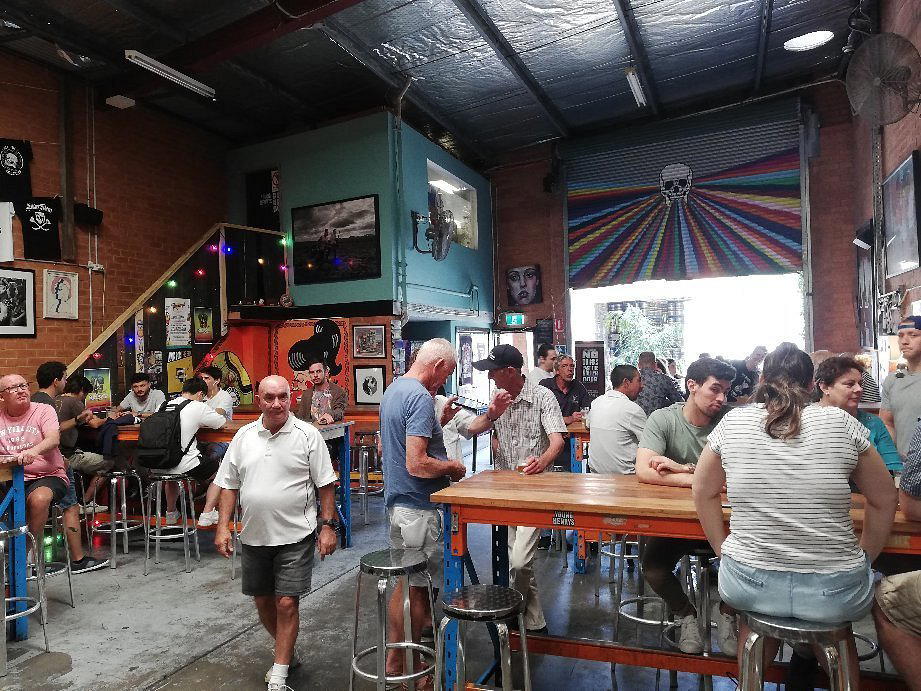
THAI 44 occupies Shop 44 in the Dixon Street arcade, Sydney's primary Chinatown corridor. The format is casual and shared-space in character, consistent with the broader arcade dining tradition that has defined this strip since the 1980s. Expect a high-energy, no-frills environment rather than a table-service restaurant.
Is THAI 44 suitable for a quick lunch near Sydney's CBD?
Shop 44 at 1 Dixon Street sits within a short walk of Town Hall Station, making it accessible from the Sydney CBD core without a detour. The arcade format favours fast turnaround, which suits a lunch window better than a drawn-out midday sitting. For Thai food at a casual price point close to the city centre, the location is straightforwardly convenient.
What's the signature dish at THAI 44?
Thai casual venues at this address type in Sydney's Chinatown typically anchor their menus around pad thai, green and red curries, and stir-fried rice dishes, but any confirmed signature offering would require verification directly with the venue.
What's THAI 44's location?
THAI 44 is located at Shop 44/1 Dixon St, Sydney NSW 2000, Australia, Sydney.
How hard is it to get a table at THAI 44?
No awards or recognition that would create unusual booking pressure are on record for THAI 44. Arcade-format venues on Dixon Street operate on walk-in, high-turnover logic — queues at peak hours on weekends are common across the strip, but extended waits of the kind seen at destination restaurants are unlikely here.
What's the standout thing about THAI 44?
The clearest editorial point is location: Shop 44 at 1 Dixon Street places THAI 44 inside Sydney's most established Southeast Asian dining corridor, a precinct with continuous operation since the 1980s. For visitors to Sydney's Chinatown, that address carries its own context — the street functions as a concentrated reference point for casual Asian cooking in the CBD.
Recognition, Side-by-Side
Comparable venues nearby, for context on price, style, and recognition.
| Venue | Cuisine | Price | Notes |
|---|---|---|---|
| THAI 44This venue — the venue you are viewing | Authentic Thai Street Food | $20–30 | Not listed |
| Baptist Street Rec Club | Thai-inspired bar snacks in a retro cocktail bar | $30–50 | Redfern |
| Chat Thai - Sydney | Authentic Thai Street Food | $20–30 | Sydney |
| Del Punto | Spanish Tapas | Not listed | Randwick |
| Slow Lane Brewing | Neapolitan-style Pizza & Craft Beer | $20–30 | Botany |
| Rocker | Modern Mediterranean Seafood | $30–50 | North Bondi |