Cemo
Our verdict
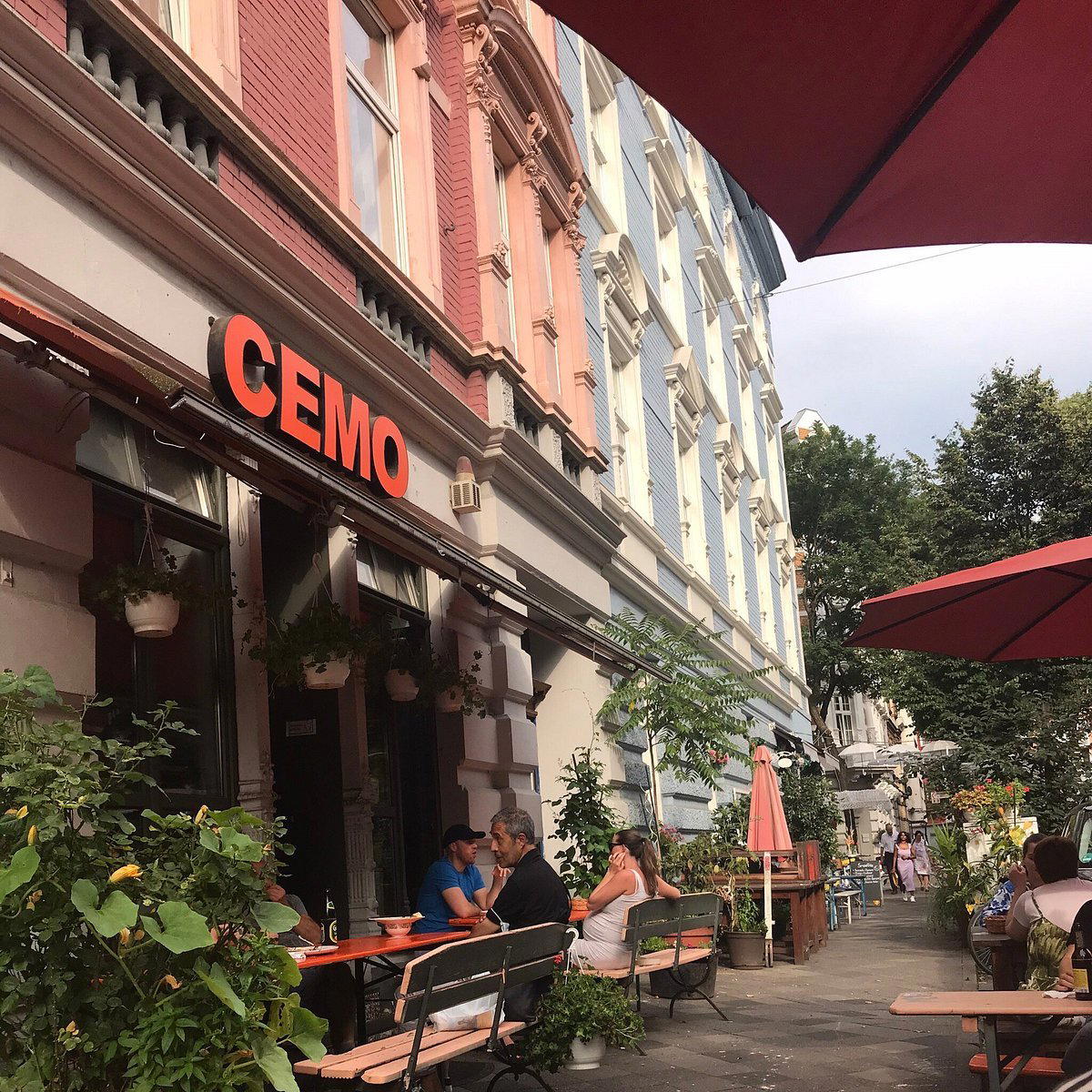
Located on Bilker Allee in Düsseldorf's Bilk district, Cemo sits within a neighbourhood that has quietly accumulated a serious range of mid-market international dining over the past decade. The address places it among a cluster of restaurants where Turkish and Mediterranean cooking traditions hold particular weight, reflecting both the city's demographics and its appetite for cooking that travels directly from source rather than through a fine-dining filter.

Pearl is the En Primeur Club membership app — saves, bookings, and concierge access live there. Same editors, same standards.
- Address
- Cemo, Bilker Allee 178, 40217 Düsseldorf, Germany
- Phone
- +492117356378
- Hours
- Mon–Fri 12–9 PMSat ClosedSun 12–9 PM
- Website
- instagram.com
- Directions
- Get directions
The menu
What to order
- Wafer-thin pizza
- Mixed grill
- Potato croquettes with cheese
- Spinach risotto
Bilk Allee and the International Dining Belt
Düsseldorf's Bilk district operates on a different frequency from the city's Altstadt or Medienhafen dining corridors. Along Bilker Allee and its surrounding streets, the restaurant density is high and the price register is mid-market, but the range of cooking traditions present is wider than many comparable stretches in German cities of similar size. Turkish and Mediterranean kitchens anchor a significant portion of the offer here, which reflects both the longstanding demographic composition of the neighbourhood and a broader shift in how German urban diners have come to regard these cuisines — not as budget alternatives to European fine dining, but as primary dining destinations in their own right.
Cemo sits at Bilker Allee 178 within this context. The address puts it squarely in the working stretch of the street, where foot traffic is consistent and the surrounding businesses signal a neighbourhood rather than a destination dining zone. That distinction matters: restaurants that succeed here do so on the strength of their cooking and regulars, not on the back of tourist flows or curated hotel proximity. The category of restaurant Cemo represents — a community-embedded international kitchen in an urban German neighbourhood, has become one of the more reliable formats for encountering cooking that hasn't been adjusted for a perceived mainstream audience.
Turkish Cooking in a German City: What the Tradition Carries
To understand a venue like Cemo within Düsseldorf, it helps to understand what Turkish restaurant culture in Germany has historically looked like, and where it is now. The first wave of Turkish-owned food businesses in German cities from the 1960s onward was driven by practicality: quick service, affordable prices, familiar formats for a working community. The döner kebab became a German institution in that period, and venues like Alanya Döner in Düsseldorf represent the continuation of that tradition at its most focused.
What has happened since is more layered. Across German cities, a second and third generation of Turkish-background restaurateurs have opened kitchens that draw on a broader register of Anatolian and Aegean cooking, meze traditions, regional stews, grilled fish, and the kind of vegetable-forward cooking that runs through both Turkish and Greek culinary inheritance. Arca Alacati in Düsseldorf addresses the Aegean end of this spectrum specifically, named after the coastal town of Alaçatı. The category has diversified substantially, and the distinctions between these kitchens, regional origin, format, price tier, have become meaningful in ways they weren't two decades ago.
Cemo operates within this broader evolution of Turkish and Mediterranean dining in a northern European city. The Bilker Allee address connects it to a neighbourhood where that evolution is visible across multiple venues and where the local clientele has developed genuine familiarity with the range of cooking traditions on offer.
Düsseldorf's mid-market international dining runs across several distinct corridors, and Bilk is one of the more coherent of these. Within the city's wider dining range, the contrast between neighbourhood-level international kitchens and the city's higher-end European restaurants is significant. Germany's fine dining tier, represented by venues such as Schwarzwaldstube in Baiersbronn, Aqua in Wolfsburg, and Vendôme in Bergisch Gladbach, operates in a completely different register, with tasting menus, extended booking windows, and price points that place them in a different planning category entirely.
Within Düsseldorf itself, the comparison set for Cemo sits closer to venues like Anfora, which represents the Italian Mediterranean side of the city's mid-market international offer, or Amuni Wein- und Käsebar, which approaches Mediterranean produce from a wine-bar format. The broader city guide at our full Dusseldorf restaurants guide maps these distinctions across the city's neighbourhoods.
For readers whose frame of reference extends to Germany's more experimental dining formats, CODA Dessert Dining in Berlin or JAN in Munich, Cemo represents the opposite end of the formality axis: a neighbourhood kitchen embedded in its community rather than a destination format built around a single chef's creative programme. That is not a criticism; it describes two different relationships between a restaurant and its city.
Planning a Visit
Bilker Allee 178 is accessible by U-Bahn from central Düsseldorf, with Bilk station serving the area directly. The street-level setting and neighbourhood character suggest walk-in dining is likely viable, though for larger groups or specific evenings, checking availability in advance is advisable. The surrounding blocks offer a range of supplementary options if a particular venue is at capacity, which makes the area a reasonable destination for informal dining without fixed plans. Readers who prefer to supplement a visit with quick-service options will find 3h's burger & chicken nearby as one of several casual alternatives in the district.
For travellers whose Germany itinerary extends beyond Düsseldorf, the contrast between this kind of neighbourhood dining and the country's top-tier restaurant tier is worth factoring into planning. Venues like Schanz in Piesport, Waldhotel Sonnora in Dreis, Victor's Fine Dining by christian bau in Perl, ES:SENZ in Grassau, and Restaurant Haerlin in Hamburg represent destinations that require advance booking and specific travel planning. A neighbourhood kitchen on Bilker Allee operates on different terms and serves a different purpose in a city itinerary. For international reference points in the same spontaneous, neighbourhood-embedded category, the contrast with tasting-menu destinations like Le Bernardin in New York City or Lazy Bear in San Francisco illustrates how differently restaurants can be positioned relative to their city's dining identity.
Frequently asked questions
Does Cemo work for a family meal?
Bilker Allee 178 is a street-level address in a residential neighbourhood, which tends to suit relaxed, multi-generational dining rather than formal occasions. The Bilk district draws a local crowd rather than a destination-dining set, so the setting is generally unhurried. For groups with children, the neighbourhood context works in your favour.
How would you describe the vibe at Cemo?
Cemo sits on Bilker Allee, a corridor that runs on a quieter register than Düsseldorf's Altstadt or Medienhafen. The immediate neighbourhood is mid-market and international in character, with a local rather than tourist-facing footfall.
Is Cemo a good option for Turkish food in Düsseldorf's Bilk district?
Cemo at Bilker Allee 178 is positioned within one of Düsseldorf's more coherent international dining corridors, where Turkish cooking sits alongside a range of mid-market options. Bilk station provides direct U-Bahn access from central Düsseldorf, making the address straightforward to reach from elsewhere in the city. No awards or critical accolades are currently documented for the venue, placing it firmly in the neighbourhood-dining category rather than the city's destination-restaurant tier.
What's the must-try dish at Cemo?
Turkish restaurant culture in Düsseldorf has historically centred on grilled meats, flatbreads, and mezze-style sharing plates, which provide a reasonable frame of reference for what to expect at a neighbourhood venue of this type on Bilker Allee.
Side-by-Side Snapshot
Comparable venues nearby, for context on price, style, and recognition.
| Venue | Cuisine | Price | Notes |
|---|---|---|---|
| CemoThis venue — the venue you are viewing | Turkish-Mediterranean Fusion Pizza | $1–10 | Not listed |
| Yede-Gör | Turkish Döner Kebab | $1–10 | Stadtmitte |
| Döner Kebap Am Spichernplatz | Turkish Döner Kebap | $1–10 | Derendorf |
| BÖCKELS Beste | German Currywurst & Pommes | $1–10 | Lichtenbroich |
| Dene & Gör | Authentic Turkish Döner Kebab | $10–20 | Stadtmitte |
| 3h's burger & chicken | Halal Burgers & Chicken | $10–20 | Pempelfort |