



1 Michelin Star · Guía Repsol 1 Sol · Macarfi 7.9 Food Rating
Our verdict
A Michelin-starred address in Cádiz's historic quarter, Código de Barra holds a 2024 star and ranks in the Opinionated About Dining Top Restaurants in Europe for 2025. Two tasting menus trace the city's 3,000-year culinary history through coastal ingredients: navazo-grown vegetables, estuary sea bream, and corvina en adobo. Service runs Wednesday through Saturday, lunch and dinner only.

Pearl is the En Primeur Club membership app — saves, bookings, and concierge access live there. Same editors, same standards.
- Address
- C. San Francisco, 7, 11004 Cádiz, Spain
- Phone
- +34 635 53 33 03
- Hours
- Mon–Tue ClosedWed–Sat 1:30–3 PM, 8:30–10 PMSun Closed
- Directions
- Get directions
- Booking
- Book on CoverManager
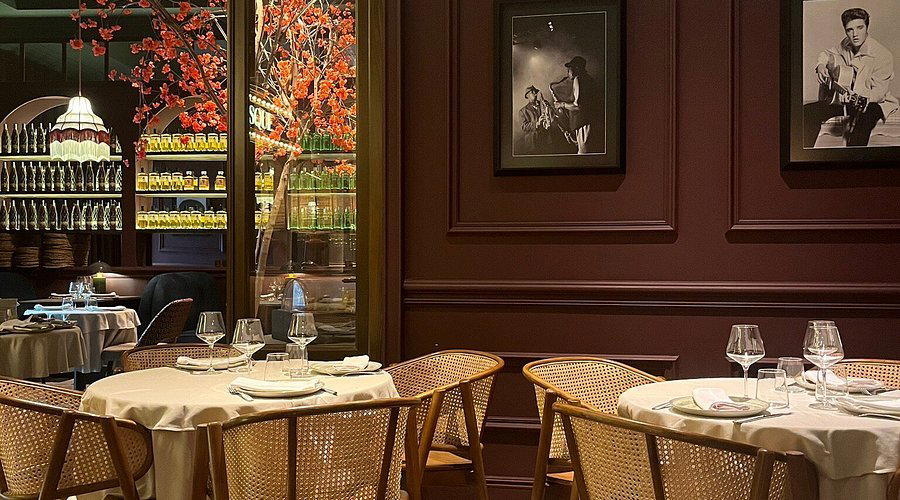
Where Cádiz's Oldest Flavours Meet a Modern Counter
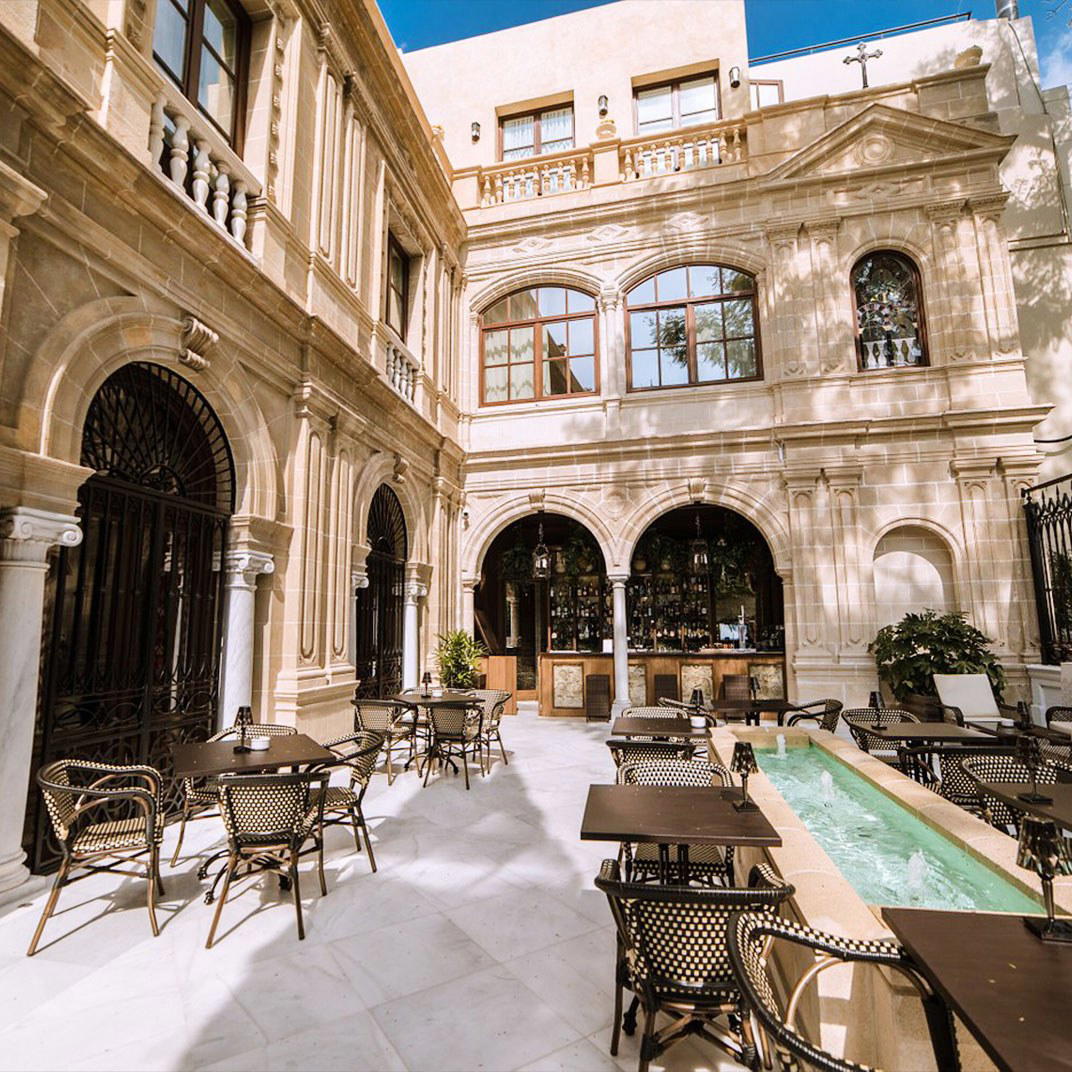
Calle San Francisco runs through one of the densest stretches of Cádiz's historic quarter, a pedestrianised corridor where the city's Roman, Phoenician, and Moorish layers surface in the stonework and the street plan alike. Inside number seven, the interior registers as something quieter than the street outside: stone, exposed brick, and whitewashed walls calibrated to reduce ambient noise rather than amplify energy. Small tables positioned near the open kitchen sit at the centre of the room, and the spatial logic of the place encourages attention on the plate rather than on spectacle. This is the physical grammar of a serious tasting-menu operation in a city more often associated with standing at the bar.
That gap between Cádiz's reputation as a fried-fish-and-fino culture and what Código de Barra actually does is part of what makes the address worth understanding. The city has a 3,000-year recorded culinary history, but most of that history remains legible only in fragments: in the salt marshes, the coastal kitchen gardens known as navazos, and the estuary systems that feed the bay. The kitchen here works from those fragments rather than from the familiar playbook of Andalusian restaurant cooking, which is partly why the Michelin committee awarded a star in 2024 and why Opinionated About Dining placed it at #632 in its 2025 Leading Restaurants in Europe ranking.
The Sourcing Logic Behind Two Tasting Menus
The menus are named Cotinusa and Erytheia, both drawn from ancient place names for Cádiz and its neighbouring island — a structuring device that signals the kitchen's commitment to historical specificity rather than generic Andalusian regionalism. That commitment becomes most legible in the sourcing. Navazo cultivation is the clearest example: these are coastal kitchen gardens, typically set behind the dunes or in brackish ground near the tideline, whose produce carries a mineral salinity from the Atlantic proximity. Vegetables grown in navazos are not interchangeable with greenhouse alternatives, and their appearance on a tasting menu in a city where agricultural land is minimal is itself an editorial statement about what the kitchen values.
The same logic applies to the estuary sea bream and the corvina prepared en adobo. The bay of Cádiz is one of the few remaining estuaries in southern Spain where traditional marisma fishing still operates at any meaningful scale, and fish caught or raised in those conditions carry a flavour profile distinct from open-sea equivalents. The kitchen's decision to source from those systems connects the menu to a food geography that predates the restaurant by centuries. That connection is not incidental; it is the point.
Tomato escabeche with red shrimp and the Candié eggnog with prawns suggest a kitchen comfortable moving between savory and sweet registers within a single course, a technique more associated with the northern Spanish avant-garde than with the Cádiz tradition. The escabeche form itself has deep roots in Andalusian preservation culture, where vinegar and spice were historically used to cure fish before refrigeration. Reading that form through a modern lens, with ingredients sourced from specific local systems, is precisely the kind of translation that tasting-menu cooking at this level does when it works.
Código de Barra in Cádiz's Wider Dining Scene
Cádiz does not have the density of high-end restaurants that Seville or Jerez carry, which means the city's Michelin-starred addresses occupy a different position in the local hierarchy than comparable stars elsewhere in Andalusia. At the €€€€ price point, Código de Barra operates above the contemporary-casual tier represented by places like Almanaque Casa de Comidas and the modern-cuisine mid-range of Contraseña, and occupies a different register entirely from the tapas tradition anchored by El Faro de Cádiz and its seafood counter, La Barra de El Faro. The Mare addresses a similar appetite for ingredient-led coastal cooking but at a different format and price position. Within the city, Código de Barra sits at the apex of the formal tasting-menu category.
The broader context for this kind of address is the transformation of southern Spanish gastronomy over the past two decades. Aponiente in El Puerto de Santa María, just across the bay, has made the case internationally that the marine ecosystems of the Cádiz province can support cooking at the highest technical level. That precedent matters: it has made the ingredients that Código de Barra works with more legible to a travelling audience already primed by three-star Michelin recognition. The argument that tidal, estuary, and coastal-garden produce from this corner of Spain deserves serious culinary treatment has been made at scale; what addresses like this one demonstrate is that the argument extends beyond a single flagship operation.
For those mapping Spanish fine dining more broadly, the contrast is instructive. The Basque model, represented by houses like Arzak in San Sebastián and Azurmendi in Larrabetzu, built its reputation on a long culture of culinary exchange and institutional infrastructure. The Catalan axis, from El Celler de Can Roca in Girona to Cocina Hermanos Torres in Barcelona, operates with similar structural depth. DiverXO in Madrid has taken the capital's fine-dining conversation in a maximalist direction. What Cádiz represents, by contrast, is a cuisine only recently surfacing at formal-dining level, without decades of institutional reinforcement behind it. A kitchen working from first principles with historically specific ingredients, rather than from an established regional fine-dining template, faces a different creative problem. The OAD ranking at #632 in Europe suggests the result is being taken seriously by the evaluators who pay closest attention to this tier.
Front of House and the Sommelier Dimension
Tasting-menu operations at this price point are assessed as complete experiences, and the service dimension matters as much as the sourcing logic. The front-of-house and sommelier responsibilities fall to Paqui Márquez, whose command of the wine program at a restaurant focused on the specificity of Cádiz's food geography implies a wine list attentive to the manzanilla and fino traditions of the Marco de Jerez — the sherry triangle that sits immediately inland from the city. What the structure of the operation implies is that the pairing dimension has been considered as part of the menu architecture rather than appended as an afterthought. For those comparing this experience with destination restaurants elsewhere, say, Frantzén in Stockholm or FZN by Björn Frantzén in Dubai, where the total-experience model is central to the proposition, the dual-role structure here achieves something similar at a smaller scale.
Planning Your Visit
Código de Barra operates Wednesday through Saturday only, with a lunch service from 1:30 PM to 3:00 PM and an evening service from 8:30 PM to 10:00 PM. The restaurant is closed Sunday, Monday, and Tuesday. Given the two-service-per-day, four-day-per-week structure and the format of exclusive tasting menus, seating capacity is constrained by design: this is not a restaurant that absorbs walk-ins or last-minute additions. Reservations should be secured well in advance, particularly for weekend dinner. The address on Calle San Francisco sits in the historic quarter of Cádiz, accessible on foot from most accommodation in the old city. For broader orientation across the city's restaurant scene, the full Cádiz restaurants guide maps the range from tapas to tasting menus. Those building a longer trip around the province can also reference the Cádiz hotels guide, bars guide, wineries guide, and experiences guide for complete trip planning.
Frequently asked questions
What's the price range at Código de Barra?
Pricing at Código de Barra is listed as €€€€.
What's the address for Código de Barra?
Código de Barra is located at C. San Francisco, 7, 11004 Cádiz, Spain, Cádiz.
Is Código de Barra Michelin-listed?
Código de Barra has received recognition including: This gastronomic oasis, located along a busy pedestrianised street in the historic quarter of Cádiz, will definitely leave its mark thanks to its contemporary take on some of the more hidden aspects of the city’s cuisine over its 3 000-year….
What should I eat at Código de Barra?
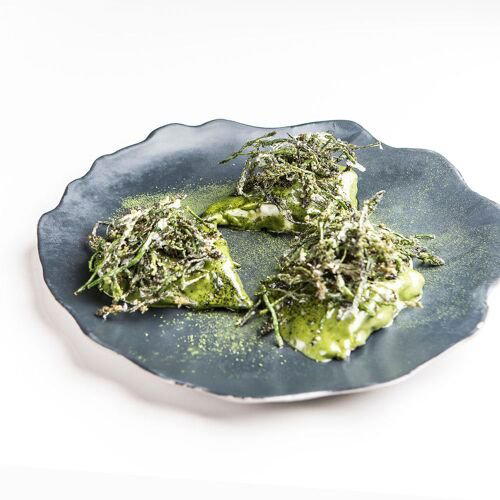
The kitchen runs no à la carte option. Your only choice is between two tasting menus: Cotinusa and Erytheia, both named after ancient designations for Cádiz and its surrounding territory. Dishes are anchored in hyper-local sourcing, including navazo-grown coastal vegetables, estuary sea bream, corvina en adobo, and red shrimp escabeche, all read through a contemporary lens that Michelin recognised with a star in 2024.
Budget and Context
| Venue | Cuisine | Price | Awards |
|---|---|---|---|
| Código de BarraThis venue — the venue you are viewing | Modern Spanish Fine Dining | $50–100 | 1 Michelin Star · Guía Repsol 1 Sol |
| Almanaque Casa de Comidas | Modern Spanish | $30–50 | Michelin Plate · Macarfi 7 Food Rating |
| El Faro de Cádiz | Traditional Cádiz Seafood | $30–50 | Macarfi 7.4 Food Rating |
| La Barra de El Faro | Traditional Cádiz Seafood Tapas | $30–50 | Not listed |
| Contraseña | Modern Spanish with Cádiz Roots | $50–100 | Michelin Plate · Macarfi 7.6 Food Rating |
| La Marmita de Ancha | Modern Andalusian with Asian Influences and Red Tuna Focus | $30–50 | Michelin Plate |
Recognition history
Dated appearances from independent guides and award organizations, with the underlying list record or original source where available.
Michelin 1 Star
Michelin
Guía Repsol 1 Sol
Guía Repsol
Macarfi 7.9 Food Rating
Macarfi
Opinionated About Dining Top Restaurants in Europe Recommended
Opinionated About Dining
Full recognition history (8 entries)
Michelin 1 Star
Michelin
Opinionated About Dining Top Restaurants in Europe Ranked #632
Opinionated About Dining
Opinionated About Dining Casual in Europe Ranked #784
Opinionated About Dining
Michelin 1 Star
Michelin
Details
- Modern
- Elegant
- Intimate
- Sophisticated
- Date Night
- Special Occasion
- Open Kitchen
- Extensive Wine List
- Local Sourcing
- Tasting Menu
- Vegetarian Friendly
- Vegan Options
- Gluten Free Options
Current opening hours
- Monday
- Closed
- Tuesday
- Closed
- Wednesday
- 1:30–3 PM, 8:30–10 PM
- Thursday
- 1:30–3 PM, 8:30–10 PM
- Friday
- 1:30–3 PM, 8:30–10 PM
- Saturday
- 1:30–3 PM, 8:30–10 PM
- Sunday
- Closed
Hours can change for holidays and private events. Last verified .
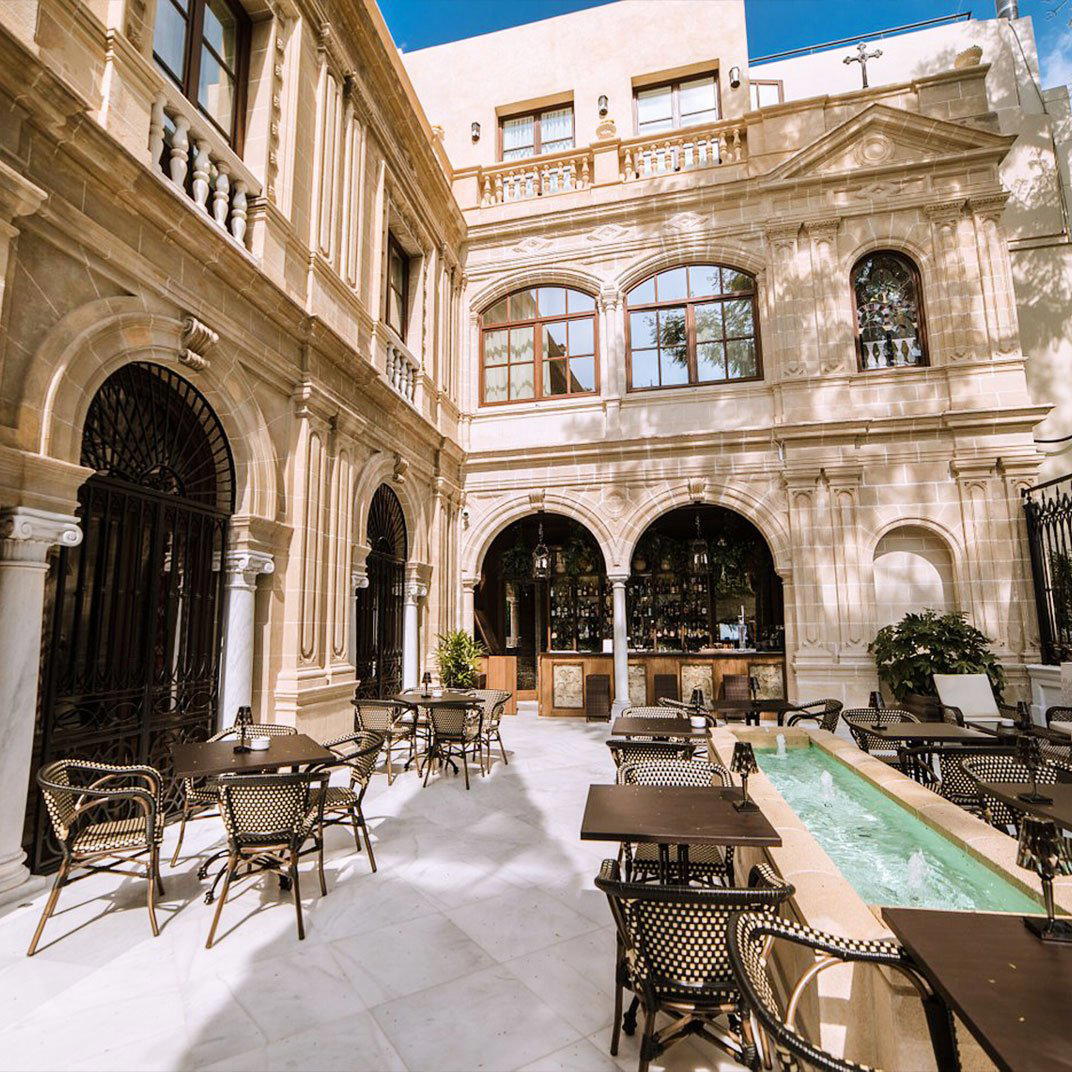
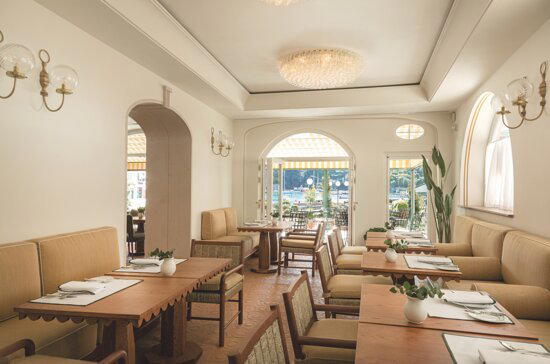
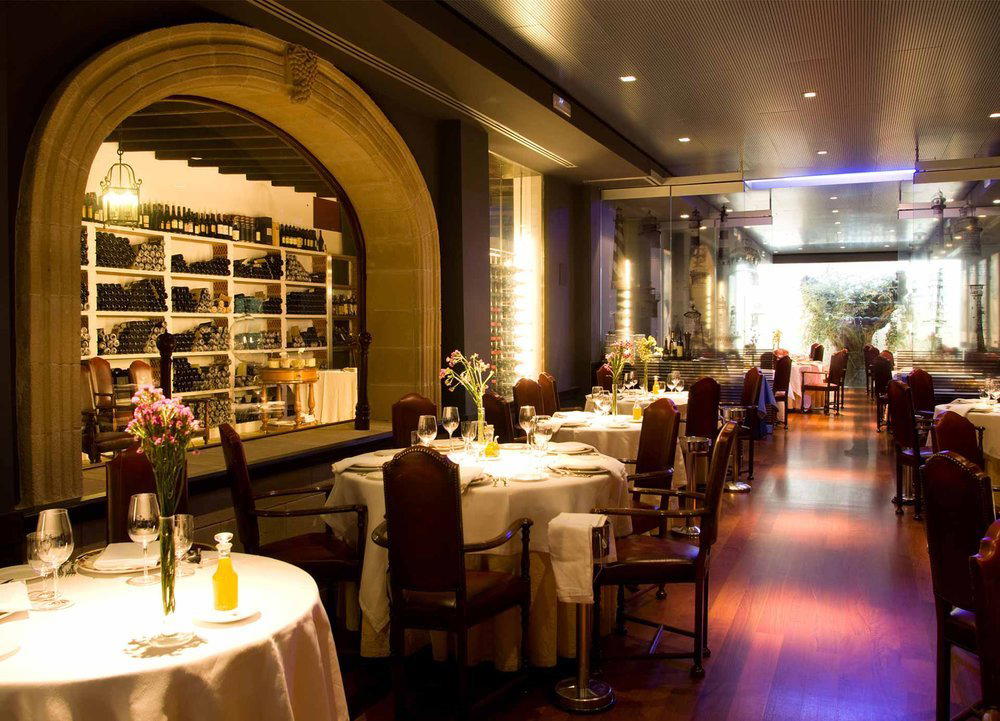
Calm and cozy with stone, brick, and whitewashed walls, open kitchen view, soft lighting, and sense of intimacy.