Castello Banfi - Il Borgo

Italy's first Michelin-starred winery restaurant, Castello Banfi - Il Borgo Montalcino combines medieval castle grandeur with Chef Domenico Francone's innovative Tuscan cuisine, offering an exclusive fine dining experience amid Brunello vineyards where frescoed walls and vineyard terraces frame exceptional tasting menus paired with world-renowned estate wines.
 Discover on Pearl
Pearl is the En Primeur Club membership app — saves, bookings, and concierge access live there. Same editors, same standards.
- Address
- castello di, 53024 Poggio alle Mura SI, Italy
- Phone
- +39 0577 877700
- Website
- banfi.it
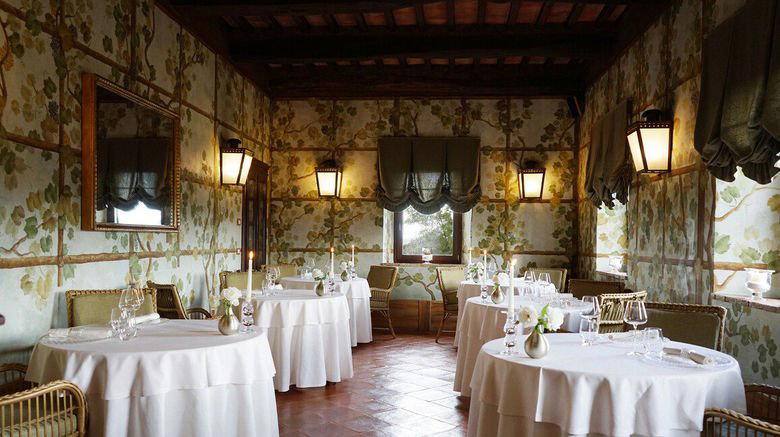
Stone, Vine, and the Southern Val d'Orcia
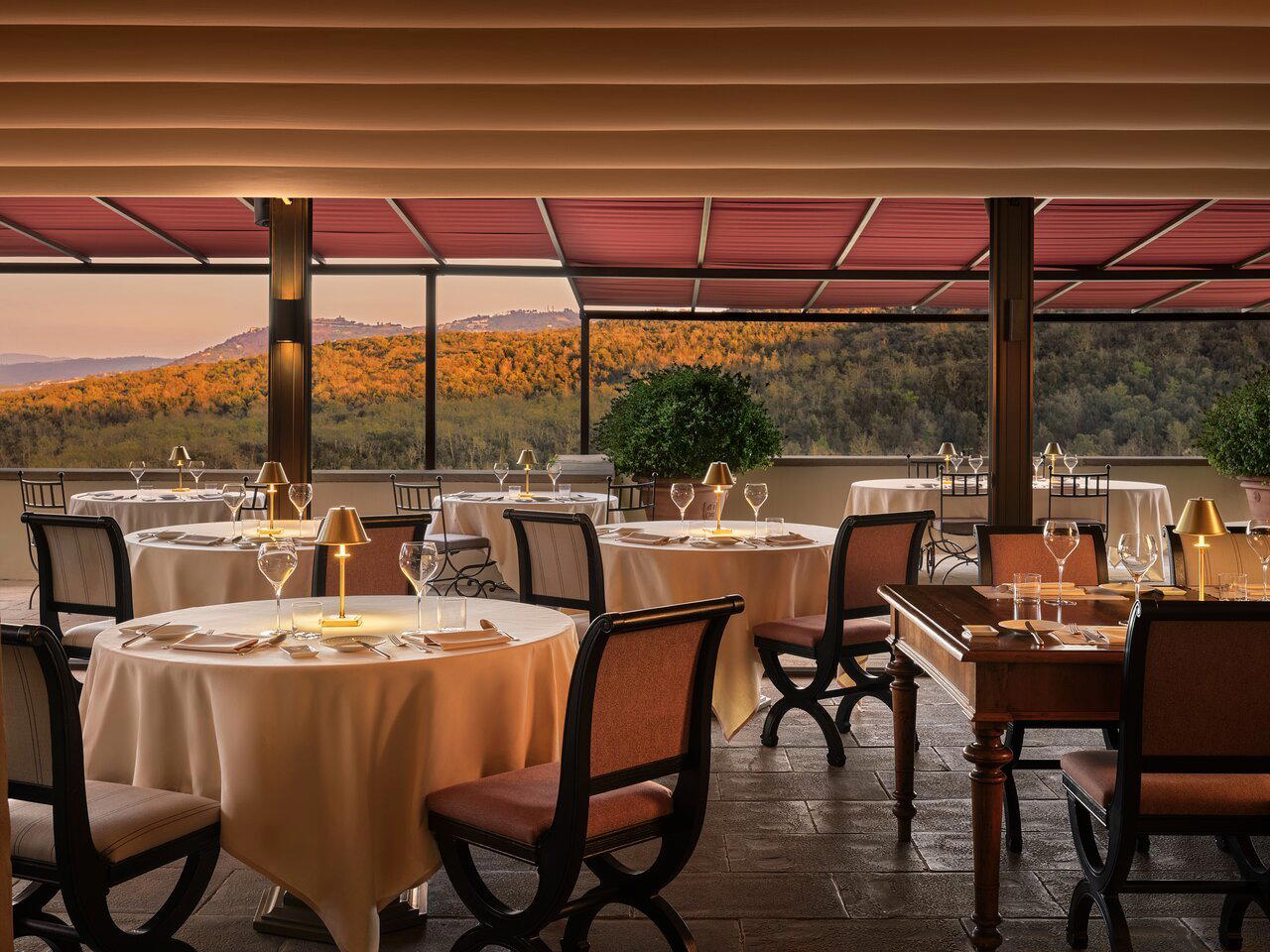
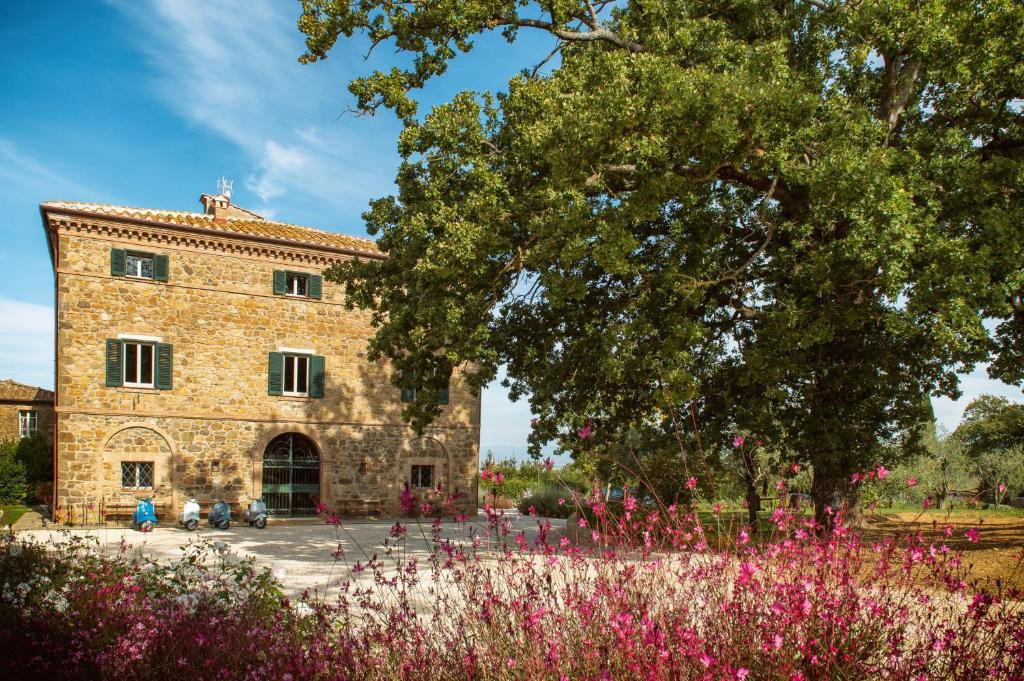
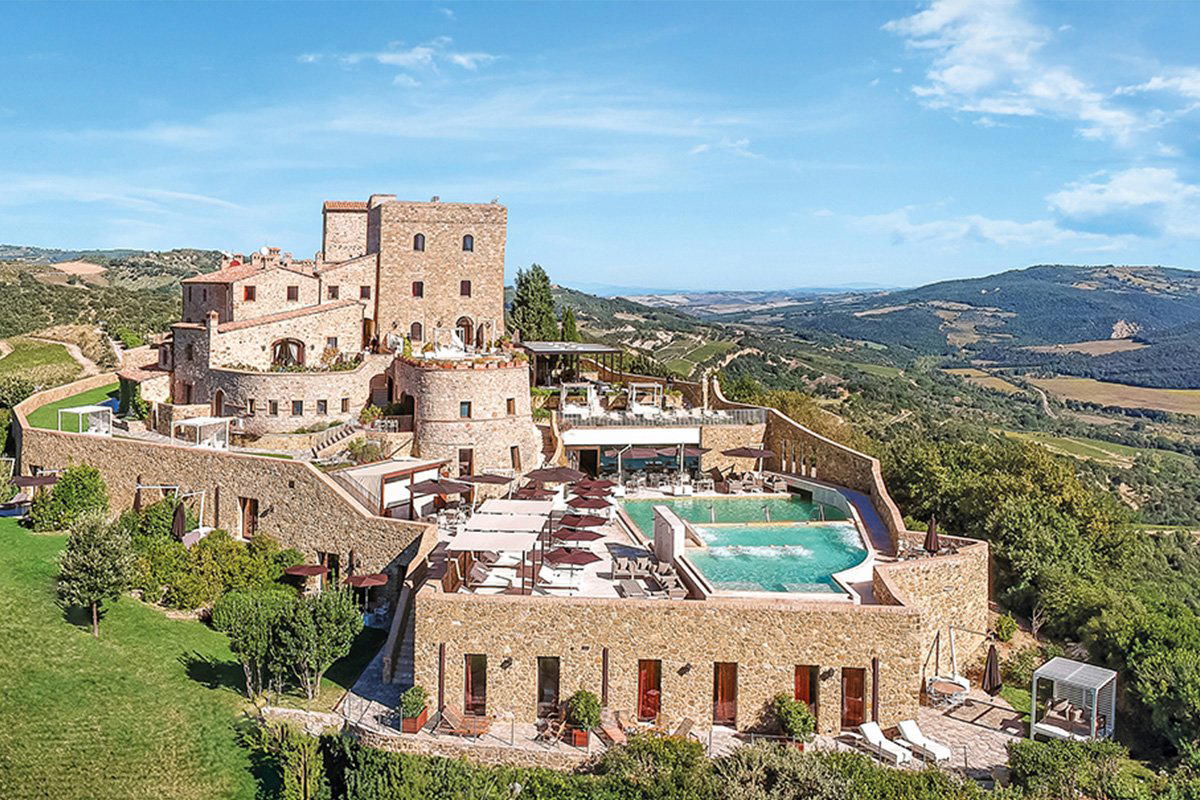
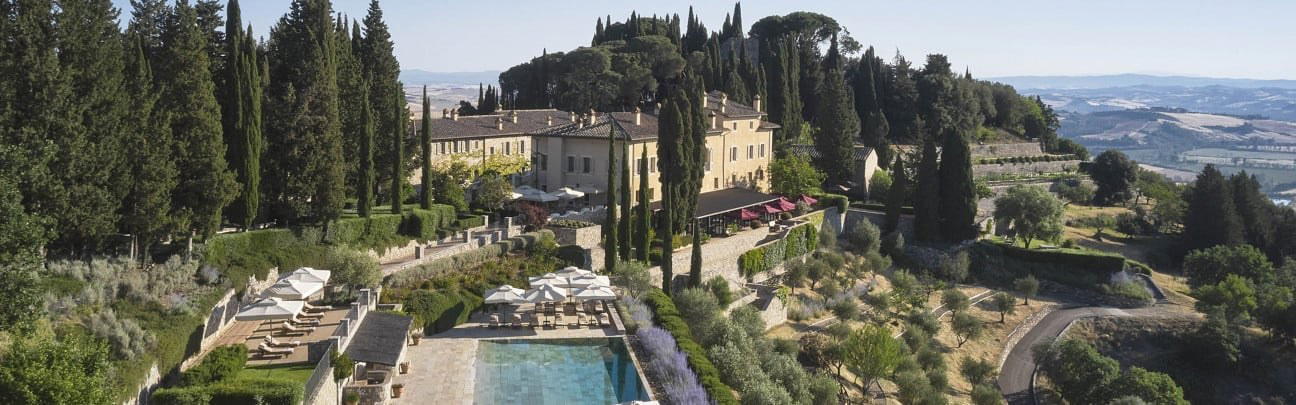
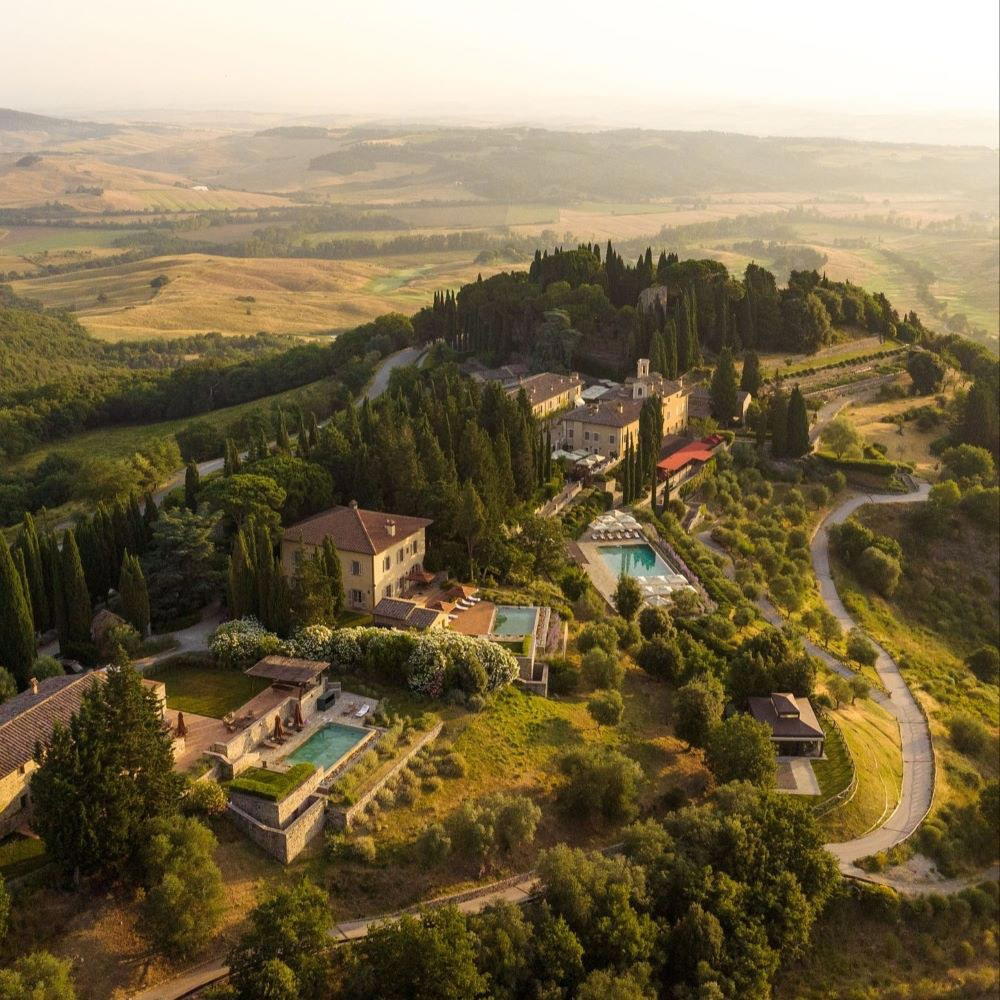
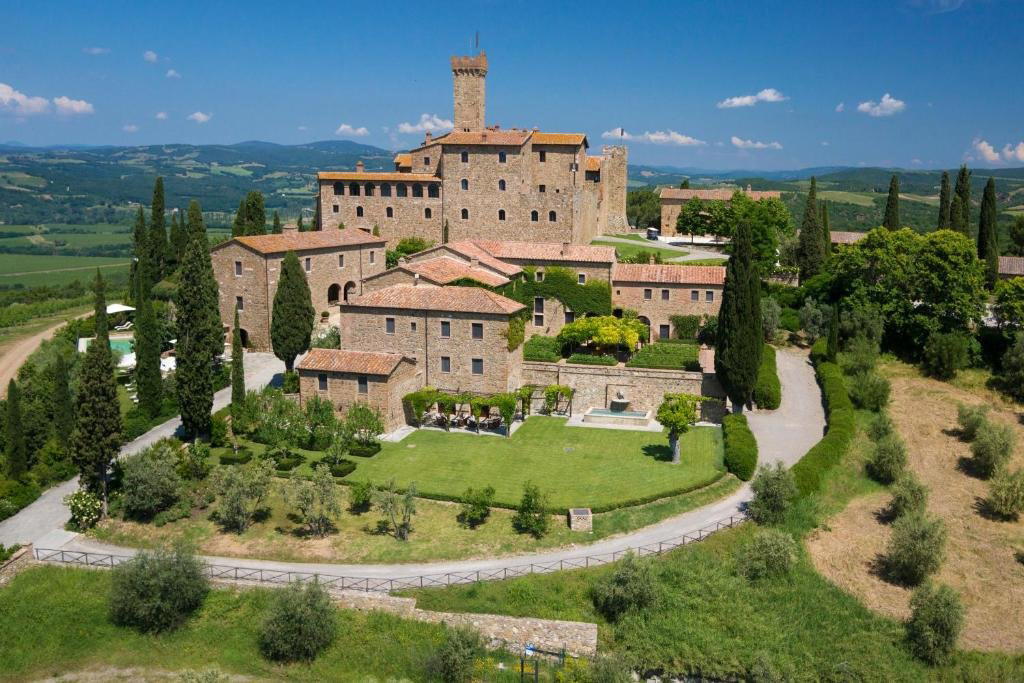
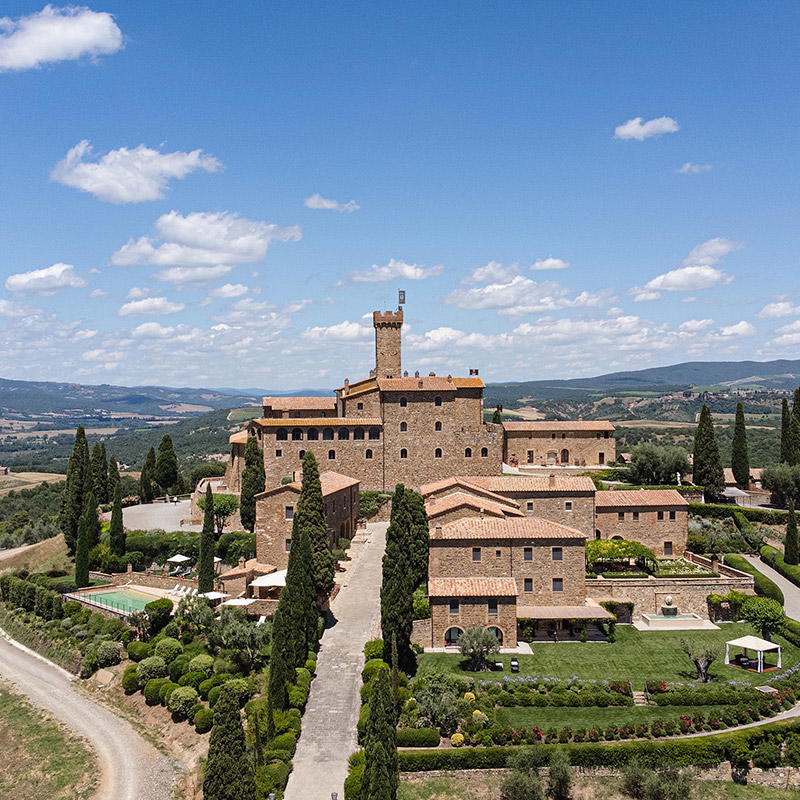
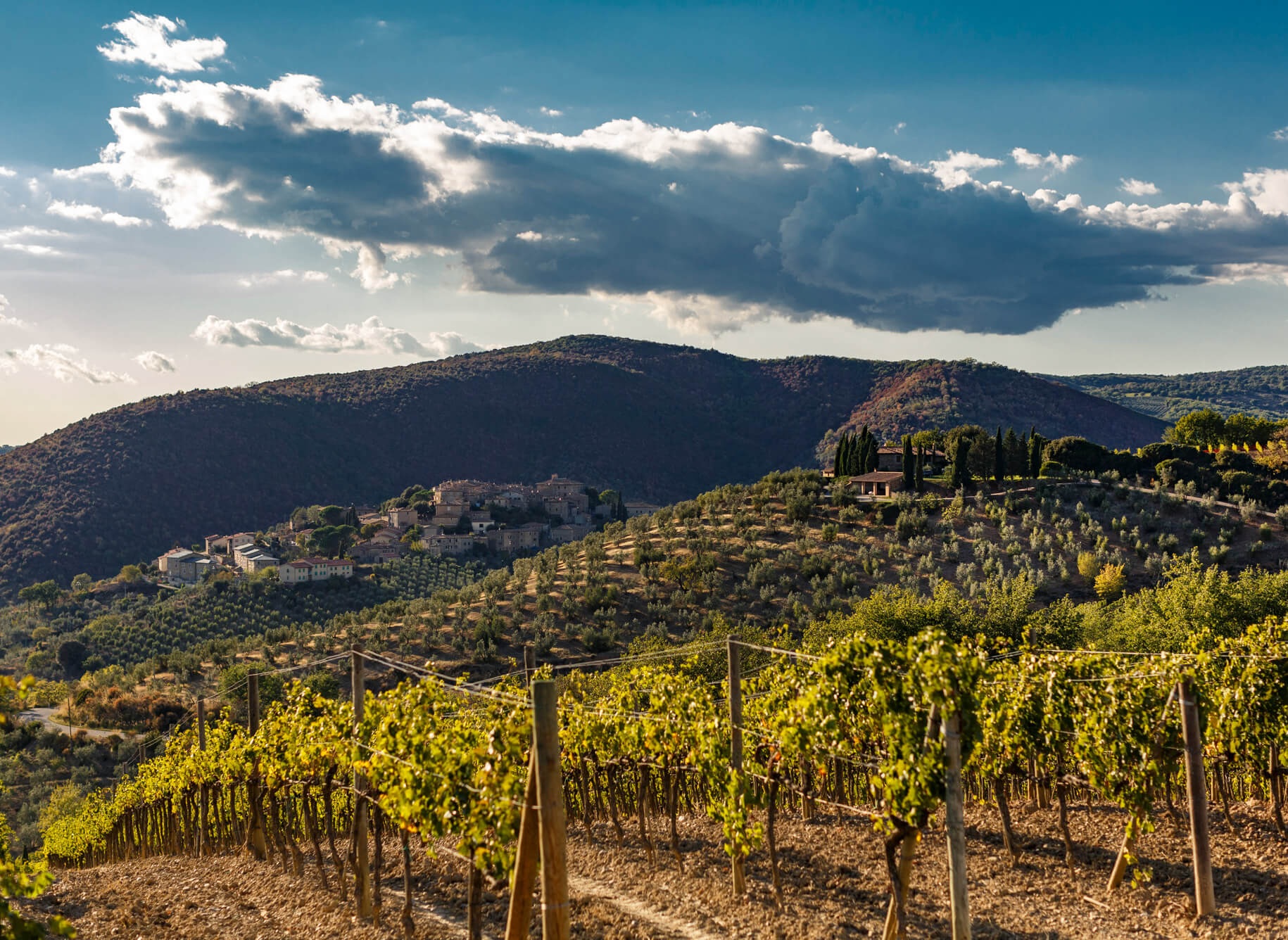
The road to Poggio alle Mura climbs through a sequence of cypress corridors and vine-striped hillsides that defines the southern edge of the Montalcino DOCG zone. Arriving at Castello Banfi's medieval hamlet, Il Borgo, the geometry changes: thick travertine walls, a restored fortified village, and uninterrupted sight lines over Sangiovese and plum orchards toward the Val d'Orcia. The physical setting is not incidental. It shapes what happens at the table, from the sourcing logic to the seasonal rhythm that governs the kitchen's output.
Tuscany has long produced two competing models of regional dining. The first is the town osteria, informal and abbreviated in scope, anchored to the specific commune it serves. The second is the estate restaurant, where a single agricultural property, vineyard, orchard, kitchen garden, produces the conditions for a more complete territorial statement. Il Borgo belongs to the second tradition, operating at the Banfi estate in a way that makes the surrounding land a direct participant in the meal. For comparable Montalcino dining at different price points and formats, the guides to Boccon DiVino (Tuscan) and Taverna del Grappolo Blu (Tuscan) represent the more accessible tier, while Campo del Drago (Contemporary), with two Michelin stars, occupies the territory above.
The Pasta Tradition in Southern Tuscany
Handmade pasta in southern Tuscany is not a gesture toward nostalgia. It is the structural logic of a regional cooking tradition that predates modern restaurant culture by several centuries. The Sienese provinces favour egg-rich doughs and broad, ribbed formats: pici, the thick, hand-rolled spaghetti native to the area around Montalcino and Pienza, remains the default carrier for braised meat sauces, wild boar ragù, and the aglio e olio preparations that define the hill-town kitchen at its least complicated. Unlike the more industrially scalable pasta formats of Emilia-Romagna, pici requires sustained hand pressure and a deliberate irregularity that resists mechanisation. Its thickness concentrates wheat flavour and supports the fatty, slow-cooked sauces that dominate the winter menu.
Estate kitchens in this zone have historically leaned on the pasta as a framing device: a way to anchor a meal in place before more elaborate secondi take over. At Il Borgo, where Chef Gonçalo Bita Bota oversees the kitchen, Tuscan pasta technique sits at the intersection of estate identity and regional convention. The approach here reads as faithful to the southern Sienese canon, shapes and sauce logic drawn from territory rather than from trend, while the estate setting provides an unusual degree of ingredient proximity. In a region where the distance between the kitchen garden and the pasta pot is often measured in metres rather than supply chains, the sourcing conditions for a place like Il Borgo are meaningfully different from a town-based trattoria buying from the wholesale market in Siena.
The broader pattern across Tuscany's estate dining tier is a renewed emphasis on pasta as the technical signature of the kitchen. Where a decade ago the main competitive signal was the wine cellar and the meat course, the handmade pasta section now carries more editorial weight. At Enoteca Pinchiorri in Florence, one of Italy's most formally recognised wine and food destinations, the pasta courses have long served as the clearest expression of culinary discipline. Similar arguments apply at Dal Pescatore in Runate, where hand-rolled formats remain the most consistent marker of the kitchen's identity across decades. Il Borgo operates at a less rarefied register than either, but the regional pasta logic is the same: the shape and the sauce are the story.
Context Within the Montalcino Dining Field
Montalcino's restaurant field is smaller and more compressed than its wine reputation might suggest. A town of roughly five thousand residents, its dining options are limited in number but reasonably well stratified by format and ambition. The town-centre operators like Osteria di Porta al Cassero offer the most accessible entry point into local Tuscan cooking. Estate-based dining like Il Borgo represents a different kind of experience: the scale of the property, the wine context, and the setting produce a meal that is harder to replicate in a town-centre location, regardless of kitchen quality.
The Banfi estate is one of the larger Brunello producers in the DOCG zone, and the wine list at Il Borgo draws predictably on that depth. Brunello di Montalcino is the reference point for the region's premium tier across both wine and table, and a meal at Il Borgo is read most usefully against that background. The wine and food pairing logic here is geographical rather than abstract: the same soils and climate that shape the Sangiovese in the glass are producing the olives, the grains, and the aromatics on the plate.
For readers exploring Tuscany's wider dining field, the comparison set at the top of the Italian fine dining spectrum includes Osteria Francescana in Modena, Piazza Duomo in Alba, and Enrico Bartolini in Milan. Il Borgo does not compete in that bracket, nor does it position itself there. It competes on estate authenticity and territorial coherence, a more specific argument that rewards readers who are already in the Montalcino zone for the wine.
Tuscan Italian in a European Frame
The Tuscan Italian category, when read against other Italian regional traditions, carries a particular emphasis on simplicity of technique and concentration of flavour. There is no competing tradition of elaborate sauce construction here; the hill-town kitchen conserves rather than augments. That conservatism is sometimes mistaken for limitation, but at its most assured it produces food that requires no interpretive assistance. Il Canto in Siena is the most formally recognised exponent of the regional tradition at high altitude. Further afield, for readers comparing Tuscan Italian with Adriatic or Alpine traditions, Atelier Moessmer Norbert Niederkofler in Brunico and Le Calandre in Rubano represent the northern Italian end of the spectrum. Al Fresco in Kyiv shows how the Tuscan Italian idiom travels outside its source territory.
Getting There and Planning Your Visit
The Banfi estate sits at GPS coordinates 42.9804, 11.3997, within the comune of Poggio alle Mura in the southern Montalcino zone. Florence Peretola airport is approximately 130 kilometres north; Florence Santa Maria Novella rail station sits at a comparable distance, making a hired car the most practical arrival option given the estate's rural position. The hamlet is not accessible on foot from Montalcino town, and public transport connections are limited. Guests staying on-site at the Banfi property avoid the transfer question entirely. The Google rating for Il Borgo stands at 4.8 out of 5, based on 636 reviews.
Cuisine-First Comparison
Comparable venues nearby, for context on price, style, and recognition.
| Venue | Cuisine | Price | Awards | Notes |
|---|---|---|---|---|
| Castello Banfi - Il BorgoThis venue — the venue you are viewing | Classic Tuscan Trattoria | $$$$ | 1 recognition | |
| Ristorante Campo Del Drago | Contemporary Tuscan Fine Dining | $$$$ | , | Castiglion del Bosco |
| Boccon DiVino | Modern Tuscan Trattoria | $$$$ | Michelin Plate | Montalcino |
| Vineria Aperta | Tuscan Wine Bar | $$$ | 1 recognition | Castelnuovo dell'Abate |
| Osteria di Porta al Cassero | Traditional Tuscan Osteria | $$ | 1 recognition | Montalcino |
| Taverna del Grappolo Blu | Traditional Tuscan Trattoria | $$ | Bib Gourmand | Montalcino |
Continue exploring
More in Montalcino
Restaurants in Montalcino
Browse all →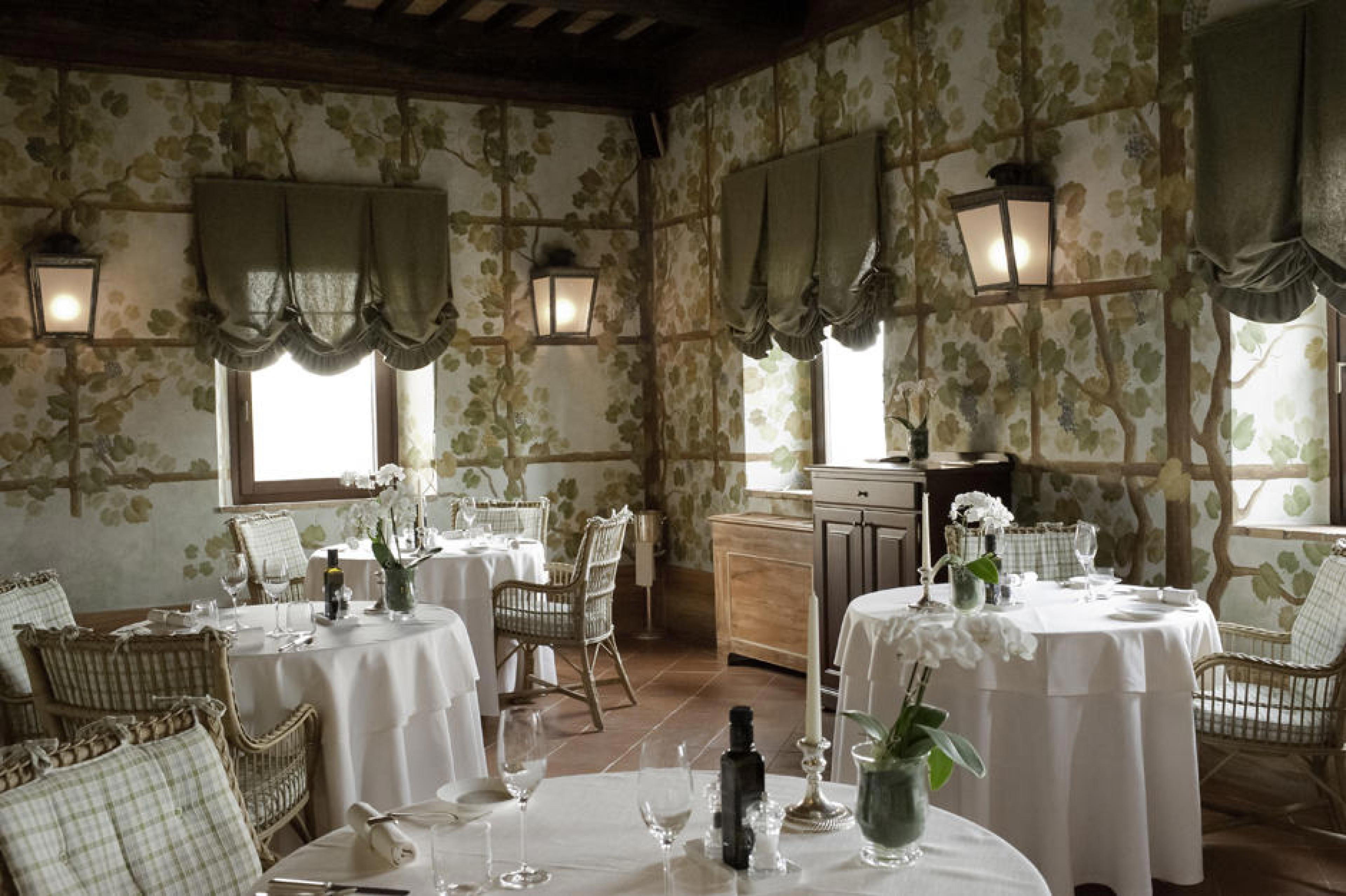
Bars in Montalcino
Browse all →
Hotels in Montalcino
Browse all →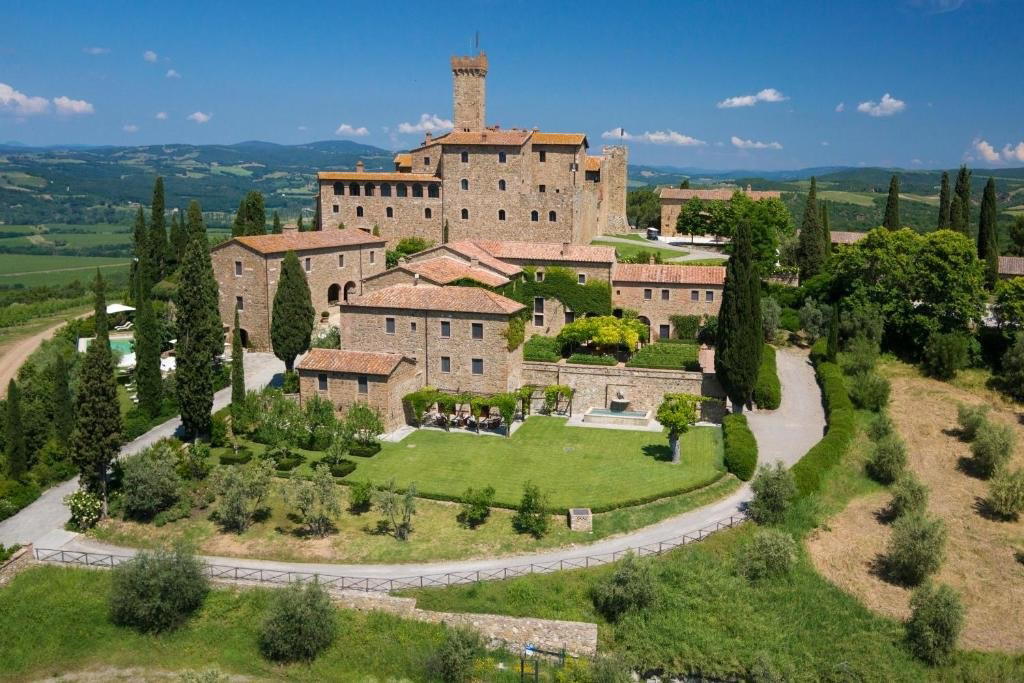
At a Glance
- Romantic
- Elegant
- Rustic
- Scenic
- Cozy
- Sophisticated
- Date Night
- Special Occasion
- Celebration
- Historic Building
- Wine Cellar
- Terrace
- Extensive Wine List
- Sommelier Led
- Local Sourcing
- Vineyard
- Mountain
Cozy and authentic Tuscan atmosphere beneath vaulted arches with comfortable, romantic castle charm.