Casa Naranja
Casa Naranja brings Spanish cooking into Chicago’s restaurant conversation through the lens of ham, preservation, and the social rhythm of shared plates. With no public awards, chef name, price range, or booking format attached, the useful read is categorical: expect a Spanish address to be judged by its treatment of cured pork, bread, wine, pacing, and restraint rather than spectacle.

Pearl is the En Primeur Club membership app — saves, bookings, and concierge access live there. Same editors, same standards.
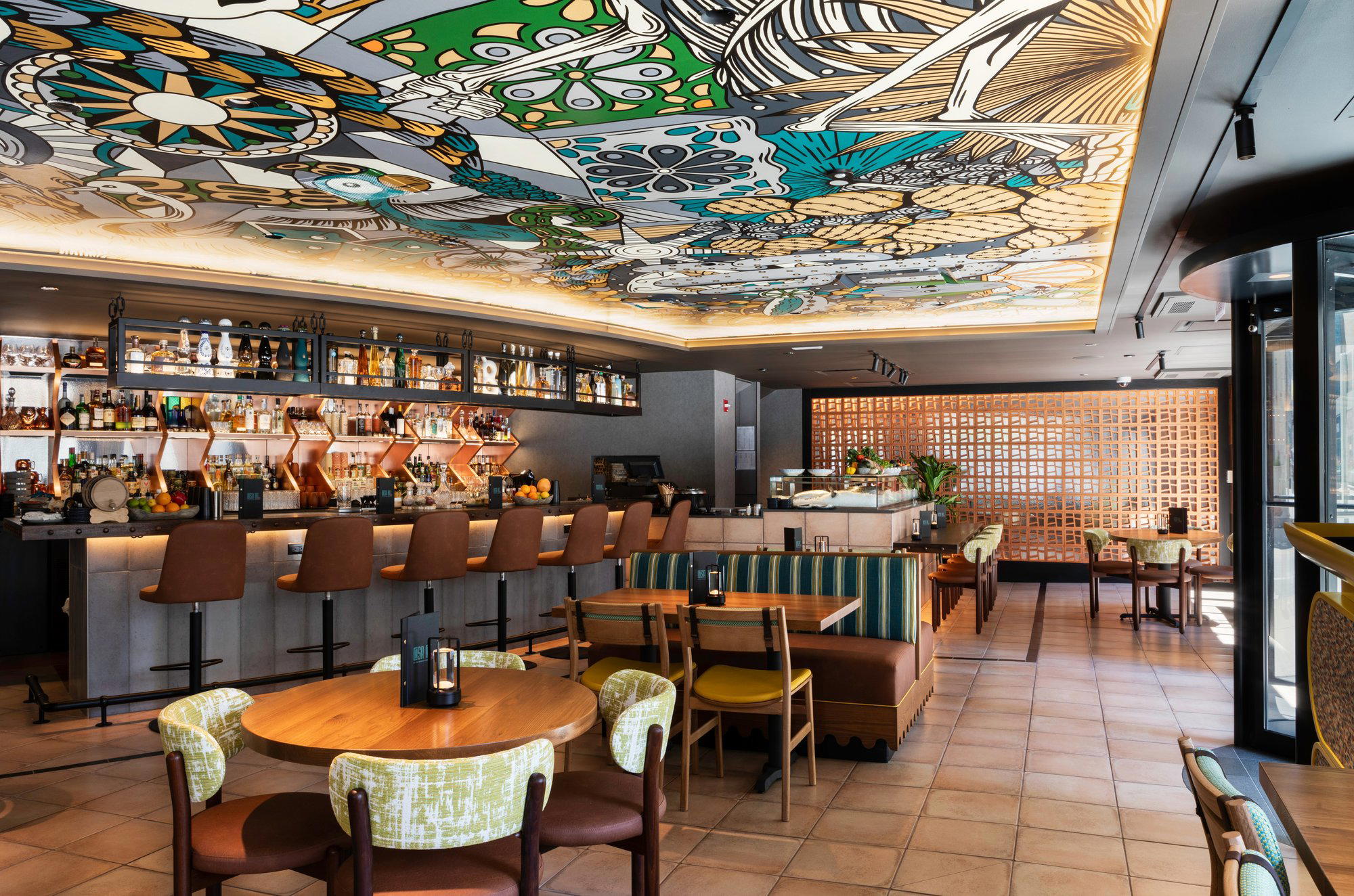
The first cue at a serious Spanish table is often not the stove but the counter: a leg of jamón, a knife, a board, bread nearby, and a room arranged for grazing rather than ceremony. Casa Naranja belongs to that tradition in Chicago, where Spanish dining is less about a single grand dish than a sequence of small decisions: salt, fat, acidity, sherry, preserved seafood, grilled vegetables, and the timing of another plate before the conversation drops.
Spanish dining in Chicago starts with the ham knife, not the main course
Jamón defines a Spanish restaurant’s discipline because it cannot be rushed. Ibérico and Serrano sit within a curing culture built on breed, feed, climate, salt, and patience; the craft is exposed at the moment of service. A thick, cold slice tells on the room. A thin cut with the fat intact tells another story. That is why ham functions as a useful test for Casa Naranja and for Spanish cooking in Chicago more broadly: the category rewards control over abundance.
Chicago has always understood meat, but Spanish ham asks the city to read it differently. The pleasure is not in smokehouse heft or steakhouse scale. It is in temperature, slice, fat distribution, and what surrounds it. Bread matters. Tomato matters. Olive oil matters. So does the pause between plates. A Spanish meal built around cured pork and small dishes works when the kitchen lets salt do its work and resists the urge to over-explain.
That distinction matters because “Spanish” can mean several things in an American dining room: tapas bar, paella house, wine bar, pintxos counter, seafood-focused room, or a broader Iberian menu. Casa Naranja is listed as Spanish, and with no public chef or award signal attached, the sharper editorial question is how it fits the city’s appetite for casual-format European dining. The strongest version of the genre does not need a long tasting arc. It needs confidence in preservation, portioning, and pace.
The useful order is built in layers: cured, brined, grilled, then something sweet
A Spanish meal gains structure through contrast. Ham or other cured pork can open the table, followed by briny or acidic plates that reset the palate. Grilled or fried dishes then carry more weight, while rice, eggs, potatoes, or beans can make the meal feel complete without turning it into a formal progression. This is the Spanish advantage in a city where many restaurants still default to appetizer-main-dessert rhythm: the table can be edited in real time.
For diners weighing the restaurant against the wider Chicago field, the relevant comparison is not a named peer but a format question. Is the night about grazing, drinking, and sharing, or about handing control to a kitchen for a long set menu? Spanish restaurants generally succeed when they make the former feel deliberate. A table should be able to start with ham and a glass, add vegetables or seafood, then decide whether the evening needs something richer. That flexibility is the point.
The jamón tradition also gives useful guidance on value. Imported cured pork carries cost before it reaches the room, and careful slicing adds labor rather than theater. If a Spanish menu prices ham above the rest of the snacks, that is not automatically a warning sign. The better question is whether the surrounding plates show the same restraint. A restaurant that treats every dish as a headline usually misses the Spanish grammar; the form depends on modest plates adding up to a complete evening.
How to place Casa Naranja in a Chicago eating itinerary
The restaurant is better read as a Spanish stop within a broader city plan than as a stand-alone trophy booking. Chicago rewards itinerary thinking: one night can be built around shared plates and wine, another around a room with a stronger design or neighborhood pull, and another around a different cuisine entirely. For nearby planning across categories, EP Club’s city pages are the cleanest starting point: Our full Chicago restaurants guide, Our full Chicago hotels guide, Our full Chicago bars guide, Our full Chicago wineries guide, and Our full Chicago experiences guide.
Chicago dining also benefits from range, so a Spanish night can sit beside different bookings without competing for the same mood. Keep an eye on Mama Delia, 1776 Restaurant, 3 Arts Club Cafe, 312 Fish Market, and 3259 E 95th St when mapping the city by occasion rather than cuisine alone.
For a wider national read on how specific food cultures translate outside their home regions, compare the editorial patterns at Jōdo Saké Bar in Los Angeles, Onigiri Time in Pasadena, ¿Por Qué No? in Portland, 'Ai Love Nalo in Waimanalo Beach, 'āina in San Francisco, 'Ama 'Ama in Kapolei, Aca 1°, Spanish in Tokyo, and Amari, Spanish in Brighton and Hove. The lesson is consistent: imported traditions travel well when a restaurant understands what to preserve and what to adapt.
Comparable Venues Nearby
Comparable venues nearby, for context on price, style, and recognition.
| Venue | Cuisine | Price | Notes |
|---|---|---|---|
| Casa NaranjaThis venue — the venue you are viewing | other | Not listed | Not listed |
| Black Dog Gelato | Artisanal Gelato | $$ | Ukrainian Village |
| Lush | Wine Bar Small Plates | $$ | West Town |
| KOVAL Tasting Room | Craft Distillery Cocktails & Flights | $$ | Ravenswood |
| Moe's Cantina River North | Mexican Cantina | $$ | River North |
| Kapitan | Authentic Peranakan & Malaysian Cuisine | $$ | Lincoln Park |


At a Glance
- Standalone