Brasador Steakhouse
Brasador Steakhouse in Volta Redonda sits at the intersection of industrial-city pragmatism and Brazil's deep churrasco tradition. Located in Vila Santa Cecília, the restaurant draws on the cattle-rich interior of Rio de Janeiro state, where sourcing proximity shapes what lands on the grill. For visitors crossing the Paraíba do Sul valley corridor, it represents a credible stop in a city not typically associated with destination dining.
Pearl is the En Primeur Club membership app — saves, bookings, and concierge access live there. Same editors, same standards.
- Address
- R. Vinte e Um, 56 - Vila Santa Cecília, Volta Redonda - RJ, 27261-610, Brazil
- Phone
- +552433422511
- Website
- brasador.com.br
- Directions
- Get directions
 Saves & bookings on Pearl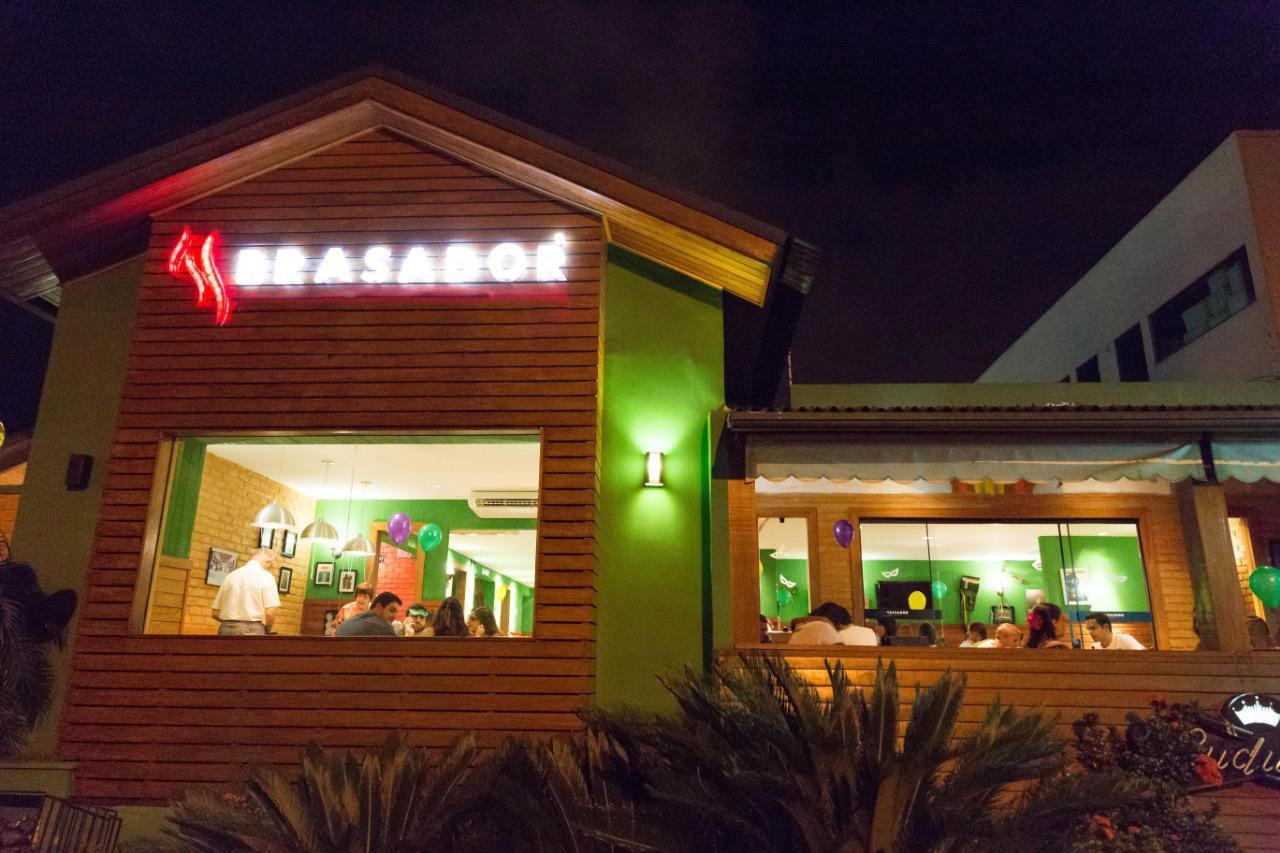
Volta Redonda and the Cut of Beef That Defines It
Brazil's interior meat culture did not originate in São Paulo or Rio de Janeiro. It grew outward from the cattle corridors of Minas Gerais and the Paraíba do Sul valley, where ranching shaped the economy long before the steel industry transformed Volta Redonda into a company town in the 1940s. That industrial identity still defines the city's public image, but its dining character has always been anchored in something older: the tradition of cooking beef over fire with minimal intervention, letting sourcing carry the weight that technique might elsewhere.
Brasador Steakhouse on Rua Vinte e Um in Vila Santa Cecília operates within that tradition. The address places it in one of the more established residential and commercial pockets of Volta Redonda, a neighbourhood that has accumulated enough foot traffic and local loyalty to support sit-down dining that goes beyond the quick-service churrascarias clustered near the steel plant exits. In a city where restaurant culture tends toward the functional, a steakhouse that takes its sourcing seriously occupies a distinct position.
Where the Meat Comes From and Why the Valley Matters
The editorial case for any Brazilian steakhouse rests on the same question: how close is it to the animal? Rio de Janeiro state's interior, stretching from the Paraíba do Sul river basin toward the Minas Gerais border, supports cattle operations that supply both formal meatpacking facilities and smaller regional distributors. Volta Redonda's position along the BR-393 corridor makes it a natural waypoint in that supply chain, meaning a steakhouse operating here has geographic proximity that coastal restaurants cannot match without added logistics.
This matters in practice because transit time between slaughter and grill affects the behaviour of beef under heat. Cuts arriving fresher hold moisture differently, require less compensating marinade, and reward simpler seasoning. The churrasco tradition, which prizes coarse salt and fire over complex preparation, is built around this proximity assumption. A steakhouse far from its source often has to adjust; one embedded in the supply corridor can let the fire do what it was always supposed to do.
Volta Redonda's position in this context is understated in most travel writing about Brazil, which tends to concentrate on the fine-dining transformation happening at addresses like Oteque in Rio de Janeiro or the creative Brazilian cooking at D.O.M. in São Paulo. Those restaurants represent one direction the country's dining culture has traveled. Brasador represents a different axis: the consolidation of regional meat culture into a format that serves a working city's appetite for quality over spectacle.
The Room and What It Signals
Vila Santa Cecília has a different energy from Volta Redonda's more transient zones near the train station and the CSN steel complex. The neighbourhood has enough permanence to support restaurants that depend on repeat local clientele rather than passing trade, and the street-level address on Rua Vinte e Um reflects that. A steakhouse in this location is not pitching to tourists or business travelers on expense accounts; it is maintaining a relationship with a community that knows what it wants and recognises when it is getting it.
That dynamic shapes the atmosphere. Brazilian churrascarias at the local end of the market tend toward high noise, shared tables, and the particular sociability of communal meat consumption. The rodízio format, where servers circle continuously with skewers, embeds that sociability into the service structure itself. Whether Brasador operates on that model or a more à la carte approach, the neighbourhood context suggests a room calibrated for groups and families as much as for couples or solo diners. Volta Redonda is not a city where solo dining culture has developed the infrastructure it has in São Paulo or Curitiba, where restaurants like Manu attract a more individualist food-focused clientele.
Comparing Registers Across the Brazilian Interior
Brazil's mid-sized interior cities, the Campos, Juiz de Foras, and Volta Redondas that sit between the coastal metros, have developed a restaurant culture that rarely travels to international food media. The conversation tends to jump from Rio de Janeiro and São Paulo upward to the more visible regional capitals, leaving a layer of serious, locally embedded dining almost entirely undocumented for external audiences. Places like Birosca S2 in Belo Horizonte have started to draw wider attention, but the towns within two hours of Rio largely remain off the map.
For travellers moving through the Paraíba do Sul valley on the way between Rio de Janeiro and Belo Horizonte, that invisibility is a practical issue. The road corridor passes through territory with real culinary identity and almost no published guidance. Brasador Steakhouse represents the kind of establishment that fills that gap: a fixed address in a stable neighbourhood, operating in a tradition with deep regional roots, in a city that feeds a substantial local population with no particular interest in performing for outside observers.
That lack of performance is itself worth noting. The dining rooms that get written about in publications covering Brazilian gastronomy are almost exclusively oriented toward a certain kind of cultural visibility. The Manga in Salvador model, or the ingredient-obsessed cooking at Orixás in Itacaré, involves a conscious positioning toward narrative and media legibility. A steakhouse in Volta Redonda is not in that conversation, which is precisely what makes it useful to know about.
Planning a Visit
Brasador Steakhouse is located at Rua Vinte e Um, 56, in the Vila Santa Cecília neighbourhood of Volta Redonda, Rio de Janeiro state. Volta Redonda is accessible by road from Rio de Janeiro and sits on the rail corridor connecting the coast to the interior, though most visitors arriving from outside the region travel by car. Vila Santa Cecília is a central enough neighbourhood that navigation from the main access roads into the city is manageable without local knowledge.
Visiting without a reservation during peak lunch or dinner service on weekends carries some risk in a room that likely draws consistent local demand. Arriving earlier in the service window is the more reliable approach. For context on the broader dining scene in the city, our full Volta Redonda restaurants guide covers additional options including Burger a Mano, which operates at a different register but within the same neighbourhood dining ecosystem.
Travellers building a longer itinerary through the Brazilian interior might also consider the regional diversity on offer further afield: Mina in Campos do Jordão represents a mountain-town counterpoint, while Olivetto in Campinas extends the picture into the São Paulo state interior. For those tracing Brazil's fire-cooking traditions more deliberately, the contrast with technique-forward addresses like Lazy Bear in San Francisco or precision-driven seafood at Le Bernardin in New York City underscores how differently heat and sourcing can be deployed when the underlying philosophy shifts from minimalism to maximalism.
In Context: Similar Options
Comparable venues nearby, for context on price, style, and recognition.
| Venue | Cuisine | Price | Notes |
|---|---|---|---|
| Brasador SteakhouseThis venue — the venue you are viewing | Brazilian Steakhouse | $$$ | Not listed |
| Burger a Mano | Burgers | $$ | City Center |
| Espaço Tano | Contemporary Brazilian Breakfast Buffet | $$$ | Barra da Tijuca |
| BOTA | Italian & Mediterranean Seaside | $$$ | Glória |
| Corrientes 348 - Vila Olímpia | Argentine Steakhouse | $$$$ | Itaim Bibi |
| Satyricon | Italian-Mediterranean Seafood | $$$ | Ipanema |
Continue exploring
More in Volta Redonda
Restaurants in Volta Redonda
Browse all →

Hotels in Volta Redonda
Browse all →
At a Glance
- Cozy
- Lively
- Casual
- Family
- Business Dinner
- Group Dining
- Open Kitchen
Current opening hours
- Monday
- 11 AM–10:30 PM
- Tuesday
- 11 AM–10:30 PM
- Wednesday
- 11 AM–10:30 PM
- Thursday
- 11 AM–10:30 PM
- Friday
- 11 AM–11:30 PM
- Saturday
- 11 AM–11:30 PM
- Sunday
- 11 AM–10 PM
Hours can change for holidays and private events. Last verified .
Cozy and pleasant with American-themed decor, wooden furnishings, and a casual, friendly vibe.