Carlo & Carla
Carlo & Carla operates on Avenida Samborondón, inside one of Ecuador's most commercially active suburban corridors. The restaurant sits within a dining scene that has grown rapidly alongside Samborondón's affluent residential expansion, where imported ingredients and local sourcing both carry weight on menus that compete for a sophisticated local clientele.
Pearl is the En Primeur Club membership app — saves, bookings, and concierge access live there. Same editors, same standards.
- Address
- Av. Samborondón, Samborondón, Ecuador
- Phone
- +59345019893
- Website
- carloycarla.com
- Directions
- Get directions
 Saves & bookings on Pearl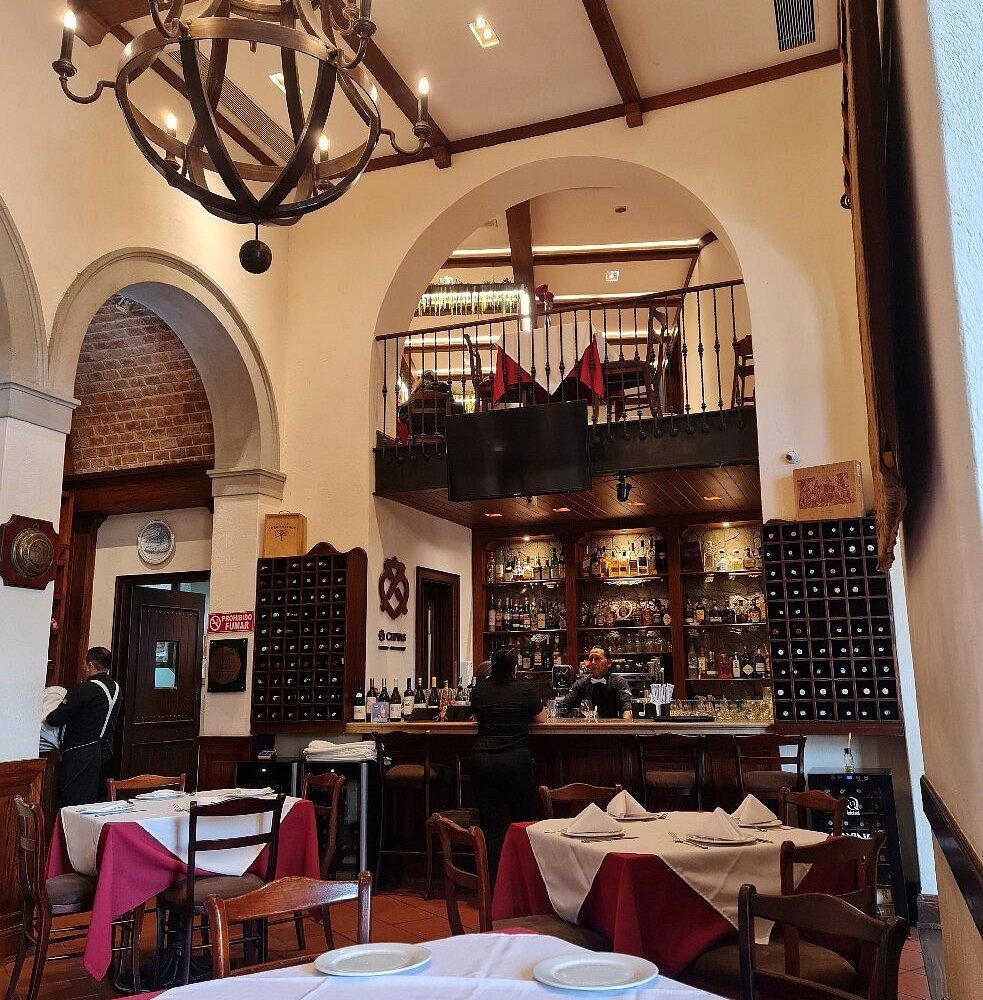
Where Samborondón's Dining Scene Places Its Bets on Local Produce
Avenida Samborondón is not a street that forces you to slow down. It moves fast, lined with commercial plazas, gated residential towers, and the kind of branded infrastructure that arrives wherever upper-income concentration reaches critical mass. Restaurants here compete less on foot traffic and more on reputation within a defined social circuit, the kind of place where the same hundred families cycle through the same dozen tables, and where word-of-mouth travels faster than any review platform. Carlo & Carla operates inside that structure, on an avenue that has quietly become one of Ecuador's more interesting suburban dining corridors over the past decade.
The broader Samborondón Canton restaurant category sits between two impulses: the cosmopolitan pull toward international formats and imported products, and a growing counter-current that treats Ecuadorian coastal and highland ingredients as assets rather than defaults. That tension is visible across the canton's dining offer. NOE experience – Bocca Samborondón and Casa Julián each represent different positions on that axis, one leaning into experience-format dining, the other anchored in the asador tradition that has migrated from Spain and Argentina into Ecuador's steakhouse culture.
Ecuador's Ingredient Story: Why Provenance Matters on the Coast
To understand any serious restaurant operating in Samborondón, it helps to understand what Ecuador's agricultural geography makes possible. The country compresses extraordinary biodiversity into a small footprint: Pacific coast fishing grounds that yield corvina, shrimp, and crab; the Andean sierra with its potatoes, quinoa, and heritage corn varieties; and the Amazonian lowlands producing cacao, plantain, and tropical fruit with almost no equivalent elsewhere in the hemisphere. Ecuador is the world's largest exporter of bananas and one of the leading sources of fine-flavour cacao, raw materials that, when treated seriously in a kitchen, carry genuine traceability and flavour distinction.
Coastal Ecuadorian cooking has its own logic, shaped by the Pacific and by centuries of trade contact. Ceviche here reads differently from the Peruvian version, less citrus-aggressive, often with different fish cuts and toasted corn accompaniments. Seco de pollo, encebollado, and tigrillo are not merely comfort food categories but regional identity markers with strong ingredient dependencies. A restaurant that sources its corn from a specific highland producer, or its shrimp from identifiable coastal operations, is making a different claim than one that buys on price from a distribution warehouse. The distinction matters to diners who have started to pay attention to those lines, and Samborondón's customer base includes enough internationally travelled residents to make that distinction commercially legible.
This is the context in which restaurants like Carlo & Carla set their tables. Ecuador's fine-dining conversation has been sharpening for years, partly driven by the work happening in Quito, where Nuema has built a serious reputation around native ingredients and contemporary technique. That kind of attention to provenance has filtered down through the country's restaurant culture, raising expectations even in suburban formats far from the capital's restaurant cluster.
The Samborondón Canton Context
Samborondón functions as Guayaquil's affluent satellite, separated from the port city by the Daule River but deeply connected to it economically and socially. The canton's restaurant growth has tracked its residential development, as gated communities expanded, so did demand for dining options that matched the purchasing power of new residents. The result is a local scene with more range than the suburb's age might suggest.
Across Ecuador's restaurant geography, different cities have developed distinct hospitality characters. Capitan&Co. in Cuenca Canton operates within a UNESCO heritage context that shapes everything from tourist volumes to ingredient sourcing from nearby Andean markets. Hornados Dieguito in Los Chillos represents the kind of hyper-regional specialist that anchors a neighbourhood's food identity around a single preparation done with precision. Samborondón's character is different again: younger, more commercially oriented, with a clientele that references international dining, from Le Bernardin in New York City to Dal Pescatore in Runate, as part of a shared frame of reference. That frame shapes what local restaurants are measured against, even when they are drawing directly on Ecuadorian materials.
For comparison at the highest levels of ingredient-focused cooking, places like Atelier Moessmer Norbert Niederkofler in Brunico have built internationally recognised programs around strict regional sourcing. HAJIME in Osaka represents a different axis entirely, biosphere-level ingredient philosophy expressed through precise technique. These are useful reference points for understanding what serious sourcing looks like when it reaches its furthest expression, even if Samborondón's scale and context sit in a different register.
Planning Your Visit
Carlo & Carla is located on Avenida Samborondón, the canton's primary commercial artery, which makes it accessible by car from both Samborondón's residential zones and from Guayaquil proper via the bridge crossings. Given the suburban layout, driving or a rideshare is the practical approach, Samborondón's commercial strips are not built for pedestrian arrival. Hours run Mon to Thu 12 to 11 PM, Fri and Sat 12:30 PM to 12 AM, and Sun 12:30 to 10 PM. Reservations are recommended. Those building a broader picture of the canton's dining options can compare it across price points and formats. Diners interested in the asador tradition have the option of Casa Julián in Guayaquil as an alternative within the broader metro area. For those extending a trip into Ecuador's more remote dining experiences, Pikaia Lodge in Galapagos Islands and Ecoventura - Galapagos in San Cristóbal represent the country's more expedition-oriented end of hospitality. Reference points further afield, Lazy Bear in San Francisco, Atomix in New York City, Emeril's in New Orleans, Quattro Passi in Marina del Cantone, and MoneyGram in Ruminahui, illustrate the range of dining formats that inform the expectations of Samborondón's internationally minded dining public.
Side-by-Side Snapshot
Comparable venues nearby, for context on price, style, and recognition.
| Venue | Cuisine | Price | Notes |
|---|---|---|---|
| Carlo & CarlaThis venue — the venue you are viewing | Traditional Italian Spaghetteria & Risotteria | $$$$ | Not listed |
| NOE experience – Bocca Samborondón | Japanese Sushi Fusion | $$$ | Samborondon |
| Casa Julián | Modern Ecuadorian Seafood | $$$ | Parque Histórico Guayaquil |
| RINCÓN DE FRANCIA | Classic French with Ecuadorian Touches | $$$ | Mariscal Sucre |
| Tiesto's | Traditional Ecuadorian Andean | $$$ | Historic Center |
| ZFOOD | Ecuadorean Seafood Cevicheria | $$$ | La Paz |
Continue exploring
More in Samborondon Canton
Restaurants in Samborondon Canton
Browse all →
Hotels in Samborondon Canton
Browse all →
At a Glance
- Elegant
- Classic
- Cozy
- Sophisticated
- Date Night
- Business Dinner
- Group Dining
- Family
- Celebration
- Terrace
- Standalone
- Craft Cocktails
- Extensive Wine List
- Local Sourcing
- Sustainable Seafood
Current opening hours
- Monday
- 12–11 PM
- Tuesday
- 12–11 PM
- Wednesday
- 12–11 PM
- Thursday
- 12–11 PM
- Friday
- 12:30 PM–12 AM
- Saturday
- 12:30 PM–12 AM
- Sunday
- 12:30–10 PM
Hours can change for holidays and private events. Last verified .
Sober yet cozy decoration reminiscent of Italian palazzi with dark wood furniture, great murals depicting Tuscan landscapes, and warm lighting that evokes a traditional Italian dining experience.