Capurro's
Capurro's at 498 Jefferson Street has anchored San Francisco's Fisherman's Wharf seafood tradition for generations, occupying a corner of the waterfront where the ritual of the meal matters as much as what arrives on the plate. The address places it within the broader San Francisco seafood dining scene, where proximity to the bay still carries cultural weight for locals and visitors alike.
Pearl is the En Primeur Club membership app — saves, bookings, and concierge access live there. Same editors, same standards.
- Address
- 498 Jefferson St, San Francisco, CA 94109
- Phone
- +14157719371
- Website
- capurros.com
- Directions
- Get directions
 Saves & bookings on Pearl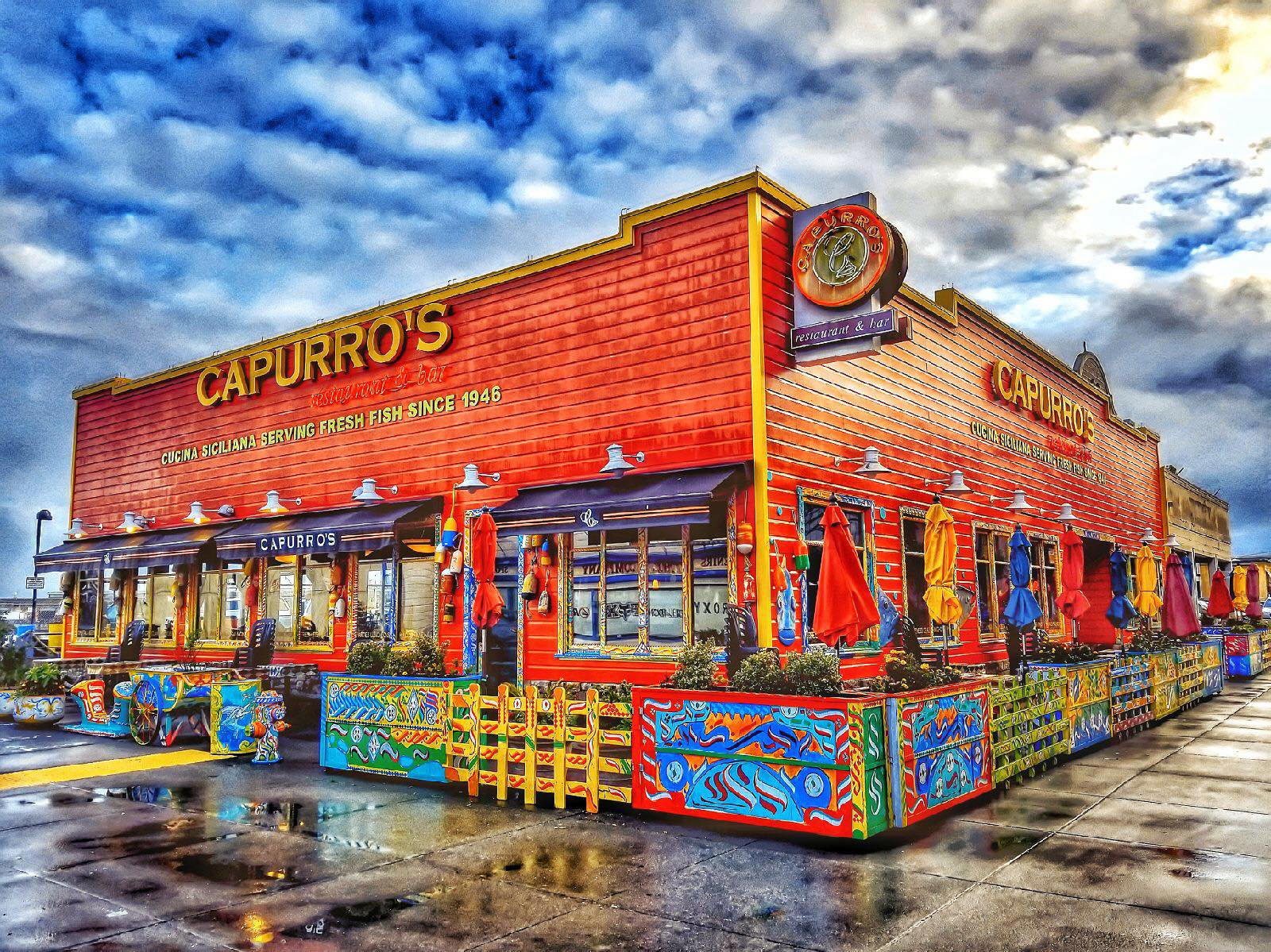
Fisherman's Wharf and the Weight of the Waterfront Meal
San Francisco's Fisherman's Wharf has always operated on a different clock than the city's restaurant scene further inland. At the waterfront end of Jefferson Street, where the smell of salt water arrives before the menu does, dining has historically been less about innovation and more about ritual: the accumulated customs of a fishing port that fed a city and, in doing so, developed its own grammar for how a seafood meal should unfold. Capurro's is an Italian Seafood restaurant at 498 Jefferson St in San Francisco.
That distinction matters. The Wharf's dining scene now splits between high-volume operations built around foot traffic and older-line establishments whose legitimacy rests on tenure and local continuity. The former are easy to identify: laminated menus, aggressive hawkers outside, crab served with little context. The latter, harder to find on a first visit, operate on the assumption that you already know why you came. Capurro's belongs to the second category by virtue of its address and place in the neighborhood.
The Ritual of a Wharf Seafood Meal
Understanding what a meal at Fisherman's Wharf is supposed to feel like requires some historical grounding. The pacing here derives from the Portuguese and Italian fishing communities that established the waterfront's culinary character in the late 19th and early 20th centuries. A proper Wharf seafood meal was never meant to be rushed: it begins with something from the shell, moves through a composed dish built around the morning's catch, and ends slowly, with the bay visible and the afternoon light changing on the water. That sequencing is not nostalgia. It is a dining logic that developed in response to the environment and the community that worked it.
The customs embedded in that tradition show up in small ways at establishments like Capurro's. The expectation is that you will stay. That you will order more than one course. That the bread arrives before you've decided anything, and that the check does not arrive before you've asked for it. These are not affectations borrowed from European fine dining, they predate San Francisco's current fine-dining culture by decades. Compared to the tasting-menu rituals at venues like Lazy Bear or the structured progression at Atelier Crenn, the Wharf seafood meal operates on a looser but no less deliberate rhythm. The informality is the form.
San Francisco Seafood in Competitive Context
San Francisco's seafood dining scene has fractured into several distinct tiers over the past two decades. At the leading, chef-driven programs integrate local catch into technically ambitious frameworks: Benu and Saison both work with Northern California seafood, but within contexts that bear little resemblance to traditional Wharf cooking. Quince draws on Italian-American traditions that share some lineage with the Wharf's founding communities, though the execution and price point now occupy a completely different register.
Further afield, the comparison points are instructive. Le Bernardin in New York City represents the apex of fine-dining seafood in the United States, a room where fish is treated with the seriousness typically reserved for protein in French haute cuisine. Providence in Los Angeles plays a comparable role on the West Coast, with a chef-driven program that prioritizes sourcing transparency and technical precision. These are not the right comparisons for the restaurant. The relevant comparable set is the historic American seafood house: establishments like Emeril's in New Orleans, where regional seafood tradition and local hospitality culture intersect, or the broader category of waterfront dining institutions that predate the current tasting-menu era and retain value precisely because they do not try to compete with it.
For visitors building a broader Northern California itinerary, it is worth mapping the restaurant against the full range of what the region offers. The French Laundry in Napa and Single Thread Farm in Healdsburg define the precision end of the spectrum. Smyth in Chicago, Addison in San Diego, Blue Hill at Stone Barns in Tarrytown, The Inn at Little Washington, Frasca Food & Wine in Boulder, Atomix in New York City, and Atelier Moessmer Norbert Niederkofler in Brunico all represent the global conversation about how regional ingredients become fine dining. The restaurant operates in a different conversation entirely: not about technique or innovation, but about what it means for a waterfront eating culture to survive long enough to become a reference point for the neighbourhood it helped define. Our full San Francisco restaurants guide maps all of these tiers in detail.
Approaching Jefferson Street
The physical approach to the restaurant at 498 Jefferson Street shapes how the meal reads. Jefferson Street at the waterfront end is loud with foot traffic, fish stalls, and the particular ambient noise of a working tourist district that was once a working port. The transition from sidewalk to dining room, from that street-level chaos to a seated meal, is itself part of the ritual. Wharf dining historically functioned as a buffer between the labour of the fishing trade and the leisure of the city; that threshold quality persists even now that the fishing trade is largely ceremonial. Sitting down at a Wharf establishment still carries the vestigial sense of having earned the meal, of having arrived somewhere after being somewhere else.
That quality is worth noting for visitors who approach Jefferson Street expecting the waterfront dining experience to be decorative. The view and the history are contextual, not the point. The point is the plate, and what the plate represents in terms of a city's relationship with the water that borders it on three sides.
Planning Your Visit
Address: 498 Jefferson St, San Francisco, CA 94109. Neighbourhood: Fisherman's Wharf, walkable from Ghirardelli Square and the Hyde Street cable car terminus. Reservations: Walk-ins are welcome. Timing: Weekday lunches at the Wharf tend to run quieter than weekend afternoons, when foot traffic on Jefferson Street peaks significantly. Arriving before noon or after 2pm typically allows for a more settled meal. What to expect: A casual Italian Seafood meal at a walk-in-friendly San Francisco address.
Comparable Spots
Comparable venues nearby, for context on price, style, and recognition.
| Venue | Cuisine | Price | Notes |
|---|---|---|---|
| Capurro'sThis venue — the venue you are viewing | Italian Seafood | $$ | Not listed |
| Pompei's Grotto | Fresh Seafood | $$ | North Beach |
| Pier Market Seafood Restaurant | Sustainable Mesquite-Grilled Seafood | $$ | North Beach |
| The Old Clam House | Classic San Francisco Seafood | $$ | Bernal Heights |
| Nick's Lighthouse | Classic American Seafood | $$ | North Beach |
| Billingsgate | Seafood Market & Cafe | $$ | Noe Valley |
Continue exploring
More in San Francisco
Restaurants in San Francisco
Browse all →
Bars in San Francisco
Browse all →
Hotels in San Francisco
Browse all →
At a Glance
- Classic
- Cozy
- Casual Hangout
- Family
- Waterfront
- Local Sourcing
- Sustainable Seafood
- Street Scene
Current opening hours
- Monday
- 11:30 AM–8:30 PM
- Tuesday
- Closed
- Wednesday
- Closed
- Thursday
- 11:30 AM–8:30 PM
- Friday
- 11:30 AM–8:30 PM
- Saturday
- 11:30 AM–8:30 PM
- Sunday
- 11:30 AM–8:30 PM
Hours can change for holidays and private events. Last verified .
Nautical theme with cool collectibles, warm and inviting atmosphere enhanced by friendly staff, featuring large dining room and outdoor patio seating.