Canfranc Express


1 Michelin Star · Guía Repsol 1 Sol
Our verdict
Set inside a restored railway carriage at the historic Canfranc Station, now a Royal Hideaway Hotel in the Spanish Pyrenees, Canfranc Express holds a Michelin star (2024) for Chef Eduardo Salanova's tasting menu of haute Aragonese cuisine. With only three tables, advance booking is essential. The experience weaves wartime history, French aperitif tradition, and regional produce into a format unlike most Spanish fine dining destinations.

Pearl is the En Primeur Club membership app — saves, bookings, and concierge access live there. Same editors, same standards.
- Address
- A Royal Hideaway Hotel, C. Huesca, 22880 Canfranc-Estación, Huesca, Spain
- Phone
- +34 974 04 00 22
- Hours
- Mon–Tue ClosedWed–Sat 1–3 PMSun Closed
- Website
- barcelo.com
- Directions
- Get directions
- Booking
- Book on TheFork
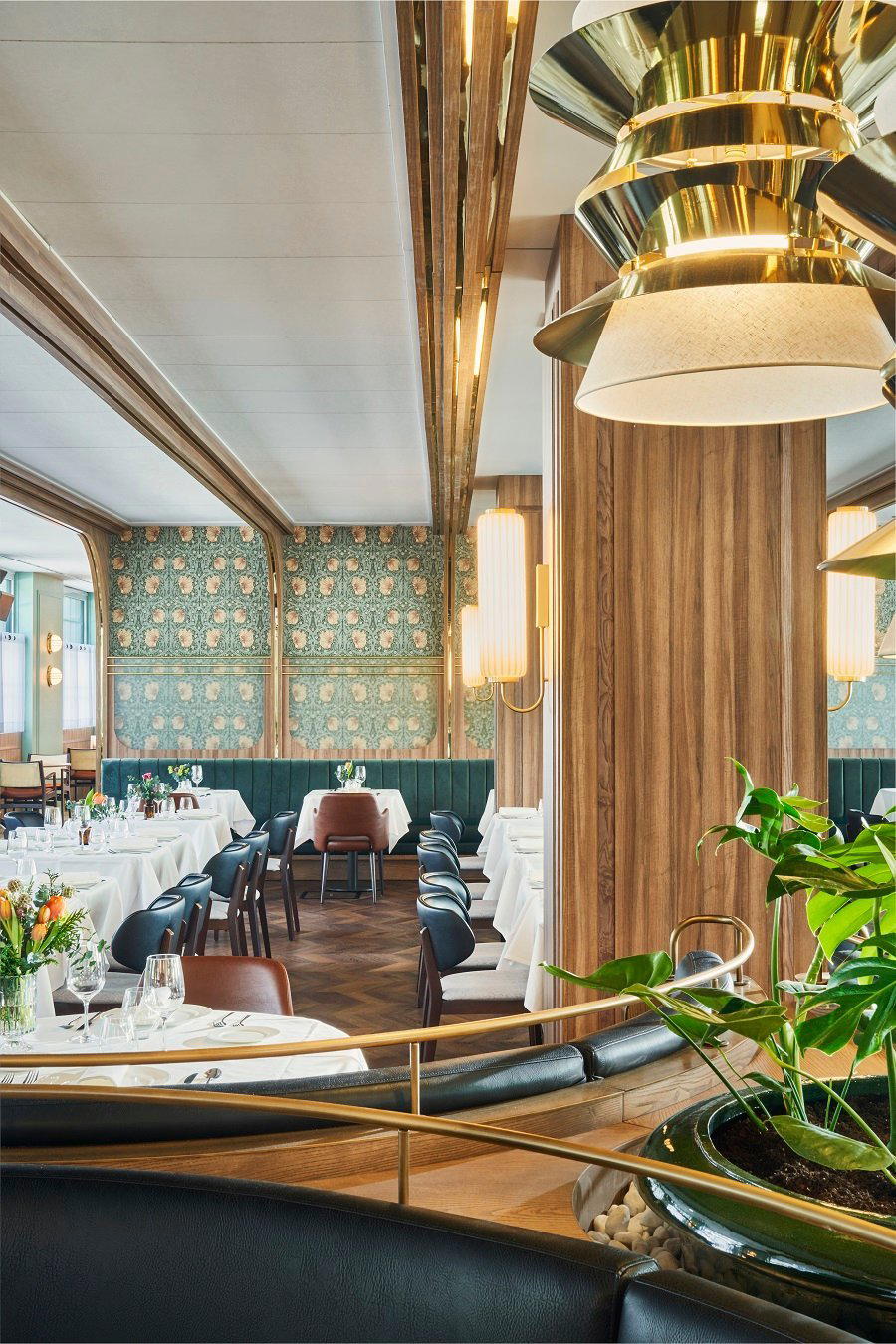
A Railway Carriage in the Pyrenees, and What It Says About Spanish Fine Dining
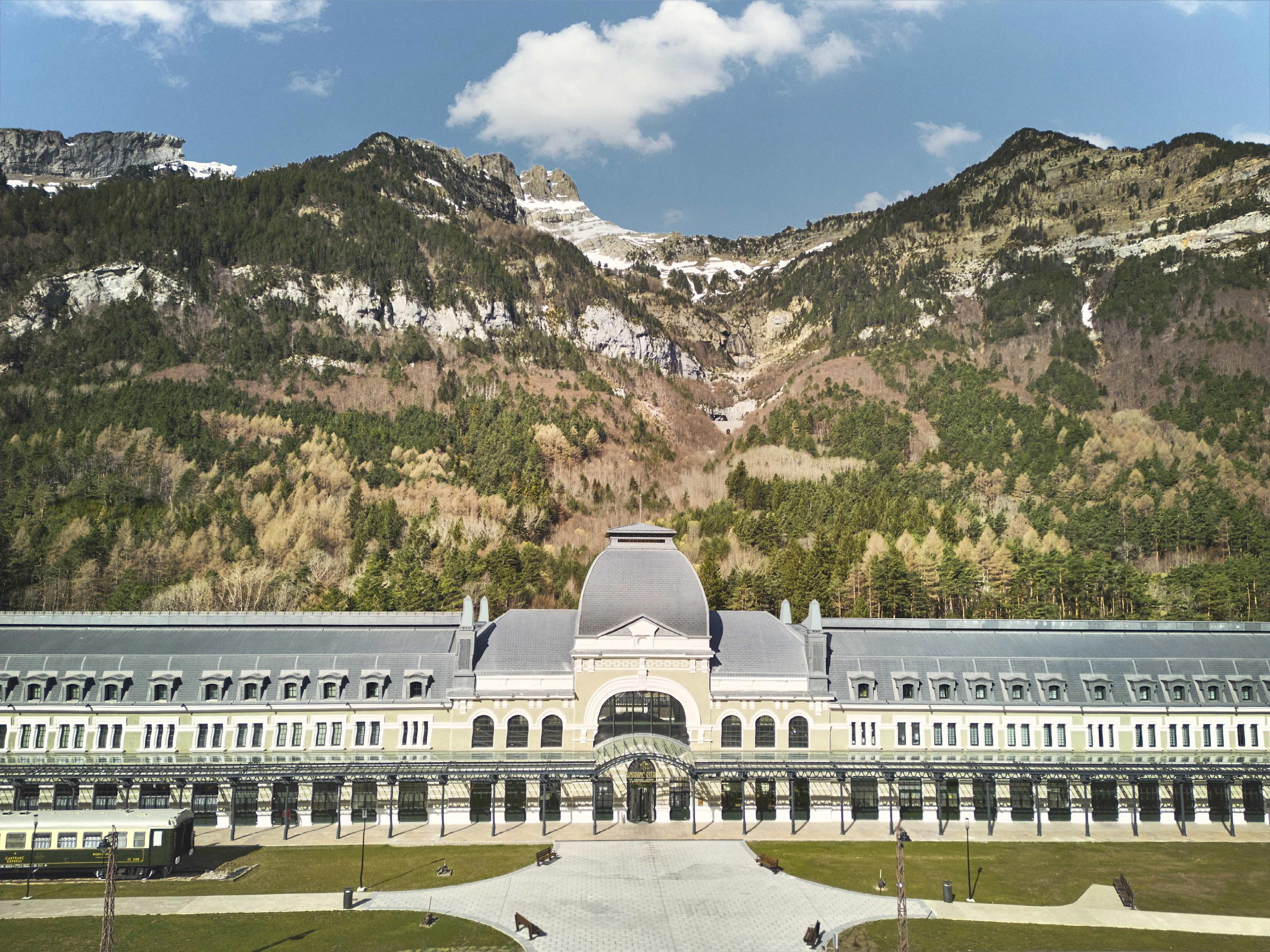
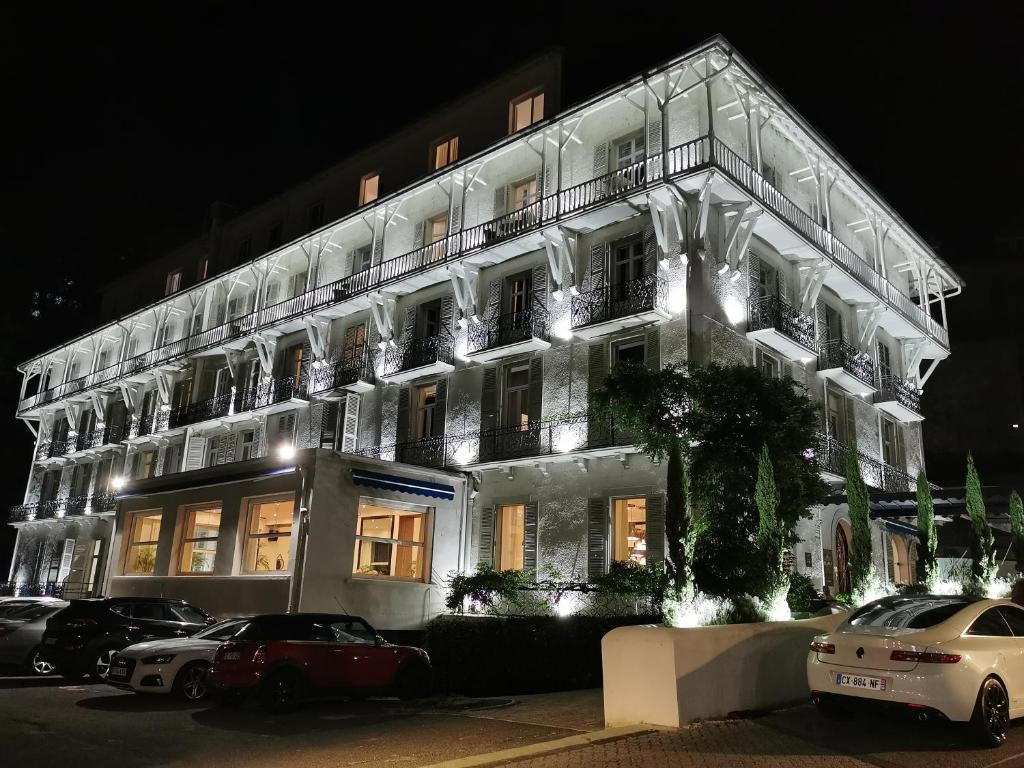
The Pyrenean town of Canfranc-Estación is not where you expect to find a Michelin-starred kitchen. The station itself — a grand, somewhat melancholy edifice that opened in 1928, fell into disuse, and then reopened as a luxury hotel — sets the terms before a single plate arrives. Arriving on the platform, guests receive a briefing on the building's history: its role as a crossing point between France and Spain during the Second World War, the intelligence operations that passed through it, and the anonymous figures who moved between the two countries under extraordinary pressure. The restaurant begins, in other words, as a history lesson, before it becomes a meal.
Spain's most decorated fine dining addresses tend to cluster around the Basque Country and Catalonia. Arzak in San Sebastián, El Celler de Can Roca in Girona, and Azurmendi in Larrabetzu each hold three Michelin stars and draw international audiences willing to travel specifically for the table. Aragón, the landlocked region that Canfranc-Estación belongs to, operates at a different register entirely: less internationally profiled, less chef-celebrity driven, but with a larder of mountain produce that serious kitchens have always understood. The arrival of a Michelin star at Canfranc Express in 2024 places the region on a map that previously overlooked it, and that repositioning matters as much as any individual dish.
Three Tables, One Carriage, and the Weight of Format
The configuration at Canfranc Express is deliberately restrictive. The gourmet option operates around three exclusive tables inside a restored railway carriage, making the total capacity one of the smallest among Michelin-recognised restaurants anywhere in Spain. For context, addresses like DiverXO in Madrid or Cocina Hermanos Torres in Barcelona, both three-star operations, run at considerably larger scale. The intimacy at Canfranc Express is not a stylistic choice layered on top of a conventional service model; it is the service model. The format demands advance booking, and the restaurant's own documentation is explicit that the experience books well ahead.
The progression begins outside, on the platform, where the historical narration grounds the experience in something beyond gastronomy. Guests then move to the 1928 carriage-restaurant for aperitifs, a section that runs its own French-influenced programme in the evenings, operated by the same team. This layered movement through the station's physical spaces, from platform to aperitif carriage to the main dining carriage, gives the experience an arc that most fine dining formats cannot replicate. The building does work that a standalone restaurant would have to manufacture through design or theatre.
Aragonese Cuisine and the French Border It Sits Against
Chef Eduardo Salanova's tasting menu positions itself as haute Aragonese cuisine, a framing that deserves unpacking. Aragonese cooking draws on the resources of a region that runs from the Pyrenean highlands to semi-arid lowlands, producing lamb, game, river fish, and a range of mountain vegetables that appear in few other Spanish regional traditions. The French influence present in Salanova's menu is not borrowed for prestige; it is geographically logical. Canfranc-Estación sits at the French border, and the kitchen's proximity to southwestern France means that cross-border ingredient flows and technique exchanges have a real, physical basis rather than being a chef's abstract reference point.
The menu's evolution is documented as continuous. This is consistent with a tasting menu format at Michelin level, where seasonal rotation and year-on-year development are effectively required. The creative range sits between Aragonese regional specificity and French technical influence, a combination that places Salanova's work in a different register from the more internationally abstract creativity at addresses like Mugaritz in Errenteria or Quique Dacosta in Dénia. Those kitchens operate at the outermost edge of Spanish avant-garde cooking. Salanova's direction is rooted first in place, then in technique.
Spain's broader Michelin map in 2024 includes a number of regionally-anchored one-star addresses that have begun to attract destination travel on their own terms. Atrio in Cáceres and Ricard Camarena in València both represent this model: kitchens where the region's identity is the primary frame, and where the cooking's authority derives from specificity rather than from positioning against international reference points. Canfranc Express follows a similar logic, though its physical setting gives it a dramatic dimension that most regionally-rooted addresses lack.
The Chef's Formation and What It Signals
Eduardo Salanova's name, within the wider Spanish fine dining conversation, is attached to Aragonese cooking rather than to the Basque or Catalan schools that have dominated the country's gastronomic narrative for three decades. His kitchen reflects a deliberate alignment with local produce and mountain traditions, interpreted through a technique set that shows French training's influence on texture, sauce work, and structural precision. The menu's documented French inflection, particularly in the aperitif stage served in the 1928 carriage, suggests that the border's culinary grammar has been absorbed and adapted rather than imitated.
In the wider Spanish context, this places Salanova in a generation of chefs who have chosen regional depth over metropolitan visibility. Martin Berasategui in Lasarte-Oria represents an earlier model of that same regional commitment, working from a Basque base while achieving multi-star recognition. Aponiente in El Puerto de Santa María does something analogous with Andalusian marine resources. The pattern, across these and other addresses, is consistent: the strongest argument for a regional kitchen's authority is what it does with its own ingredients, not how closely it mirrors the international fine dining vocabulary.
The 2024 Michelin star functions here as a credentialing signal for an audience that may not yet have direct experience of Salanova's cooking. Among Spain's newer single-star recognitions, Canfranc Express is unusual in that the award came to a restaurant whose location already attracted visitors for reasons entirely unconnected to food. The station's conversion to a Royal Hideaway Hotel had generated travel interest before the kitchen received formal recognition. The star now gives diners arriving primarily for the hotel a reason to engage with the food more seriously, and gives destination diners a reason to come to Canfranc-Estación in the first place.
Planning a Visit: Timing, Booking, and the Broader Canfranc Stay
The three-table format makes this one of the most capacity-constrained Michelin-starred restaurants in Spain, which translates directly to booking lead time. The restaurant's own materials indicate that advance reservations are essential, and given the combination of the 2024 star recognition and the station hotel's existing visitor base, competition for the available seats should be taken seriously. The price range sits at the €€€€ tier, consistent with the one-star tasting menu format and the exclusivity of the setting.
Hotel context means that the most practical approach for most guests is to stay on-site. Our full Canfranc-Estación hotels guide covers the accommodation options available in and around the station. For those building a wider itinerary around the visit, our full Canfranc-Estación restaurants guide, bars guide, wineries guide, and experiences guide provide coverage of the surrounding area. The Pyrenean setting offers hiking, ski access in winter, and the general infrastructure of a high-altitude mountain destination, which gives the trip a context beyond the dining room itself.
For readers whose reference points are Spain's major metropolitan fine dining addresses, Canfranc Express represents something the city restaurants cannot: a meal inside a building that carries its own historical weight, served in a region whose cooking tradition has been less internationally broadcast than those of the Basque Country or Catalonia. That gap is narrowing. The 2024 Michelin recognition is one marker of that shift.
Frequently asked questions
What does dinner at Canfranc Express typically cost?
Pricing at Canfranc Express is listed as €€€€.
Side-by-Side Snapshot
| Venue | Cuisine | Awards |
|---|---|---|
| Canfranc ExpressThis venue — the venue you are viewing | Avant-garde Aragonese Fine Dining | 1 Michelin Star · Guía Repsol 1 Sol |
| Aponiente | Progressive - Seafood, Creative | Michelin 3 Star |
| Arzak | Modern Basque, Creative | Michelin 3 Star |
| DiverXO | Progressive - Asian, Creative | Michelin 3 Star |
| El Celler de Can Roca | Progressive Spanish, Creative | Michelin 3 Star |
| Quique Dacosta | Creative | Michelin 3 Star |
Recognition history
Dated appearances from independent guides and award organizations, with the underlying list record or original source where available.
Michelin 1 Star
Michelin
Guía Repsol 1 Sol
Guía Repsol
Full recognition history (4 entries)
Michelin 1 Star
Michelin
Michelin 1 Star
Michelin
Continue exploring
More in Canfranc-Estación
Restaurants in Canfranc-Estación
Browse all →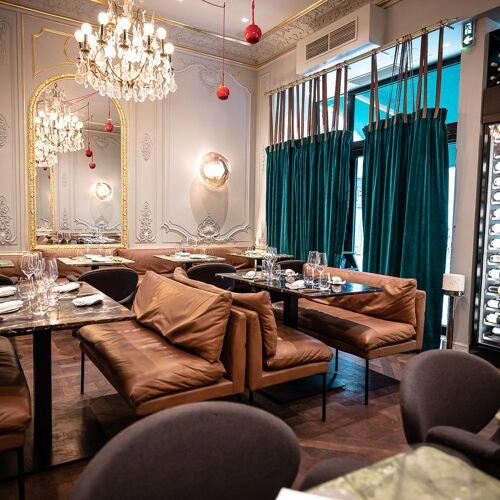
Details
- Elegant
- Sophisticated
- Well Known
- Historic
- Special Occasion
- Historic Building
- Hotel Restaurant
- Extensive Wine List
- Local Sourcing
- Mountain
- Tasting Menu
Current opening hours
- Monday
- Closed
- Tuesday
- Closed
- Wednesday
- 1–3 PM
- Thursday
- 1–3 PM
- Friday
- 1–3 PM
- Saturday
- 1–3 PM
- Sunday
- Closed
Hours can change for holidays and private events. Last verified .
Ornate and nostalgic atmosphere evoking 1920s luxury train travel with elegant Art Deco elements and intimate setting for 12 guests.