
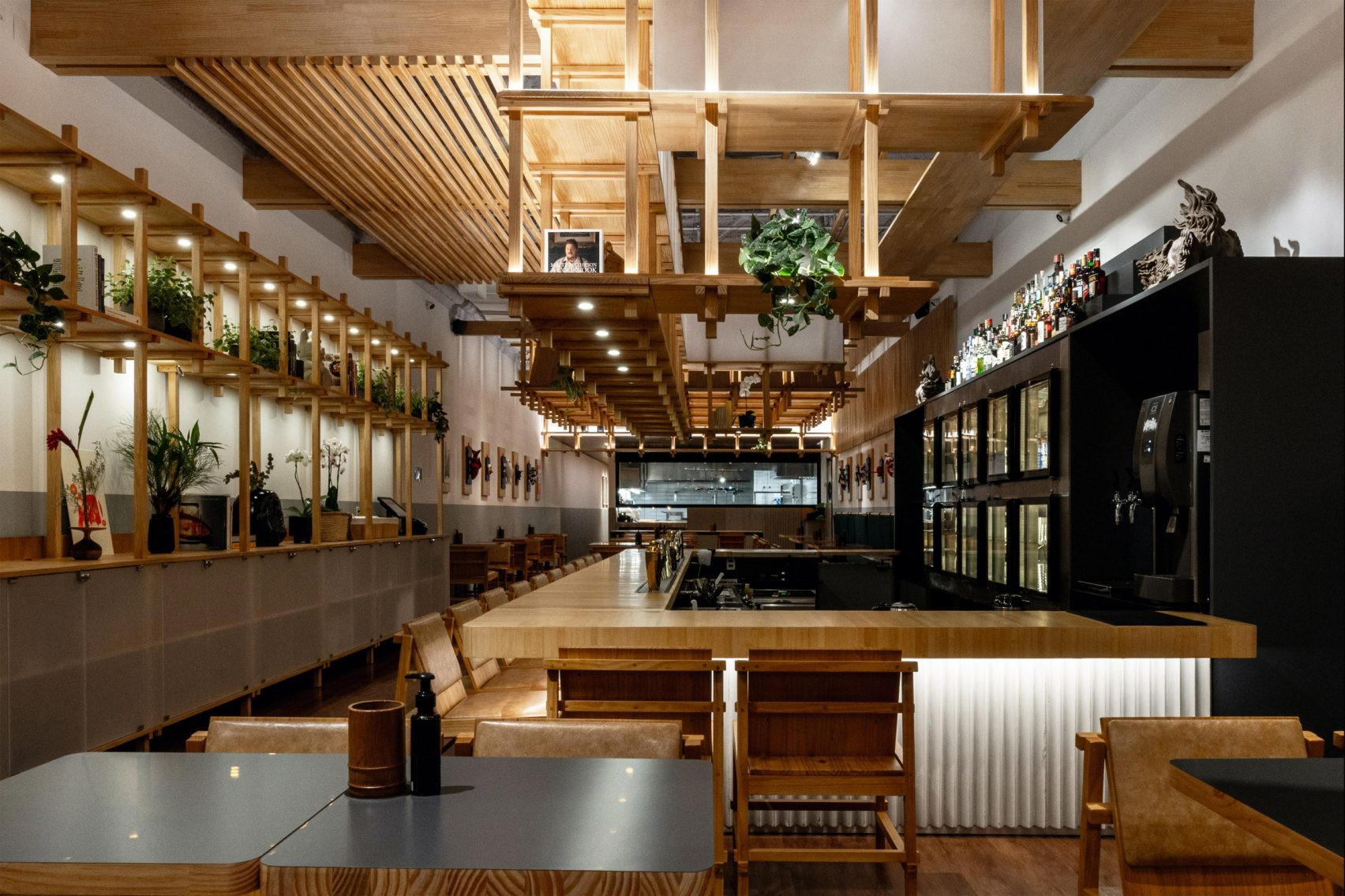
CALA CARMEN brings Catalan cooking and Spanish bar culture into Nagoya’s station-side dining circuit, with Tabelog 100 Spanish Cuisine recognition in 2024 and 2026. The appeal is less about spectacle than format: tapas, paella, Spanish wine, counter seating, and a 37-seat room that suits dinner, weekend lunch, and small group use.
Pearl is the En Primeur Club membership app — saves, bookings, and concierge access live there. Same editors, same standards.
- Address
- 1 Chome-1-4-1 Noritake, Nakamura Ward, Nagoya, Aichi 453-0014, Japan
- Phone
- +81 52-452-1613
- Website
- cala-carmen.com
 Saves & bookings on Pearl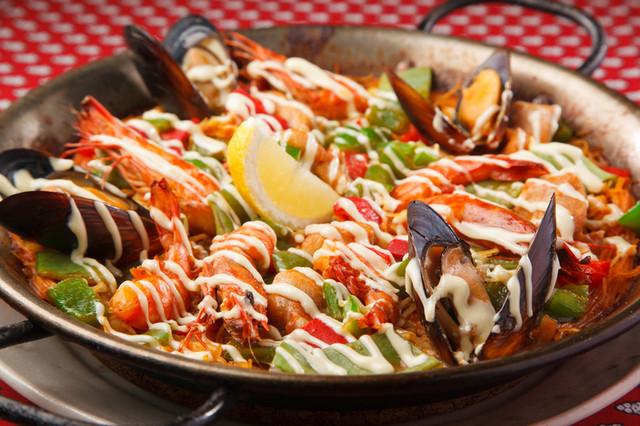
Approaching the west side of Nagoya Station, the city shifts fast from transport hub to small-room dining: ramen counters, beef specialists, curry rooms, izakaya, and compact international restaurants across Nakamura Ward. In that mix, Spanish cooking offers a slower, wine-led alternative to station food built around speed, turnover, and single-dish specialization.
CALA CARMEN sits in that narrower category: Spanish and baru-style dining, not fine-dining theatre. The room is listed with counter seating, live music, and space suited to groups, useful in Nagoya’s station area, where many good meals are designed for fast solo eating or tightly timed business dinners. Here the format suggests sharing, grazing, and opening bottles, a different rhythm from the bowls and set meals around it.
Catalan cooking in a station district built for faster meals
Nagoya’s restaurant identity is often read through local staples: miso-rich cooking, kishimen, hitsumabushi, and late-night ramen. International restaurants near the station work when they give diners a clear reason to pause before catching a train or entering the hotel corridor. Spanish baru cooking does that through modularity: small plates, rice dishes, wine, and a table structure that can stretch or compress with the evening.
The Catalan reference matters because it narrows the lens beyond generic Spanish dining. Catalonia’s food culture balances coastal seafood, rice, sausages, vegetables, preserved products, and wine-drinking formats that travel well into urban Japanese dining rooms. The public description points to handmade dishes, tapas, paella, Catalan sausage, and Spanish wine. Those details place the restaurant in a practical middle ground: more composed than a casual snack bar, less formal than a tasting-menu destination.
That middle ground has a sustainability implication worth taking seriously. Small-plate formats can reduce pressure to over-order fixed courses, and rice-based centrepieces such as paella historically favour collective eating over individual luxury plating. That is not a sourcing-policy guarantee, but the structure encourages portion control, shared dishes, and wine choices by appetite rather than ceremony. In a travel city where station dining often means speed or excess, that is useful.
The stronger public trust signal is recognition. Selection for Tabelog 100 Spanish Cuisine in 2024 and again in 2026 puts the restaurant inside a national conversation about Spanish cooking in Japan, not just Nagoya’s international-dining category. Tabelog’s score is listed at 3.71, meaningful in a market where specialist restaurants often build reputation through accumulated diner scrutiny rather than hotel-concierge gloss.
Wine, shared plates, and why the room matters
Spanish restaurants in Japan succeed or fail on understanding the difference between decoration and format. The concrete clues here are useful: sommelier availability, Spanish wine emphasis, take-out, non-smoking interior policy, children welcome, and a 37-seat layout without private rooms. Together, they suggest a restaurant built for mixed use, date-night tables, family meals, friends, and small groups, not a hushed room forcing the cooking into ceremony.
The wine angle is not decorative. Spanish baru culture depends on the bottle list carrying part of the meal’s identity, especially when dishes arrive in waves rather than a formal sequence. A sommelier signal adds credibility for diners who want the meal to move around seafood, sausage, rice, and tapas without a single pairing formula. It also separates the experience from casual international restaurants where wine is an afterthought.
Compared with nearby station-area options, the positioning is clear. Betokon Ramen Shinkyo Meieki nishiguchi ten and Chuka Soba Raian operate in the low-cost noodle lane, Menya Shishimaru sits in a ramen bracket above that, ERICK SOUTH KITTE nagoya ten gives the area a South Indian option, and Saitobi Hida Gyu Shabusuki Ya Bakuro Ichidai Nagoya WEST moves into beef-led spending. CALA CARMEN occupies a different decision point: Spanish wine, shared plates, and a longer table conversation without luxury pricing language.
That distinction helps visitors planning around Nagoya Station. The neighbourhood can absorb serious appetite at almost any hour, but many choices are built around one dominant product. A Spanish baru gives a group more flexibility. One diner can treat it as wine and tapas; another can anchor the meal around rice and larger plates. The category also suits mixed-age parties, because children are explicitly welcomed.
How to place it in a Nagoya itinerary
The restaurant is most persuasive as a station-side dinner, not a trophy reservation. Its value lies in range: Catalan reference points, Spanish wine, a room for counter diners and groups, and recognition beyond the city. For travellers using Nagoya as a rail hub, this address gives the evening texture without requiring a detour across town.
Readers comparing broader dining options can start with Our full Nagoya restaurants guide, then cross-check the city’s stay, drink, wine, and activity planning through Our full Nagoya hotels guide, Our full Nagoya bars guide, Our full Nagoya wineries guide, and Our full Nagoya experiences guide. Nearby restaurant research can also include 1022, 451, Aaron, Alan., and All Day Dining Montmartre.
For Japan-wide context, EP Club’s restaurant archive also tracks contrasting formats such as -Grilled beef Sukiyaki- KAMAKURA TANUKIAN 鎌倉 たぬき庵 in Kamakura. 鮪と炭火焼き うお炭 秋葉原店 in Tokyo.cafe in Osaka.know in Kumamoto, (Shoku) Vietnam in Kawasaki, [Curry Senmon Ten] Maruyama Kyoju. in Sapporo, Jōdo Saké Bar in Los Angeles, and Onigiri Time in Pasadena.
The editorial read is simple: choose this for Catalan-leaning Spanish food near Nagoya Station when the group wants wine, shared dishes, and a room with enough range for adults and children. The Tabelog 100 Spanish Cuisine selections in 2024 and 2026 give the address credible national recognition; the format gives it practical usefulness in a neighbourhood that usually rewards speed.
Similar Picks
Nearby venues at a similar price tier for orientation.
| Venue | Cuisine | Price | Notes |
|---|---|---|---|
| CALA CARMEN | Authentic Catalan & Spanish Restaurant | $$ | Nakamura |
| Tenichi | Dining | Not listed | Nishi |
| 眞善美 | japanese | Not listed | Higashi |
| Raamen Ajisai | Modern Nagoya shoyu ramen & tsukemen | $$ | Nakagawa |
| Seigetsu | Charcoal-grilled Unagi (Eel) Restaurant | $$ | Higashi |
| New Old Style Niku Soba Keisuke Dainagoya birudingu ten | Japanese Ramen | $$ | Nakamura |
Recognition history
Dated appearances from independent guides and award organizations, with the underlying list record or original source where available.
Tabelog 100 #95 · No. 95
Tabelog · Tabelog 100 - Spanish cuisine - 2026
Continue exploring
More in Nagoya
Restaurants in Nagoya
Browse all →



At a Glance
- Cozy
- Lively
- Intimate
- Classic
- Date Night
- Group Dining
- After Work
- Casual Hangout
- Celebration
- Live Music
- Standalone
- Private Dining
- Extensive Wine List
Current opening hours
- Monday
- 5:30–10 PM
- Tuesday
- 5:30–10 PM
- Wednesday
- 5:30–10 PM
- Thursday
- 5:30–10 PM
- Friday
- 5:30–10 PM
- Saturday
- 12–2 PM, 5:30–10 PM
- Sunday
- 12–2 PM, 5:30–10 PM
Hours can change for holidays and private events. Last verified .