Cai Lin Xuan

World's Best Wine Lists Awards WBWL 2-Star
Our verdict
Cai Lin Xuan holds a 2-Star Accreditation from the World of Fine Wine & Leadership Awards, placing it among a small tier of recognised dining destinations in Jiuzhaigou, a valley more associated with wilderness tourism than serious restaurant credentials. Operating in one of Sichuan's most remote UNESCO-listed sites, the kitchen draws on a larder shaped almost entirely by the surrounding landscape and its Tibetan-Qiang agricultural traditions.

Pearl is the En Primeur Club membership app, where members save venues, book tables and use the concierge.
The menu
What to order
- Yak beef steak
- Cordyceps cold-water fish hot pot
- Matsutake
Dining at Altitude: What Jiuzhaigou Demands of Its Kitchens
Jiuzhaigou sits at elevations between 2,000 and 4,500 metres in the Min Mountains of northern Sichuan, a UNESCO World Heritage site better known for its turquoise lakes and seasonal foliage than for its restaurant credentials. The county town of Jiuzhaigou, a dense cluster of hotels, tour operators, and local businesses serving the park's millions of annual visitors, is not a city with a developed fine-dining infrastructure. Serious restaurants here operate under constraints that their counterparts in Chengdu or Chongqing simply do not face: supply chains that depend on mountain road access, a seasonal visitor economy, and a food culture rooted in Tibetan and Qiang agricultural traditions rather than the lowland Sichuan canon most international visitors expect. Against that backdrop, Cai Lin Xuan's 2-Star Accreditation from the World of Fine Wine & Leadership Awards represents something worth examining. The award places the restaurant in a small peer group of accredited venues across China, a list that elsewhere includes properties in Shanghai, Beijing, Macau, and Hangzhou, making its presence in a remote mountain county genuinely noteworthy from a comparative standpoint.
The Source Question: What the Land Around Jiuzhaigou Actually Provides
The editorial angle that matters most when writing about dining in this part of Sichuan is ingredient provenance. Jiuzhaigou County and the wider A Ba Tibetan and Qiang Autonomous Prefecture sit at the intersection of several distinct food-producing zones. The high-altitude meadows and forested valleys of the Min Mountains produce ingredients that are largely unavailable at lower elevations: yak meat and dairy, highland barley, a range of foraged mushrooms and wild herbs that vary by season and altitude, and freshwater fish from rivers fed by glacial melt. These are not marketing distinctions, they represent a genuinely different larder from the pork-forward, chilli-saturated pantry that defines lowland Sichuan cooking.
Restaurants that do this well in comparable remote high-altitude contexts, whether in the Tibetan regions of Yunnan or the mountain counties of western Sichuan, tend to structure their menus around what the surrounding geography actually yields in a given season rather than attempting to replicate city-format tasting menus with imported produce. The proximity to the park and the agricultural communities of the valley means that sourcing from local growers and herders is logistically feasible in a way it would not be for a restaurant trying to do the same thing in a city. That logistical reality is also a quality argument: in-season highland produce arrives fresher and with less supply-chain degradation than equivalent products transported over the mountain passes from Chengdu, a journey that can take the better part of a day under good road conditions.
For context on how high-end Chinese kitchens in other regions approach sourcing as a point of distinction, it is worth noting that venues like Ru Yuan in Hangzhou and Xin Rong Ji in Chengdu have built recognised programs around regional ingredient specificity. In each case, the sourcing argument is inseparable from the culinary identity. The same logic applies in Jiuzhaigou, but with a geography that skews toward highland Tibetan and Qiang produce rather than the Yangtze Delta or Sichuan basin ingredients those venues work with.
Accreditation in Context: What Two Stars from the World of Fine Wine Signals
The World of Fine Wine & Leadership Awards operate as a trade and editorial recognition scheme with an accreditation framework rather than a ranking ladder. A 2-Star Accreditation does not imply a ranked position above a 1-Star venue in the way that a Michelin star system functions; instead, it signals that the restaurant has met a threshold of quality assessment across the award body's evaluation criteria. Within China's wider dining recognition ecosystem, the award sits alongside but distinct from Michelin's Black Pearl Guide and the Asia's 50 Best infrastructure. It is a credentialing signal rather than a definitive hierarchy.
What is notable here is the geography. The World of Fine Wine accreditations for China skew heavily toward the major eastern cities. Accredited venues in Jiuzhaigou are rare simply because the pool of formally evaluated restaurants in the county is small. The recognition does not automatically place Cai Lin Xuan in the same competitive set as, say, Chef Tam's Seasons in Macau or Imperial Treasure Fine Chinese Cuisine in Guangzhou, both of which operate in dense, highly competitive urban restaurant markets with international visitor bases and deep supply chains. The more relevant comparison is within the category of destination dining in remote or tourism-driven Chinese locations, where the question is whether a kitchen can maintain consistent standards outside the support infrastructure of a major city.
For readers planning a broader Sichuan visit who want to benchmark the full range of the province's dining credentials, the Cai Lin Xuan at the Ritz-Carlton Reserve, Rissai Valley offers an instructive parallel: a restaurant operating under international hotel infrastructure in the same general geography, with a different set of resources and a different target guest. The two represent distinct approaches to the challenge of serious dining in a mountain tourism corridor.
The Jiuzhaigou Dining Context for Visitors
Most visitors to Jiuzhaigou arrive through Jiuzhai Huanglong Airport, a high-altitude airport that has expanded access significantly compared to the era of road-only entry. The county's restaurant scene is heavily skewed toward tour-group formats, large banquet-style operations serving Sichuan classics and simplified local dishes to high-volume groups, and genuinely destination-calibre dining options are sparse. That scarcity makes the few recognised venues more significant as planning anchors for travellers whose itineraries extend beyond the park itself. Our full Jiuzhaigou restaurants guide covers the wider field, including budget and mid-range options alongside accredited venues.
The seasonal dimension matters for planning. Jiuzhaigou's peak visitor periods are autumn, when the foliage shifts and the lakes reach their most photographed state, and early summer. Restaurant demand tracks visitor volume closely in a county this dependent on tourism infrastructure. Visitors aiming for accredited restaurants during peak autumn season should treat reservations as a logistical priority rather than an afterthought.
For travellers building a broader visit around the area, our Jiuzhaigou hotels guide, bars guide, wineries guide, and experiences guide provide coverage across the full range of the county's hospitality offering.
China's Wider Fine-Dining Spread: Where Jiuzhaigou Sits
China's recognised dining scene has expanded geographically over the past decade, but the weight of accreditations and awards still concentrates in the coastal cities and a handful of inland hubs. Chengdu, as the provincial capital of Sichuan, has the deepest restaurant bench in western China, anchored by venues like Xin Rong Ji and complemented by a broader ecosystem of tea houses, Sichuan hot pot specialists, and emerging international-format fine dining. Moving north into A Ba Prefecture, that density drops sharply. The restaurants that hold recognition in this zone are operating in a different mode: smaller guest volumes, tighter supply options, and a visitor base that has often arrived primarily for the landscape rather than the food.
That positioning is not a weakness in itself. Some of the most interesting food in remote Chinese geographies comes precisely from kitchens that have had to develop self-sufficiency and local sourcing networks rather than relying on the produce and protein flows that supply urban restaurant districts. The critical question for any accredited venue in this category is whether the kitchen treats its geography as a constraint to work around or as the primary creative resource. The venues that answer that question most convincingly, working with yak butter and highland mushrooms on their own terms rather than forcing them into borrowed frameworks, tend to produce the most coherent and interesting plates. Comparable dynamics play out internationally at restaurants like Le Bernardin in New York City, where an absolute commitment to a single sourcing category (seafood, in that case) defines both the identity and the ceiling of what the kitchen attempts.
Readers interested in how Chinese fine dining handles regional ingredient identity across a wider geographic range will find useful comparisons in our coverage of Xin Rong Ji on Xinyuan South Road in Beijing, 102 House in Shanghai, Dai Yuet Heen in Nanjing, Dingshan·Jiangyan in Suzhou, Fleurs Et Festin in Xiamen, Jiangnan Wok·Rong in Fuzhou, and Emeril's in New Orleans for a sense of how regional identity functions as a restaurant's primary credential across different contexts.
Planning a Visit
Cai Lin Xuan is located at 26 二组, Jiuzhaigou County, A Ba Tibetan and Qiang Autonomous Prefecture, Sichuan, 623402. Given the limited public information on hours and booking policy, building in flexibility around meal times is sensible for visitors with fixed onward travel from Jiuzhai Huanglong Airport.
Frequently asked questions
Where do I go for Cai Lin Xuan?
Cai Lin Xuan is located at 26 二组, Jiuzhaigou County, A Ba Zang Zu Qiang Zu Zi Zhi Zhou, Sichuan, China, 623402, Jiuzhaigou.
Is Cai Lin Xuan Michelin-listed?
Cai Lin Xuan has received recognition including:
What's the must-try dish at Cai Lin Xuan?
What the 2-Star World of Fine Wine accreditation does confirm is that the kitchen meets a recognised editorial standard. Dishes rooted in northern Sichuan's high-altitude larder, yak, foraged fungi, local grains, are the ingredients that define serious cooking in this region.
Can I walk in to Cai Lin Xuan?
Visitors to Jiuzhaigou arriving via Jiuzhai Huanglong Airport should expect limited advance booking infrastructure compared to urban Sichuan. Checking with your hotel concierge on arrival at 26 二组, Jiuzhaigou County is the most practical approach.
What's the signature at Cai Lin Xuan?
Cai Lin Xuan's 2-Star accreditation from the World of Fine Wine & Leadership Awards places it in a small cohort of recognised dining addresses outside China's main urban centres. In the context of Jiuzhaigou, a UNESCO World Heritage site at elevations up to 4,500 metres, that credential signals a kitchen working seriously with the region's constrained supply chain and altitude-affected cooking conditions. The signature here is less about a single dish and more about the discipline of operating at that standard in this location.
At-a-Glance Comparison
Comparable venues nearby, for context on price, style, and recognition.
| Venue | Cuisine | Price | Awards | Notes |
|---|---|---|---|---|
| Cai Lin XuanThis venue (the venue you are viewing) | Fine-Dining Sichuan & Jiuzhaigou Chinese | Not listed | World's Best Wine Lists Awards WBWL 2-Star | Not listed |
| Cai Lin Xuan, Ritz-Carlton Reserve, Rissai Valley | Sichuan, Tibetan & Cantonese Fine Dining | Not listed | Not listed | Zhongcha Valley, Zhangzha Town |
| FONG SENSE | Modern Huaiyang Chinese Fine Dining | Not listed | Black Pearl 1 Diamond | Jiangning Development Zone |
| Yue CREATIVE CANTONESE CUISINE | Modern Creative Cantonese Fine Dining | $100–150 | Black Pearl 2 Diamond | Haizhu District |
| 新光酒家方亮蟹宴(黄浦店) | Shanghai Crab Banquet | $50–100 | Not listed | Huangpu |
| Yueyan · Premium Fujian Cuisine | Premium Fujian Fine Dining | $50–100 | Black Pearl 1 Diamond | Not listed |
Recognition history
Dated appearances from independent guides and award organizations, with the underlying list record or original source where available.
World's Best Wine Lists Awards WBWL 2-Star
World's Best Wine Lists Awards
Continue exploring
More in Jiuzhaigou
Restaurants in Jiuzhaigou
All restaurants in Jiuzhaigou →


Cai Lin Xuan
The wine
- Wine program
- Deep wine list
- Extensive wine list
Details
- Elegant
- Scenic
- Sophisticated
- Intimate
- Special Occasion
- Business Dinner
- Celebration
- Hotel Restaurant
- Extensive Wine List
- Local Sourcing
- Mountain
- A La Carte
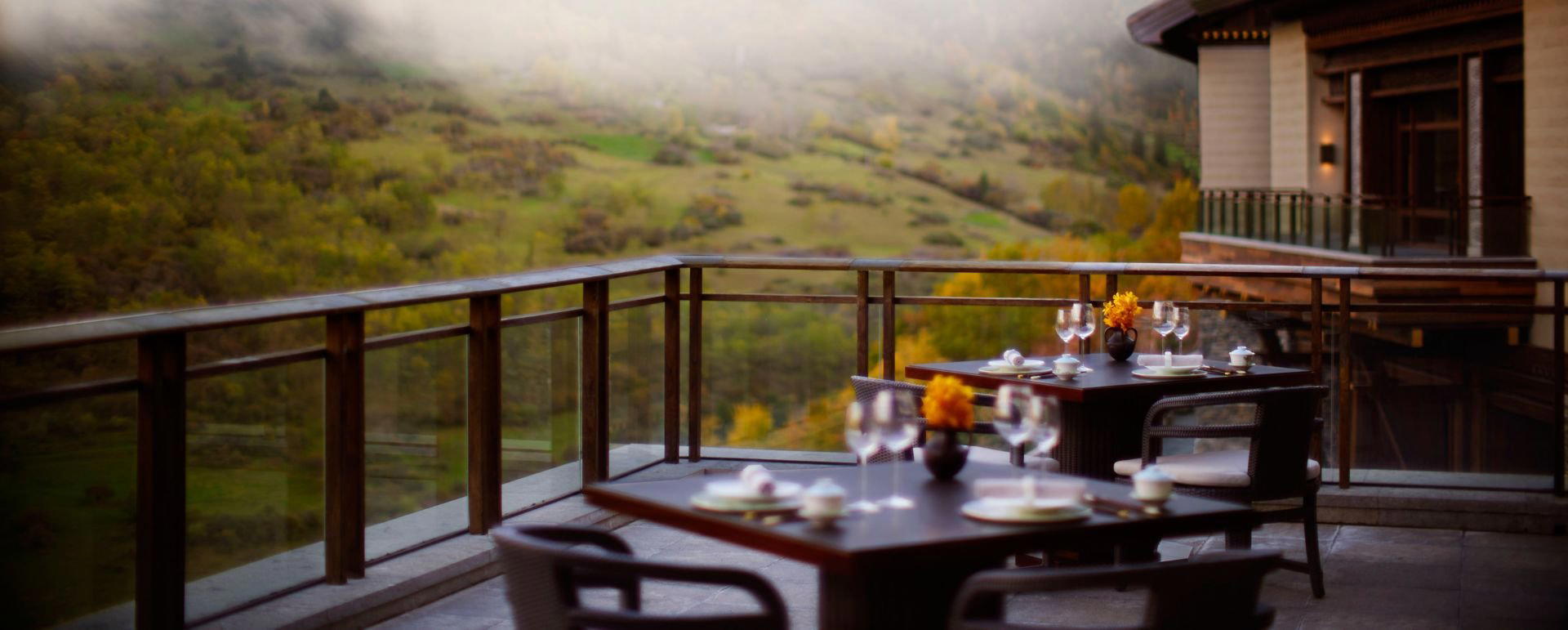
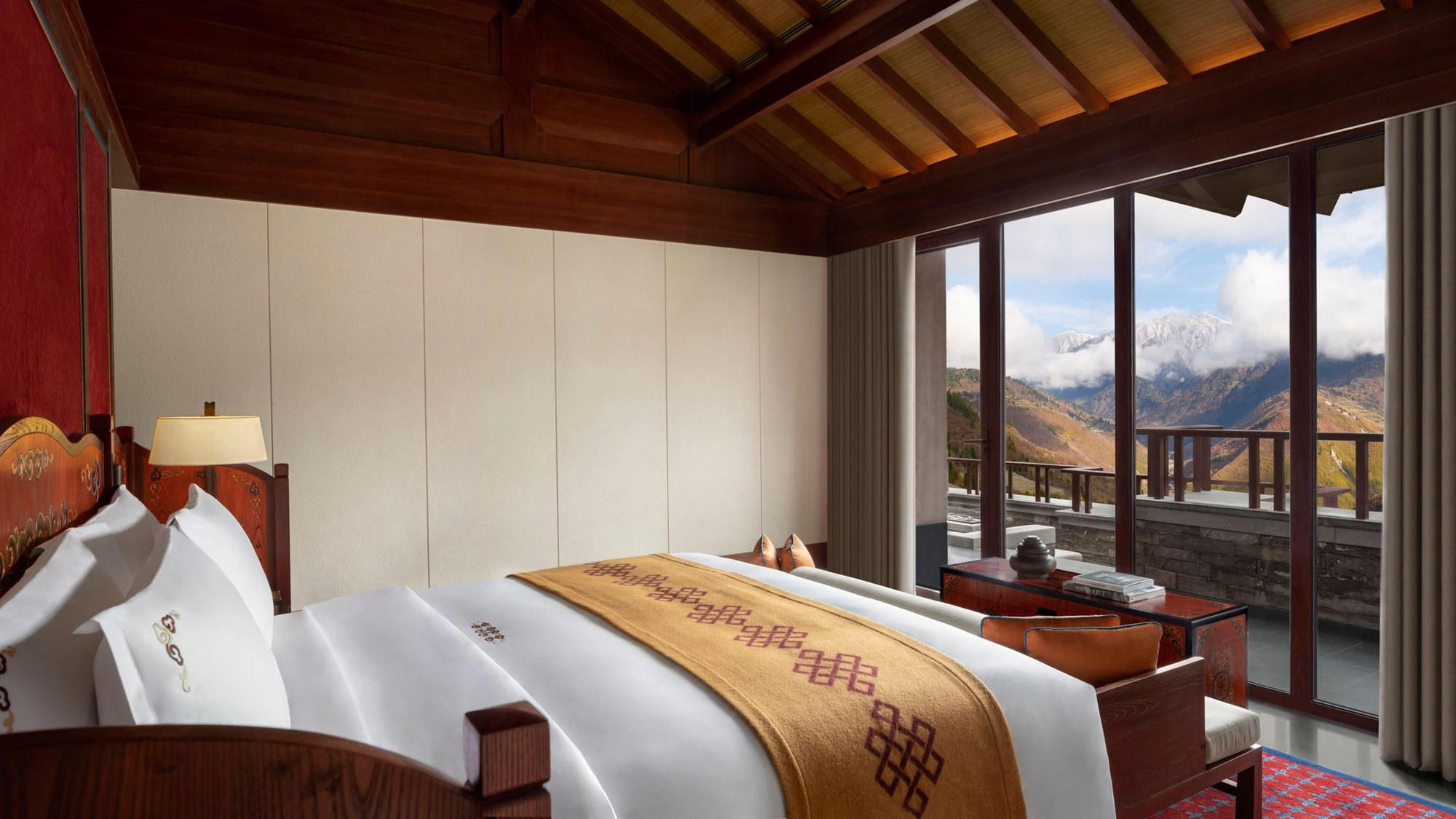
Cozy and intimate with mindful use of natural stone, dark woods, and floor-to-ceiling windows showcasing far-reaching mountain vistas.