Cahoots
Our verdict
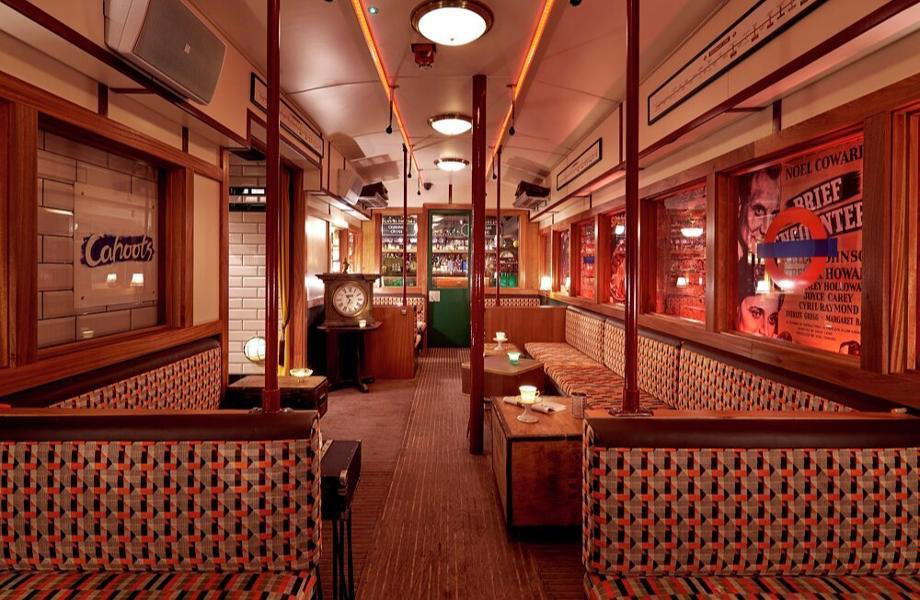
Cahoots occupies a wartime-era underground station aesthetic in Kingly Court, Carnaby, delivering 1940s-themed cocktails and swing-era atmosphere in one of Soho's more theatrically committed bar formats. The setting channels post-Blitz London with corrugated metal, vintage signage, and period-dressed staff, a deliberate counterpoint to the clinical minimalism that defines much of the city's current cocktail scene.

Pearl is the En Primeur Club membership app, where members save venues, book tables and use the concierge.
The menu
What to order
- Mushroom_Toast
- Mezze_Board
- Jumbo_Sausage_Roll
Underground London, Literally: The Wartime Bar Format Making a Case for Immersive Drinking
London's cocktail culture has spent the better part of a decade sorting itself into two distinct camps. On one side sit the technically rigorous, aesthetically restrained programs, clarified spirits, precise dilution, muted interiors, that have come to dominate the city's critical conversation. On the other sits a smaller, noisier tier of bars that bet on full environmental commitment: the room, the staff, the glassware, and the music all locked into a single era or concept. Cahoots, tucked into Kingly Court off Carnaby Street in the West End, belongs firmly to the second camp, and makes no apologies for it.
The format draws on a genuinely specific cultural reference point: the improvised underground shelters and subterranean social spaces that defined civilian life in London during the Second World War. The corrugated metal walls, the vintage Ministry of Information signage, the wartime-era radio broadcasts playing overhead, these are not set-dressing choices borrowed loosely from a mood board. They reflect a period in London's social history when drinking and dancing carried real psychological weight, when the city's underground spaces became sites of determined communal pleasure in the face of sustained disruption. Bars that commit this deeply to a cultural frame are making an argument about what an evening out can mean, and Cahoots commits fully.
Carnaby's Layered Character and Where Cahoots Sits Within It
Kingly Court itself rewards attention as a location choice. The covered courtyard off Carnaby Street operates on three levels, drawing a mix of after-work drinkers, tourists navigating Soho, and a younger crowd using it as a staging post before heading deeper into the West End. The immediate neighbourhood carries a complex identity: Carnaby Street's 1960s counterculture legacy has been substantially commercialised, but the surrounding blocks still hold enough independent operators and characterful venues to give the area texture. Cahoots slots into this context as a destination rather than a thoroughfare stop, the kind of place that requires a deliberate decision to visit, not one you stumble into while passing.
London's broader cocktail scene, for context, currently runs across a wide price spectrum and stylistic range. The technically focused end of the market has strong representation in Mayfair and Fitzrovia, where bars attached to or adjacent to fine-dining operations set a clinical, ingredient-led tone. The theatrical end, where Cahoots competes, tends to cluster in Soho and Shoreditch, with formats ranging from speakeasy cosplay to more considered immersive concepts. Cahoots sits at the more committed end of that theatrical tier, where the concept is dense enough that the cocktail menu reads as an extension of the environment rather than the primary product.
The Cultural Frame: Why the 1940s Reference Holds
Immersive bars frequently reach for historical periods as aesthetic cover without doing the underlying cultural work. The 1920s speakeasy format, now exhausted across most major cities globally, became shorthand for exposed brick and a password door rather than any genuine engagement with Prohibition-era drinking culture. What distinguishes the wartime London reference at Cahoots is its specificity to place. This is not a generic mid-century gesture, it is a reading of a particular moment in this particular city, and the venue's location underground (accessing it requires descending from the courtyard level) reinforces the spatial logic of the concept in a way that feels considered rather than convenient.
The 1940s were, paradoxically, a period of significant creativity in British social culture. With formal entertainment infrastructure disrupted and class hierarchies under pressure, drinking and dancing spaces became unusually democratic. Swing music crossed social lines in a way that peacetime entertainment rarely managed. A bar format that references this period is drawing on something with genuine cultural density, not merely a photogenic aesthetic.
How Cahoots Sits in the Wider London Drinking and Dining Picture
For visitors whose London agenda extends beyond the cocktail bar tier, the surrounding area offers useful orientation. The West End's fine-dining concentration runs from Mayfair through Fitzrovia, with operations like Sketch, The Lecture Room and Library in Conduit Street and Restaurant Gordon Ramsay in Chelsea anchoring the formal end of the market. Modern British cooking at its most refined is represented across the city by addresses like CORE by Clare Smyth in Notting Hill and Dinner by Heston Blumenthal at the Mandarin Oriental, while The Ledbury in Notting Hill continues to represent the more ingredient-focused wing of European fine dining in London.
Beyond the capital, the UK's serious restaurant tier spreads across several regions. Waterside Inn in Bray and L'Enclume in Cartmel anchor the countryside fine-dining circuit, while Moor Hall in Aughton, Gidleigh Park in Chagford, and Hand and Flowers in Marlow represent the breadth of serious cooking operating outside the London orbit. Midsummer House in Cambridge and Opheem in Birmingham extend that map further, and both hide and fox in Saltwood and Ynyshir Hall in Machynlleth represent the more adventurous regional operators. In Scotland, Restaurant Andrew Fairlie in Auchterarder remains the country's most decorated kitchen. For international comparison, Le Bernardin in New York City and Lazy Bear in San Francisco illustrate how the theatrical, communal dining format translates across different cultural contexts. Our full London restaurants guide maps the city's dining options across price points and neighbourhoods.
Practical Planning
Cahoots is located at Address: 13 Kingly Court, Carnaby, London W1B 5PW, accessible from Oxford Circus (Central, Bakerloo, Victoria lines) or Piccadilly Circus (Bakerloo, Piccadilly lines), both within a five-minute walk. Reservations: The bar operates a bookings system for tables; walk-in capacity exists but is limited on weekends and Friday evenings when the format draws significant demand. Booking ahead is the more reliable approach for groups. Timing: Weekday early evenings offer a quieter version of the experience; the bar operates at higher volume and fuller atmospheric effect later in the week and on weekends. Note:
Frequently asked questions
Is Cahoots good for families?
Cahoots is an adult-oriented cocktail bar at 13 Kingly Court, Carnaby, and the format, a wartime underground drinking den built around spirits and themed theatrical service, is not designed with children in mind. Kingly Court itself has a broader mix of restaurants across its three levels that may suit families better. For an evening drinks itinerary, Cahoots is firmly in the adults-only category.
What's the overall feel of Cahoots?
The bar occupies a former underground shelter space in Kingly Court, Carnaby, and the 1940s wartime aesthetic runs deeper than surface decoration: vintage signage, period-appropriate glassware, and staff costuming all sustain the frame. The atmosphere sits closer to theatrical set design than conventional cocktail lounge. Expect noise, energy, and close quarters rather than the low-lit minimalism found at London's more technically focused bar counters.
What makes Cahoots different from other themed bars in London's West End?
Cahoots occupies an actual basement space in Kingly Court, Carnaby (W1B 5PW), which gives the 1940s underground shelter concept a physical logic that purpose-built themed venues typically lack. The location within a three-level covered courtyard off Carnaby Street also places it inside one of central London's more historically layered retail and dining precincts, rather than a standalone unit. That combination of genuine subterranean setting and a sustained period reference distinguishes it within the immersive bar tier operating across the West End.
What's the must-try dish at Cahoots?
Cahoots is primarily a cocktail bar, and the drinks programme, built around the 1940s wartime concept at its Kingly Court address, is the main draw rather than a food menu. The bar's reputation rests on its themed cocktails rather than a kitchen output. Check the current menu directly with the venue for any food offerings available alongside drinks.
Where exactly is Cahoots?
Cahoots is located at 13 Kingly Ct, Carnaby, London W1B 5PW, United Kingdom, London.
Do they take walk-ins at Cahoots?
Walk-ins are possible at Cahoots in Kingly Court, Carnaby, though the bar's popularity in the West End means space fills quickly on weekends and evenings. Booking ahead is the more reliable approach for groups. check the venue's official channels or check their website for current reservation availability.
Standing Among Peers
Comparable venues nearby, for context on price, style, and recognition.
| Venue | Cuisine | Price | Notes |
|---|---|---|---|
| CahootsThis venue (the venue you are viewing) | British 1940s Gastropub | $50–100 | Not listed |
| Old Compton Brasserie | Modern British Brasserie | $30–50 | Soho |
| Reform Social and Grill | British Grill & Afternoon Tea | $30–50 | Marylebone |
| The Refinery Citypoint | Modern British Gastropub | Not listed | Barbican |
| Thirty Six | Modern British Gastropub | $30–50 | Westminster |
| The Orangery | Modern British Farm-to-Table | $30–50 | St Giles |
Continue exploring
More in London
Restaurants in London
All restaurants in London →
Bars in London
All bars in London →

Details
- Lively
- Whimsical
- Trendy
- Energetic
- Date Night
- Group Dining
- Celebration
- Late Night
- Live Music
- Historic Building
- Craft Cocktails
- Small Plates
- A La Carte
- Craft Cocktails
- Vegetarian Friendly
- Allergy Accommodating
Current opening hours
- Monday
- 5 PM–1 AM
- Tuesday
- 5 PM–1 AM
- Wednesday
- 5 PM–1 AM
- Thursday
- 4 PM–2 AM
- Friday
- 4 PM–2 AM
- Saturday
- 12 PM–2 AM
- Sunday
- 4 PM–12 AM
Hours can change for holidays and private events. Hours as of .
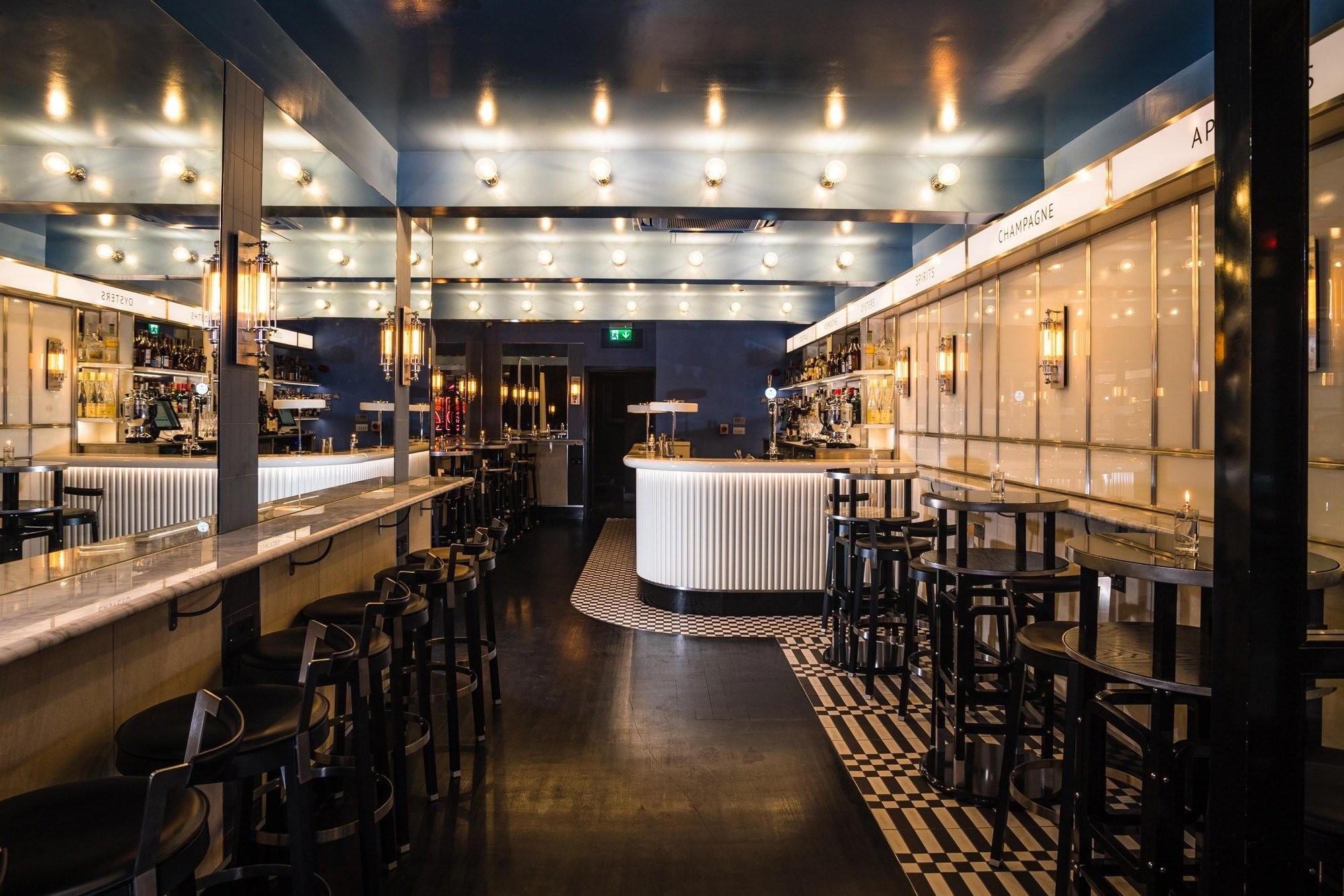
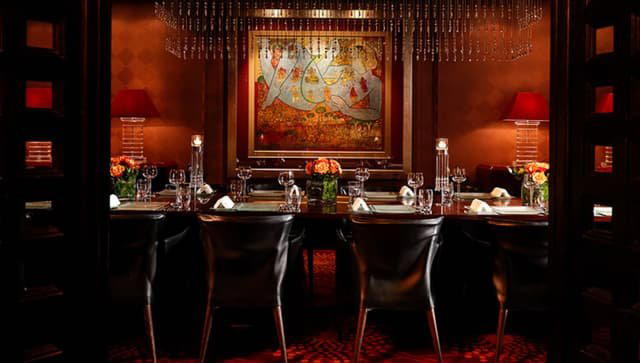
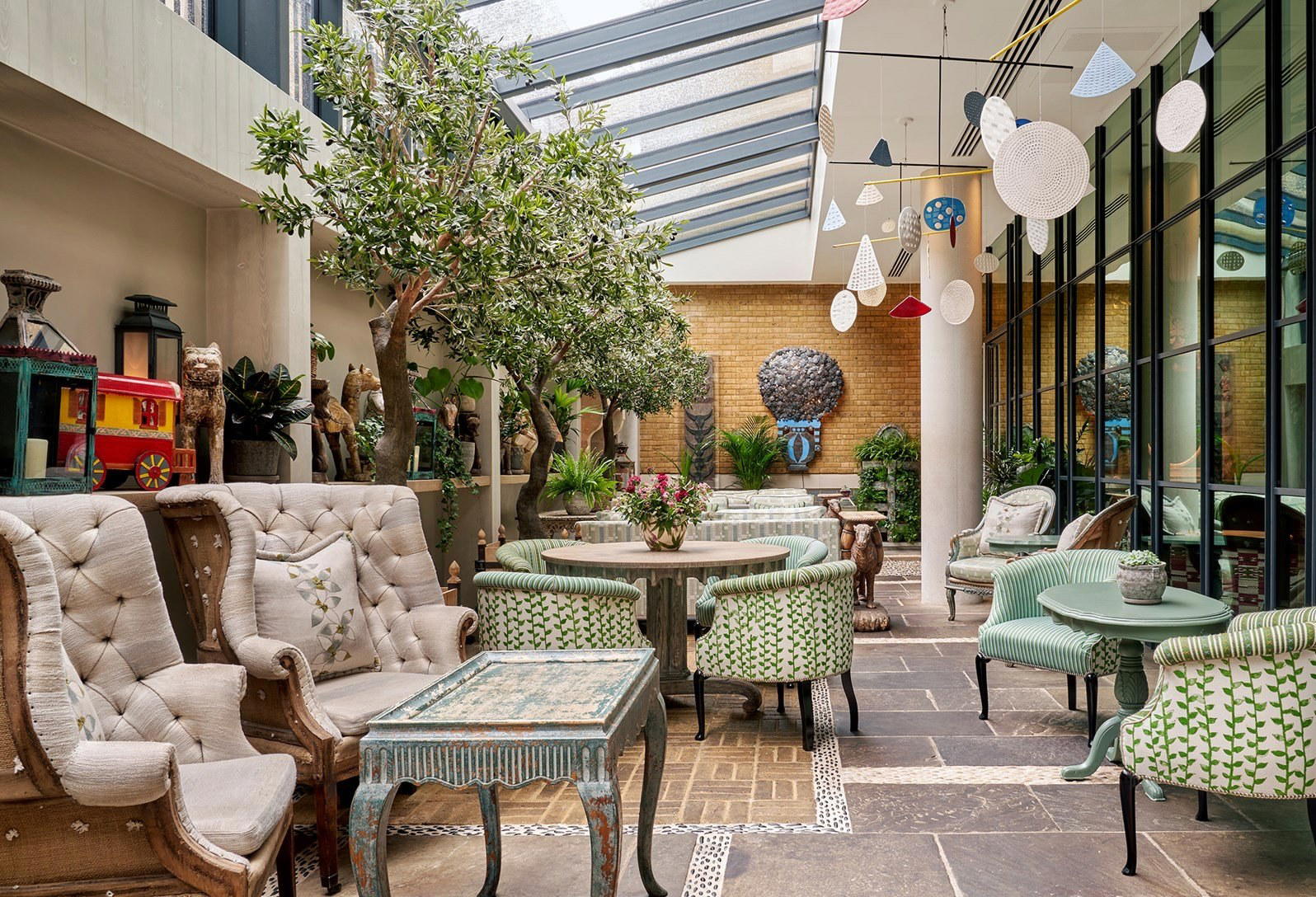
Buzzy underground atmosphere with low ceilings, vintage tube carriage seating, and theatrical 1940s decor evoking post-war revelry.