Blackbook Winery

Falstaff Winery - Listed
Blackbook Winery brings English winemaking into London’s urban fabric, working from a compact cellar under railway arches rather than a rural estate. Its interest lies in the tension between city production and English vineyard sourcing: cool-climate fruit, low-intervention cellar work, and a tasting format built around seeing wine made at close range.

Pearl is the En Primeur Club membership app — saves, bookings, and concierge access live there. Same editors, same standards.
- Address
- Arch 41, London Stone Business Estate, Broughton St, London SW8 3QR, United Kingdom
- Phone
- +44 7816 658471
- Hours
- Mon–Thu ClosedFri 4–9 PMSat 5:30–9:30 PMSun Closed
- Website
- blackbookwinery.com
- Directions
- Get directions
Approaching Blackbook Winery means entering a version of London wine culture that has little interest in château theatre. The setting is industrial and compact, with the working equipment of winemaking close to the visitor rather than hidden behind polished hospitality design. Barrels and steel tanks are part of the room’s grammar. That matters because urban wineries are not trying to imitate vineyard estates; they compress production, education, and direct sales into the city, putting the cellar within reach of the drinker.
London’s wine identity has long been shaped by merchants, importers, restaurants, clubs, and auction rooms. Urban production changes that relationship. Instead of treating wine as something that arrives finished from elsewhere, Blackbook places fermentation inside the capital and asks a more interesting question: what happens when English grapes are made, poured, and explained in the same metropolitan environment where they are consumed?
English fruit, London cellar: the terroir question without the estate script
The defining tension here is place. The wines are made in London, but the raw material comes from English vineyards beyond the city. Reported sourcing has included Clayhill Vineyard in Essex and Yew Tree Vineyards in Oxfordshire, with fruit also linked to Essex, south-east Anglia, Kent, and named English sites such as South Bank Vineyard. This is not estate winemaking in the classical sense. It is closer to a grower-connected, city-based model in which vineyard relationships and harvest decisions carry the terroir argument.
That model suits England’s modern wine moment. Sparkling wine has dominated much of the country’s international conversation, but Blackbook’s identity gives serious space to still wines, especially Chardonnay, Pinot Noir, Pinot Noir Rosé, Bacchus, Pinot Meunier, Ortega, Cabernet Noir, Sauvignac, and skin-contact styles. The result is a portfolio that reads as cool-climate rather than imitation-European: acidity, aromatic lift, and moderate ripeness are the structural assumptions, while the London cellar supplies the interpretive frame.
Low-intervention language can become vague quickly, but the production details here give it substance. The cellar approach has been associated with indigenous fermentations, low sulphur, whole-cluster work, pigeage, barrel fermentation, lees ageing, steel tanks, and restrained oak use. Those choices do not guarantee quality on their own; they do indicate a winemaking culture more interested in texture, fermentation character, and vineyard expression than in pushing English fruit toward a generic international style.
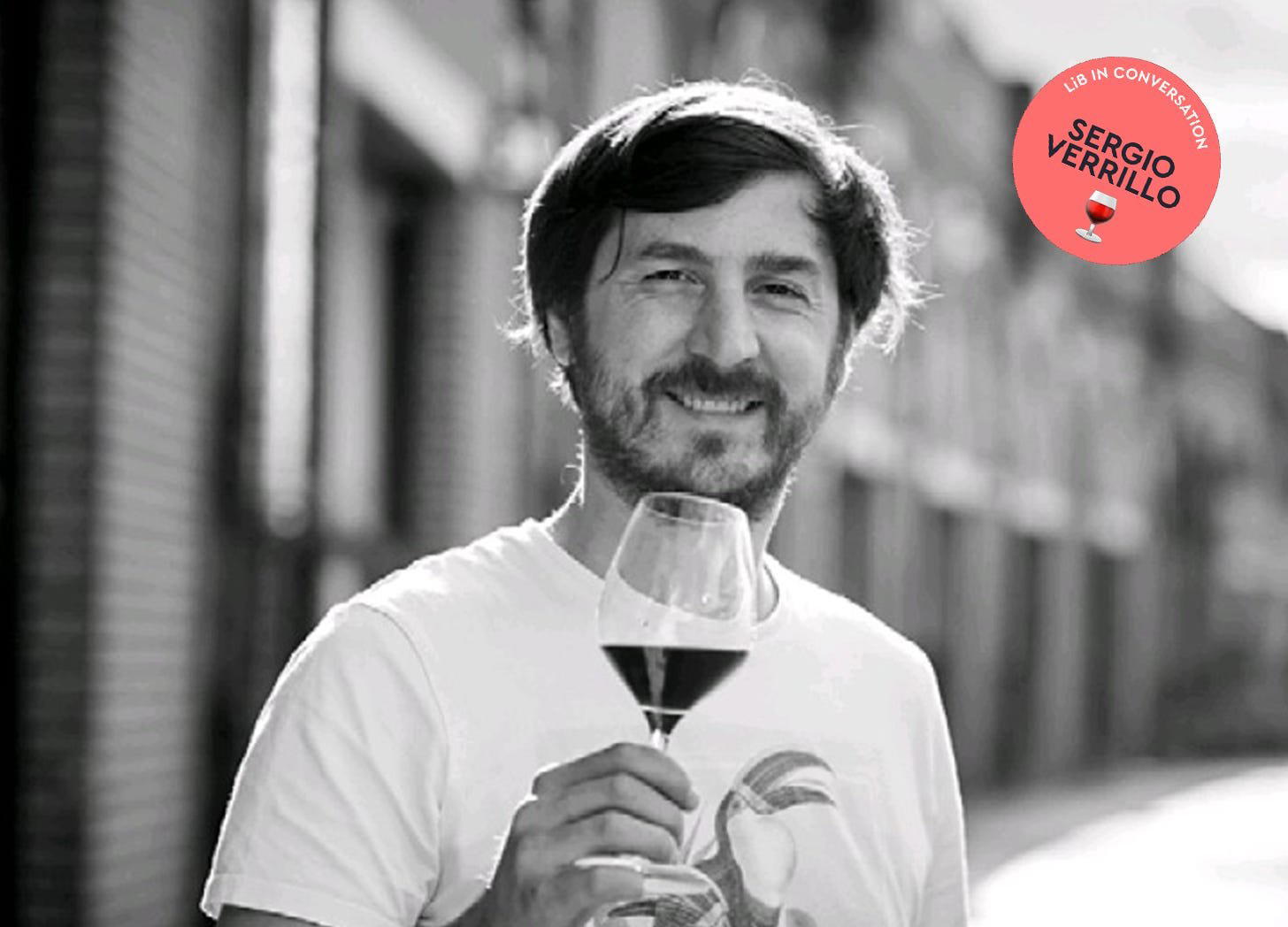
Sergio and Lynsey Verrillo’s role is relevant because it explains the technical seriousness behind the urban format, not because this should be read as a founder portrait. Sergio’s background as a travelling winemaker feeds into a practical, outward-looking sourcing model, while the decision to start the business in 2017 placed Blackbook inside a younger London movement built around proximity to consumers, cellar-door education, and direct release. In wine terms, the city is not decoration here. It is part of the operating system.
A tasting room that behaves like a working cellar
The experience is strongest when understood as access to process rather than a conventional tasting-room performance. Blackbook is a small urban winery with an appointment-led tasting format, and the appeal is the closeness of the production space: tanks, barrels, and the physical evidence of winemaking sit within the visitor’s field of attention. For drinkers used to English wine as a countryside-weekend category, that immediacy changes the conversation.
The public tasting offer has included an Urban Winery Experience & Tasting, and the listed price point places it in a relatively approachable bracket for London wine education. The format aligns with the broader urban-winery playbook: pour, explain, sell directly, build repeat customers through releases and membership. A wine club priced annually from £185 also points to the same direct-to-consumer logic, where the relationship continues beyond a single tasting.
Bottle names reveal a producer comfortable with contemporary branding, but the more instructive point is the breadth of formats. Releases have included single-vintage still wines, reserve bottlings, magnums, sparkling wines, mixed cases, and experimental packs. Named examples such as “Painter of Light” Chardonnay, “Nightjar” Pinot Noir, “Tamesis” Bacchus, “Controversy” Pinot Meunier, “Fragments of Time” Sauvignac, “Crush and Brisk” Blanc de Noirs, and “GMF” show a portfolio with range, but the through-line is English fruit filtered through a city cellar.
Recognition has come through specialist wine coverage rather than a trophy-heavy awards profile. Financial Times coverage has placed Blackbook within London’s urban-winery shift, while Great British Wine, Wineanorak, and the drinks business have all treated the producer as part of a serious conversation about English wine production, sustainability-minded cellar work, and city-based hospitality. For a winery without a grand rural estate behind it, that kind of critical attention is a useful trust signal: the interest is in the model, not just the room.
How to place it within a London wine itinerary
Blackbook makes sense for travellers who want London’s wine scene beyond restaurant lists and retail shelves. It belongs in a day that treats the capital as a wine city in its own right: merchants, bars, importers, dining rooms, and now producers. For broader context, EP Club’s London coverage can be read across our full London wineries guide, our full London restaurants guide, our full London bars guide, our full London hotels guide, and our full London experiences guide.
Readers mapping the city’s wider wine infrastructure can also look at London names such as Bibendum Wine, Champagne Jacober trading as Eminent Wines, Davy's Wine Merchants, Dynamic Vines, and Enotria. Outside the capital, the wider EP Club drinks map reaches from Aberlour in Aberlour, Arbikie Highland Estate in Arbroath, and Ardbeg in Port Ellen to continental producers and specialists including »der Steiner« Hans Steiner in Podersdorf am See and & Handwein in Mannheim.
The critical case for Blackbook is not that it replaces the vineyard visit. It offers a different form of wine literacy: English terroir interpreted through an urban production space, with the city acting as market, classroom, and cellar door at once. For London, that is a more revealing proposition than another polished tasting counter.
Recognition history
Dated appearances from independent guides and award organizations, with the underlying list record or original source where available.
Falstaff Winery - Listed
Falstaff
Continue exploring
More in London
Wineries in London
Browse all →

Bars in London
Browse all →
Restaurants in London
Browse all →
Details
- Industrial
- Intimate
- Trendy
- Cozy
- Group Outing
- Celebration
- Solo Exploration
- Wine Education
- Special Occasion
- Barrel Room
- Private Tasting
- Design Destination
- Sustainable
- Chardonnay
- Pinot Noir
- Pinot Meunier
- Bacchus
- Sauvignac
- Still Red
- Still White
- Still Rosé
- Sparkling
- Skin Contact
- Guided Tasting
- Tour & Tasting
- Wine Bar Flights
- English
Current opening hours
- Monday
- Closed
- Tuesday
- Closed
- Wednesday
- Closed
- Thursday
- Closed
- Friday
- 4–9 PM
- Saturday
- 5:30–9:30 PM
- Sunday
- Closed
Hours can change for holidays and private events. Last verified .
Compact industrial urban winery set under Victorian railway arches, with barrels and steel tanks in a nondescript industrial estate, creating an intimate, authentic working-cellar feel rather than a polished tasting room.