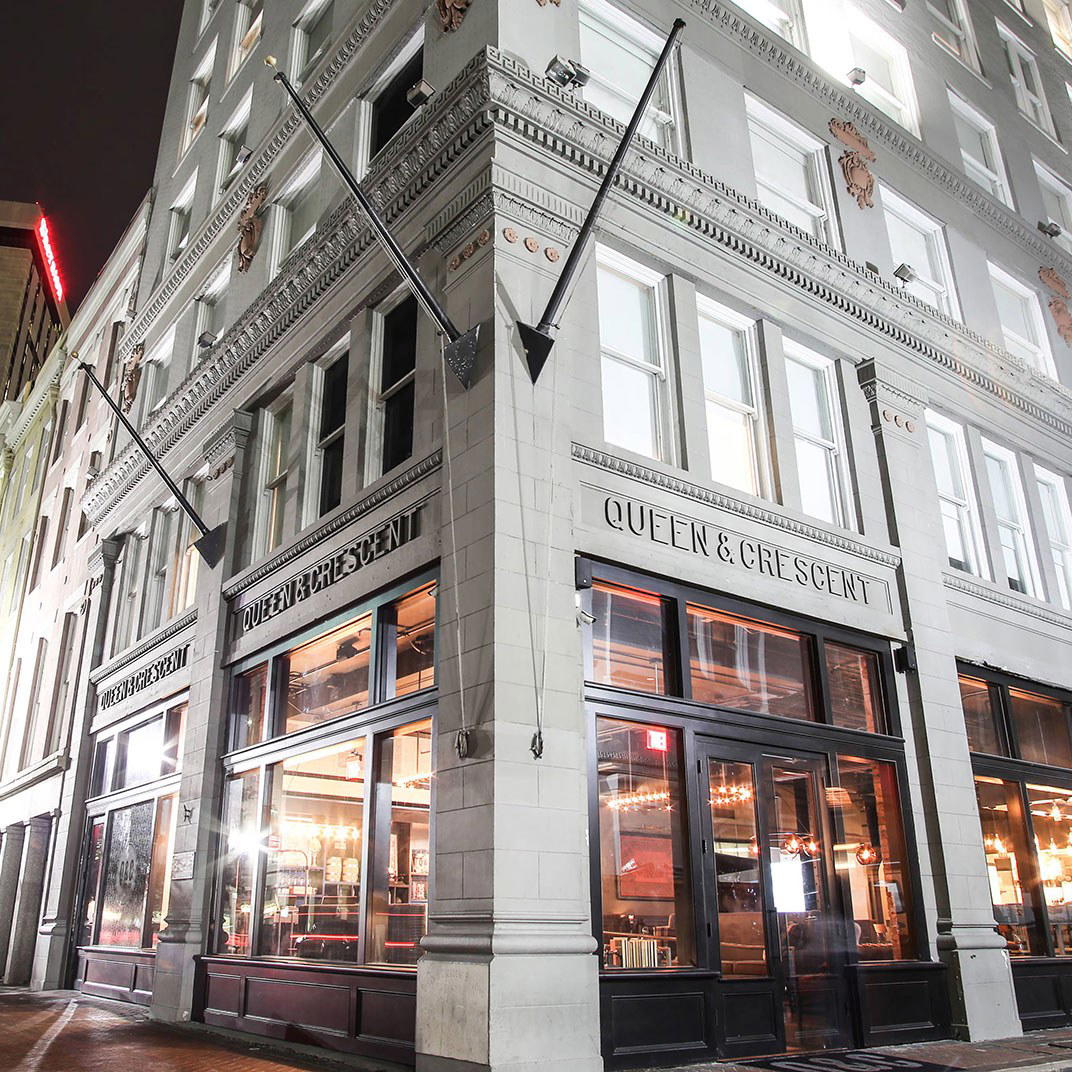
Café Normandie
Our verdict
Café Normandie sits inside The National WWII Museum in New Orleans, where the dining experience is inseparable from one of America's most significant historical institutions. The kitchen draws on the foodways of wartime France and the Gulf South, placing provenance at the center of the plate. It occupies a distinct position in a city where culinary memory and cultural identity are rarely separated.

Pearl is the En Primeur Club membership app, where members save venues, book tables and use the concierge.

The menu
What to order
- Shrimp and Grits
- Eggs Benedict on Croissant with Crab
- Crab Beignets
- Short Rib Debris Beignets
There is a particular gravity to eating inside The National WWII Museum. The building at 440 Andrew Higgins Blvd is not a passive backdrop, it shapes how a meal lands, what a dish means, what sourcing decisions signal. Café Normandie operates within that charged environment, and the result is a dining room where context does more interpretive work than any menu introduction could.
Museum Dining That Takes Provenance Seriously
New Orleans has always understood that food is memory. The city's defining traditions, Creole, Cajun, the long overlap between French colonial influence and Gulf Coast abundance, are acts of cultural transmission as much as they are culinary ones. At Café Normandie, that relationship between place, history, and plate is made explicit. The museum setting is not incidental. It places the food in conversation with the Norman and French regional traditions that shaped Allied wartime logistics, French rural cookery, and the agricultural supply chains that sustained civilian populations during the occupation years.
That editorial commitment to sourcing and provenance is increasingly relevant across American fine dining. Restaurants like Blue Hill at Stone Barns in Tarrytown and Single Thread Farm in Healdsburg have built their reputations on treating ingredient origin as primary information, not background footnote. The argument is that where food comes from determines what it tastes like, and that transparency about sourcing is a form of critical honesty. Café Normandie operates within that broader shift in American dining consciousness, filtered through a specifically Southern Louisiana lens.
A City Where Ingredient Lineage Has Always Mattered
New Orleans is arguably the American city where the concept of provenance is most deeply embedded in everyday cooking. The distinction between a roux made with local lard versus vegetable shortening, between Gulf blue crab and imported alternatives, between Creole tomatoes grown in St. Bernard Parish and commodity equivalents, these are not abstract concerns for local cooks. They are the difference between a dish that belongs to a place and one that merely references it.
That sensitivity to sourcing connects Café Normandie to a wider conversation happening across the city's dining rooms. Emeril's built its reputation on amplifying Louisiana's ingredient identity at a time when the national restaurant conversation was moving toward French-inflected technique. Bayona in the French Quarter has sustained a New American approach that consistently returns to local seasonal material. Both represent a tradition of making regional sourcing the organizing principle of a menu rather than a marketing addendum.
Café Normandie sits within that lineage while operating at a different register. As a museum restaurant, it functions as a point of access for visitors who may not move through the full breadth of the city's dining scene, but that accessibility does not imply a reduced commitment to the sourcing ethos that defines serious New Orleans cooking.
The Museum Setting and What It Demands
Dining inside a major cultural institution creates expectations that differ from a standalone restaurant. The visitor to The National WWII Museum arrives with a particular frame, historical, emotional, often reflective, and the food must hold its own within that context without competing against it. The better museum restaurants in the United States have learned that the solution is not theatrical menu design but rather a focused, credible cooking program that reflects the institution's intellectual seriousness.
Comparable institutions elsewhere in American dining have grappled with this challenge in different ways. The farm-to-table discipline practiced at venues like Smyth in Chicago and the ingredient-led rigor of Providence in Los Angeles both demonstrate that sourcing transparency can carry a dining room's identity without relying on setting alone. For Café Normandie, the museum provides the historical scaffolding; the kitchen's relationship to Norman and Gulf South ingredients is what gives the food its independent standing.
Where Café Normandie Sits in the New Orleans Dining Order
New Orleans currently supports a wide range of dining registers, from the highest-tier tasting-menu format at places like Saint-Germain and the contemporary positioning of Re Santi e Leoni to the more accessible American contemporary tier occupied by spots like Zasu. Café Normandie does not compete directly with any of these, its context is categorically different, but it draws on the same city-wide commitment to ingredient fidelity that makes New Orleans restaurants worth visiting at any price point.
The broader national conversation about ingredient sourcing and regional identity at the table is well represented in our coverage of venues including The French Laundry in Napa, Addison in San Diego, Lazy Bear in San Francisco, Frasca Food & Wine in Boulder, Le Bernardin in New York City, Atomix in New York City, The Inn at Little Washington, and Atelier Moessmer Norbert Niederkofler in Brunico, a venue that has made Alpine regional sourcing its entire identity. These comparisons underscore that the decision to root a restaurant's identity in where ingredients come from is not a limitation. It is a form of editorial clarity that the leading dining rooms in the world have come to treat as foundational.
For a broader map of where Café Normandie fits within the city's full dining offer, see our full New Orleans restaurants guide.
Know Before You Go
- Address: On Campus at The National WWII Museum, 440 Andrew Higgins Blvd, New Orleans, LA 70130
- Booking: Contact the museum directly or check the museum's official website for dining reservations and availability
- Hours: Aligned with museum operating hours; confirm current schedule ahead of your visit as museum hours vary by season and event
- How far ahead should I plan for Café Normandie?
- As a museum restaurant, availability is tied to the museum's broader operational calendar, including special exhibitions, events, and seasonal hours. Visitors to New Orleans who intend to combine a meal here with a museum visit should build in flexibility and confirm reservation options directly with The National WWII Museum ahead of time, particularly during peak travel periods in the city.
- What is the standout thing about Café Normandie?
- The setting is the answer that most visitors reach first, and it is not wrong, eating inside one of the most significant historical museums in the United States changes the register of a meal in ways that are difficult to replicate elsewhere. But the more durable point is the kitchen's grounding in two distinct regional food traditions, Norman French and Gulf South Louisiana, both of which take ingredient origin seriously. That combination is specific to this address.
- Can Café Normandie accommodate dietary restrictions?
- Is Café Normandie accessible to visitors who are not attending the museum?
- This is one of the practical questions worth resolving before you arrive. Museum restaurants in the United States operate under varying access policies, some require paid admission, others offer separate dining access. Given that The National WWII Museum is a major institutional venue drawing significant visitor numbers, the access terms may differ by day or season. Confirming directly with the museum is the only reliable way to know whether a standalone dining visit is possible without a full museum ticket.
Frequently asked questions
What's the address for Café Normandie?
Café Normandie is located at On Campus at The National WWII Museum, 440 Andrew Higgins Blvd, New Orleans, LA 70130, New Orleans.
Is Café Normandie open to the public, or do you need a museum ticket to dine there?
Some museum dining rooms require paid admission; others maintain separate public entrances. Confirming access policy directly with the museum before planning a standalone dining visit is advised.
What do regulars order at Café Normandie?
New Orleans institution cafés in comparable museum contexts tend to anchor their menus around local staples rather than experimental formats. Check directly with the museum for current offerings.
How far ahead should I plan for Café Normandie?
Café Normandie operates on the campus of The National WWII Museum, one of the most-visited cultural institutions in New Orleans, which means peak season and group visits can affect availability. Planning around the museum's own ticketing calendar is a reasonable baseline.
What's the standout thing about Café Normandie?
The setting is the defining factor: dining on the campus of The National WWII Museum at 440 Andrew Higgins Blvd places Café Normandie inside one of the country's most significant historical institutions. In a city where food and memory are deeply linked, from Creole lineage to French colonial influence, a café embedded in that narrative context carries weight that a standalone room cannot replicate. It occupies a specific register in New Orleans dining that few venues share.
Can Café Normandie accommodate dietary restrictions?
As a museum café in New Orleans, the kitchen likely operates within the practical constraints of high-volume daytime service, which in comparable venues typically includes some flexibility for common dietary needs.
Cuisine and Recognition
Comparable venues nearby, for context on price, style, and recognition.
| Venue | Cuisine | Price | Awards | Notes |
|---|---|---|---|---|
| Café NormandieThis venue (the venue you are viewing) | Rustic French Bistro with Cajun Influences | $20–30 | Not listed | Not listed |
| Luke | Creole-Inspired French Brasserie | $30–50 | Not listed | Central Business District |
| Bijoux | French with Louisiana Influences | Not listed | Not listed | Central Business District |
| Le Moyne Bistro | Modern French Bistro with New Orleans Influence | $50–100 | Wine Enthusiast Best Wine Restaurants | Warehouse District |
| Johnny's Po-Boys | Classic New Orleans Po'Boys | $10–20 | Not listed | French Quarter |
| Red Dog Diner | American Comfort Diner | $20–30 | Not listed | Garden District |