On Brienner Strasse in central Munich, Café Luitpold has anchored the city's grand-café tradition since the 19th century. Daytime brings pastry cases, afternoon Kaffee und Kuchen rituals, and a terrace that draws both locals and visitors; the evening shifts the register toward something more considered. It occupies a distinct space between Munich's fine-dining circuit and its everyday café culture.
Pearl is the En Primeur Club membership app — saves, bookings, and concierge access live there. Same editors, same standards.
- Address
- Brienner Str. 11, 80333 München, Germany
- Phone
- +49 89 2428750
- Website
- cafe-luitpold.de
- Directions
- Get directions
 Saves & bookings on Pearl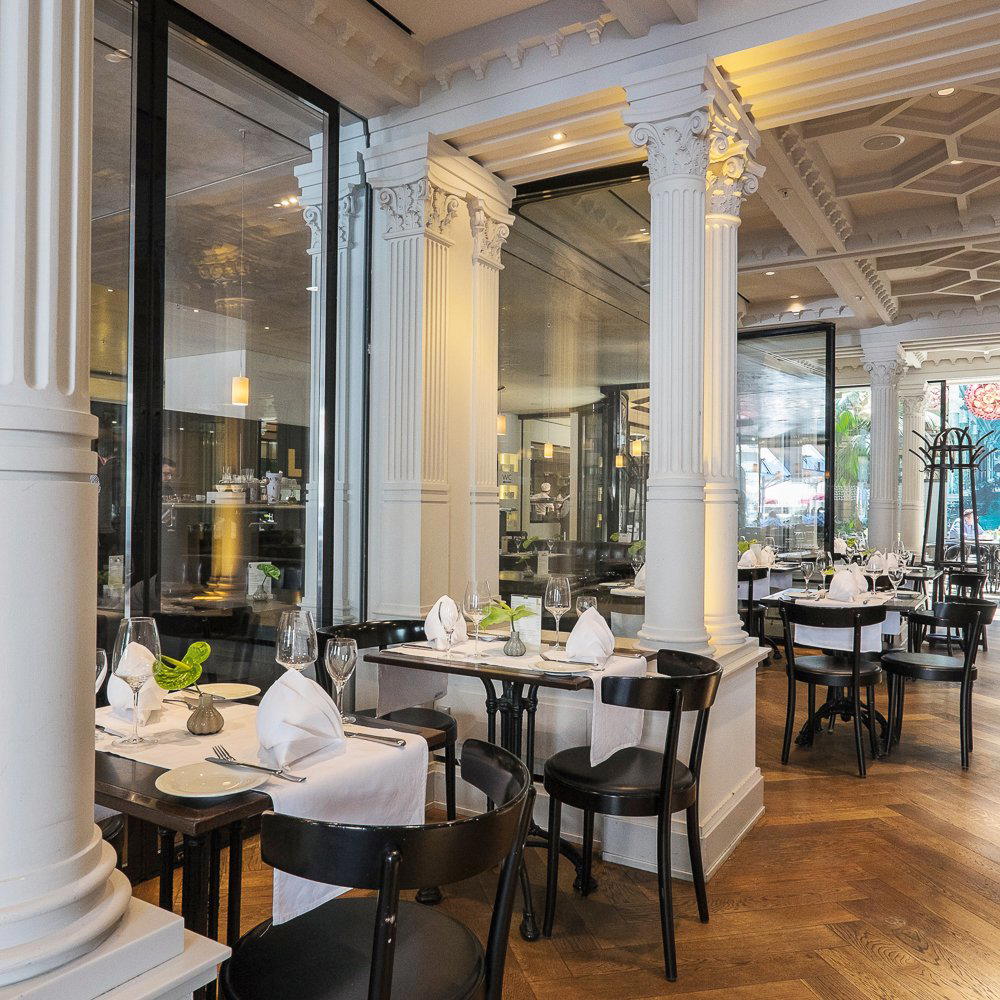
Where Munich's Grand-Café Tradition Meets the Present
Brienner Strasse runs through Munich's first district with a particular kind of civic weight, government ministries, art institutions, and the lateral geometry of Königsplatz all converge nearby. On this street, Café Luitpold has operated as a fixture of Munich's grand-café culture across multiple generations. The format it represents, a large European café with a pastry counter, a restaurant section, and a terrace, belongs to a broader Central European tradition that cities like Vienna and Budapest have preserved more consistently than most. Munich, operating in the shadow of its beer-hall identity, has maintained fewer of these addresses. Luitpold is among the more historically persistent.
That persistence matters for the traveller trying to understand where Luitpold sits in Munich's current scene. The city's fine-dining circuit has grown considerably in ambition: addresses like Tantris, Atelier, and JAN operate at the €€€€ tier with tasting menus and Michelin recognition, as do Tohru in der Schreiberei and Alois – Dallmayr Fine Dining. Luitpold does not position against that tier. It occupies a different category entirely: the high-quality grand café, where the transaction is as much about time and atmosphere as it is about the plate.
Daytime at Luitpold: The Pastry Counter and the Ritual of Kaffee und Kuchen
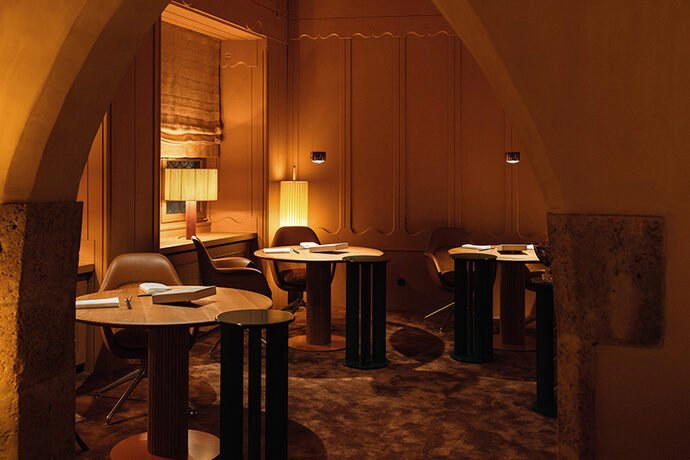
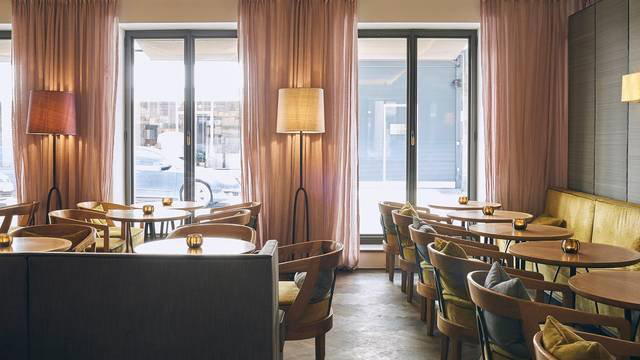
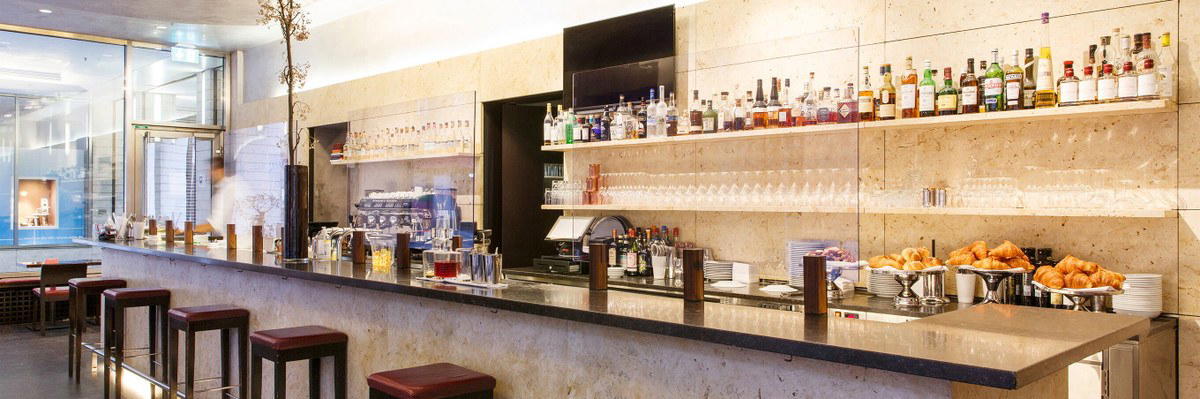
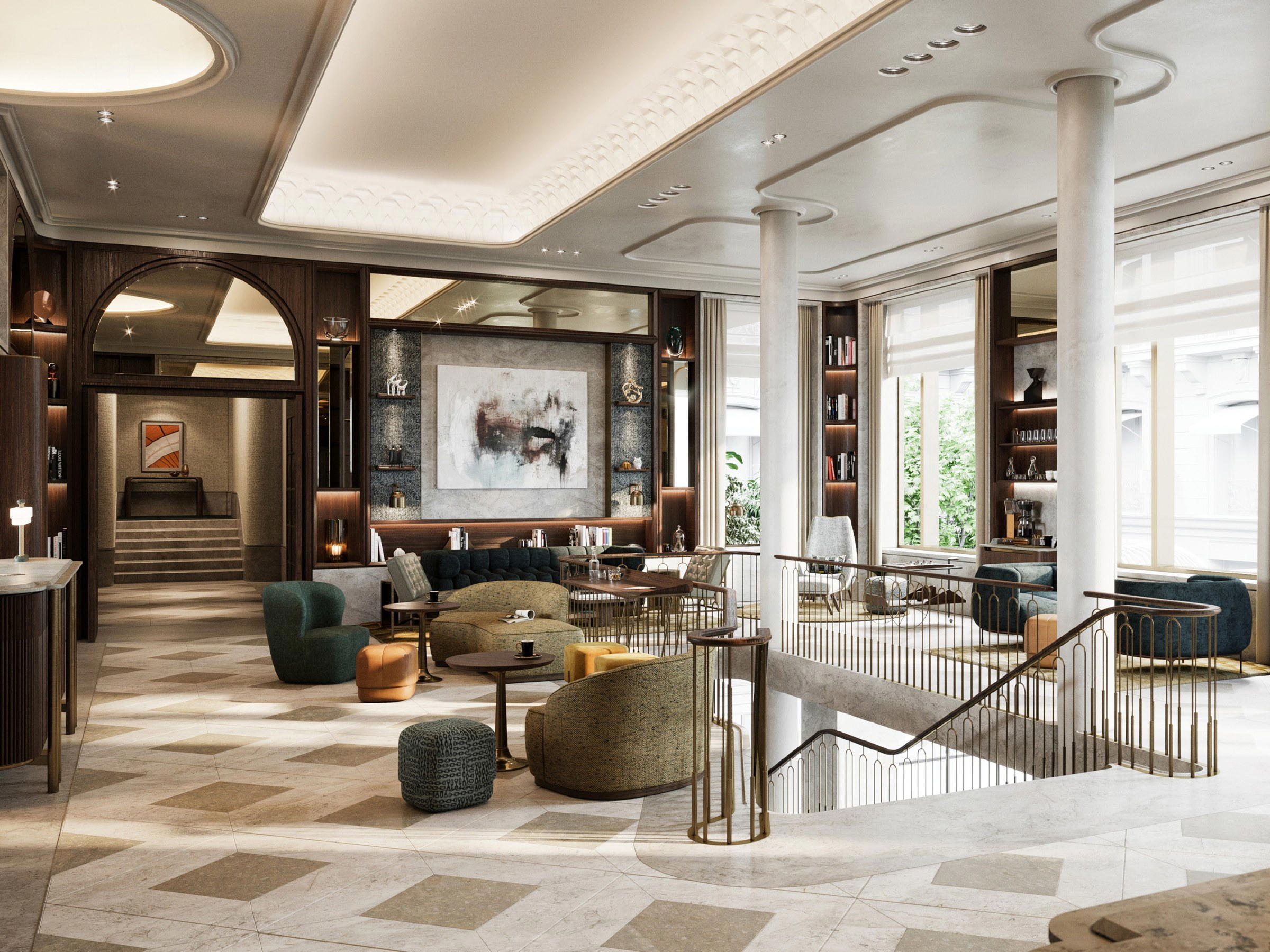
The Central European afternoon coffee ritual has a specific grammar. It is not a quick espresso at a standing bar. It involves a table, a cake selected from a counter, a pot or cup of something properly brewed, and the expectation that you will occupy that table for longer than commercially efficient. Luitpold's afternoon service fits this format. The pastry counter has long been a draw in its own right, and the interior, with its period architectural references and high ceilings, gives the ritual its appropriate physical frame.
Daytime at a café of this type functions partly as a social institution. The mix of guests tends toward locals on a midweek afternoon, shoppers, professionals from the nearby offices, older residents who treat Kaffee und Kuchen as a standing appointment. On weekends and during tourist season, the balance shifts, but the bones of the room absorb both registers without difficulty. The terrace, on Brienner Strasse, adds a warm-weather dimension that extends the daytime service into something more expansive.
For visitors covering Germany's broader restaurant scene, also considering Schwarzwaldstube in Baiersbronn, Aqua in Wolfsburg, or Restaurant Haerlin in Hamburg, a midday stop at Luitpold provides useful contrast: this is what Munich's civic café culture looks like at its most deliberate, set against the country's more technically focused fine-dining addresses.
Evening Service: A Different Mood, A Different Proposition
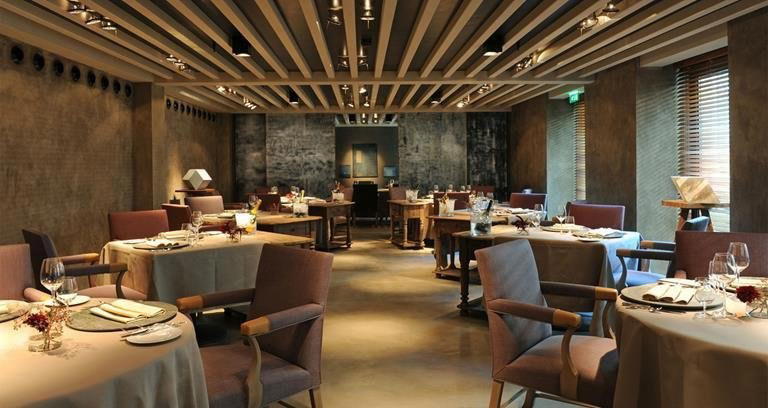
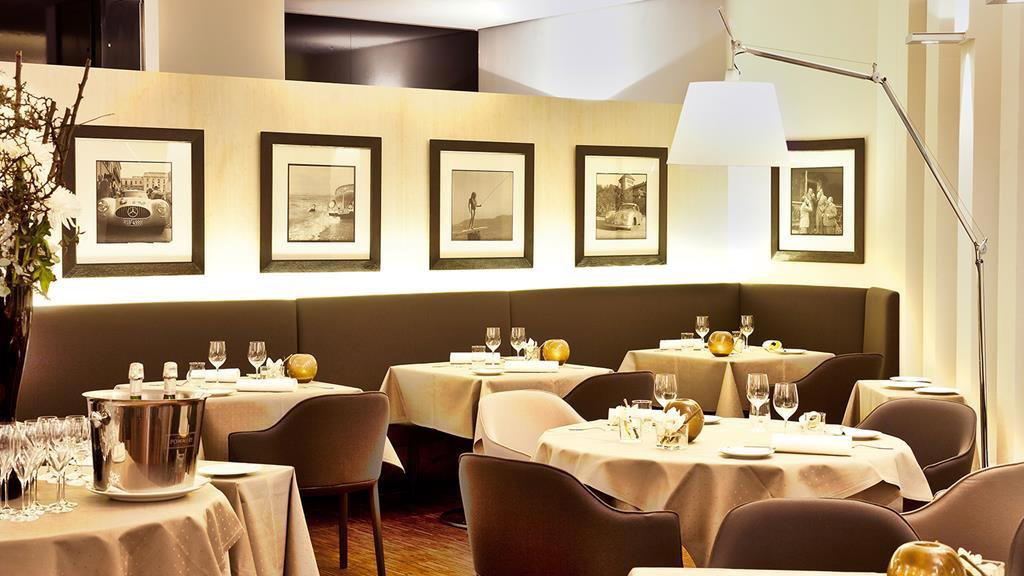
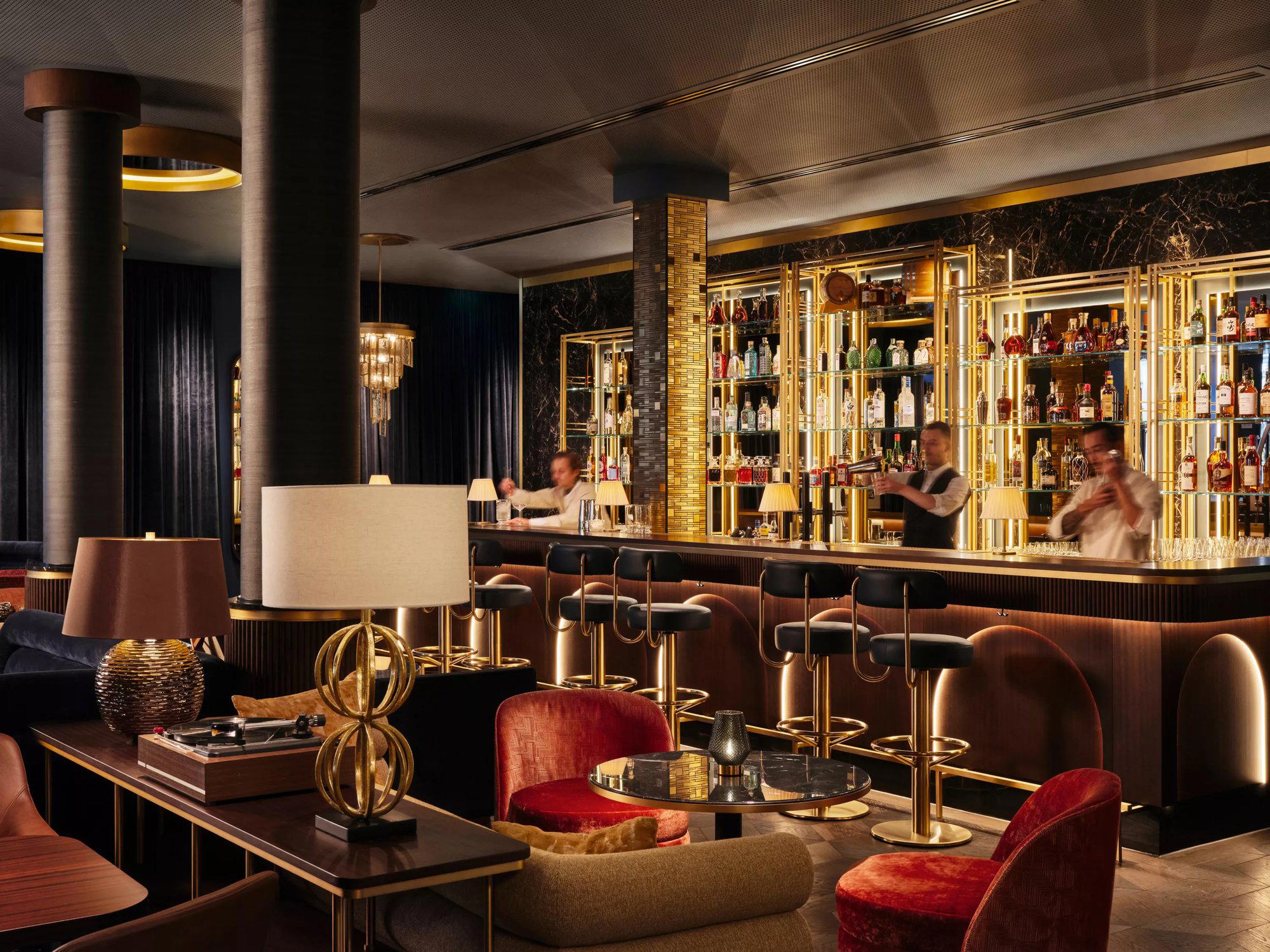
The lunch-to-dinner shift at grand cafés of this kind involves a noticeable recalibration. The pastry counter recedes in importance; the restaurant section takes precedence. Lighting changes. The pace adjusts. What was a daytime social institution becomes a dinner destination operating in a more formal register, though never approaching the structured ceremony of a tasting-menu room.
This split is worth understanding before you plan your visit. If the goal is Luitpold at its most characteristic, the pastry tradition, the afternoon rhythm, the terrace in season, the daytime hours are the appropriate window. If the evening draws you, the proposition is closer to a well-maintained Munich restaurant with café-house heritage: a different kind of value, and a different kind of experience. Neither reading is wrong, but conflating the two leads to mismatched expectations.
Germany's more technically driven evening formats, venues like Victor's Fine Dining by Christian Bau, Vendôme in Bergisch Gladbach, or Waldhotel Sonnora in Dreis, operate at a different register entirely. Luitpold's evening is not in competition with those rooms. It is in conversation with Munich's broader middle tier: well-executed, historically anchored, and oriented toward the kind of dinner that accompanies a night at the nearby theatres or galleries rather than one that is itself the centrepiece of an evening.
Placing Luitpold in Munich's Current Café and Restaurant Map
Munich's café scene is thinner than its restaurant scene in terms of historically significant addresses. The beer garden and beer hall formats absorb much of the city's casual social energy, which means that the grand-café format, properly maintained, occupies a somewhat narrower niche than it might in Vienna. Luitpold's address on Brienner Strasse places it at the edge of the Maxvorstadt, a district more associated with museums and universities than with gastronomy, which reinforces its function as a civic institution rather than a destination on a restaurant-crawl itinerary.
Visitors building a broader Munich programme can find our fuller editorial overview in the EP Club Munich restaurants guide. For those whose German trip extends beyond Bavaria, the dessert-led format at CODA Dessert Dining in Berlin and the Mosel-adjacent cooking at Bagatelle in Trier or Schanz in Piesport represent the kind of specialist programmes that sit in an entirely different competitive conversation. And for those pairing European dining with transatlantic travel, the reference points shift again toward rooms like Le Bernardin in New York or Lazy Bear in San Francisco, where format innovation drives the editorial interest. Closer to Munich, ES:SENZ in Grassau represents the kind of ambitious regional address that has raised expectations for what serious cooking in Bavaria can look like outside the city centre.
Planning Your Visit
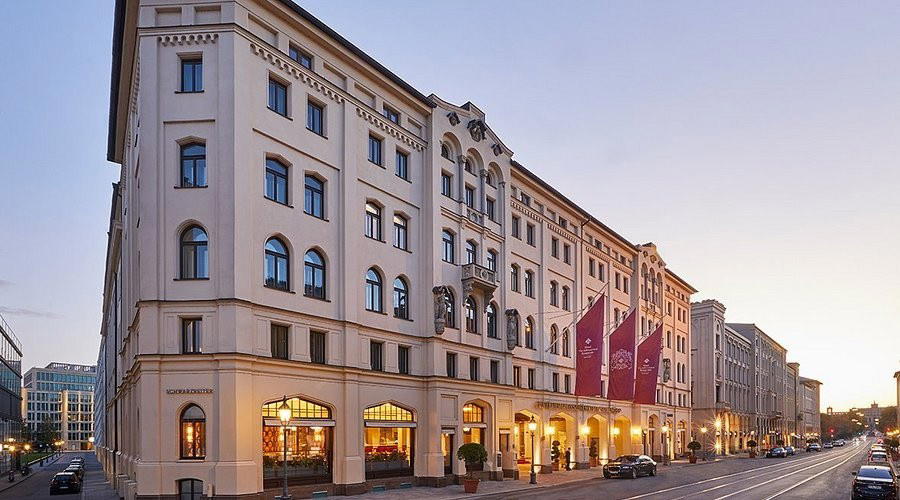
Café Luitpold sits at Brienner Str. 11, 80333 München, within walking distance of Königsplatz and the Alte Pinakothek. For most visitors, arriving without a reservation for a weekday afternoon coffee or pastry is workable; weekend mornings and summer terrace season bring higher footfall. For an evening table, especially on weekends, checking availability in advance is sensible. The address is accessible by U-Bahn via Königsplatz (U2) or Odeonsplatz (U3, U4, U6), both within short walking distance. Specific current hours, pricing, and reservation details are best confirmed directly with the venue before your visit, as operational details shift across seasons.
Where It Fits
Comparable venues nearby, for context on price, style, and recognition.
| Venue | Cuisine | Price | Notes |
|---|---|---|---|
| Café LuitpoldThis venue — the venue you are viewing | Historic German Café & Pastry House | $$$ | Not listed |
| Spatenhaus at the opera | Traditional Bavarian | $$$ | Lehel |
| Haxnbauer | Traditional Bavarian | $$$ | Altstadt |
| Miss Lilly's | German Cafe with Regional Specialties | $$ | Au |
| Gaststätte Großmarkthalle | Traditional Bavarian Gaststätte | $$ | Ludwigsvorstadt |
| Wirtshaus Papa Benz | Modern Bavarian Gastropub | $$ | Schwabing |
At a Glance
- Classic
- Elegant
- Historic
- Cozy
- Brunch
- Casual Hangout
- Historic Building
Current opening hours
- Monday
- 8 AM–8 PM
- Tuesday
- 8 AM–10 PM
- Wednesday
- 8 AM–10 PM
- Thursday
- 8 AM–10 PM
- Friday
- 8 AM–10 PM
- Saturday
- 8 AM–10 PM
- Sunday
- 9 AM–8 PM
Hours can change for holidays and private events. Last verified .
Elegant 19th-century coffeehouse with grand atrium, glass arcade, and Roman temple setup, offering charming and stylish historic atmosphere.