A fixture on the Rue des Fossés Saint-Jacques since before the neighbourhood's current wave of wine-bar conversions, Café de la Nouvelle Mairie operates as a reference point for the Latin Quarter's drinking and eating culture. The format sits somewhere between a classic Parisian bistro and a serious natural wine bar, drawing a clientele of regulars who return for the list as much as the food.
Pearl is the En Primeur Club membership app — saves, bookings, and concierge access live there. Same editors, same standards.
- Address
- 19 Rue des Fossés Saint-Jacques, 75005 Paris, France
- Phone
- +33 1 44 07 04 41
- Directions
- Get directions
 Saves & bookings on Pearl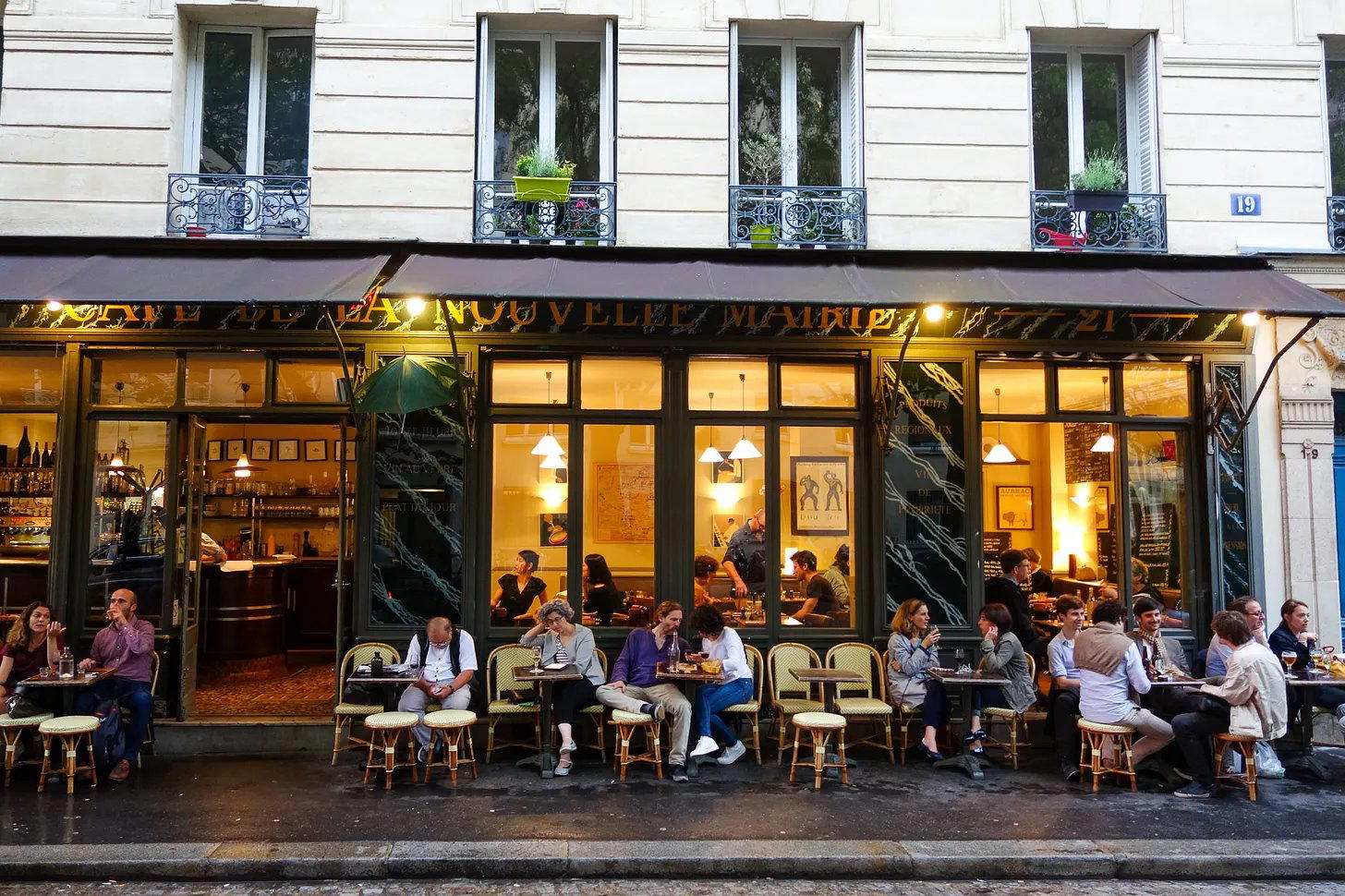
The Latin Quarter's Quiet Constant
There is a category of Parisian café-bar that resists easy classification: too wine-focused to be a classic café, too informal to be a restaurant, too consistent to be accidental. The 5th arrondissement has historically been home to several of these, and Café de la Nouvelle Mairie on Rue des Fossés Saint-Jacques is among the more discussed. The street itself sits just below the Panthéon, a part of the Latin Quarter that tourists reach less reliably than the Boulevard Saint-Germain corridor, which creates the conditions for a local-facing room that has never needed to perform for newcomers.
Paris's wine bar scene has split over the past decade into two recognisable camps: the high-concept, design-led neo-bistros with printed programmes and social media presence, and the older generation of addresses where the wine list functions as the main editorial statement. Café de la Nouvelle Mairie belongs firmly to the second group. Where Alléno Paris au Pavillon Ledoyen or Le Cinq at the Four Seasons George V represent the formal summit of Parisian dining at the €€€€ tier, addresses like this one serve an entirely different function in the city's food culture: they are where people who know Paris eat on a Tuesday.
What Keeps the Regulars Coming Back
The loyalty this kind of address generates is not built on novelty. In Paris's wine bar tradition, the repeat customer is the audience that matters, and the offer is calibrated accordingly. The wine list at places like this tends toward natural and low-intervention producers, with a depth in Loire and Burgundy that reflects where Paris's serious wine drinking has concentrated. The format rewards knowledge: a regular knows which growers are currently poured, what to ask for by producer rather than appellation, and which bottles move fast enough to be worth ordering early in the evening.
The food at this category of address functions as serious accompaniment rather than headline act. Charcuterie, rillettes, cheese, and simple cooked plates that hold their own against acidic, low-sulphur wines. The logic is the same whether you are on the Rue des Fossés Saint-Jacques or at a comparable address in the 11th: the kitchen supports the glass, not the reverse. This is a different proposition from the tasting-menu restaurants that define Paris's international reputation, such as Arpège or L'Ambroisie, and it is not trying to be one.
Unwritten menu at a café-bar of this type is as important as anything printed. Regulars know that certain producers appear only by the glass and only when stock allows. They know the rhythm of the room, when to arrive to claim a table versus when the bar itself becomes the better position, and which staff members are worth asking for a recommendation. This knowledge transfers poorly to a first visit, which is partly why the room can feel insider-facing to someone arriving without context.
The 5th Arrondissement as Dining Context
Neighbourhood sets expectations. The Latin Quarter's dining reputation has been complicated in recent decades by the tourist-facing restaurants clustered around Saint-Michel, which do not reflect what the 5th does at its better. The streets near the Panthéon and the Rue Mouffetard market corridor represent the other version: a denser, less curated eating culture where price points are lower and the audience is a mix of academics, locals, and the kind of traveller who navigates by neighbourhood rather than by guidebook list.
Within that context, a wine-focused address with genuine producer depth occupies a specific position. It is not competing with the formal dining rooms of the Right Bank, nor with the neo-bistro wave centred further east in the 10th and 11th. It sits in a distinct tier: moderate prices, high wine literacy, a room built around conversation rather than theatre. France's broader restaurant culture, from institutions like Paul Bocuse's Auberge du Pont de Collonges to destination addresses such as Mirazur in Menton or Bras in Laguiole, is well-documented internationally. The neighbourhood wine bar is harder to export, which is precisely what gives it staying power.
Other French regional institutions worth knowing include Troisgros in Ouches, Auberge de l'Ill in Illhaeusern, Flocons de Sel in Megève, Les Prés d'Eugénie in Eugénie-les-Bains, Auberge du Vieux Puits in Fontjoncouse, La Table du Castellet, and Georges Blanc in Vonnas. For comparison across the Atlantic, Le Bernardin in New York and Lazy Bear in San Francisco each represent a different model for how wine and food programming can be structured around a committed regular audience. Kei in Paris offers another angle on how the city absorbs outside culinary influences into a French-format room.
The Café de la Nouvelle Mairie model is, in a sense, what the city does when it is not performing for visitors. The room exists because the neighbourhood supports it and because the people who drink there have made it their own over time. That process is slow and cannot be manufactured. Our full Paris restaurants guide covers the broader picture of where the city's dining is moving across all price tiers.
Know Before You Go
- Address: 19 Rue des Fossés Saint-Jacques, 75005 Paris, France
- Neighbourhood: Latin Quarter, 5th arrondissement, close to the Panthéon
- Format: Café-wine bar; suited to drinking with food rather than full table-service dining
- Getting there: Luxembourg (RER B) or Cardinal Lemoine (line 10) are the nearest stations
- Booking: See FAQ below for reservation guidance
- Leading time: Weekday lunches and early evenings tend to be quieter; weekend evenings fill quickly with regulars
A Lean Comparison
A quick peer check to anchor this venue’s price and recognition.
| Venue | Cuisine | Price |
|---|---|---|
| Café de la Nouvelle MairieThis venue — the venue you are viewing | Not listed | Not listed |
| Alléno Paris au Pavillon Ledoyen | Creative | €€€€ |
| Kei | Contemporary French, Modern Cuisine | €€€€ |
| L'Ambroisie | French, Classic Cuisine | €€€€ |
| Le Cinq - Four Seasons Hôtel George V | French, Modern Cuisine | €€€€ |
| Pierre Gagnaire | French, Creative | €€€€ |
Continue exploring
More in Paris
Restaurants in Paris
Browse all →
Bars in Paris
Browse all →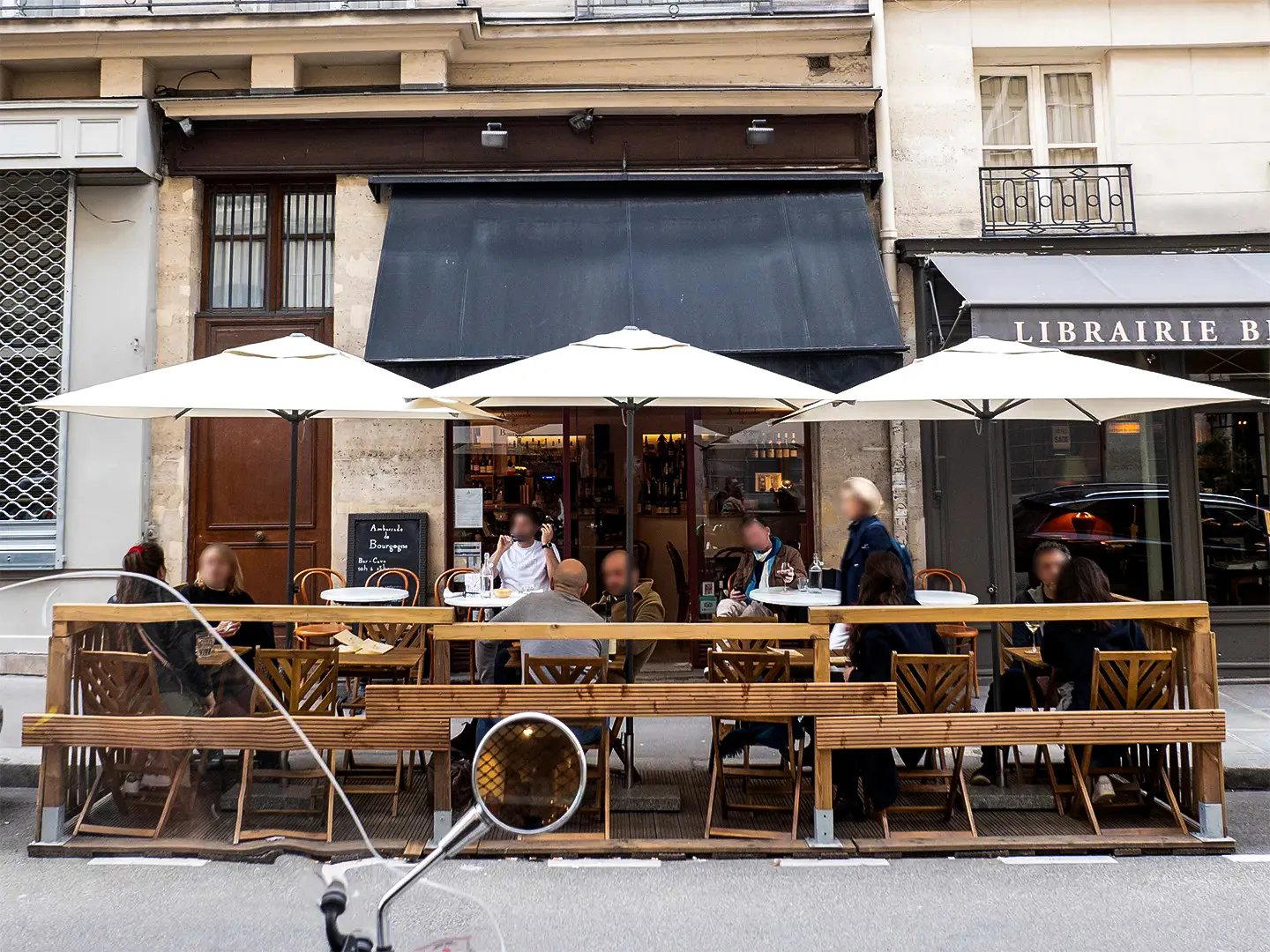
Hotels in Paris
Browse all →



At a Glance
- Cozy
- Classic
- Rustic
- Casual Hangout
- After Work
- Terrace
- Natural Wine
- Local Sourcing
- Street Scene
Current opening hours
- Monday
- 8 AM–12 AM
- Tuesday
- 8 AM–12 AM
- Wednesday
- 8 AM–12 AM
- Thursday
- 8 AM–12 AM
- Friday
- 8 AM–12 AM
- Saturday
- Closed
- Sunday
- Closed
Hours can change for holidays and private events. Last verified .
Welcoming and convivial with an energetic staff, simple bistro decor, and lively terrace spilling into the street.