Cacio&Pepe
Cacio&Pepe brings the Roman trattoria format to Pimlico's Churton Street, anchoring the neighbourhood's quiet residential stretch with one of Italian cuisine's most technically demanding two-ingredient pasta dishes. Against London's broader Italian dining scene, it occupies the informal, ingredient-focused tier rather than the white-tablecloth end, making it a practical choice for direct Roman cooking without the theatre of the capital's larger destination restaurants.
Pearl is the En Primeur Club membership app — saves, bookings, and concierge access live there. Same editors, same standards.
- Address
- 46 Churton St, Pimlico, London SW1V 2LP, United Kingdom
- Phone
- +442076307588
- Website
- cacioepepe.co.uk
- Directions
- Get directions
 Saves & bookings on Pearl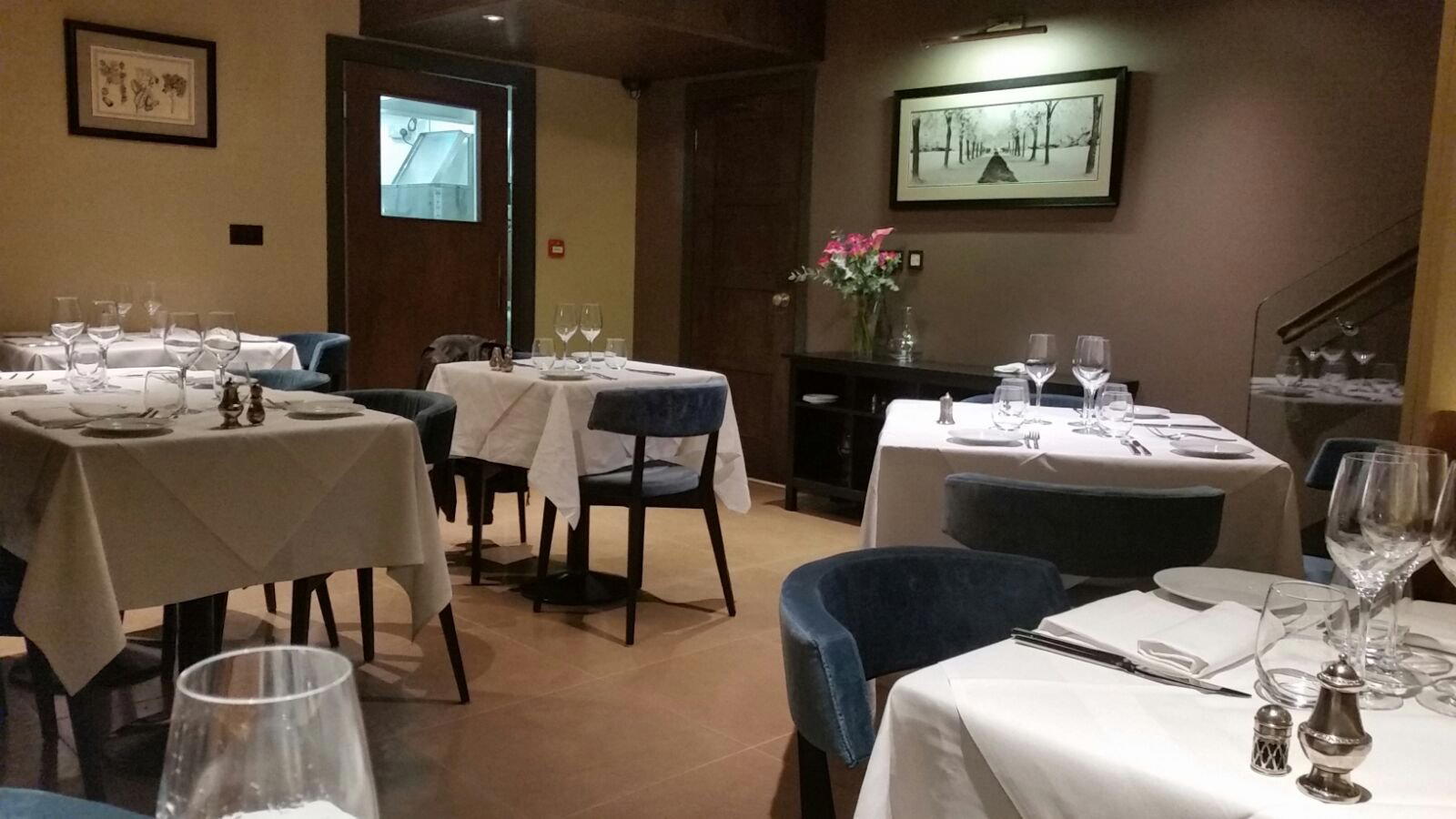
A Roman Formula on a Pimlico Side Street
Churton Street sits in the quieter western fringe of Pimlico, a residential stretch of Victorian terraces that rarely competes for attention with the neighbourhood's grander Victoria-adjacent thoroughfares. The approach to Cacio&Pepe; is low-key by design: no canopy signage, no host stationed at the door. What you find instead is the kind of compact, unpretentious room that has defined Roman neighbourhood trattorias for generations, close tables, the smell of rendered fat and cracked pepper reaching you before you sit down, and a menu short enough that the kitchen can execute each dish without hedging.
That restraint is itself a statement. London's Italian dining scene has long bifurcated between high-spending destination rooms, polished pasta programs with sommeliers, tasting menus, and rooms that telegraph ambition in every fitting, and the more workaday end that trades on familiarity rather than craft. Cacio&Pepe; occupies a third position that is harder to sustain: focused informality, where the cooking is taken seriously but the surroundings are not asking you to notice them.
The Dish and What It Demands
Cacio e pepe as a culinary format carries more technical difficulty than its two-ingredient premise suggests. The emulsification of Pecorino Romano and the pasta's starchy cooking water is the central technical act: get the temperature wrong, add the cheese too fast, or use the wrong ratio of water to fat, and the sauce breaks into clumps. Black pepper, toasted and freshly cracked rather than pre-ground, should deliver heat that builds across the palate rather than arriving all at once. Across Rome's trattorias, the dish has become something of a benchmark, a way of reading a kitchen's precision and restraint before ordering anything more complex.
In London, that same dish functions as a positioning signal. The restaurants in London's ££££ tier, CORE by Clare Smyth, Restaurant Gordon Ramsay, Sketch, The Lecture Room and Library, The Ledbury, and Dinner by Heston Blumenthal, are structured around multi-course progression and wine pairings. Cacio&Pepe; is structured around a single pasta tradition done with conviction. The two propositions do not compete; they address entirely different decisions.
The Progression of the Meal
In the Roman model, a meal at a trattoria follows a predictable arc. You begin with something sharp and acidic, a cured meat or marinated vegetable that readies the palate rather than sating it. The pasta course arrives as the fulcrum of the meal: substantial enough to be the main event but calibrated to leave room for what follows. Cacio e pepe sits in that fulcrum position by convention. After it, something simpler: a secondi of roasted meat or offal, then cheese or a restrained dessert.
What makes the Roman trattoria format distinctive against London's broader Italian dining scene is this deliberate sequencing without inflation. There is no amuse-bouche designed to demonstrate technique, no intermezzo, no petit four signalling that you are in the hands of a kitchen with something to prove beyond the food itself. The meal moves at the pace of the kitchen and the room. That informality requires its own discipline, a kitchen that knows which dishes anchor the menu and builds around them rather than expanding outward until nothing is memorable.
Visitors expecting the pacing of London's grander European restaurants, the kind of experience you find at Waterside Inn in Bray or L'Enclume in Cartmel, will find Cacio&Pepe; operates at a different frequency entirely. Equally, compared to the structured ambition of rooms like Moor Hall in Aughton, Gidleigh Park in Chagford, or Midsummer House in Cambridge, the appeal here is built on clarity of purpose rather than formal progression. It is a different genre of restaurant, and should be evaluated on those terms.
Pimlico and Its Dining Character
Pimlico's dining identity is not built around flagship openings or Michelin circuits. It is a neighbourhood that feeds its own residents with a range of independent spots that tend toward the competent and unfussy rather than the ambitious. In that context, a restaurant that takes a technically demanding Roman pasta seriously occupies a useful position: local enough to function as a regular, specific enough to reward occasional visits from elsewhere in the city.
The address at 46 Churton Street places it within walking distance of Victoria station. For visitors staying near Victoria or travelling through the area, it functions as a practical alternative to the chain-dominated options around the station itself. For Londoners, it is the kind of place that works on a Tuesday as readily as a Saturday, with opening hours that run Tue to Sun and Monday closed.
For those wanting the full spectrum of London's Italian and European dining across price points and formality, our full London restaurants guide maps the scene in detail.
Where It Sits Against a Broader Field
Informal Italian restaurants that anchor menus on a single pasta tradition have a strong precedent internationally. In New York, Le Bernardin demonstrates the opposite end of the same principle: total menu focus, in that case on seafood, creates authority rather than limiting it. In San Francisco, Lazy Bear shows what happens when informality of atmosphere meets serious culinary ambition. Cacio&Pepe;'s version of that argument is narrower and more domestic in scale, but the underlying logic is the same: a kitchen that commits to a specific tradition earns trust through repetition and precision, not through range.
Across the UK, the restaurants that hold the highest critical regard, Hand and Flowers in Marlow, hide and fox in Saltwood, Opheem in Birmingham, Ynyshir Hall in Machynlleth, Restaurant Andrew Fairlie in Auchterarder, are mostly operating in formal registers with menus built for occasion dining. Cacio&Pepe; sits at the opposite end of that formal spectrum and makes no pretence of competing with it. That clarity of positioning is, itself, worth something.
Planning Your Visit
| Factor | Cacio&Pepe; (Pimlico) | Formal London Italian (comparable tier) | Leading London destination restaurants |
|---|---|---|---|
| Format | Trattoria, à la carte | À la carte, some set menus | Tasting menus, set progression |
| Price tier | Mid-range (est.) | Mid to upper-mid | ££££ |
| Booking lead time | Short to moderate | Moderate | Weeks to months in advance |
| Nearest transport | Victoria (approx. 10-min walk) | Varies by location | Varies |
| Dress code | Casual | Smart casual | Smart casual to formal |
Style and Standing
Comparable venues nearby, for context on price, style, and recognition.
| Venue | Cuisine | Price | Notes |
|---|---|---|---|
| Cacio&PepeThis venue — the venue you are viewing | Authentic Roman-Style Italian | $$ | Not listed |
| Theo's | Italian Pizza | $$ | Camberwell |
| Pizza East - Shoreditch | Wood-Fired Italian Pizza | $$ | Shoreditch |
| Sapori Sardi | Authentic Sardinian & Italian | $$ | Fulham Palace |
| Bonnane Restaurant | Authentic Italian Pizza & Pasta | $$ | Silvertown |
| Mele e Pere | Italian Trattoria | $$ | Soho |
Continue exploring
More in London
Restaurants in London
Browse all →
Bars in London
Browse all →
Hotels in London
Browse all →

At a Glance
- Cozy
- Elegant
- Intimate
- Classic
- Date Night
- Special Occasion
- Business Dinner
- Open Kitchen
- Private Dining
- Extensive Wine List
Current opening hours
- Monday
- Closed
- Tuesday
- 12–10:30 PM
- Wednesday
- 12–10:30 PM
- Thursday
- 12–10:30 PM
- Friday
- 12–10:30 PM
- Saturday
- 12:30–10:30 PM
- Sunday
- 12:30–10:30 PM
Hours can change for holidays and private events. Last verified .
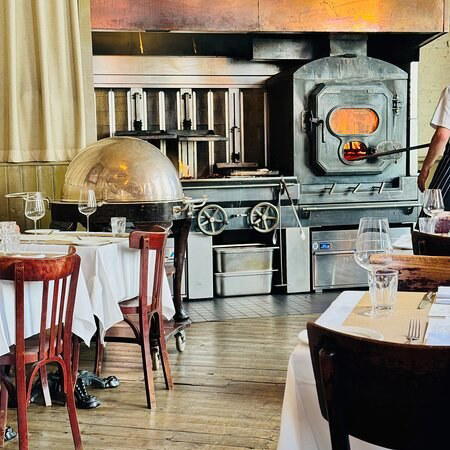
Cosy and welcoming with an elegant, simple yet chic interior featuring white tablecloths, copper accents, and contemporary lighting.